
Loading, please wait...
LOT 0698
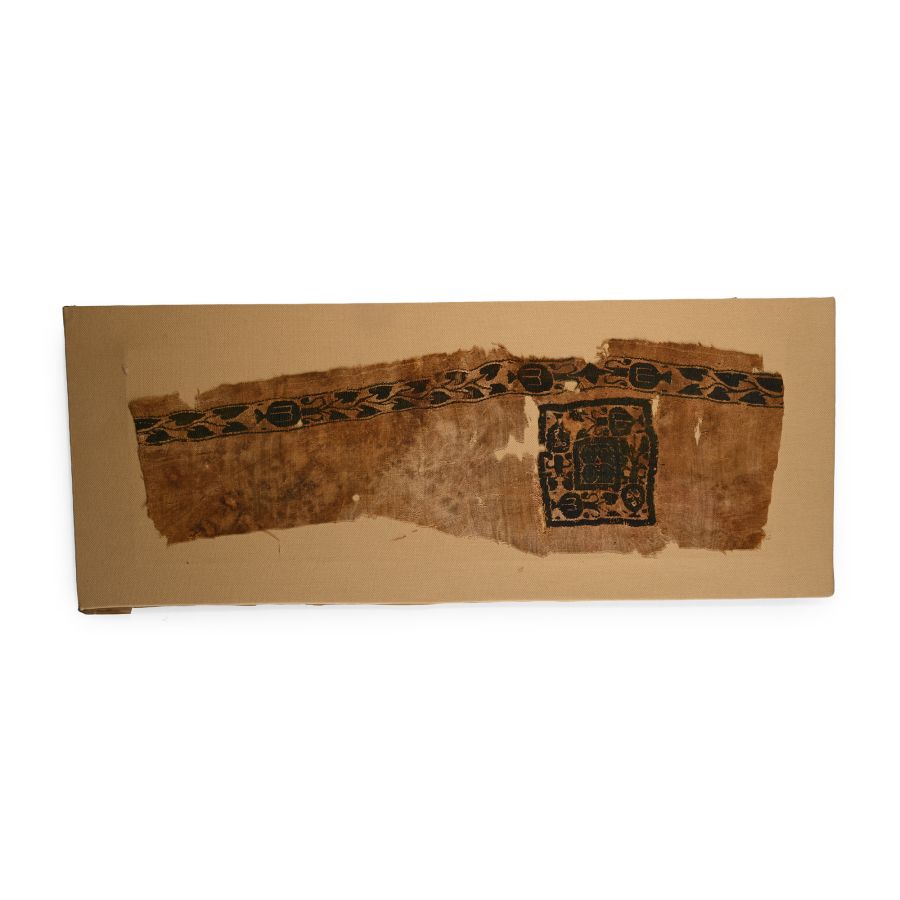
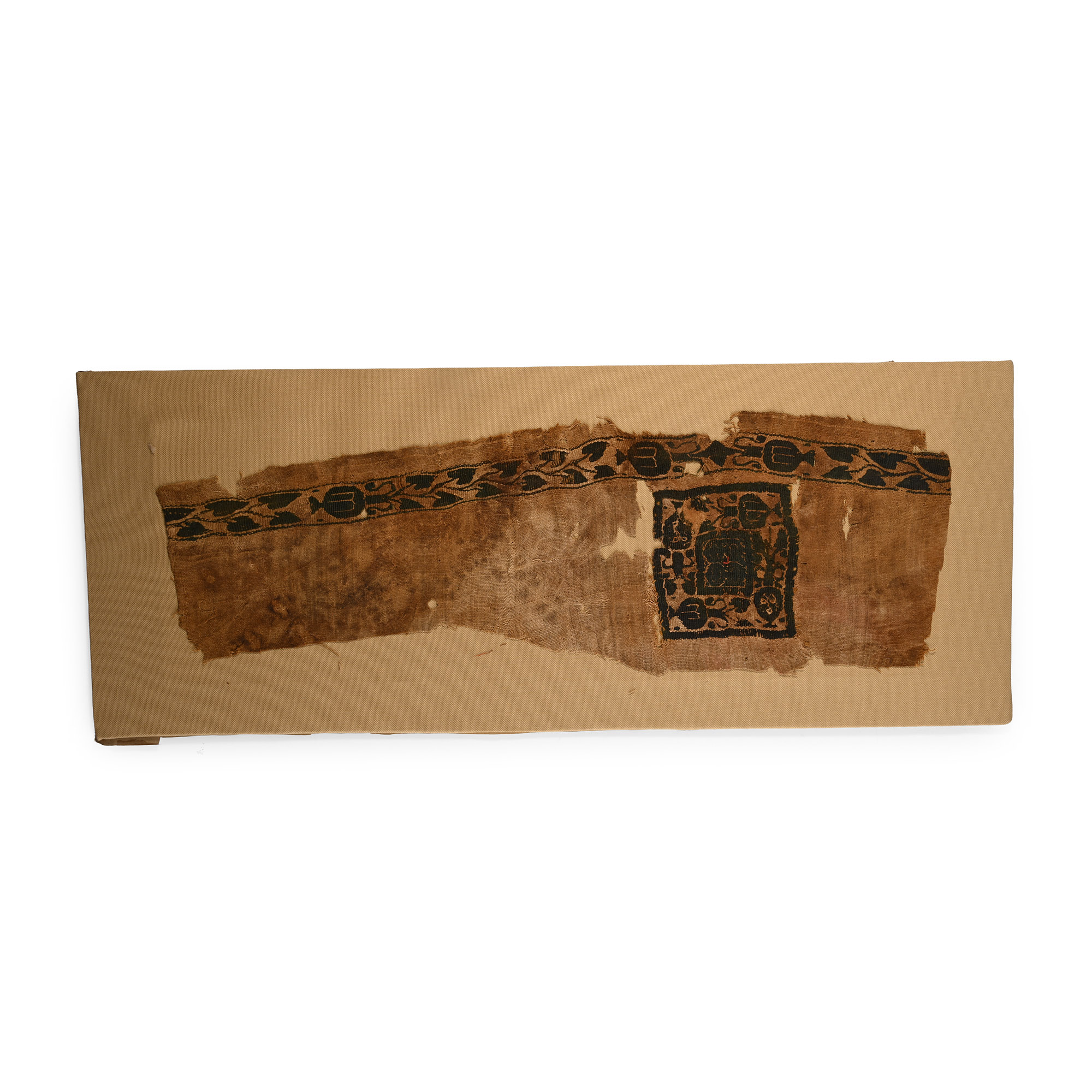
Egyptian Mounted Coptic Tunic Textile Fragment with Clavus and Tabula
CIRCA 6TH CENTURY A.D.
22 1/2 in. (174 grams total, 57 cm).
Showing a large portion of a tunic, decorated with a clavus and a tablion, both featuring foliate ornaments alternating with kantharoi, the centre of the tablion patterned with rosettes surrounded by kantharoi on the four sides; mounted on a backing board. [No Reserve]
ProvenanceAcquired 1970s-1996.
Property of a North American collector.
London collection, 2016.
Cf. Gayet, M. Al., Le Costume en Egypte, du IIIe au XIIIe Siecle, Paris, 1900, no. 51, p.115, for a tunic fragment with similar ornaments, from Deir-el-Dyk.; Del Francia Barocas, L., Museo dell'Alto Medioevo, Roma, I materiali Copti, p.86, no.6, for similar textiles.
FootnotesThis type of embroidery was typical of tunics and garments characterised by full-length clavi and segmenta, decorated with either intricate geometric patterns or floral and vegetal motifs. In Christian symbology, the kantharos was an ancient Greek wine cup that symbolised resurrection and eternal life through Christ.
CONDITIONTimeLine Auctions follows a vetting process to ensure the authenticity and legality of all items, reinforcing our commitment to integrity and responsible trading. Each antiquity, antique, and coin lot undergoes thorough examination by a vetting committee of at least ten external specialists, professional trade association members, scientists, and archaeologists: Our Vetting Process
AUCTIONS:
TimeLine is a leading auction house specialising in antiquities, ancient art, collectables, natural history, coins, medals, and books. Our auctions offer museums, collectors, historians, and enthusiasts the opportunity to acquire unique and historically significant pieces.
LOT 0698
Egyptian Mounted Coptic Tunic Textile Fragment with Clavus and Tabula
Estimate £80 - 100€93 - 116 (for guidance only)$108 - 135 (for guidance only)
-
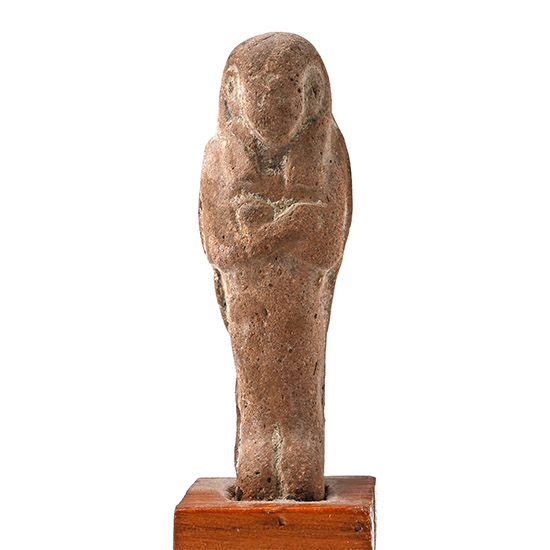
Egyptian Terracotta Shabti
New Kingdom, late 18th-19th Dynasty, circa 1332-1189 B.C.Estimate: £80 - 100 (+bp*)
Bids: 1 | Current Bid: £5
Mummiform figure wearing a lappet wig, arms crossed over the chest; back flat; traces of white pigment in places; supplied with a custom-made wooden stand. 45.3 grams total, 99 mm
Acquired Caledonian market, 16th March 1962, for 5 shillings. From the private collection of Peter Clayton, FCILIP, Dip, Arch, FSA, FRNS, Hemel Hempstead, Hertfordshire, UK; formed since the late 1950s. Accompanied by an old handwritten information card by Peter Clayton, collection no.93.
During the late New Kingdom, larger quantities of shabti figurines were provided for the deceased and were often mass-produced using open moulds, leaving the backs flat. -
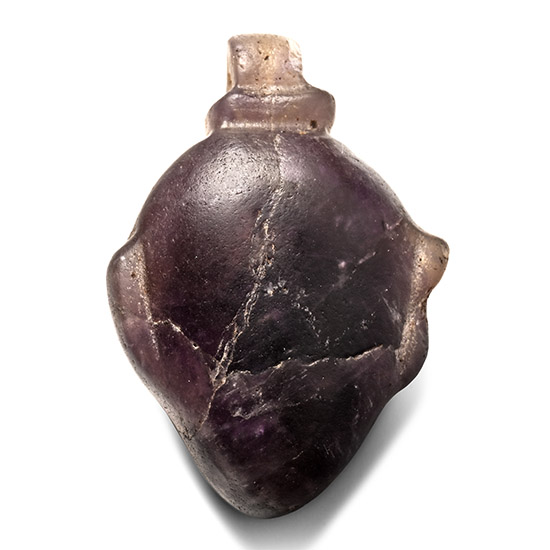
Egyptian Amethyst Heart Amulet
Late Period, circa 664-332 B.C.Estimate: £100 - 140 (+bp*)
Opening Bid: £50
Lentoid in section with two side lugs and a suspension loop on the top. 4.7 grams, 25 mm
London gentleman's collection, 1970-1990s, by descent.
Ancient Egyptians regarded the heart (ib) as the seat of intelligence, emotions, behaviour, and memory. During the ‘Weighing of the Heart’ ceremony, the heart spoke for the deceased before Osiris and accounted for their actions. For this reason, Egyptians placed heart amulets on mummies to protect the organ and secure a favourable judgement. -
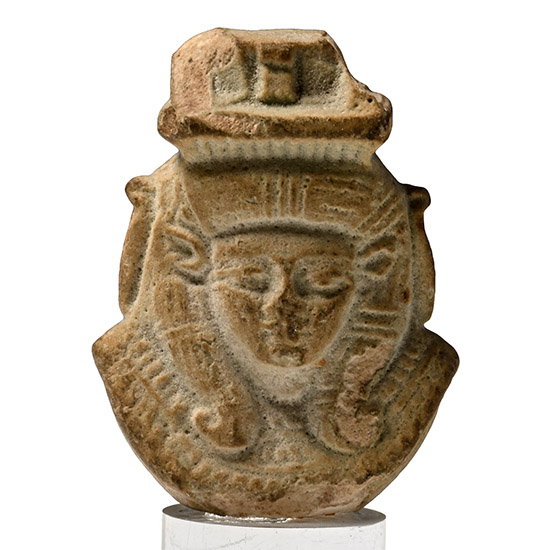
Egyptian Green Glazed Faience Head of the Goddess Hathor from a Sistrum
Late Period, 26th Dynasty, circa 600-700 B.C.Estimate: £300 - 400 (+bp*)
Bids: 2 | Current Bid: £15
Bifacial bust of Hathor, depicted as a woman's head with cow ears, wearing a heavy wig with curled lappet ends and uraei on either side, mounted on a custom-made stand. 18.7 grams total, 49 mm including stand
Acquired from Caledonian market, 16th March 1962, for 5 shillings. From the private collection of Peter Clayton, FCILIP, Dip, Arch, FSA, FRNS, Hemel Hempstead, Hertfordshire, UK; formed since the late 1950s. Accompanied by an old handwritten information card by Peter Clayton, collection no.92.
This carefully modelled fragment is undoubtedly from a sistrum, a musical instrument often played during Hathoric rituals and festivals.
