
Loading, please wait...
LOT 0623
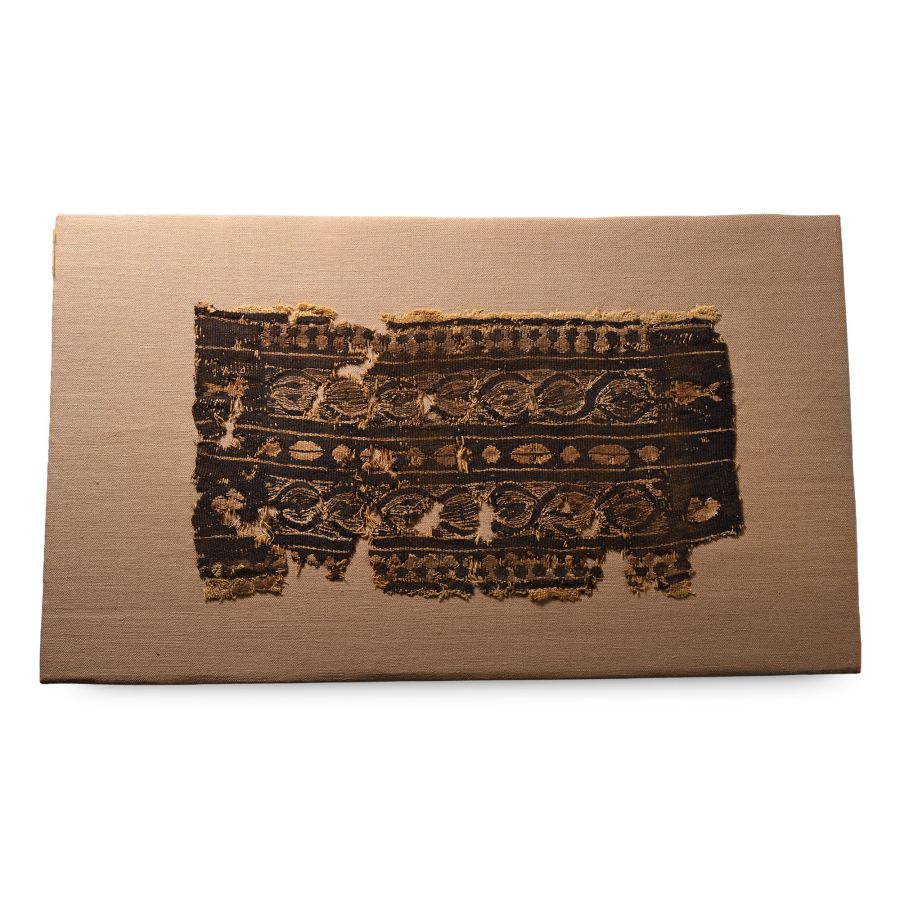
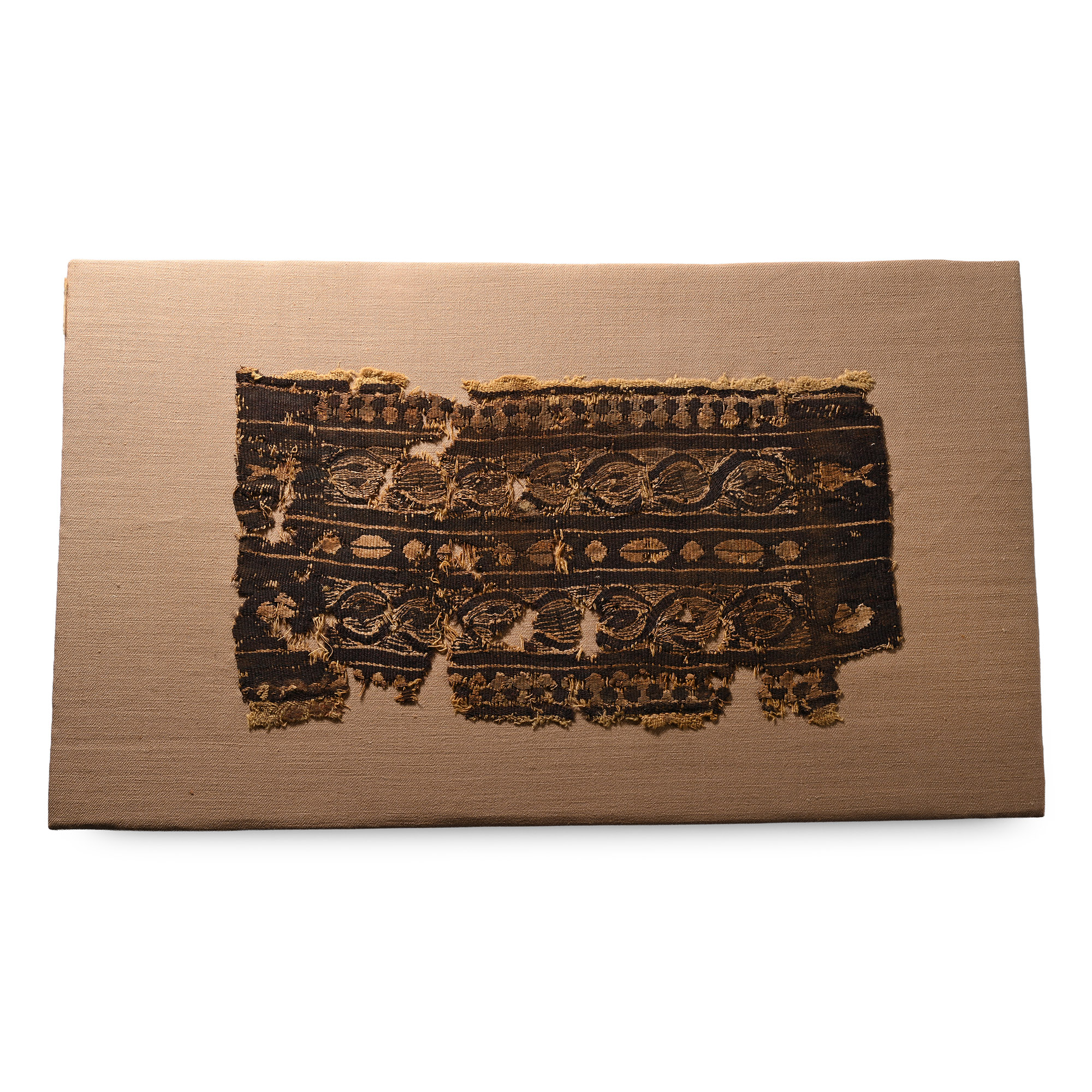
Egyptian Mounted Coptic Tunic Textile Fragment of a Clavus with Nilotic Ornament
CIRCA 6TH CENTURY A.D.
10 1/4 in. (88 grams total, 26 cm).
Comprising a large segmentum in linen and wool, purple wool on linen, S-torsion, borders with dentilled decoration, floral and vegetal embroidery divided into three running strips; mounted on linen backing. [No Reserve]
ProvenanceAcquired 1970s-1996.
Property of a North American collector.
London collection, 2016.
Cf. Del Francia Barocas, L., Museo dell'Alto Medioevo, Roma, I materiali Copti, p.98, for similar textile.
FootnotesThis embroidery was typical of tunics and garments characterised by full-length clavi, decorated with either intricate geometric patterns or with a multitude of small figures and animals, often edged with geometric borders and finished with thick, weft-loop fringes or cords.
CONDITIONTimeLine Auctions follows a vetting process to ensure the authenticity and legality of all items, reinforcing our commitment to integrity and responsible trading. Each antiquity, antique, and coin lot undergoes thorough examination by a vetting committee of at least ten external specialists, professional trade association members, scientists, and archaeologists: Our Vetting Process
AUCTIONS:
TimeLine is a leading auction house specialising in antiquities, ancient art, collectables, natural history, coins, medals, and books. Our auctions offer museums, collectors, historians, and enthusiasts the opportunity to acquire unique and historically significant pieces.
LOT 0623
Egyptian Mounted Coptic Tunic Textile Fragment of a Clavus with Nilotic Ornament
Estimate £40 - 60€46 - 70 (for guidance only)$54 - 81 (for guidance only)
Opening Bid
£5 (EUR 6; USD 7) +BP*
-
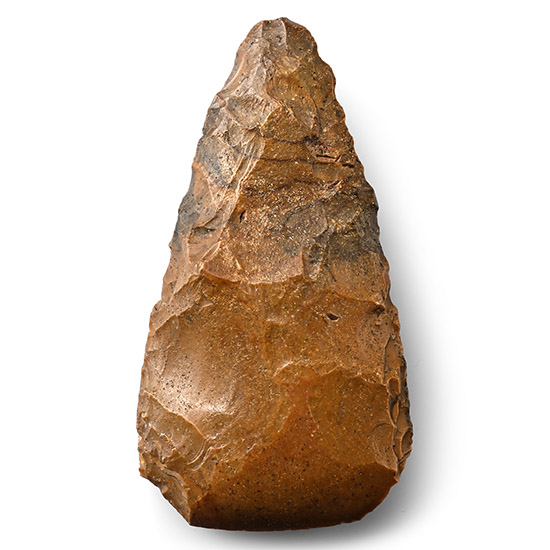
Egyptian Stone Age Polished Knapped Axehead
Neolithic Period, 11,000-5,200 B.P.Estimate: £100 - 140 (+bp*)
Opening Bid: £5
Piriform in plan with a narrow butt. 58.3 grams, 86 mm
Found at Fayum North. From the collection of A.D. Passmore (1879-1958), his collection of flints from the area of Stonehenge was donated to the Ashmolean Museum in the 1950s. From the private collection of Peter Clayton, FCILIP, Dip, Arch, FSA, FRNS, Hemel Hempstead, Hertfordshire, UK; formed since the late 1950s. Accompanied by a copy of an old handwritten information card by Peter Clayton. -
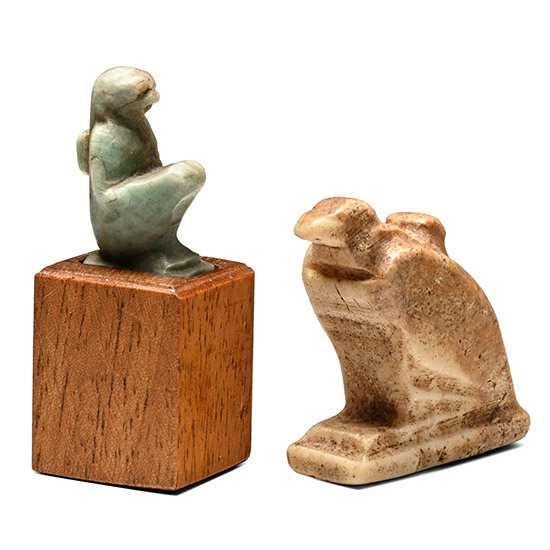
Egyptian Stone Amulet Collection
New Kingdom-Late Period, circa 1100-500 B.C.Estimate: £700 - 900 (‡+bp*)
Opening Bid: £365
Comprising: a feldspar amulet of the crouching god Sokar with falcon head and human body, custom-made display stand; a carved vulture amulet on a rectangular base; suspension loop on the back. 19.5 grmas total, 28-41 mm
Sokar: Ex Roger Liechti (1934-2010), Petit-Lancy, Switzerland (inv.no. E.601); acquired from Galerie Elsa-Bloch Diener, Bern. Thence by family descent. Vulture: Ex Roger Liechti (1934-2010), Petit-Lancy, Switzerland (inv.no. E. 772); acquired in 1984 from Mr Cohen, Galerie La Reine Margot, Paris. Thence by family descent, Switzerland.
Vulture representations are among the oldest amulet types, found in burials dating to the late Third millennium B.C. They provide apotropaic protection for the deceased. The vulture is associated with various Egyptian deities, especially with the goddess Nekhbet. Sokar, the hawk-god originally of the Memphite necropolis and deity of fertility and artisans, became closely linked with Osiris and Ptah, forming the syncretic deity Ptah-Sokar-Osiris. -
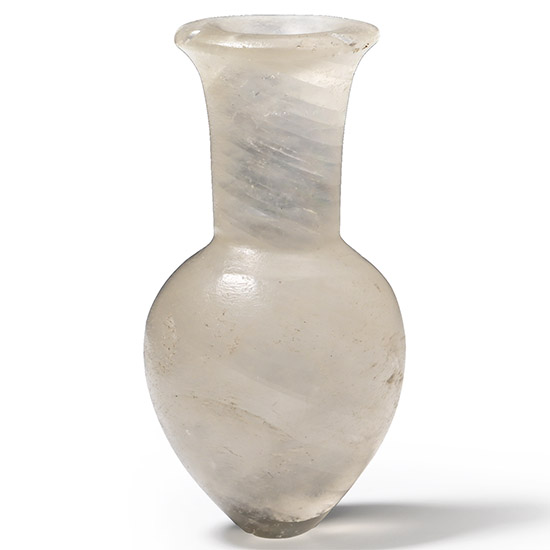
Egyptian Rock Crystal Dummy Vessel
Old Kingdom, 5th-6th Dynasty, circa 2500-2200 B.C.Estimate: £2,000 - 3,000 (+bp*)
Opening Bid: £1,000
Model amphora with a piriform body, a long, flaring, trumpet-like neck and rim, and a shallow depression at the top. 55 grams, 59 mm
with Archaeologia, Switzerland, before 1983. Ex private North American collection. London private collection, 2016. This lot has been checked against the Interpol Database of stolen works of art and is accompanied by a search certificate no.13231-249997.
This was one of the model vessels in a set associated with the 'Opening of the Mouth' ritual, which revived the deceased.
