
Loading, please wait...
LOT 0477
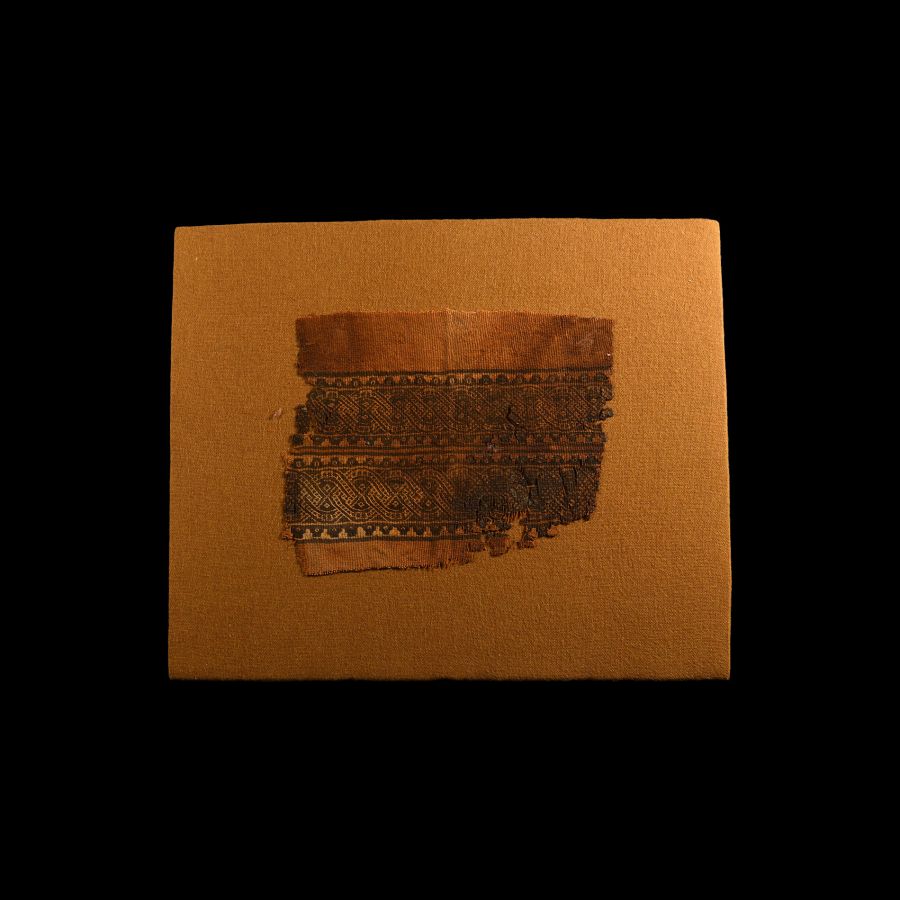
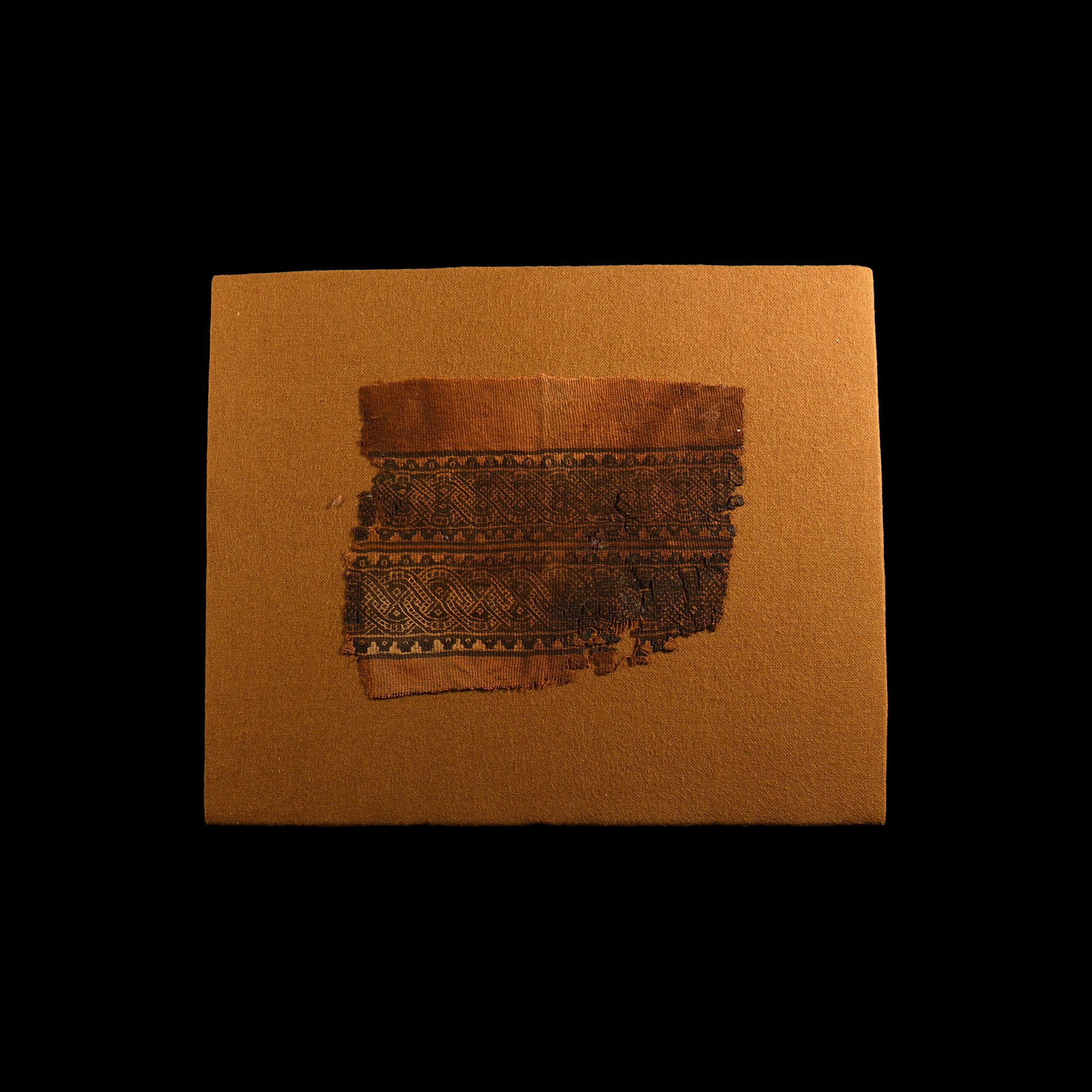
Egyptian Mounted Coptic Textile
CIRCA 6TH-7TH CENTURY A.D.
12 3/4 x 10 5/8 in. (85 grams, 32.5 x 27 cm).
Comprising a large fragment of a vertical band (clavus) from a tunic, woven in yellow linen and purple wool, embroidered with two rows of interlaced polygonal patterns, edged by crenellated borders and a straight line, the two rows divided by a central linear double band. [No Reserve]
ProvenanceAcquired 1970s-1996.
Property of a North American collector.
London collection, 2016.
Cf. Forrer, Die Graeber und Textilfunde von Achmim-Panopolis, Strassburg, 1891, pl.XI, no.4, for similar.
FootnotesThe wide geometric pattern suggests a dating of the item in the early years of the Arab conquest.
CONDITIONTimeLine Auctions follows a vetting process to ensure the authenticity and legality of all items, reinforcing our commitment to integrity and responsible trading. Each antiquity, antique, and coin lot undergoes thorough examination by a vetting committee of at least ten external specialists, professional trade association members, scientists, and archaeologists: Our Vetting Process
AUCTIONS:
TimeLine is a leading auction house specialising in antiquities, ancient art, collectables, natural history, coins, medals, and books. Our auctions offer museums, collectors, historians, and enthusiasts the opportunity to acquire unique and historically significant pieces.
-
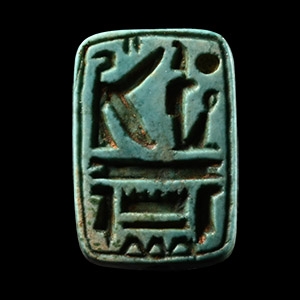
Egyptian Faience Amulet with Hieroglyphs
Second Intermediate Period, circa 1650 B.C.Sold for (Inc. bp): £442
Rectangular amuletic bead with hieroglyphic text to both faces, central cartouche to one face. 1.67 grams, 17 mm
From a family collection formed 1900-1950; by descent circa 1980. -
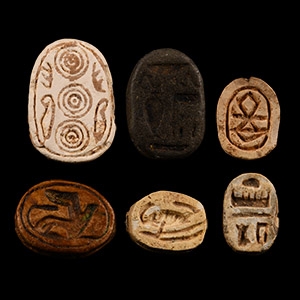
Egyptian Stone Scarab Collection
Mostly Late Period, 664-332 B.C.Sold for (Inc. bp): £156
Comprising six scarabs carved with simple anatomical detailing, each pierced for suspension and displaying an engraved motif to the base: a griffin; hieroglyphs; geometric designs and additional forms, possibly a galloping quadruped and an insect. 4.1 grams total, 9-15 mm
Collected since the 1970s. Ex Everitt collection, acquired by descent 2017. -
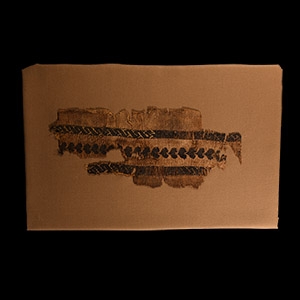
Egyptian Mounted Coptic Textile with Heart Motifs
Circa 4th century A.D.Sold for (Inc. bp): £59
Comprising a clavus with a band of heart motifs, framed by a straight border of straight segments decorated with geometric motifs. 122 grams, 41 x 26 cm
Acquired 1970s-1996. Property of a North American collector. London collection, 2016.
Tapestry technique on natural purple wool and linen. It is highly probable that this tapestry was part of a tunic decoration, a clavus, running vertically on the breast and on the back of it.
