
Loading, please wait...
LOT 0447
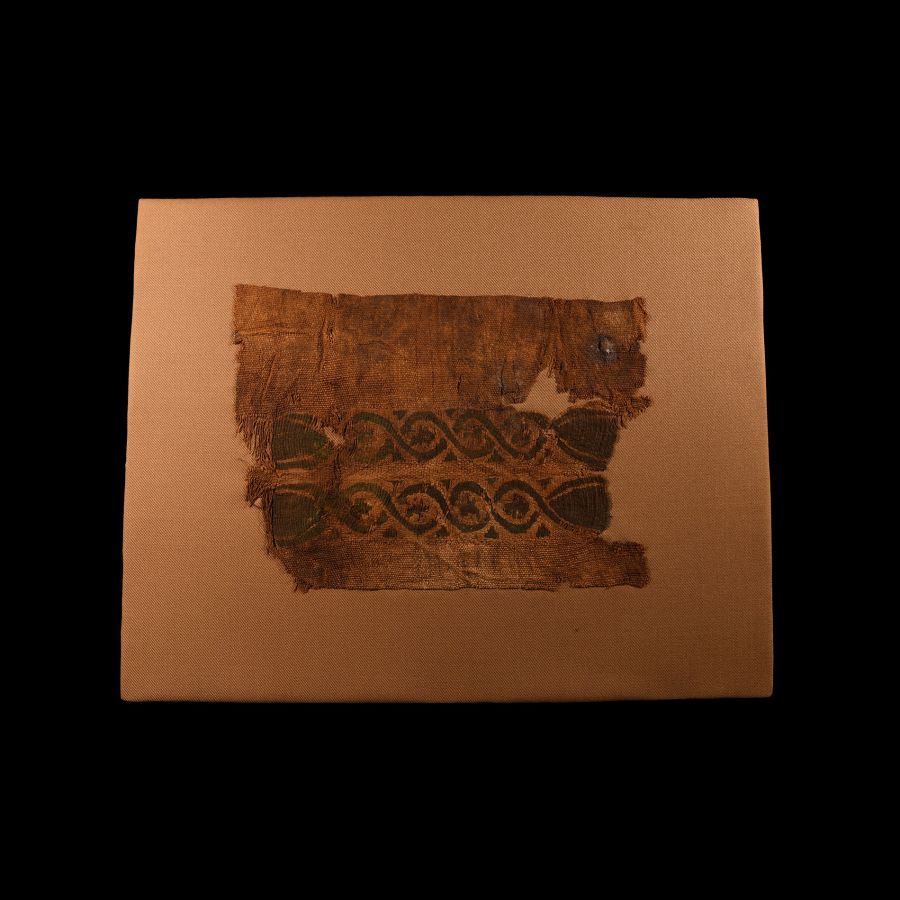
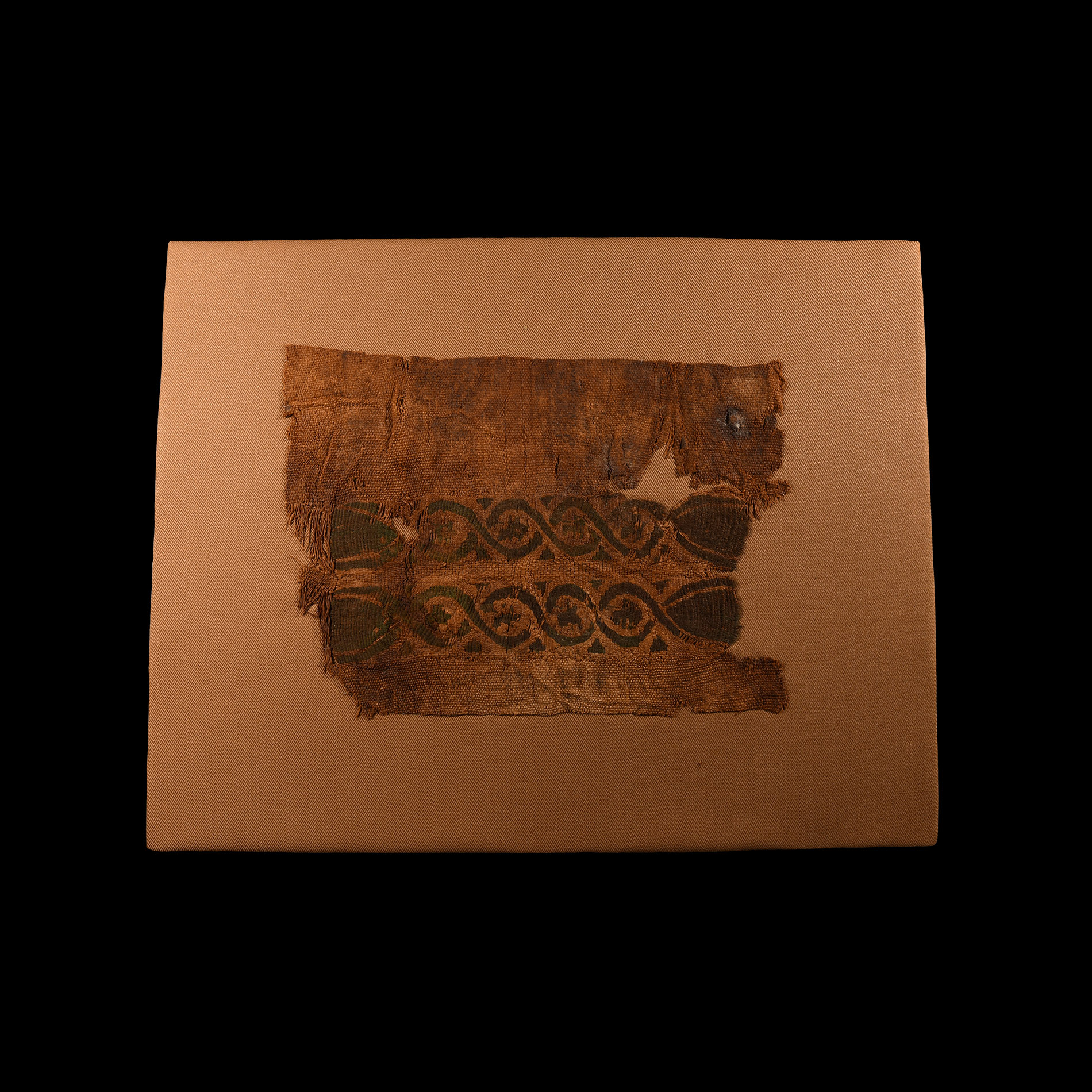
Egyptian Mounted Coptic Textile
CIRCA 6TH-7TH CENTURY A.D.
15 x 11 3/4 in. (121 grams, 38 x 30 cm).
Comprising a pair of simple segmenta on a woven background, formed of a spiral line surrounding floral images, closed at both ends by a pair of petals. [No Reserve]
ProvenanceAcquired 1970s-1996.
Property of a North American collector.
London collection, 2016.
Cf. Pritchard, F., Clothing Culture: Dress in Egypt in the First Millennium AD, Manchester, 2006, p.62, fig.4.12, for similar segmenta.
FootnotesThe textile shows a pair of segmenta, probably from a sleeve of a linen tunic. The wool here seems to be Z-spun, a spin direction not very common in Roman Egypt and suggesting that the spun yarn may have been traded from another province of the empire. Frequently, like in our case, the wool is purple in hue.
CONDITIONTimeLine Auctions follows a vetting process to ensure the authenticity and legality of all items, reinforcing our commitment to integrity and responsible trading. Each antiquity, antique, and coin lot undergoes thorough examination by a vetting committee of at least ten external specialists, professional trade association members, scientists, and archaeologists: Our Vetting Process
AUCTIONS:
TimeLine is a leading auction house specialising in antiquities, ancient art, collectables, natural history, coins, medals, and books. Our auctions offer museums, collectors, historians, and enthusiasts the opportunity to acquire unique and historically significant pieces.
-
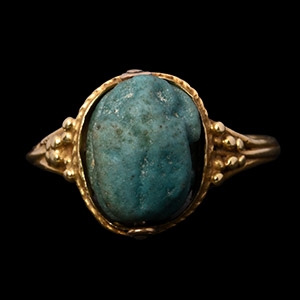
Egyptian Faience Scarab in Gold Swivel Ring
Second Intermediate Period, circa 1650 B.C.Sold for (Inc. bp): £468
With flared shoulders and granulation detailing, applied filigree band, turquoise-coloured faience scarab in swivel mount, hieroglyphs to the underside. 1.88 grams, 23.40 mm overall, 15.97 mm internal diameter (approximate size British K 1/2, USA 5 1/2, Europe 10.58, Japan 10)
From a family collection formed 1900-1950; by descent circa 1980. -
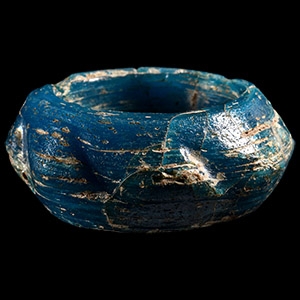
Egyptian Blue Glass Ring
Late Period, 664-332 B.C.Sold for (Inc. bp): £143
Wound construction with raised partially gilded decoration. 10.61 grams, 32.49 mm overall, 19.42 mm internal diameter (approximate size British T, USA 9 1/2, Europe 21.26, Japan 20)
Acquired 1970s-1996. Property of a North American collector. London collection, 2016. -
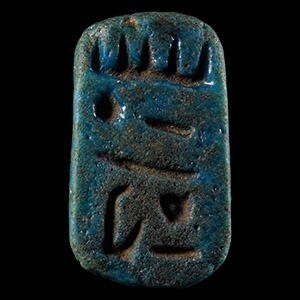
Egyptian Faience Amulet with Hieroglyphs
Late Period, 664-332 B.C.Sold for (Inc. bp): £91
Rectangular in plan with ribbed loop to the reverse, incuse hieroglyphic text. 4.5 grams, 29 mm
Acquired 1970s-1996. Property of a North American collector. London collection, 2016.
