
Loading, please wait...
LOT 0484
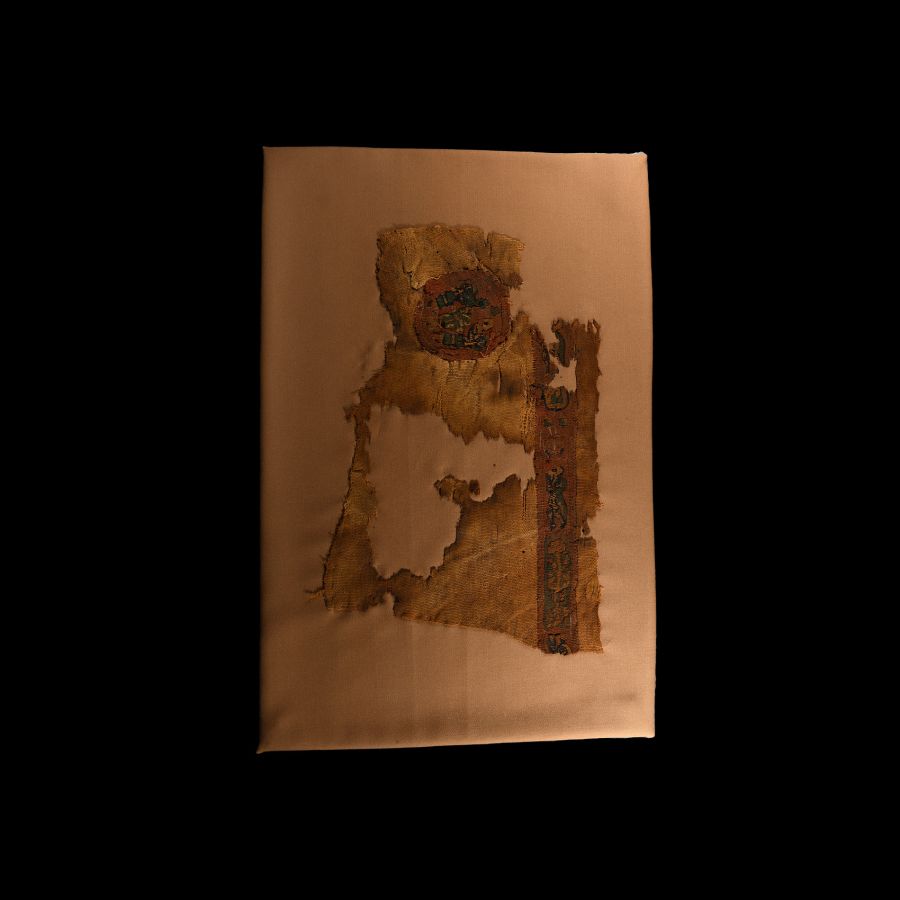
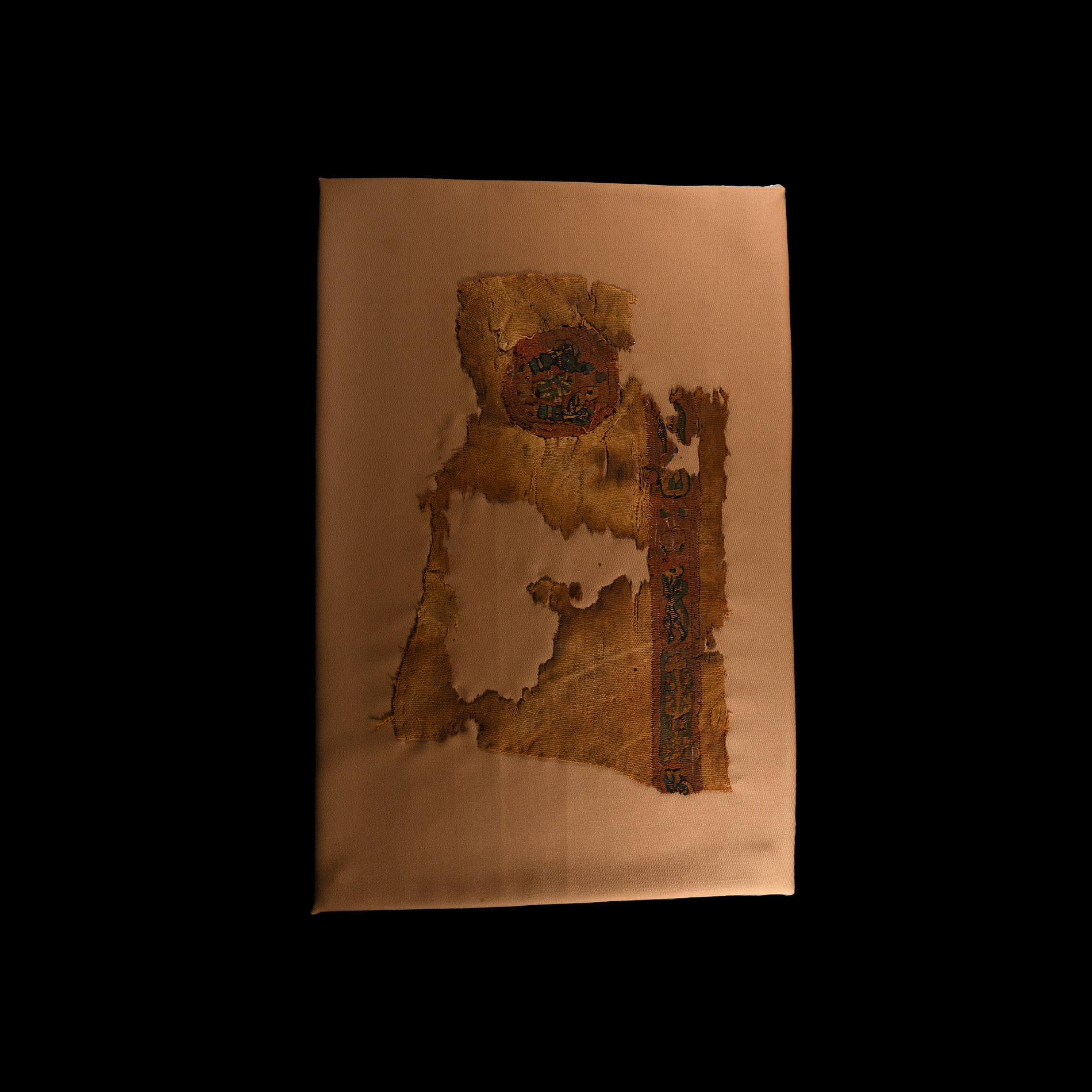
Egyptian Mounted Coptic Textile with Satyrs
CIRCA 5TH-7TH CENTURY A.D.
22 x 14 1/2 in. (239 grams, 56 x 37 cm).
Comprising part of a tunic, formed of a medallion (orbiculus) and one segment (clavus), decorated with stylised semi-human figures (satyrs?) in bright green and yellow colours on a red background, alternating with foliage ornaments. [No Reserve]
ProvenanceAcquired 1970s-1996.
Property of a North American collector.
London collection, 2016.
Cf. Rutschowscaya, M.H., Tissus Coptes, Paris, 1990, pp.104-105, for similar orbiculi.
FootnotesWool tapestry. These decorations can be associated to other textiles and numerous late Roman art objects adorned with picturesque scenes reproducing daily life in the countryside.
CONDITIONTimeLine Auctions follows a vetting process to ensure the authenticity and legality of all items, reinforcing our commitment to integrity and responsible trading. Each antiquity, antique, and coin lot undergoes thorough examination by a vetting committee of at least ten external specialists, professional trade association members, scientists, and archaeologists: Our Vetting Process
AUCTIONS:
TimeLine is a leading auction house specialising in antiquities, ancient art, collectables, natural history, coins, medals, and books. Our auctions offer museums, collectors, historians, and enthusiasts the opportunity to acquire unique and historically significant pieces.
-
.jpg)
Egyptian Painted Wooden Mummy Mask
4th-3rd century B.C.Estimate: £5,000 - 7,000 (‡+bp*)
Opening Bid: £2,500
Displaying semi-naturalistic detailing in relief, beneath a band of headdress ornament composed of rows of architectural dot-and-dash and zig-zag patterns over a segmental panel, possible hieroglyphs to the top tier; attachment pegs to the sides of the face and through the head; extensive remains of painted black pigmentation and composition fill to the eyes. 677 grams, 36 cm
From a French estate, acquired between 1960 and 1980. with SAS Cornette de Saint Cyr Auction, Paris, Vente 882, Mobilier et Objets d'art, 2 December 2014, lot 69. Accompanied by a copy of a French cultural passport no.167062. Accompanied by an academic report by Dr Alberto Maria Pollastrini. This lot has been checked against the Interpol Database of stolen works of art and is accompanied by search certificate no.11807-206837. -
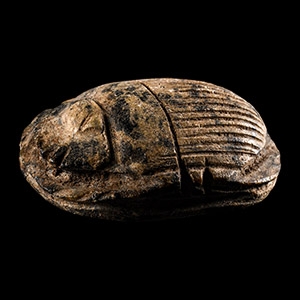
Egyptian Hardstone Scarab
Late Period, 664-332 B.C.Sold for (Inc. bp): £247
With detailed mouth and hatched carapace. 13.8 grams, 34 mm
Acquired 1970s-1996. Property of a North American collector. London collection, 2016. -
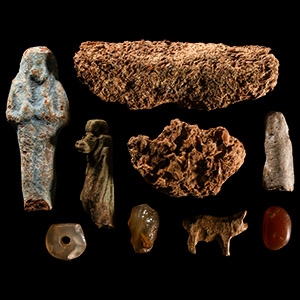
Egyptian and Other Artefact Collection
Late Period, 664-323 B.C. and laterSold for (Inc. bp): £156
Comprising: a blue-glazed shabti; remains of a rock crystal stamp seal and other stone items; carved pig figure; fragment of a Taweret amulet; together with other items. 43 grams total, 18-79 mm
From an early 20th century collection, Carnavon, North Wales, UK.
