
Loading, please wait...
LOT 0496
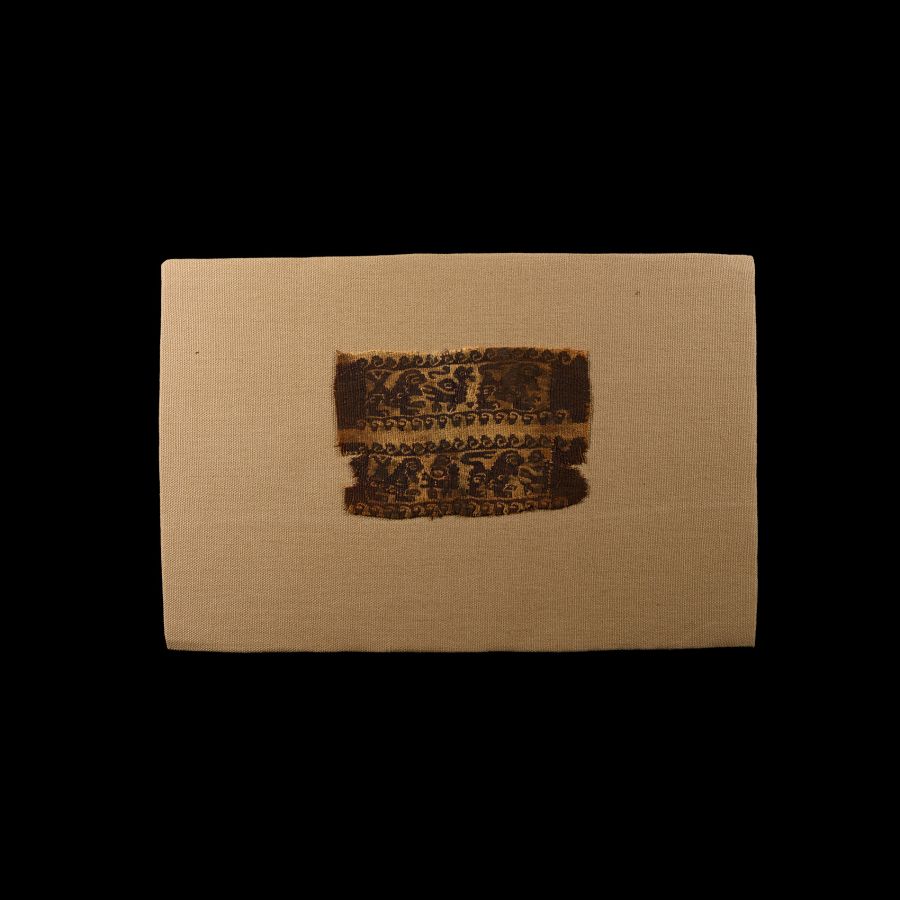
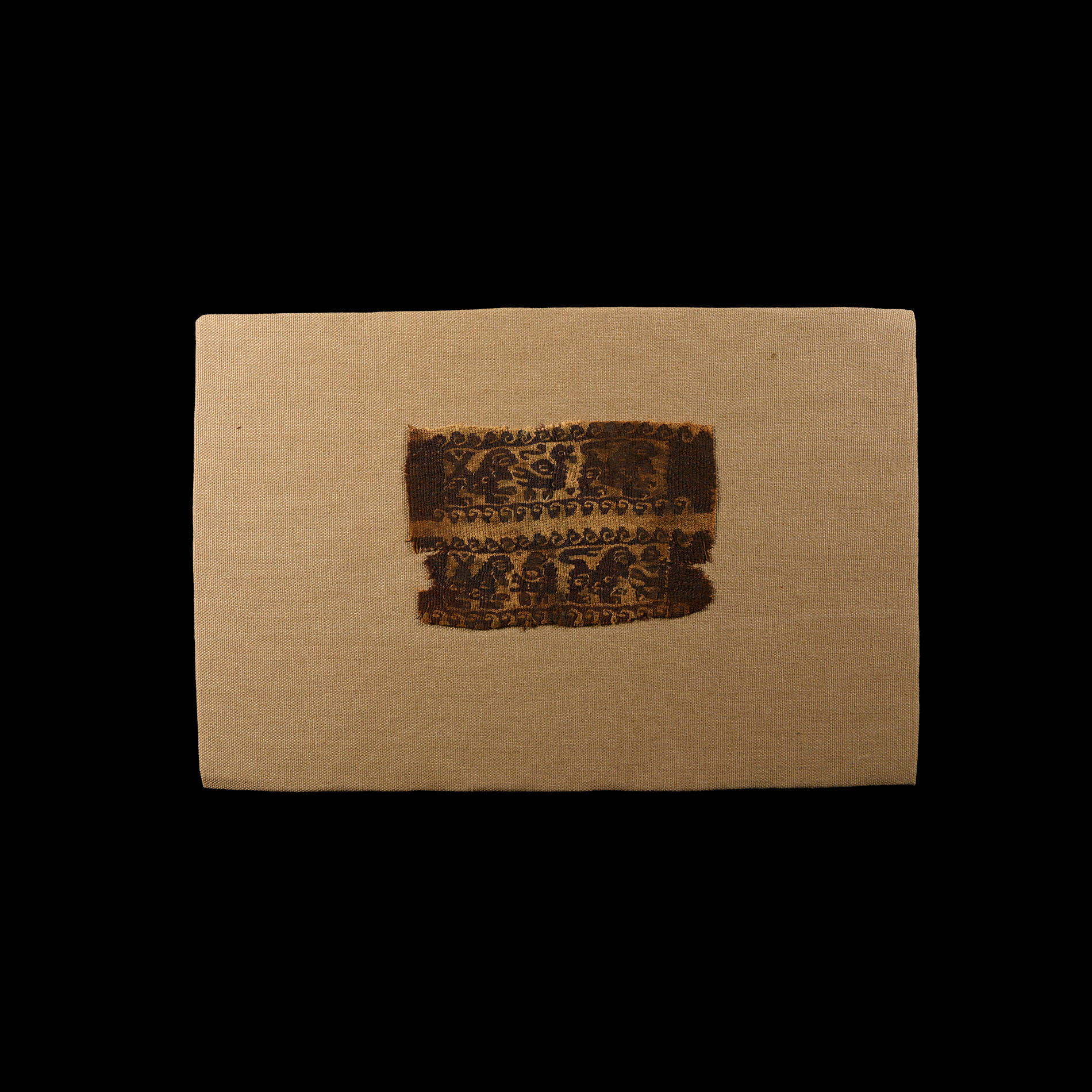
Egyptian Mounted Coptic Textile with Lion Chasing a Bird
CIRCA 5TH-7TH CENTURY A.D.
10 1/4 x 6 3/4 in. (46 grams, 26 x 17 cm).
Comprising a tendril pattern with enclosing a frieze of a lion chasing a bird, the spaces between the figures filled with squares. [No Reserve]
ProvenanceAcquired 1970s-1996.
Property of a North American collector.
London collection, 2016.
Cf. Wulff,O. & W.F.Volbach, Spätantike und koptische Stoffe aus ägyptischen Grabfunden in den Staatlichen Museen Kaiser-Friedrich-Museum / Ägyptisches Museum Schliemann-Sammlung, Berlin, 1926, no.9021, p.49, for similar textile.
FootnotesTapestry technique of wool and linen in purple. It is highly probable that this tapestry was part of a tunic decoration, a double segmentum, applied on the wrists of the garment and decorating the lower part of the sleeves.
CONDITIONTimeLine Auctions follows a vetting process to ensure the authenticity and legality of all items, reinforcing our commitment to integrity and responsible trading. Each antiquity, antique, and coin lot undergoes thorough examination by a vetting committee of at least ten external specialists, professional trade association members, scientists, and archaeologists: Our Vetting Process
AUCTIONS:
TimeLine is a leading auction house specialising in antiquities, ancient art, collectables, natural history, coins, medals, and books. Our auctions offer museums, collectors, historians, and enthusiasts the opportunity to acquire unique and historically significant pieces.
LOT 0496
Egyptian Mounted Coptic Textile with Lion Chasing a Bird
Sold for (Inc. bp): £130
-
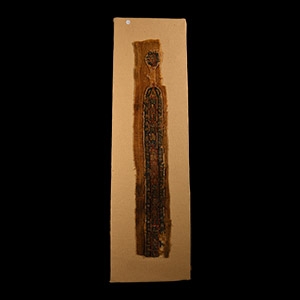
Egyptian Mounted Coptic Textile with Figures
Circa 6th-7th century A.D.Sold for (Inc. bp): £182
Comprising a clavus decorated with various bright colours (green, brown, blue, yellow) with stylised human figures vertically arranged upon a red background and separated by foliage decoration, vegetal pattern inside the orbiculus, polychrome dowel frame with an articulated and rounded profile, all upon linen background with roped border. 120 grams, 62 x 18 cm
Acquired 1970s-1996. Property of a North American collector. London collection, 2016.
Tapestry technique on linen and wool. It is highly probable that this tapestry was part of a tunic decoration, the clavus with preserved orbiculus, running vertically on the breast and on the back of it. -
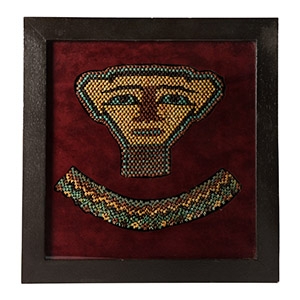
Egyptian Faience Bead Mummy Mask with Collar
Late Period, 664-332 B.C.Estimate: £1,000 - 1,400 (‡+bp*)
Opening Bid: £500
Comprising a restrung panel of small glazed composition beads in various colours representing a mummy face mask with false beard and collar; framed and glazed. 556 grams, 27.5 x 28.5 cm
Ex collection of Mr & Ms François & Marion Reber - Burki, Rue des Beaux-Arts 10, Neuchâtel, Switzerland. Collected in the first part of 20th century by Mr F. Burki, father of Ms Marion Reber. -
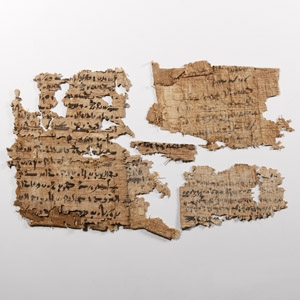
Egyptian Papyrus Fragment Group
Circa 100 B.C.Sold for (Inc. bp): £715
Fragments of a papyrus manuscript with text in Demotic script, remains of a painted grid or decorative figure. 35 grams, 26 x 14.5 cm
Acquired 1970s-1996. Property of a North American collector. London collection, 2016.
