
Loading, please wait...
LOT 0414
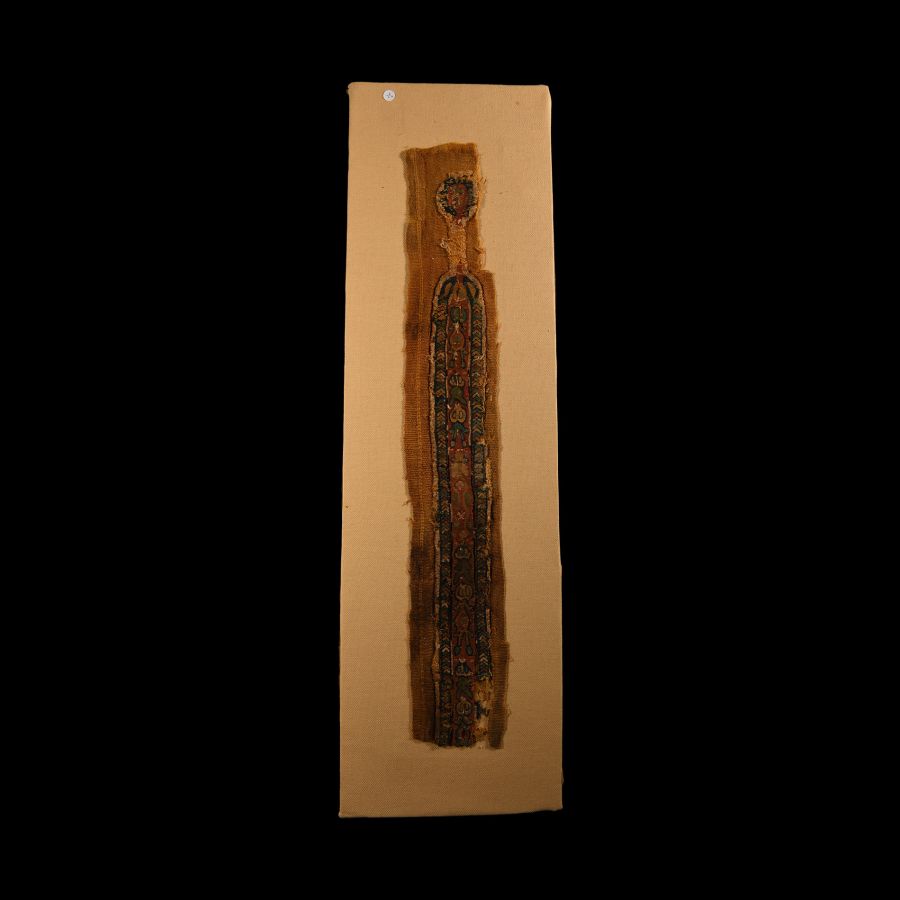
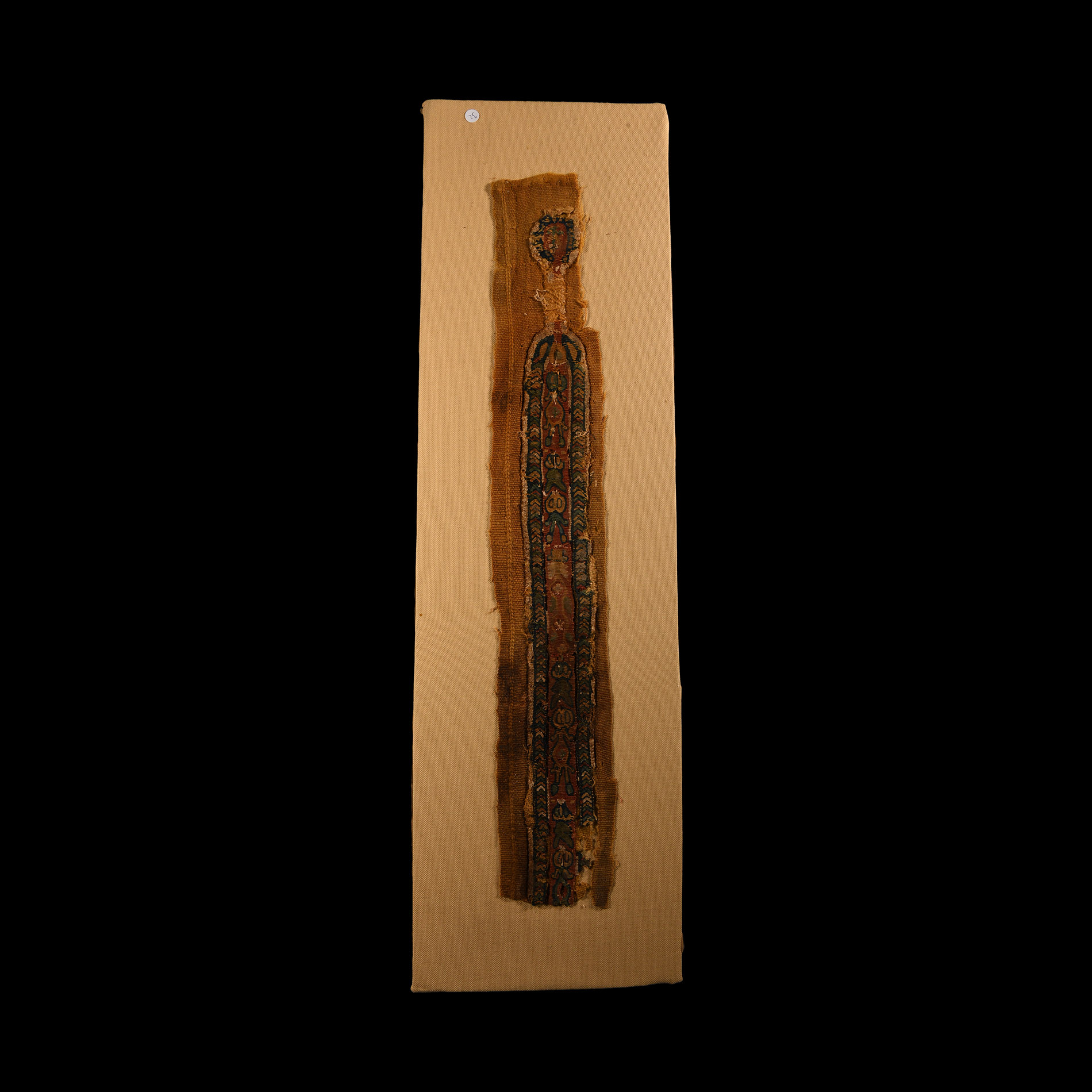
Egyptian Mounted Coptic Textile with Figures
CIRCA 6TH-7TH CENTURY A.D.
24 7/8 x 7 in. (120 grams, 62 x 18 cm).
Comprising a clavus decorated with various bright colours (green, brown, blue, yellow) with stylised human figures vertically arranged upon a red background and separated by foliage decoration, vegetal pattern inside the orbiculus, polychrome dowel frame with an articulated and rounded profile, all upon linen background with roped border. [No Reserve]
ProvenanceAcquired 1970s-1996.
Property of a North American collector.
London collection, 2016.
Cf. Del Francia Barocas, L., Museo dell'Alto Medioevo, Roma, I materiali Copti, p.168-171, nos.42 A-B, for similar textile figures and warp.
FootnotesTapestry technique on linen and wool. It is highly probable that this tapestry was part of a tunic decoration, the clavus with preserved orbiculus, running vertically on the breast and on the back of it.
CONDITIONTimeLine Auctions follows a vetting process to ensure the authenticity and legality of all items, reinforcing our commitment to integrity and responsible trading. Each antiquity, antique, and coin lot undergoes thorough examination by a vetting committee of at least ten external specialists, professional trade association members, scientists, and archaeologists: Our Vetting Process
AUCTIONS:
TimeLine is a leading auction house specialising in antiquities, ancient art, collectables, natural history, coins, medals, and books. Our auctions offer museums, collectors, historians, and enthusiasts the opportunity to acquire unique and historically significant pieces.
-
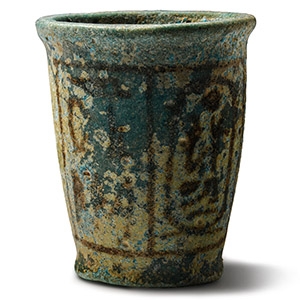
Egyptian Faience Ramesses II Offering Cup
1279-1213 B.C.Estimate: £1,500 - 2,000 (‡+bp*)
Opening Bid: £750
Glazed blue and painted with two conjoined rectangular panels containing the king's cartouches. 31 grams, 45 mm
Acquired in Europe before 1994.
Also known as Ramses the Great, famed for his building projects and military achievements, this king was the second longest reigning in Egyptian history, ascending the throne at age 13 and remaining there for around 67 years. -
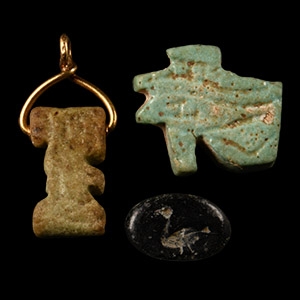
Egyptian Faience Amulet Collection
Mostly Late Period, 664-332 B.C.Sold for (Inc. bp): £91
Comprising: a blue-glazed eye of Horus amulet with bifacial detailing, pierced for suspension; a glazed Shu amulet, suspended on a slender gold bar and pendant hoop; offered with a black stone stamp seal engraved with a bird standing left, pierced for suspension. 5.06 grams total, 13-26 mm
Collected since the 1970s. Ex Everitt collection, acquired by descent 2017. -
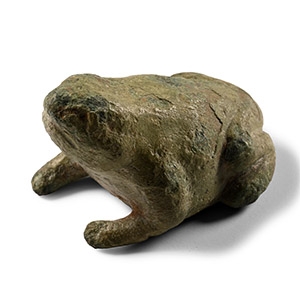
Egyptian Bronze Heket as Frog Statuette
Roman Period, 30 B.C.-323 A.D.Sold for (Inc. bp): £286
Modelled in the round with naturalistic detailing, with head raised. 35 grams, 28 mm
‘The Ancient Menagerie Collection’ formerly the property of a Cambridgeshire lady, collected since the 1990s and acquired from auctions and dealers throughout Europe and the USA, now ex London collection.
This may be a weight, since small bronze statuettes of various animals including frogs were used as counterbalances on scales.
