
Loading, please wait...
LOT 0443
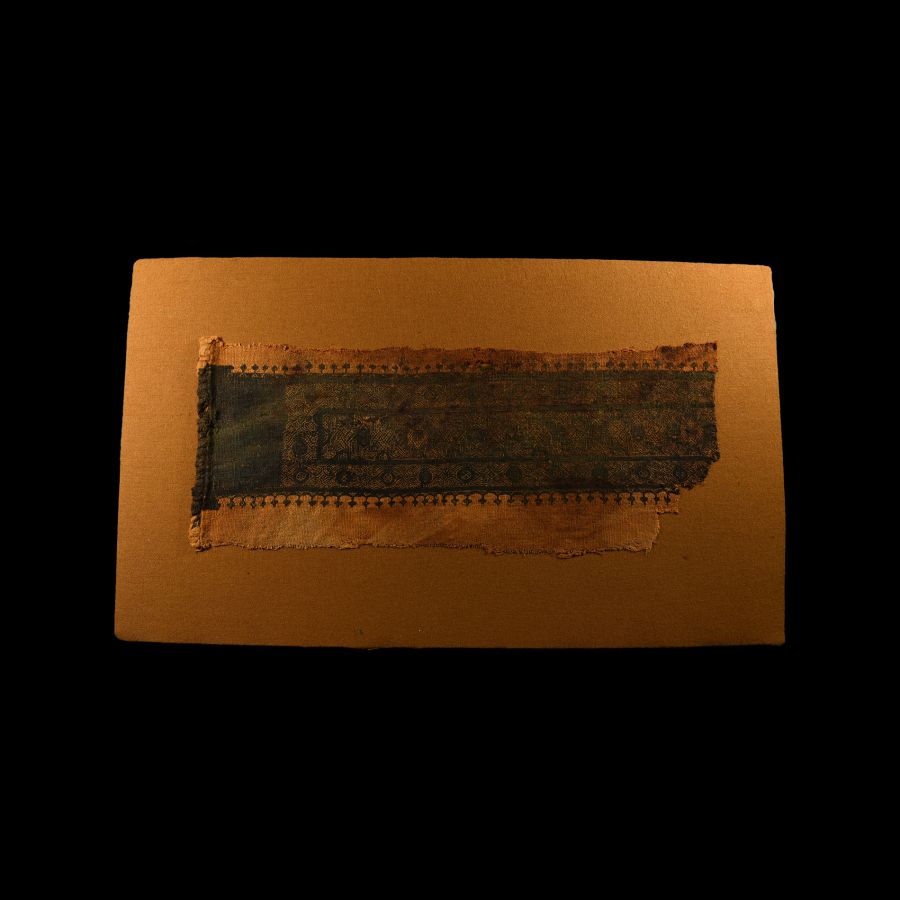
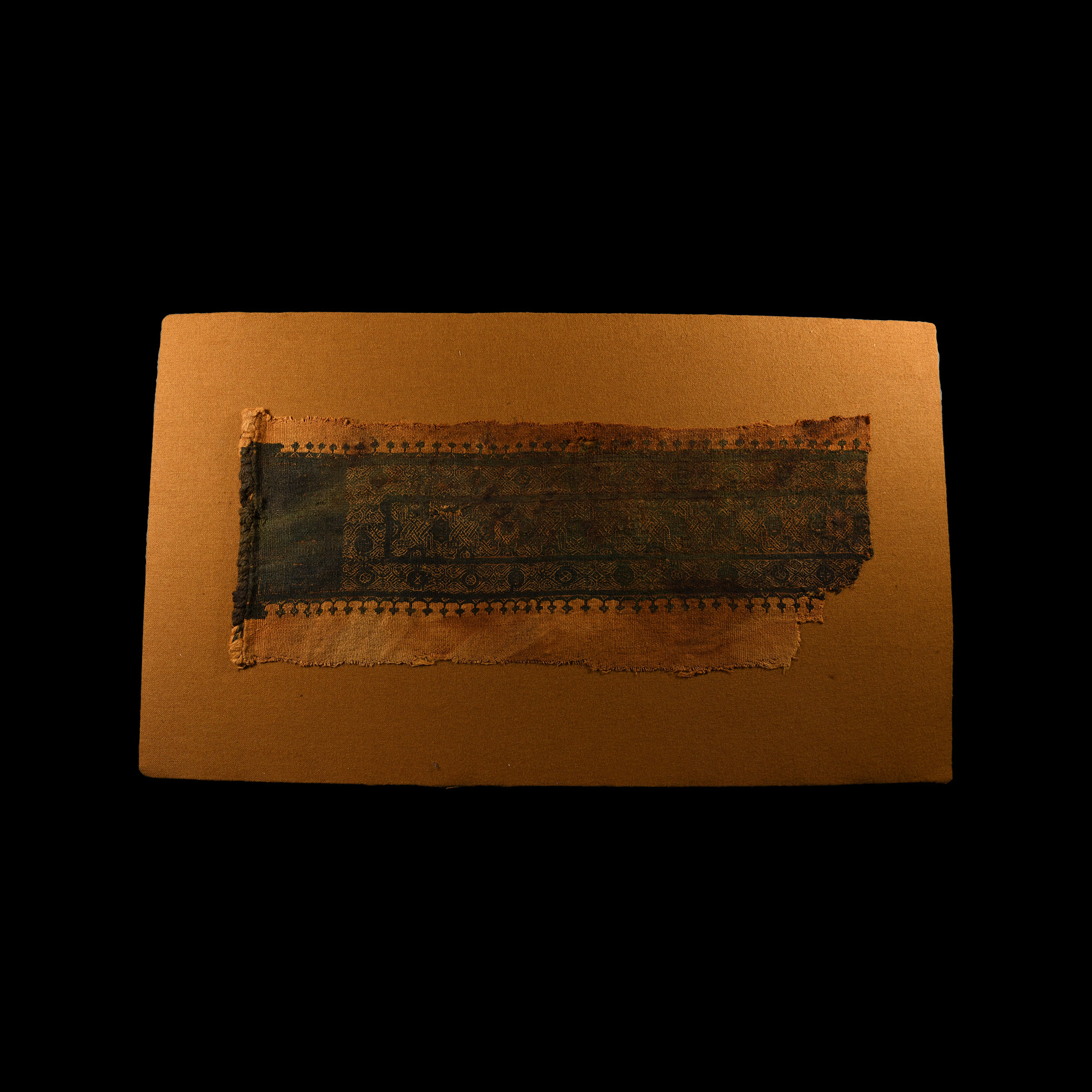
Egyptian Mounted Coptic Textile with Crenellated Blossoms
CIRCA 5TH-7TH CENTURY A.D.
25 1/4 x 14 1/2 in. (264 grams, 64 x 37 cm).
Part of a tunic, the rectangular segment in yellow and green linen and wool, the central part decorated with interlaced geometric motifs, surrounded by an edge of similar motifs and border edged of crenellated blossoms. [No Reserve]
ProvenanceAcquired 1970s-1996.
Property of a North American collector.
London collection, 2016.
Cf. Pritchard, F., Clothing Culture: Dress in Egypt in the First Millennium AD,, Manchester, 2006, pp.74-75, and fig.4.23, for similar textile style.
FootnotesAmong the many fragments from wool tunics are several long strips that match to form nearly full-length central pectoral clavi. They are patterned with a profusion of small figures or interlaced abstract designs, birds, plants and animals with a contrasting border filled with geometric motifs.
CONDITIONTimeLine Auctions follows a vetting process to ensure the authenticity and legality of all items, reinforcing our commitment to integrity and responsible trading. Each antiquity, antique, and coin lot undergoes thorough examination by a vetting committee of at least ten external specialists, professional trade association members, scientists, and archaeologists: Our Vetting Process
AUCTIONS:
TimeLine is a leading auction house specialising in antiquities, ancient art, collectables, natural history, coins, medals, and books. Our auctions offer museums, collectors, historians, and enthusiasts the opportunity to acquire unique and historically significant pieces.
LOT 0443
Egyptian Mounted Coptic Textile with Crenellated Blossoms
Sold for (Inc. bp): £78
-
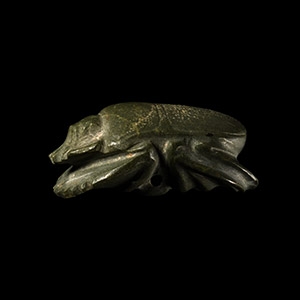
Egyptian Green Jasper Heart Scarab
Late Period, 664-332 B.C.Estimate: £2,500 - 3,500 (+bp*)
Opening Bid: £1,250
Finely carved, with naturalistic detailing to the upper body, legs shown folded beneath the body with suspension loop at centre. 6.8 grams, 24 mm
From an early 20th century Home Counties collection. This lot has been checked against the Interpol Database of stolen works of art and is accompanied by search certificate number no.11846-207088.
The Egyptians saw the scarab as a symbol of renewal and rebirth. The beetle was associated with the sun god because scarabs roll large balls of dung in which to lay their eggs, a behavior that the Egyptians thought resembled the progression of the sun through the sky from east to west. Scarab amulets were used for their magical rejuvenating properties by both the living and the dead. The regenerative powers of scarabs such as the one offered here could be used by either the living or the dead for healing and protection. The striking red/orange colour of the carnelian stone used to produce this amulet strengthens its solar associations. -
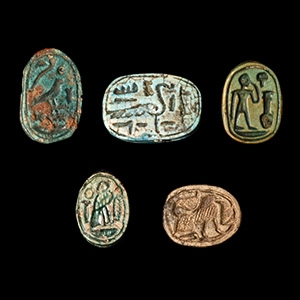
Egyptian Faience Hieroglyphic Scarab Group
Second Intermediate Period, circa 1650 B.C.Sold for (Inc. bp): £910
Comprising: one in white glazed composition with figure of a baboon (the god Thoth) to the underside; four similar in blue-turquoise with hieroglyphs. 12.1 grams total, 15-19 mm
From a family collection formed 1900-1950; by descent circa 1980. -
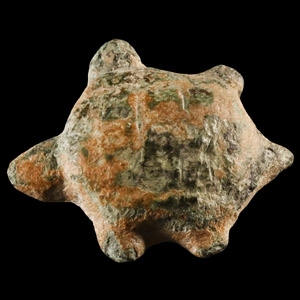
Romano-Egyptian Bronze Tortoise Statuette
Roman Period, 30 B.C.-323 A.D.Sold for (Inc. bp): £98
Modelled in the round with naturalistic detailing. 6.9 grams, 21 mm
‘The Ancient Menagerie Collection’ formerly the property of a Cambridgeshire lady, collected since the 1990s and acquired from auctions and dealers throughout Europe and the USA, now ex London collection.
