
Loading, please wait...

LOT 0521
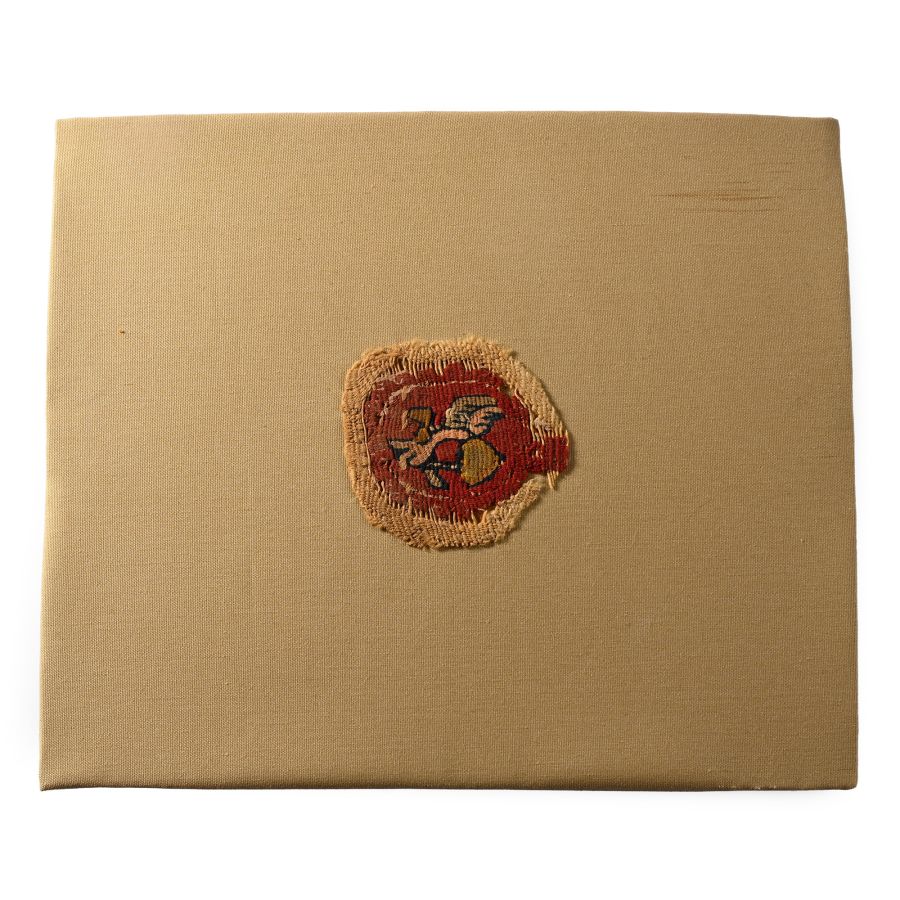
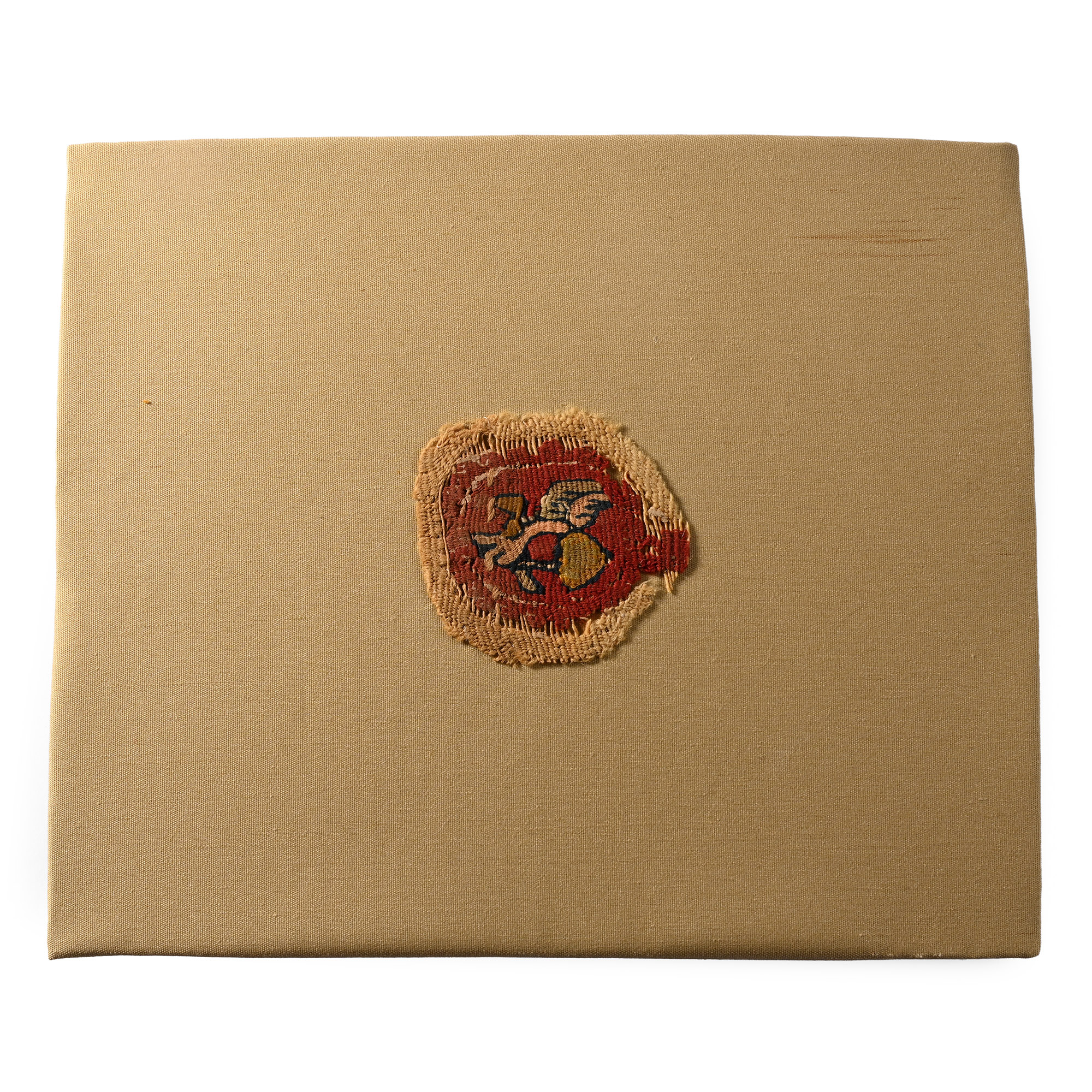
Egyptian Mounted Coptic Textile Terminal Fragment of a Clavus with Putto
CIRCA 6TH CENTURY A.D.
2 in. (26 grams total, 52 mm).
With a putto flying over a red woven surface, in red, green, and yellow wool, S-twist tapestry. [No Reserve]
ProvenanceAcquired 1970s-1996.
Property of a North American collector.
London collection, 2016.
Cf. Calament, F., Durand, M., Antinoé, á la vie, á la mode, visions d’élégance dans les solitudes, Lyon, 2013, cat.68, fig.a, for similar textile.
FootnotesAmong the many fragments of wool tunics, there are several long strips that match to form a nearly full-length central pectoral clavi. They were patterned with a profusion of small figures like this flying putto, kept in one orbiculus (round embroidery), forming the finial of a clavus.
CONDITIONTimeLine Auctions follows a vetting process to ensure the authenticity and legality of all items, reinforcing our commitment to integrity and responsible trading. Each antiquity, antique, and coin lot undergoes thorough examination by a vetting committee of at least ten external specialists, professional trade association members, scientists, and archaeologists: Our Vetting Process
AUCTIONS:
TimeLine is a leading auction house specialising in antiquities, ancient art, collectables, natural history, coins, medals, and books. Our auctions offer museums, collectors, historians, and enthusiasts the opportunity to acquire unique and historically significant pieces.
LOT 0521
Egyptian Mounted Coptic Textile Terminal Fragment of a Clavus with Putto
Estimate £50 - 70€58 - 81 (for guidance only)$68 - 95 (for guidance only)
-
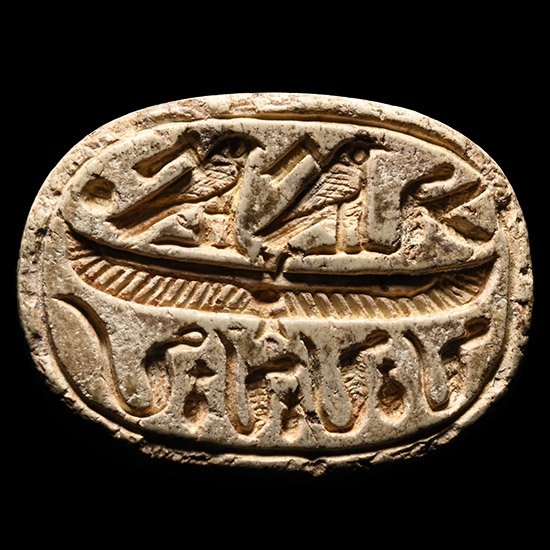
Egyptian Steatite Scarab with Religious Motifs
Late Period, 664-332 B.C.Estimate: £200 - 300 (‡+bp*)
Opening Bid: £100
Plano-convex in section, with a segmented upper face; the underside features an incuse design of a winged scarab, two perching Horus falcons, and a winged uraeus above, with a frieze of four cobras interspersed with three nefer signs below; supplied with an impression. 3.53 grams, 19 mm
Acquired from Derek Content, 24 June 1975. Private collection of Kal Noselson, New York, acquired between 1976 and the late 1990s; thence by descent. Accompanied by an original handwritten invoice from Derek Content, dated 24 June 1975. -
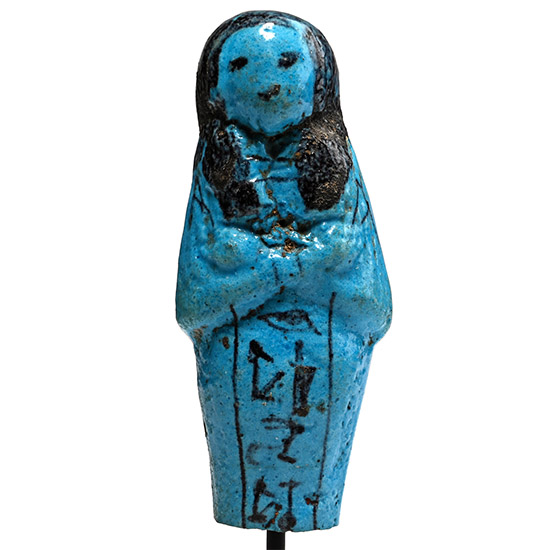
Egyptian Bright Blue Glazed Faience Shabti of Wennefer
New Kingdom, circa 1292-1069 B.C.Estimate: £600 - 800 (+bp*)
Bids: 2 | Current Bid: £10
Upper half of a mummiform figure (feet missing), with a black-painted tripartite wig, crossed arms subtly modelled in relief, and hands holding hoes rendered in black; two globular water pots (?) on the back, with a bold black line beneath; a hieroglyphic text on the lower body, reading: 'The Osiris Wennefer'; mounted on a display stand. 61 grams total, 11 cm including stand
Acquired from the Egyptian Exploration Society, 30th June 1965, for 2 shillings and sixpence. From the private collection of Peter Clayton, FCILIP, Dip, Arch, FSA, FRNS, Hemel Hempstead, Hertfordshire, UK; formed since the late 1950s. Accompanied by an old handwritten information card by Peter Clayton, collection no.118.
Wennefer, a common name, particularly in the New Kingdom and the Third Intermediate Period, which loosely translates as 'the perfect being', was also an epithet of Osiris. -
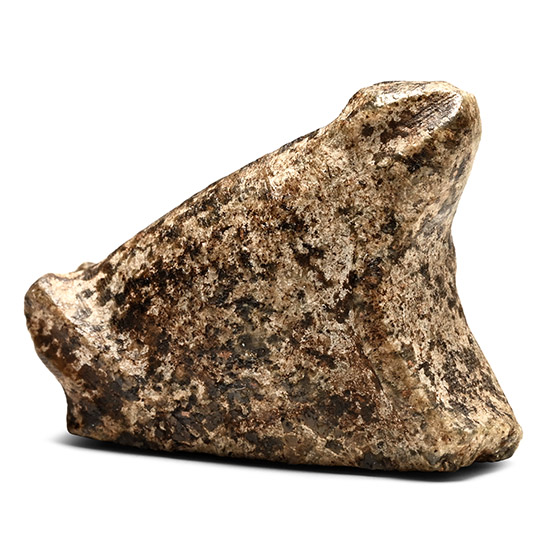
Egyptian Amulet in the Shape of a Squatting Frog
Late Period, 664-332 B.C.Estimate: £500 - 700 (‡+bp*)
Opening Bid: £275
Carved in the round in a squatting pose, with rear legs poised to leap. 9.2 grams, 27 mm
Ex Herbert A. Cahn, Basel, 1970s; thence by descent.
Frog amulets in ancient Egypt symbolised fertility, rebirth, and renewal. Associated with the goddess Heqet, who was linked to childbirth and life-giving forces, they were especially popular for fertility and for protection during pregnancy and labour. Their association with the annual Nile flood, which brought new life to the land, further emphasised their symbolism of revival and abundance.
