
Loading, please wait...
LOT 0516
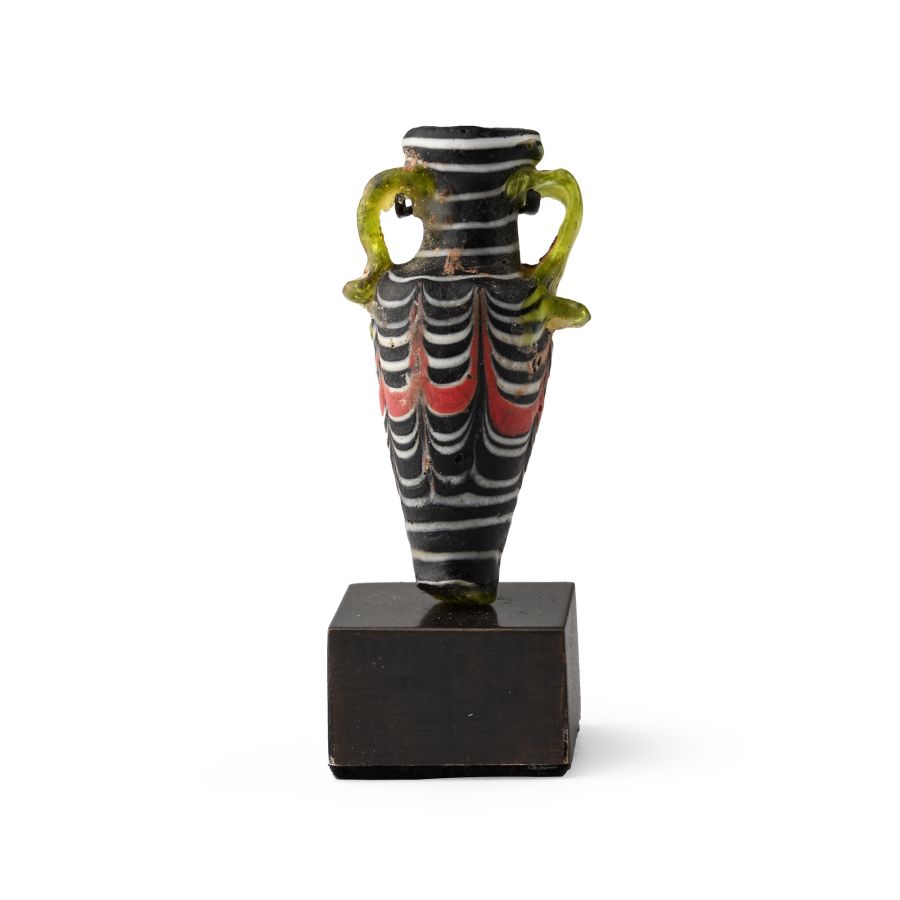
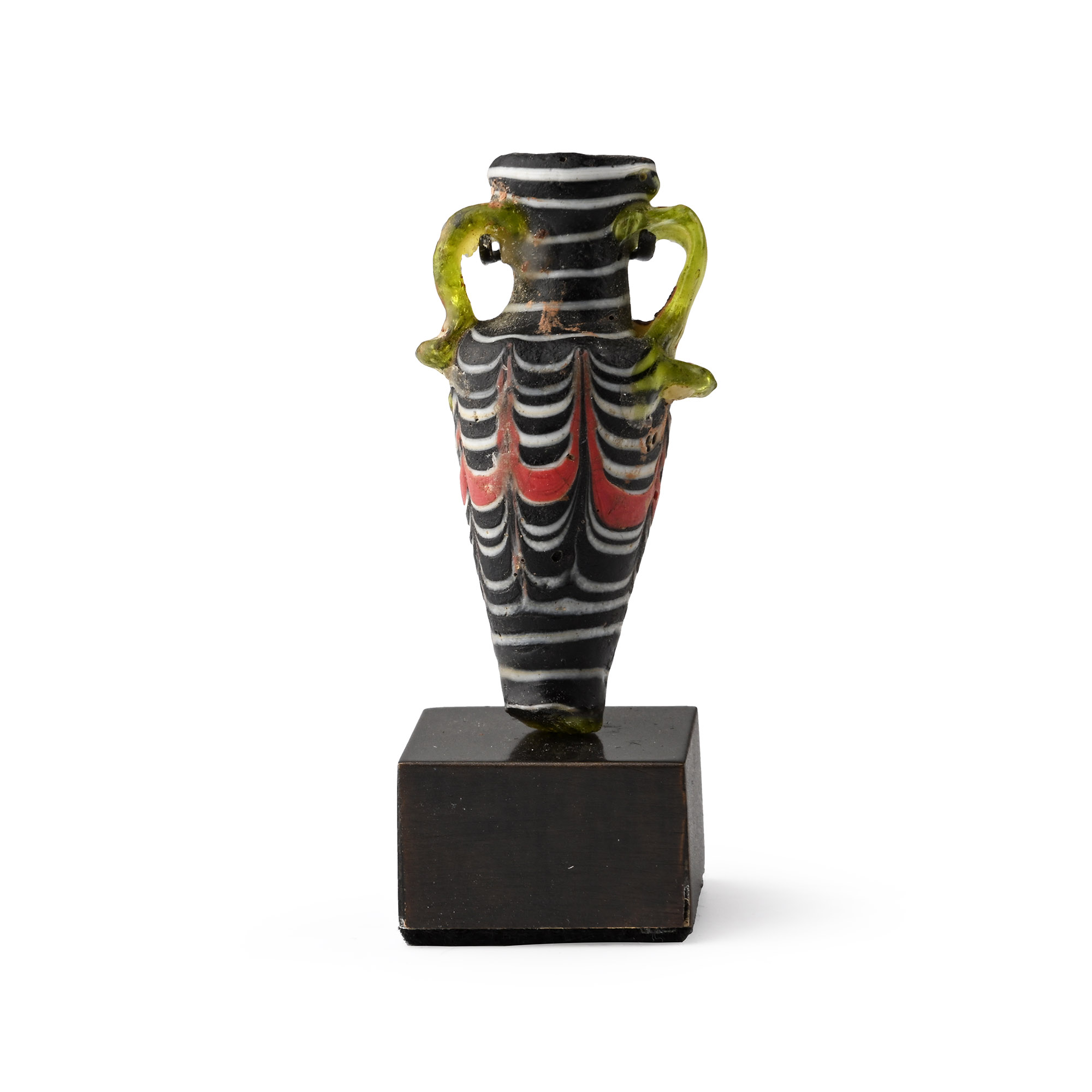
Egyptian Mosaic Glass Amphora
PTOLEMAIC PERIOD, 332-30 B.C.
2 3/8 in. (35 grams total, 62 mm including stand).
Mosaic glass amphora with trumpet mouth, applied lateral loop handles, bands of marvered trails; mounted on a custom-made stand.
ProvenanceEx Mayfair, London, UK, gallery, 1990s-2000s.
From an important collection of glass, the property of a London gentleman.
This lot is accompanied by an illustrated lot declaration signed by the Head of the Antiquities Department, Dr Raffaele D'Amato.
Cf. Hall, E.H., 'A Collection Made of Antique Glass,' The Museum Journal IV, 4 (1913), p.120, fig. 96, for examples of this vessel type.
CONDITIONTimeLine Auctions follows a vetting process to ensure the authenticity and legality of all items, reinforcing our commitment to integrity and responsible trading. Each antiquity, antique, and coin lot undergoes thorough examination by a vetting committee of at least ten external specialists, professional trade association members, scientists, and archaeologists: Our Vetting Process
AUCTIONS:
TimeLine is a leading auction house specialising in antiquities, ancient art, collectables, natural history, coins, medals, and books. Our auctions offer museums, collectors, historians, and enthusiasts the opportunity to acquire unique and historically significant pieces.
-
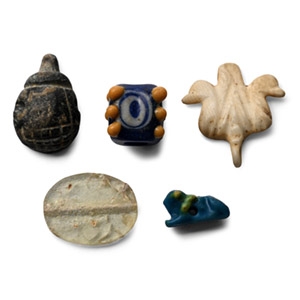
Egyptian Stone and Glass Artefact Group
Late 1st millennium B.C. and laterSold for (Inc. bp): £338
Including cuboid hot-worked eye bead with applied granules to the edges, a recumbent lion, double bird, and stylised hedgehog amulets, and iridescent plaque. 83.7 grams total, 13-22 mm
Acquired on the European art market in the early 2000s. with Galerie Rhéa, Zurich, Switzerland. This lot is accompanied by an illustrated lot declaration signed by the Head of the Antiquities Department, Dr Raffaele D'Amato. -
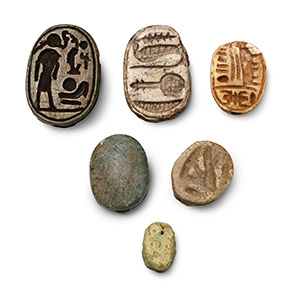
Egyptian Steatite Scarab Collection
New Kingdom-Late Period, 1550-332 B.C.Sold for (Inc. bp): £312
Designs include: a line border encloses the standing figure of a falcon-headed deity wearing a sun disc and uraeus, standing before the hieroglyphs user, Maat, Re, setep, n, Re); a line border enclosing n, cobra, nefer, and neb signs; a line border enclosing numerous hieroglyphs, including those spelling the throne name of Thutmose III (men-kheper-Re); a falcon; and two plain scarabs. 13.18 grams total, 10-21 mm
From a London collection, 2000s, some previously ex Mustaki collection pre 1950. This lot is accompanied by an illustrated lot declaration signed by the Head of the Antiquities Department, Dr Raffaele D'Amato.
The design of the first scarab incorporates Ramesses II’s throne name ‘the justice of Re is powerful, chosen of Re (user-Maat-Re setep-n-Re) -
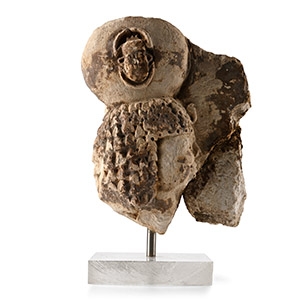
Egyptian Limestone Relief
Late-Ptolemaic Period, 664-30 B.C.Sold for (Inc. bp): £910
Relief fragment comprising: a sun disc with high-relief scarab motif to the centre; below this, a head in profile wearing a tiered wig with uraeus to the brow; mounted on a custom-made stand. 1.61 kg total, 22.2 cm including stand
Collection of Mr C., Geneva, Switzerland (1936-2016), assembled between 1985 and 2010. This lot is accompanied by an illustrated lot declaration signed by the Head of the Antiquities Department, Dr Raffaele D'Amato.
