
Loading, please wait...


LOT 0512
Egyptian Mixed Scarab Collection
2ND-1ST MILLENNIUM B.C. AND LATER
5/8 - 1 1/8 in. (22.75 grams total, 15-28 mm).
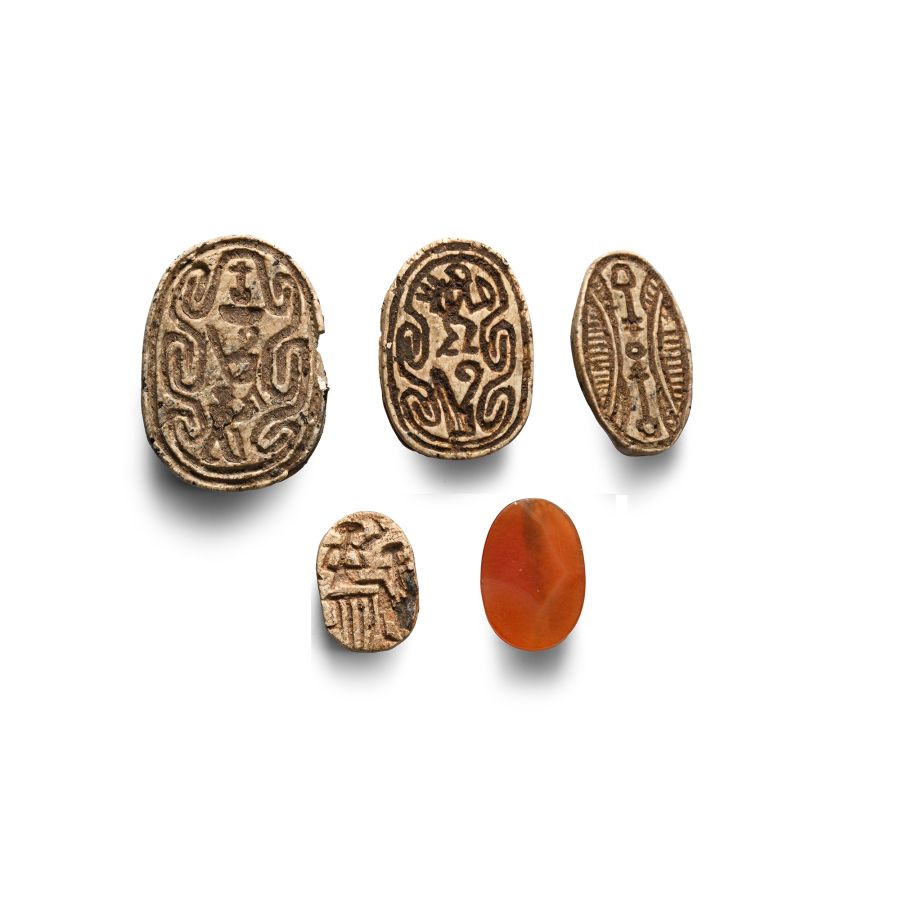
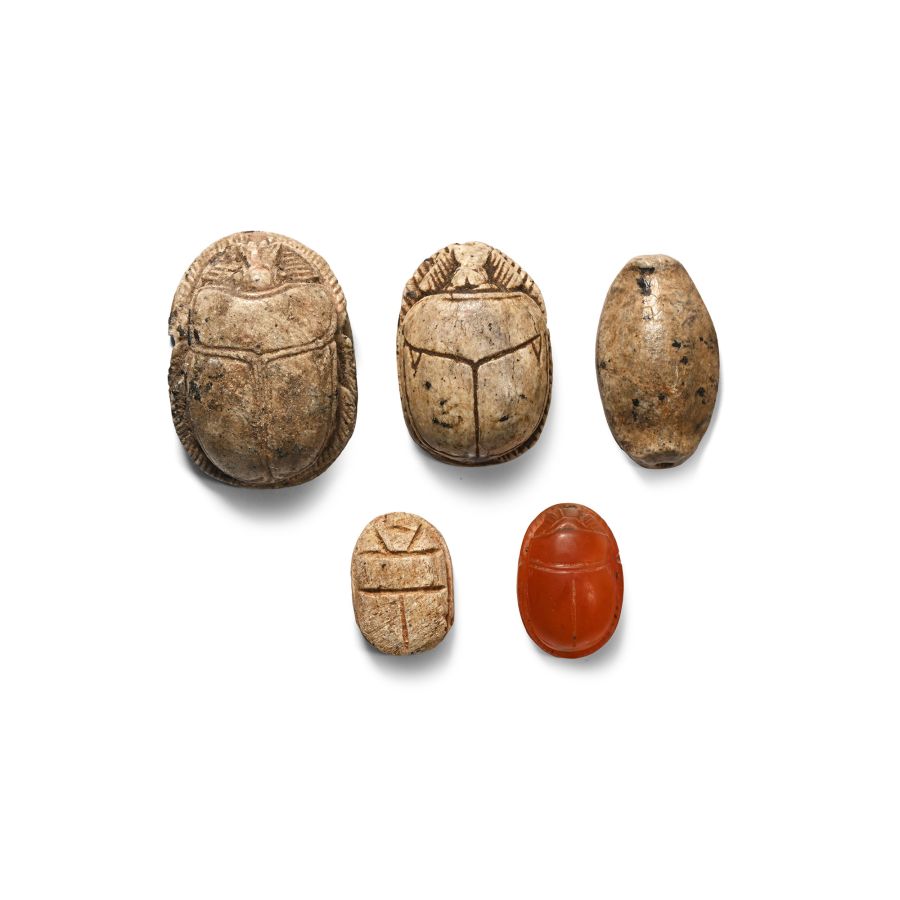
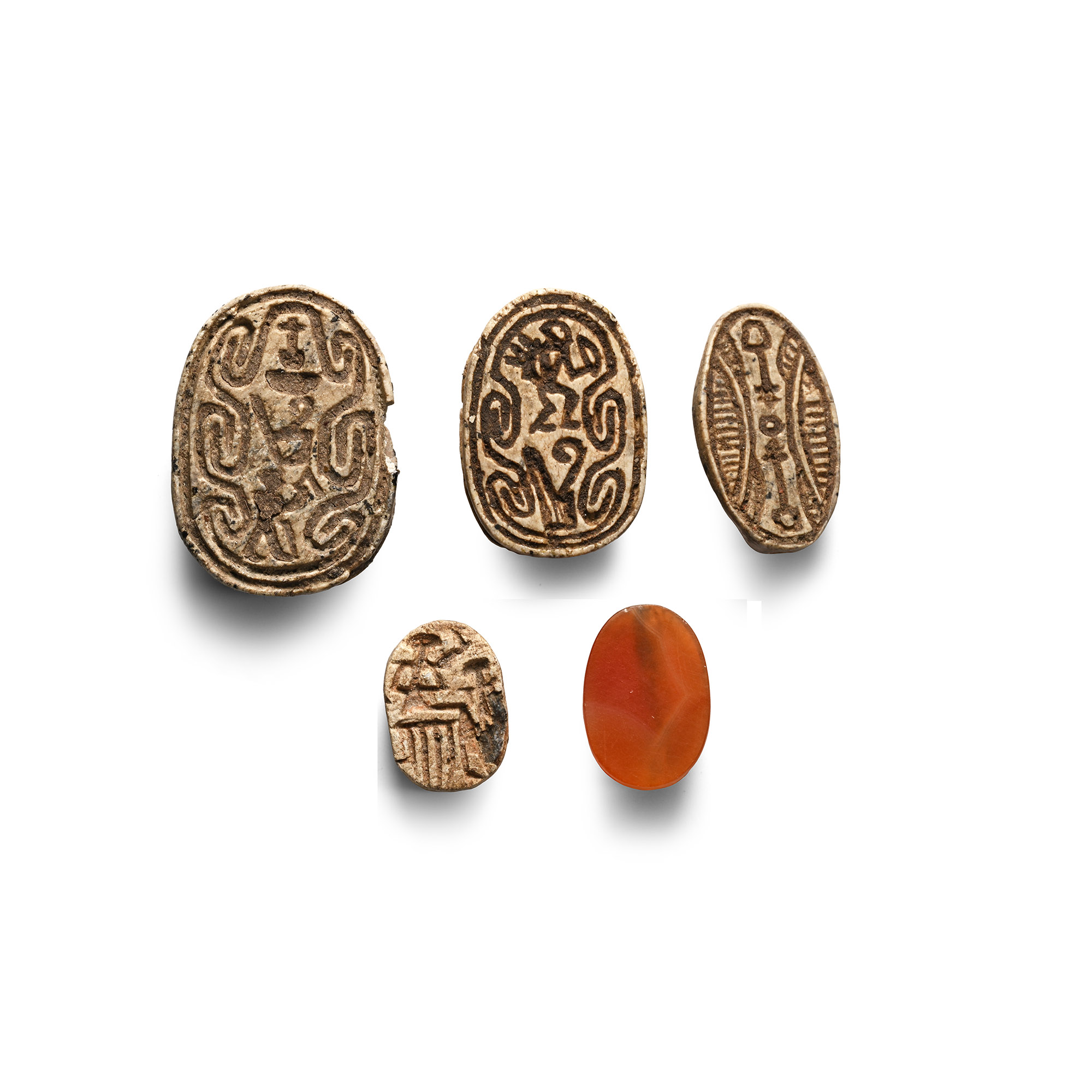
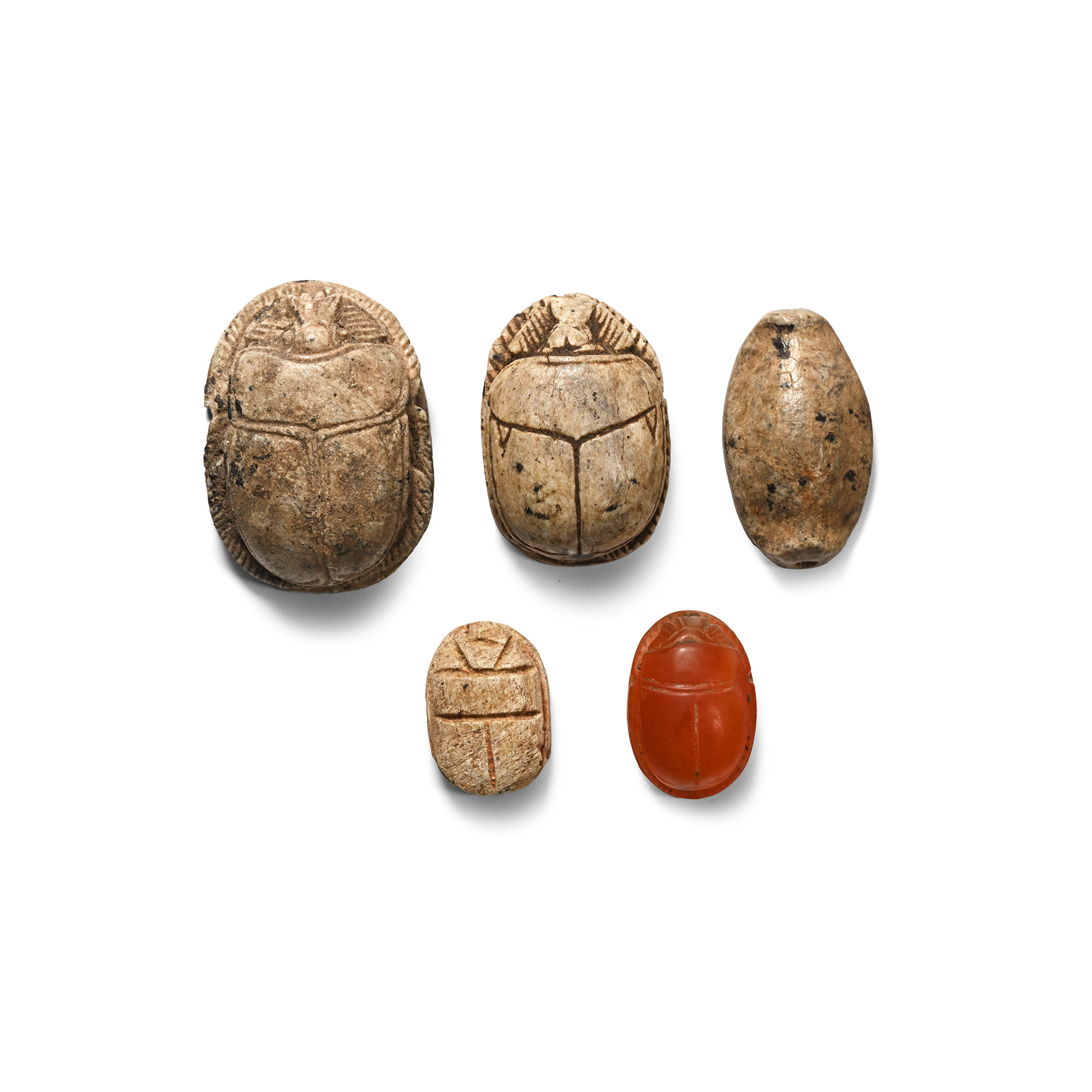
Comprising three faience scarabs with detailed bodies and decorated undersides, featuring: a scroll border with central design consisting of a nefer, neb, Red Crown, and a striding human figure holding a flail; a scroll border with a central figure of a bowman with a Red Crown beneath; a seated figure before an offering table(?); an oval scaraboid featuring a central sun disc with opposed nefer signs flanked by hatched panels; and a plain carnelian scarab. [5]
ProvenanceFrom the collection of a gentleman, acquired on the London art market in the 1990s.
This lot is accompanied by an illustrated lot declaration signed by the Head of the Antiquities Department, Dr Raffaele D'Amato.
TimeLine Auctions follows a vetting process to ensure the authenticity and legality of all items, reinforcing our commitment to integrity and responsible trading. Each antiquity, antique, and coin lot undergoes thorough examination by a vetting committee of at least ten external specialists, professional trade association members, scientists, and archaeologists: Our Vetting Process
AUCTIONS:
TimeLine is a leading auction house specialising in antiquities, ancient art, collectables, natural history, coins, medals, and books. Our auctions offer museums, collectors, historians, and enthusiasts the opportunity to acquire unique and historically significant pieces.
LOT 0512
Egyptian Mixed Scarab Collection
Estimate £400 - 600€460 - 700 (for guidance only)$540 - 810 (for guidance only)
Opening Bid
£200 (EUR 232; USD 270) +BP*
-
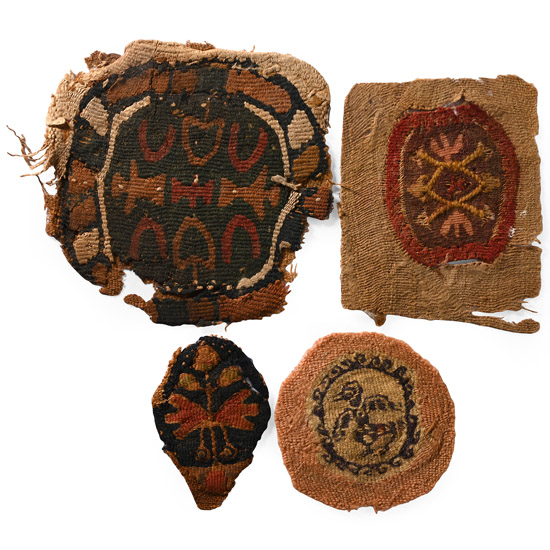
Egyptian Coptic Tunic Textile Fragments of Orbiculi with Vegetation, Animals and Geometric Ornament
Circa 6th-7th century A.D.Estimate: £80 - 100 (+bp*)
Opening Bid: £5
Featuring four medallions (orbiculi) in red, green, yellow, and dark blue wool, three decorated with floral and geometric motifs, the fourth featuring an eaglet figure with a meander border; tapestry weave, S-twist. 11.07 grams total, 6.3-10.7 cm
Acquired 1970s-1996. Property of a North American collector. London collection, 2016.
The orbiculi are realised in the tapestry technique. They were part of the decoration of a tunic, and the presence of the Imperial eagle, which is not a common pattern, could be related to a military tunic or to a tunic of an Imperial functionary. -
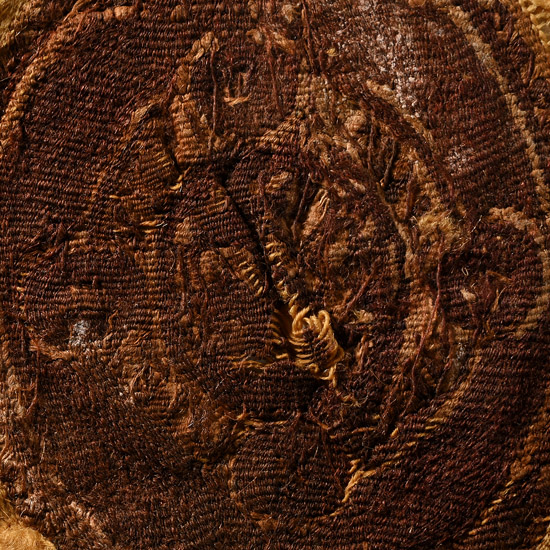
Egyptian Coptic Textile Fragment of an Orbiculus from a Tunic
Circa 4th century A.D.Estimate: £30 - 40 (+bp*)
Bids: 1 | Current Bid: £5
In purple wool and coarse linen, on a brown linen background, S-torsion, embroidered with vegetal ornaments, and the borders decorated with meanders. 6.38 grams, 10 x 9.8 cm
Acquired 1970s-1996. Property of a North American collector. London collection, 2016.
In the Late Roman Period, round orbiculi decorated the shoulders and the lower part of tunics and kamisia (inner tunics). These fabrics were of great decorative finesse, displaying an unusual and extremely well-preserved colour palette. When the tunic was removed from use, these embroideries could be recycled and patched onto another garment. -
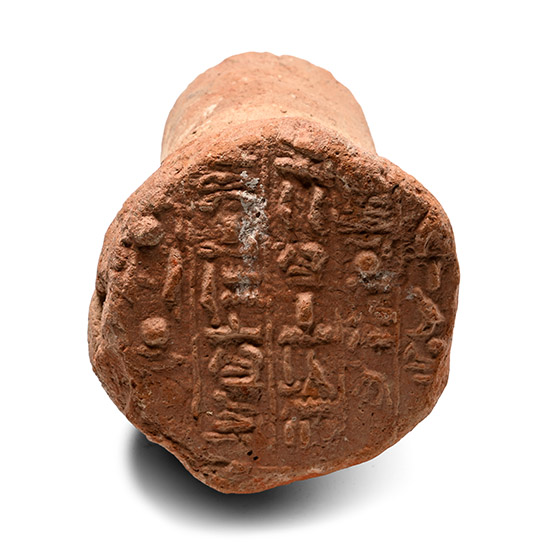
Egyptian Terracotta Funerary Cone of Amunhotep, called Huy
New Kingdom, 18th Dynasty, circa 1350 B.C.Estimate: £300 - 400 (+bp*)
Bids: 4 | Current Bid: £85
Front portion of a tapering funerary cone, with the circular flat end impressed with five columns of hieroglyphic text, reading: 'Honoured before Osiris, hereditary prince, Amunhotep, called Huy, this famous person in the entire land, born of the dignitary Hepu'. 220 grams, 71 mm
Acquired from Abdoul Rassoul on the West Bank at Luxor, 1974-1980 when a guest lecturer. From the private collection of Peter Clayton, FCILIP, Dip, Arch, FSA, FRNS, Hemel Hempstead, Hertfordshire, UK; formed since the late 1950s.
Although funerary cones of Amenhotep have been in circulation for a long time, his Theban tomb was not documented until 1996, when the German Egyptologist Friederike Kampp-Seyfried recorded it and assigned it the number 396.
