
Loading, please wait...
LOT 0505
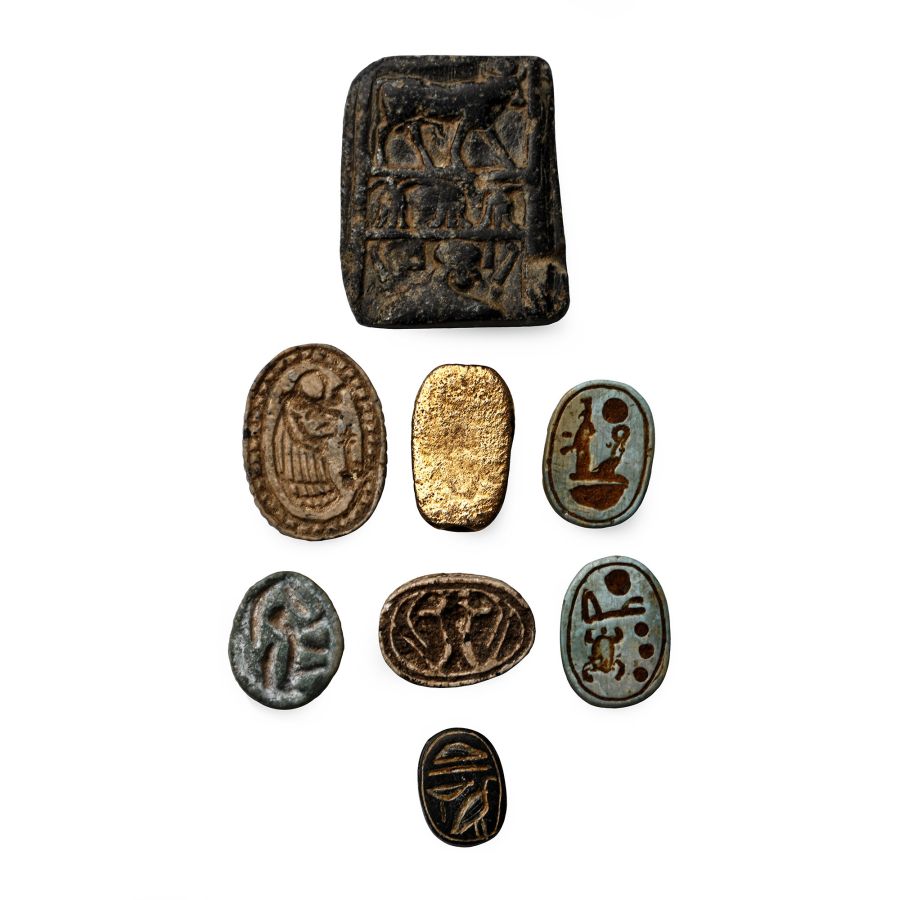
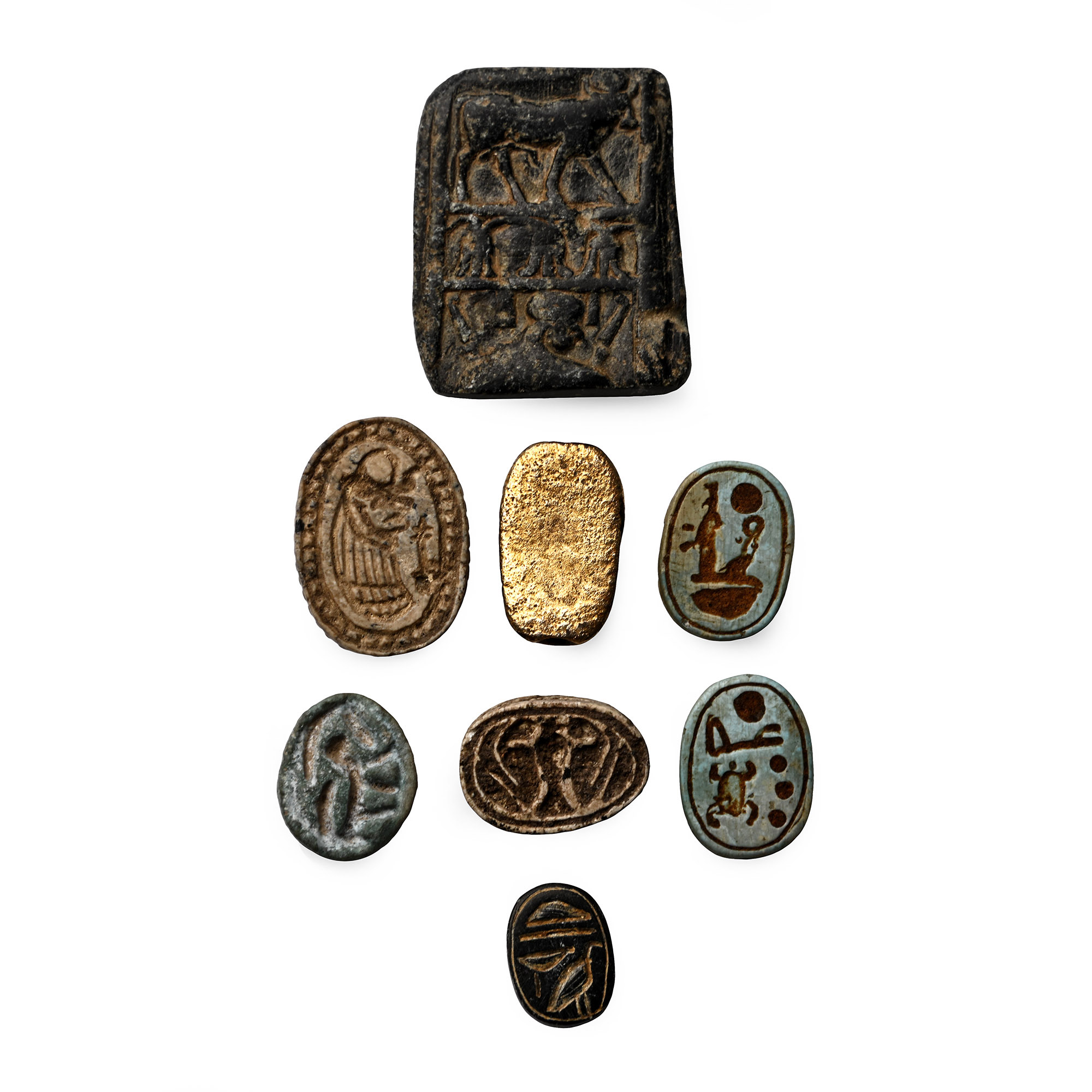
Egyptian Mixed Scarab Collection
2ND-1ST MILLENNIUM B.C. AND LATER
1/2 - 1 3/8 in. (36.9 grams total, 14-35 mm).
Stone plaque with raised relief depictions of the Apis bull and a falcon deity beneath; a mixed group of scarabs and scaraboids, most bearing text or motifs on the underside, including: a rope border enclosing the head of a lion wearing a sun disc and uraeus; a plain gold scaraboid; a line border enclosing the throne name of Amenhotep III (neb-maat-Re); an indeterminate standing figure; a central hes- vase flanked by rearing cobras; a group of hieroglyphs, perhaps a slightly incorrect spelling of the throne name of Amenhotep II (akheperu-Re); and a group of four hieroglyphs. [8]
ProvenanceFrom the collection of a gentleman, acquired on the London art market in the 1990s.
CONDITIONTimeLine Auctions follows a vetting process to ensure the authenticity and legality of all items, reinforcing our commitment to integrity and responsible trading. Each antiquity, antique, and coin lot undergoes thorough examination by a vetting committee of at least ten external specialists, professional trade association members, scientists, and archaeologists: Our Vetting Process
AUCTIONS:
TimeLine is a leading auction house specialising in antiquities, ancient art, collectables, natural history, coins, medals, and books. Our auctions offer museums, collectors, historians, and enthusiasts the opportunity to acquire unique and historically significant pieces.
-
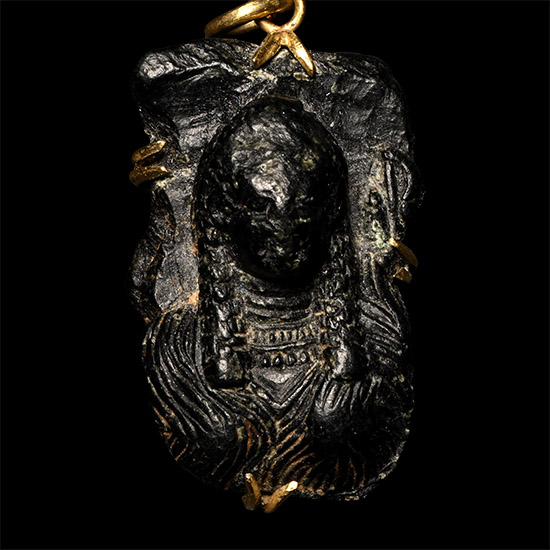
Egyptian Steatite Bust in a Gold Pendant
Ptolemaic Period, 332-30 B.C.Estimate: £800 - 1,000 (+bp*)
Opening Bid: £400
Fragment of a carved panel or vessel depicting a female bust - possibly a queen or Isis - modelled in half-round relief, wearing a loosely draped tunic, a tiered wesekh collar, and a heavy curled, tripartite wig; reverse with lotus flower ropework and other ornamentation; mounted in a later gold suspension frame. 8.75 grams, 38 mm
Private collection, Southern France, 1970s. Acquired on the English art market. -
.jpg)
Egyptian Faience Menat Amulet
Late Period, 664-332 B.C.Sold for (Inc. bp): £286
Amuletic pendant formed as keyhole-shaped plaque with decorative column to one face, ribbed suspension loop to the top. 1.52 grams, 25 mm
Ex early 20th century collection, London, UK.
The menat was a counterpoise that hung at the back of a heavy ornamental collar and was closely associated with the goddess Hathor. Amulets representing the counterpoise were thought to bring good luck, protect against evil spirits, and safeguard the wearer in the afterlife. Their Hathoric connection symbolised fertility and good health for women while representing virility for men. -
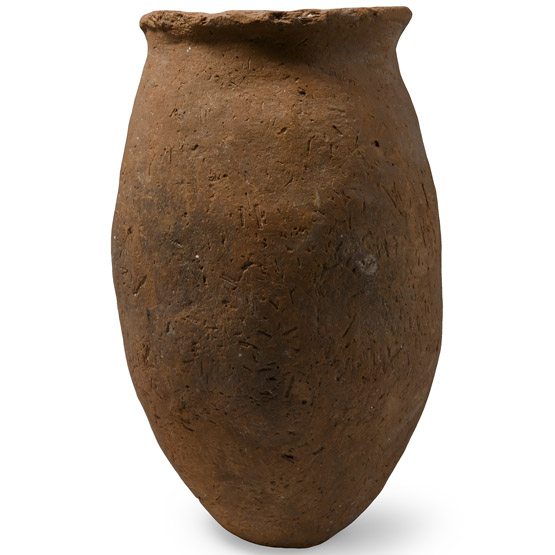
Egyptian Predynastic Terracotta Jar
3500-3100 B.C.Sold for (Inc. bp): £234
Piriform in profile with flared rim; marked with collector's reference to base '2348'. 1.14 kg, 21 cm
Private collection, London, UK. Acquired on the UK art market, 2003.
