
Loading, please wait...
LOT 0459
Egyptian Mixed Scarab Collection
2ND-1ST MILLENNIUM B.C. AND LATER
5/8 - 1 1/8 in. (22.75 grams total, 15-28 mm).
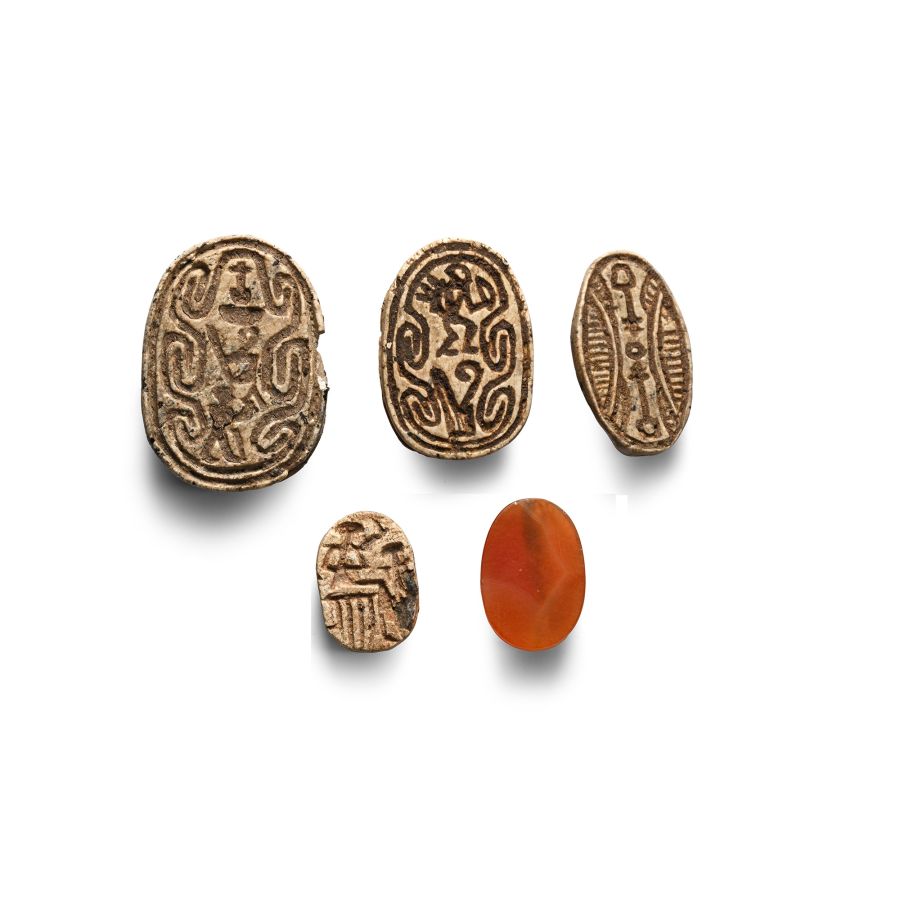
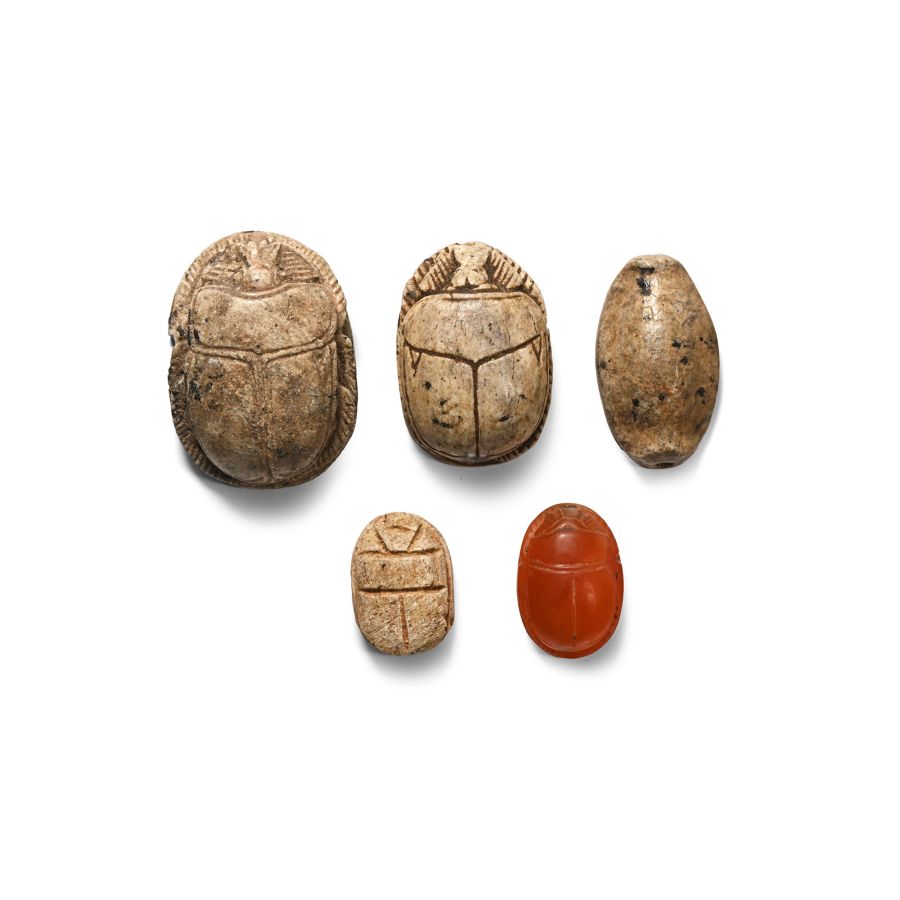
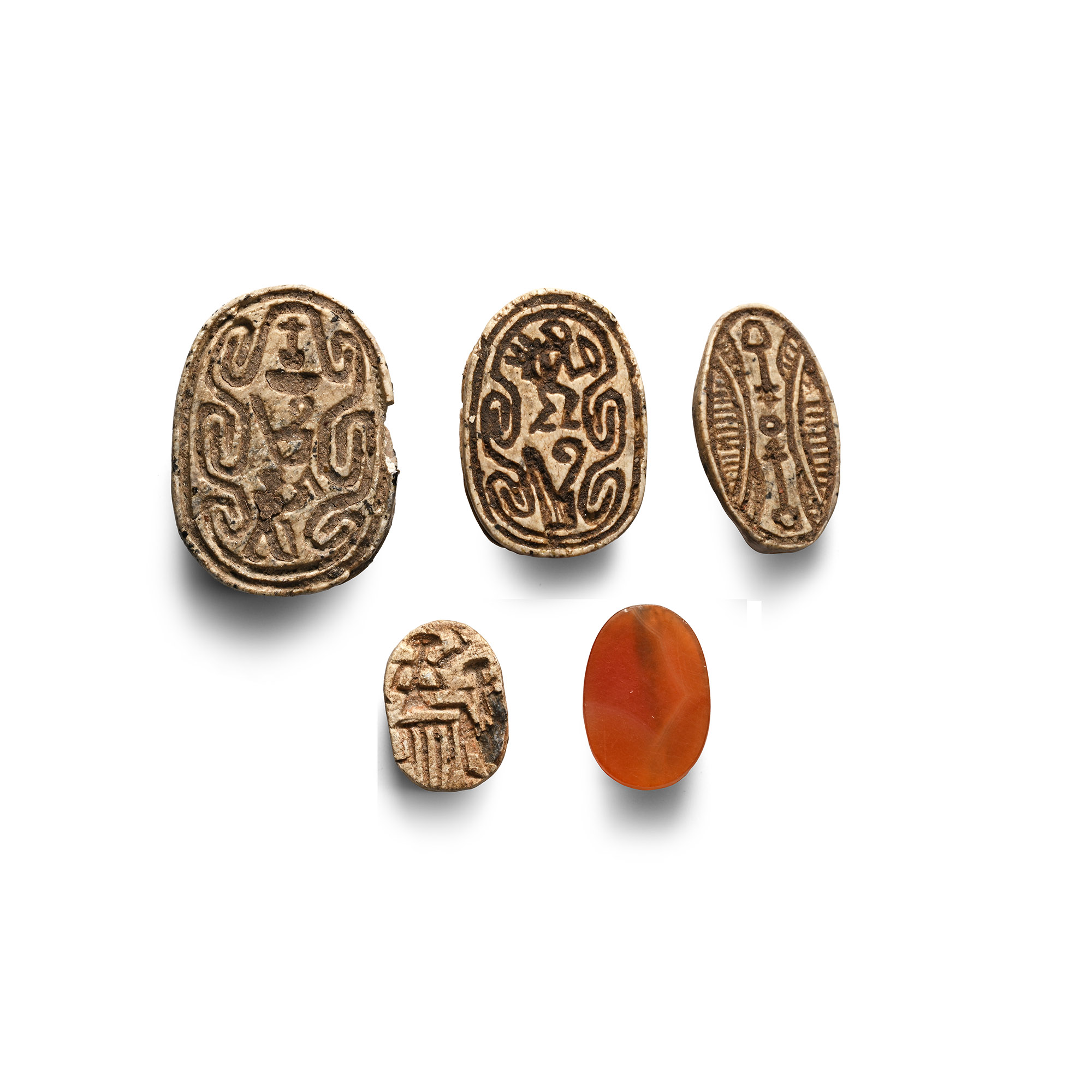
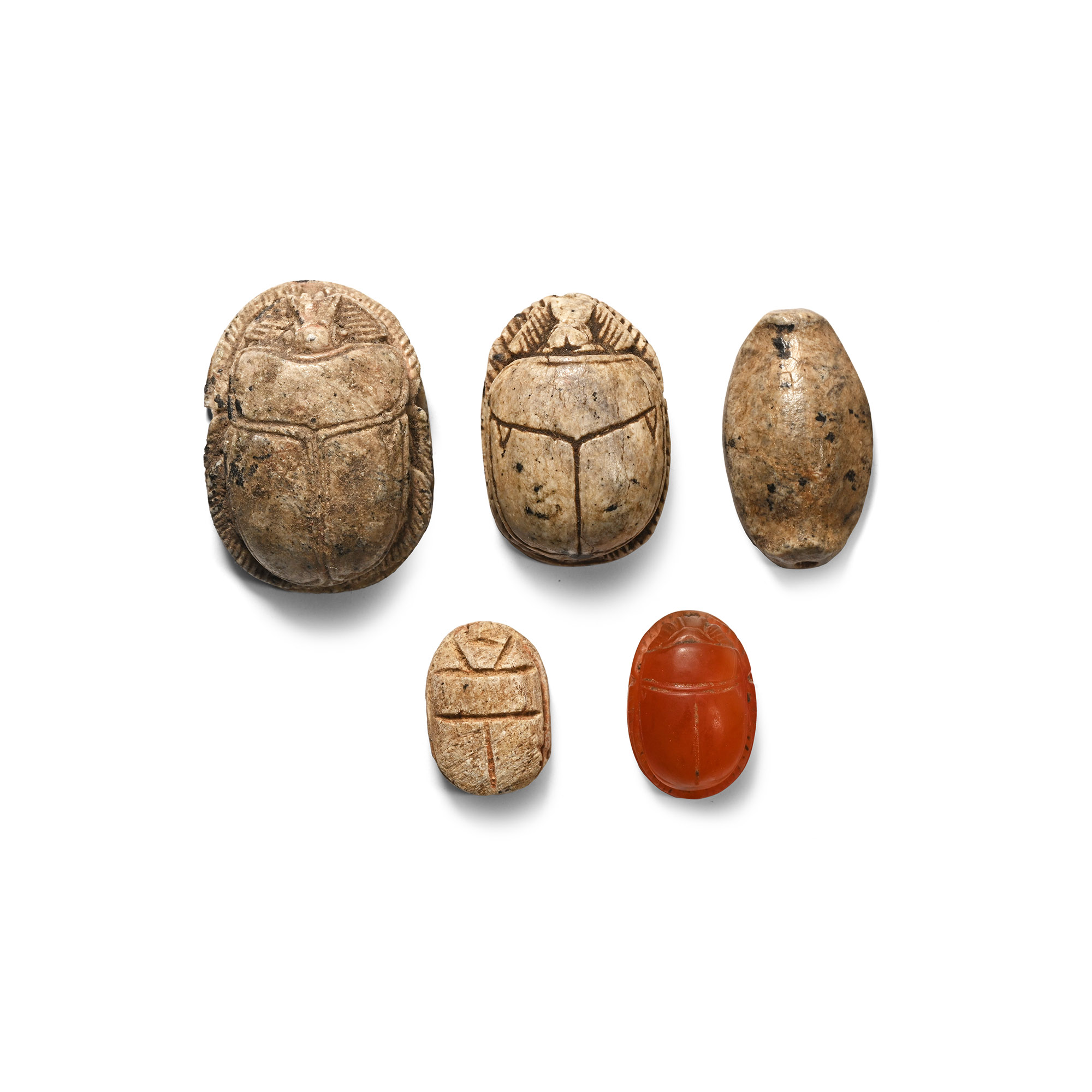
Comprising three faience scarabs with detailed bodies and decorated undersides, featuring: a scroll border with central design consisting of a nefer, neb, Red Crown, and a striding human figure holding a flail; a scroll border with a central figure of a bowman with a Red Crown beneath; a seated figure before an offering table(?); an oval scaraboid featuring a central sun disc with opposed nefer signs flanked by hatched panels; and a plain carnelian scarab. [5]
ProvenanceFrom the collection of a gentleman, acquired on the London art market in the 1990s.
This lot is accompanied by an illustrated lot declaration signed by the Head of the Antiquities Department, Dr Raffaele D'Amato.
TimeLine Auctions follows a vetting process to ensure the authenticity and legality of all items, reinforcing our commitment to integrity and responsible trading. Each antiquity, antique, and coin lot undergoes thorough examination by a vetting committee of at least ten external specialists, professional trade association members, scientists, and archaeologists: Our Vetting Process
AUCTIONS:
TimeLine is a leading auction house specialising in antiquities, ancient art, collectables, natural history, coins, medals, and books. Our auctions offer museums, collectors, historians, and enthusiasts the opportunity to acquire unique and historically significant pieces.
-
Lead-Glazed Ribbed Glass Amphora
Parthian, 3rd-1st century B.C.Sold for (Inc. bp): £117
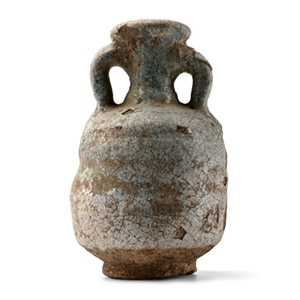
Squat in profile with ribbed sidewall and scooped foot, trumpet-shaped neck and mouth flanked by two thick loop handles. 104 grams, 95 mm
Ex London, UK, collection, 1990s. This lot is accompanied by an illustrated lot declaration signed by the Head of the Antiquities Department, Dr Raffaele D'Amato. -
Egyptian Green Glass Winged Goddess Pectoral
Ptolemaic Period, 300-30 B.C.Sold for (Inc. bp): £1,950
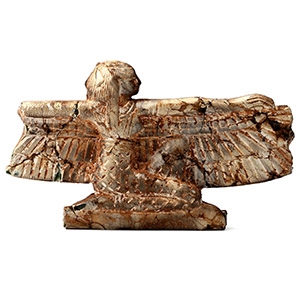
A fragmentary rectangular-section figure of a kneeling goddess with outstretched wings; accurate detailing to the goddess, wearing a tripartite wig with a seshed headband tied at the back, a menat broad collar and a tightly wrapped sheath held up by two straps leaving the breasts exposed, the dress decorated with a lozenge pattern possibly representing beadwork. 15.3 grams, 54 mm
Swiss private collection, 1970s. Galerie Nefer, Zurich, early 1990s. with Christie's New York, 9 December 2008, no.39. Accompanied by copies of the relevant Christie's catalogue pages. This lot has been checked against the Interpol Database of stolen works of art and is accompanied by a search certificate number no.12843-241338. This lot has been cleared against the Art Loss Register database, and is accompanied by an illustrated lot declaration signed by the Head of the Antiquities Department, Dr Raffaele D'Amato.
Although it is not possible to spot holes in the upper and lower edges, this figure was probably a pectoral or chest ornament with an apotropaic function that would have been attached to the wrapping of the mummy. -
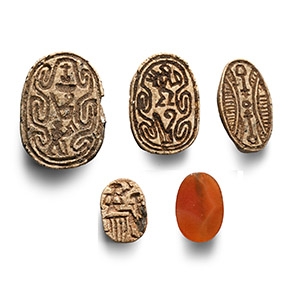
Egyptian Mixed Scarab Collection
2nd-1st millennium B.C. and laterSold for (Inc. bp): £468
Comprising three faience scarabs with detailed bodies and decorated undersides, featuring: a scroll border with central design consisting of a nefer, neb, Red Crown, and a striding human figure holding a flail; a scroll border with a central figure of a bowman with a Red Crown beneath; a seated figure before an offering table(?); an oval scaraboid featuring a central sun disc with opposed nefer signs flanked by hatched panels; and a plain carnelian scarab. 22.75 grams total, 15-28 mm
From the collection of a gentleman, acquired on the London art market in the 1990s. This lot is accompanied by an illustrated lot declaration signed by the Head of the Antiquities Department, Dr Raffaele D'Amato.
