
Loading, please wait...
LOT 0524
Egyptian Mixed Scarab Collection
2ND-1ST MILLENNIUM B.C. AND LATER
1/2 - 1 3/8 in. (36.9 grams total, 14-35 mm).
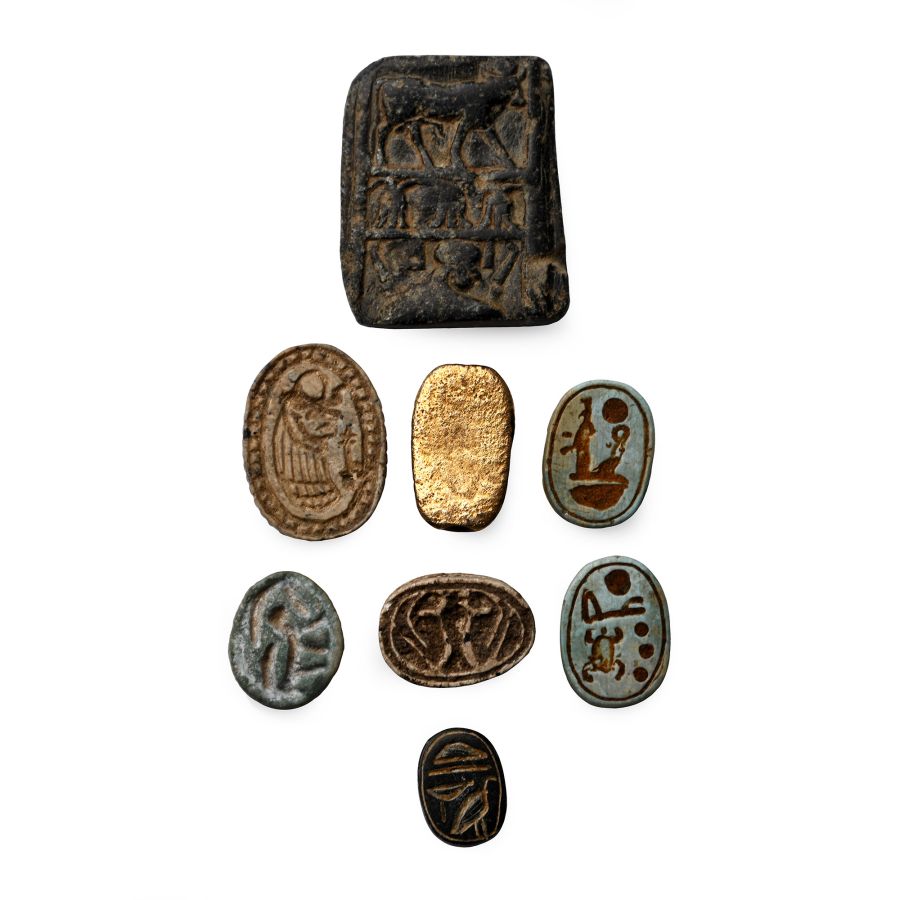
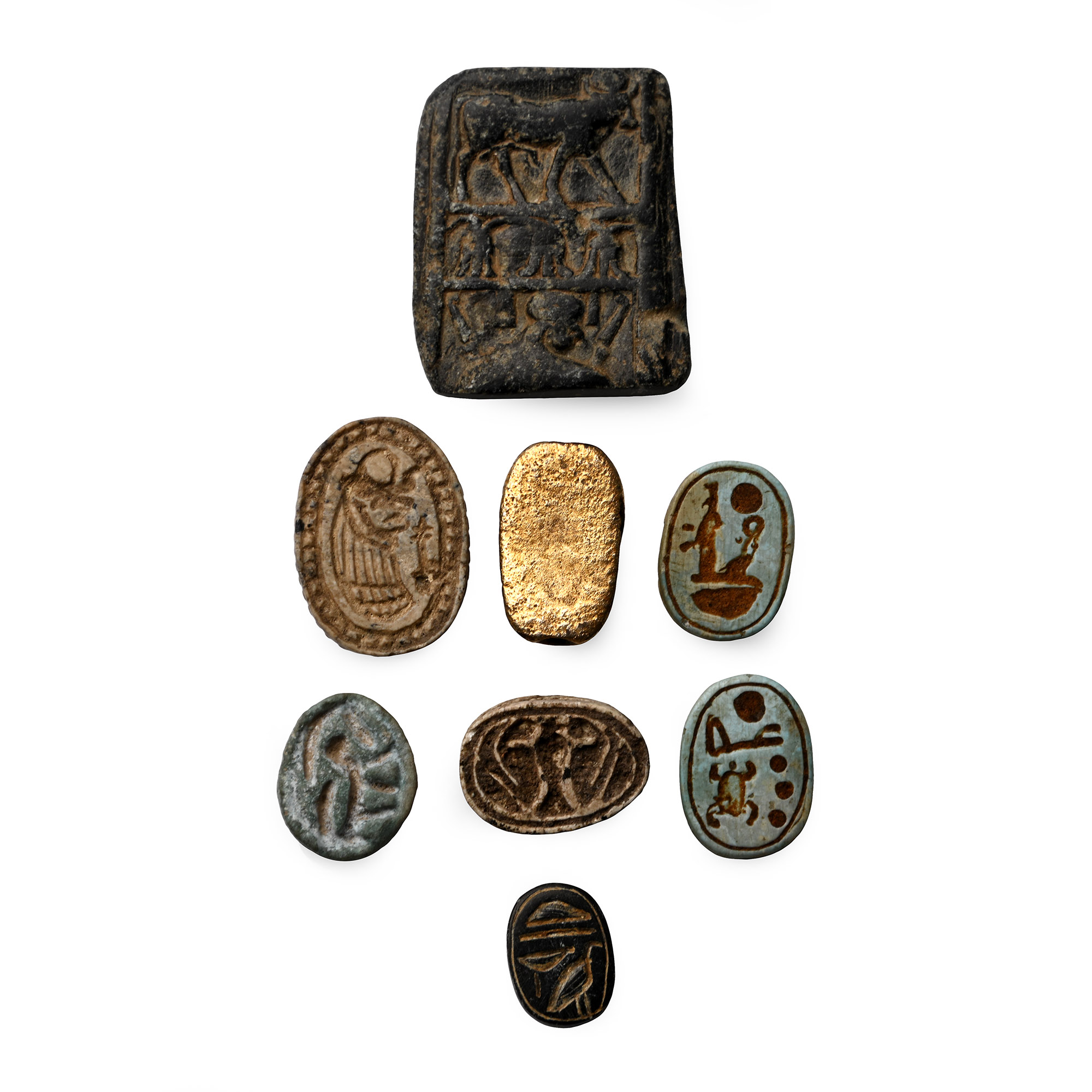
Stone plaque with raised relief depictions of the Apis bull and a falcon deity beneath; a mixed group of scarabs and scaraboids, most bearing text or motifs on the underside, including: a rope border enclosing the head of a lion wearing a sun disc and uraeus; a plain gold scaraboid; a line border enclosing the throne name of Amenhotep III (neb-maat-Re); an indeterminate standing figure; a central hes- vase flanked by rearing cobras; a group of hieroglyphs, perhaps a slightly incorrect spelling of the throne name of Amenhotep II (akheperu-Re); and a group of four hieroglyphs. [8]
ProvenanceFrom the collection of a gentleman, acquired on the London art market in the 1990s.
This lot is accompanied by an illustrated lot declaration signed by the Head of the Antiquities Department, Dr Raffaele D'Amato.
TimeLine Auctions follows a vetting process to ensure the authenticity and legality of all items, reinforcing our commitment to integrity and responsible trading. Each antiquity, antique, and coin lot undergoes thorough examination by a vetting committee of at least ten external specialists, professional trade association members, scientists, and archaeologists: Our Vetting Process
AUCTIONS:
TimeLine is a leading auction house specialising in antiquities, ancient art, collectables, natural history, coins, medals, and books. Our auctions offer museums, collectors, historians, and enthusiasts the opportunity to acquire unique and historically significant pieces.
LOT 0524
Egyptian Mixed Scarab Collection
Estimate £600 - 800€700 - 930 (for guidance only)$810 - 1,080 (for guidance only)
-
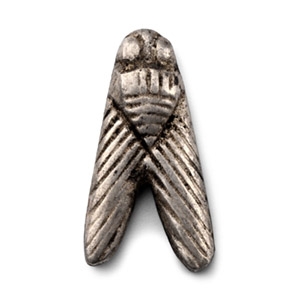
Egyptian Silver Fly Amulet
Late-Ptolemaic Period, 664-30 B.C.Sold for (Inc. bp): £130
With detailing to wings and eyes, loop for suspension above the head. 1.05 grams, 17 mm
Ex London, UK, gentleman 1980-1990s. This lot is accompanied by an illustrated lot declaration signed by the Head of the Antiquities Department, Dr Raffaele D'Amato.
Considering that Egyptian artists often depicted fly whisks in the hands of pharaohs and high officials, one might assume that flies were merely a nuisance. However, the Egyptians held flies in high regard for their speed, quick reactions, and persistence. Small fly amulets first appeared in burials during the Naqada II Period, around 3200 B.C. These amulets gained popularity, and the materials used to make them varied during the New Kingdom. They were crafted from various materials such as gold, silver, lapis lazuli, carnelian, amethyst, faience, and bone. These amulets were believed to protect against insect bites and to ward off troublesome flying creatures through apotropaic magic. Some believe they may have even symbolised the fly’s fecundity. Additionally, pharaohs would bestow gold fly-shaped pendants as military awards to honour the bravery and persistence of soldiers in battle. -
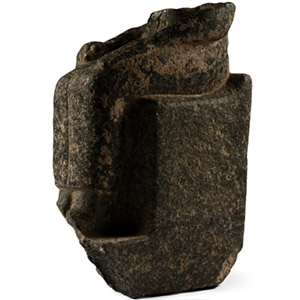
Egyptian Granite Seated Figure
Late Period, 664-332 B.C.Estimate: £3,500 - 4,500 (‡+bp*)
Opening Bid: £1,889
Fragment of a statue of an official, comprising the torso and legs clad in an ankle-length robe and seated on a rectangular-section seat with stepped base and short, curved backrest and rear dorsal pillar; the left hand carved with the palm resting along the thigh; the right hand similarly placed but with the hand gripping a folded piece of cloth of which the ends are draped over the lower thigh above the knee; traces of an old label to reverse. 4.1 kg, 18.7 cm
Private collection, Europe. with Bonhams & Brooks, 8th November 2001, no.265. Private collection, Europe. Accompanied by copies of the relevant Bonhams & Brooks catalogue pages. This lot has been checked against the Interpol Database of stolen works of art and is accompanied by a search certificate number no.12584-232097. This lot has been cleared against the Art Loss Register database, and is accompanied by an illustrated lot declaration signed by the Head of the Antiquities Department, Dr Raffaele D'Amato.
The official would have been shown wearing a longer cloak-like garment rather than a waist-height kilt, as the line of the folded edge is visible above where a waistband would typically be. -
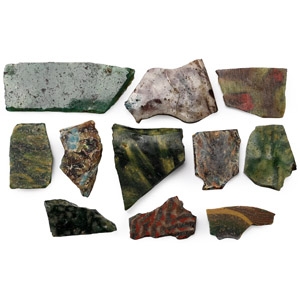
Romano-Egyptian Mosaic Glass Fragment Group
Roman Period, 30 B.C.-323 A.D.Estimate: £100 - 140 (+bp*)
Opening Bid: £50
Irregular plate fragments with banded, rosette and other designs. 34.6 grams total, 21-48 mm
Ex Gallery Mikazaki, prior to 1994. From the collection of a London, UK, gentleman. This lot is accompanied by an illustrated lot declaration signed by the Head of the Antiquities Department, Dr Raffaele D'Amato.
