
Loading, please wait...
LOT 0421
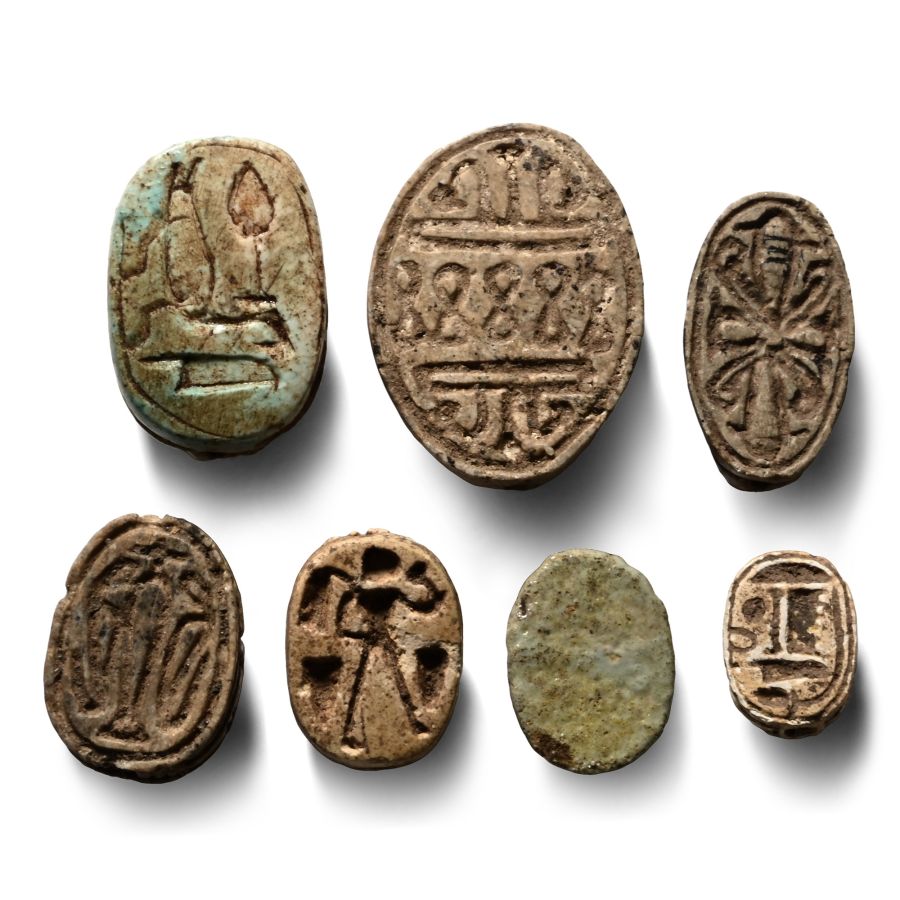
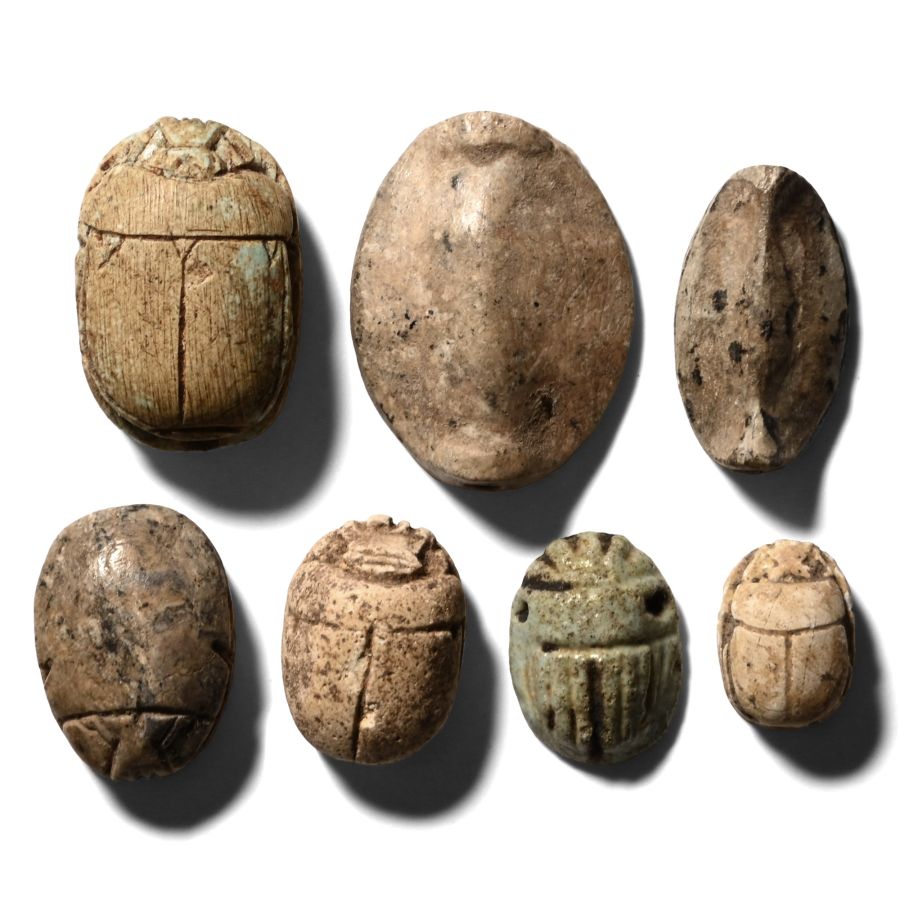
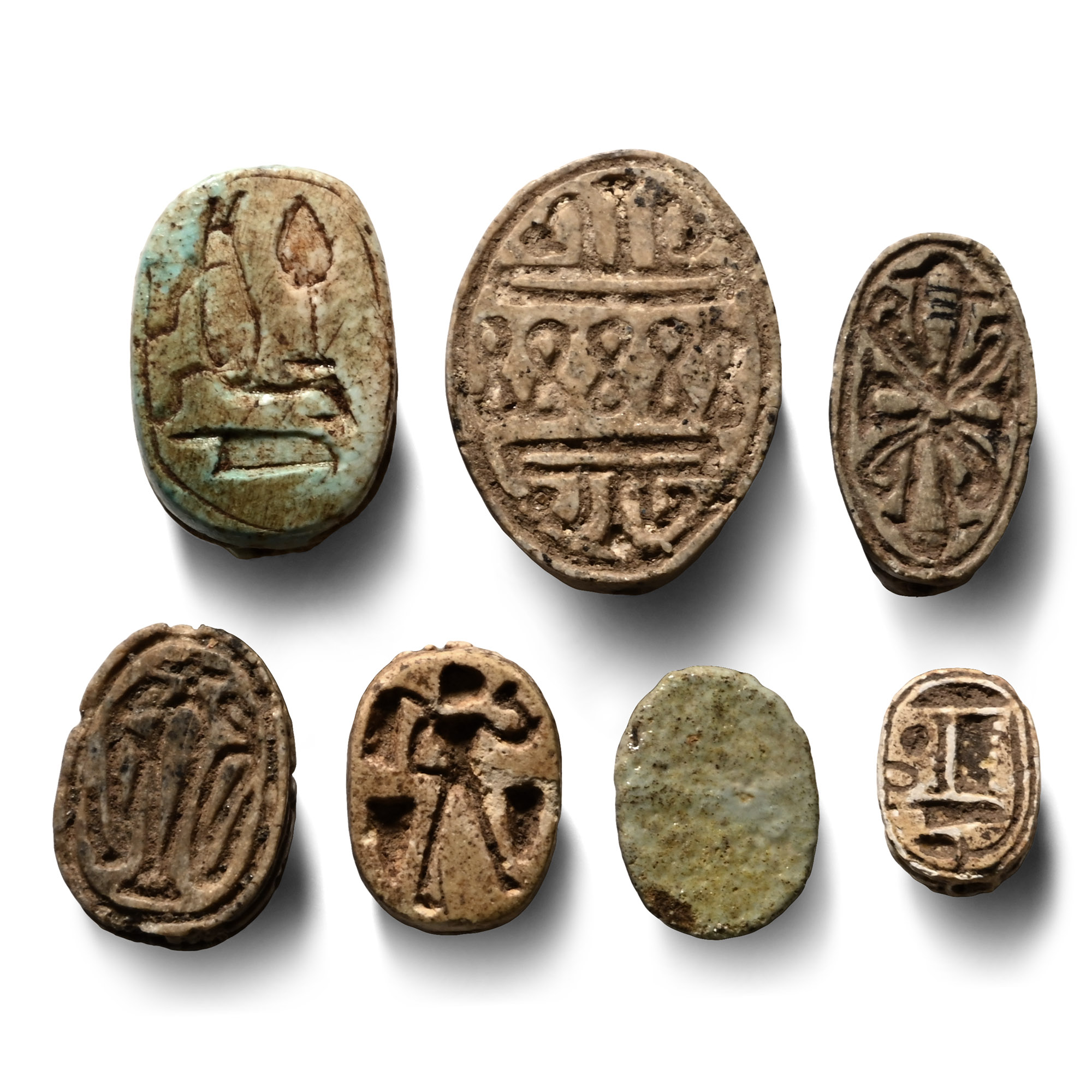
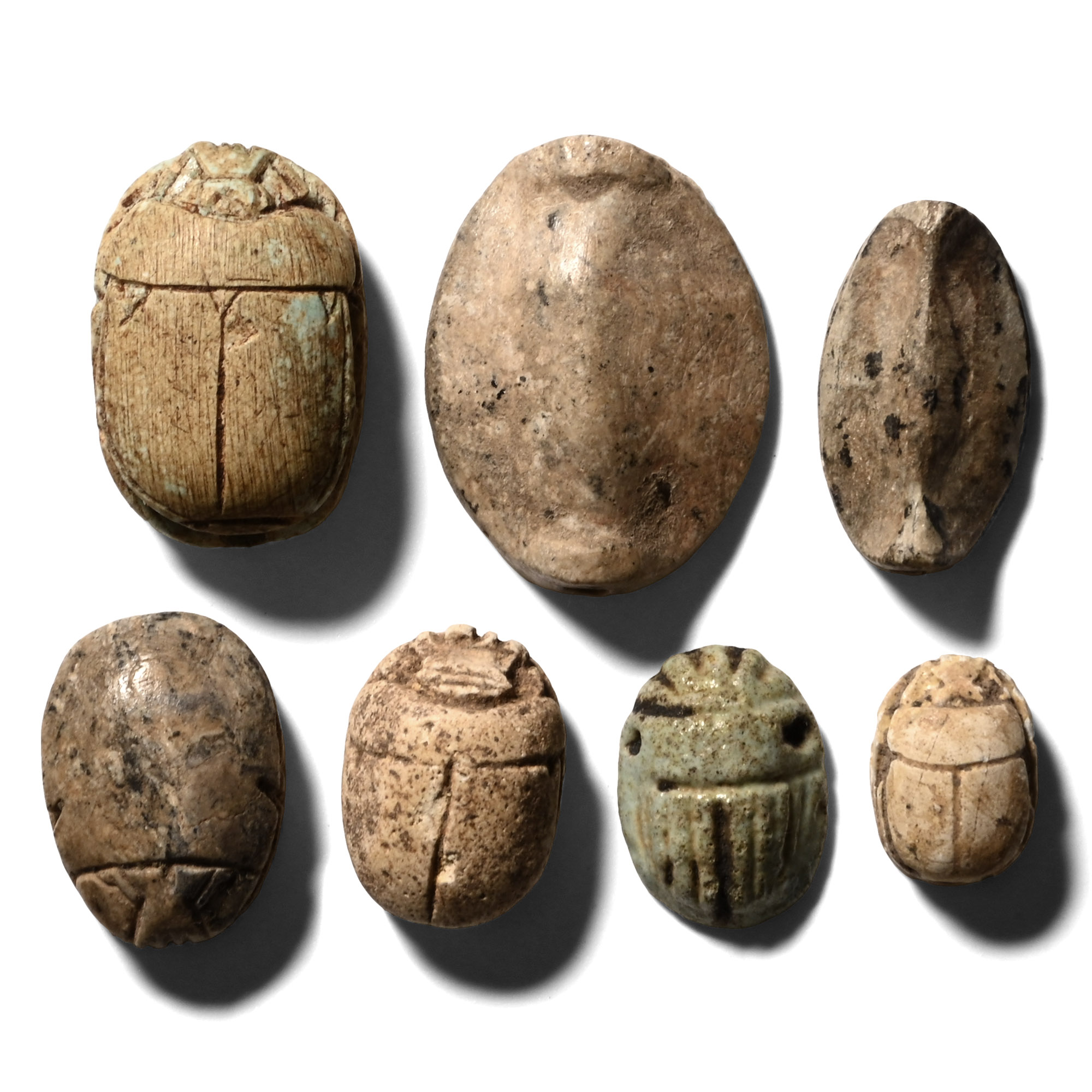
Egyptian Mixed Scarab and Scaraboid Collection
2ND-1ST MILLENNIUM B.C.
1/2 - 7/8 in. (13 grams total, 11-23 mm).
Comprising (from left to right, top to bottom): 1) a scarab with an oval border containing a goose, nefer(?), and a reed leaf; 2) a scarab with an oval border featuring a triple lotus flower motif at the top and bottom, with a middle row of floral bundles; 3) a scaraboid with a long oval border containing a cross pattern incorporating scrolls, coiled cords, and floral elements; 4) a scarab with an oval border featuring a hes-jar flanked by two cobras; 5) a scarab with a standing male figure holding a sceptre/mace and a flail, flanked by two highly stylised rearing cobras; 6) a plain scarab; 7) and a scarab with an oval border containing the name Amun-Re, a neb symbol, and a lotus flower. [7]
ProvenanceFrom the collection of a gentleman, acquired on the London art market in the 1990s.
This lot is accompanied by an illustrated lot declaration signed by the Head of the Antiquities Department, Dr Raffaele D'Amato.
Cf. 1) Matouk, F.S., Corpus du scarabée égyptien. Vol. 2: Analyse thématique, Beirut, 1976, p. 393, nos. 1029-1032, for examples of scarab motifs incorporating a goose, reed leaf, and other symbols; 2) Ben-Tor, D., Scarabs, Chronology, and Interconnections: Egypt and Palestine in the Second Intermediate Period, Fribourg/Göttingen, 2007, pl. 32, no.2, for a similar example, but with two central rows of floral bundles; 3) Ben-Tor, D., Scarabs, Chronology, and Interconnections: Egypt and Palestine in the Second Intermediate Period, Fribourg/Göttingen, 2007, pl. 68, no. 10, for a comparable design of a Caananite scarab; 4) Matouk, F.S., Corpus du scarabée égyptien. Vol. 2: Analyse thématique, Beirut, 1976, p. 395, no.1152, for a scarab with a horizontal arrangement of the same motif; 5) Matouk, F.S., Corpus du scarabée égyptien. Vol. 2: Analyse thématique, Beirut, 1976, p. 402, no. 1662, for a similarly-themed scarab; 7) Ben-Tor, D., The Scarab: A Reflection of Ancient Egypt, Tel Aviv, 1993, p.73, no.1, for similar.
CONDITIONTimeLine Auctions follows a vetting process to ensure the authenticity and legality of all items, reinforcing our commitment to integrity and responsible trading. Each antiquity, antique, and coin lot undergoes thorough examination by a vetting committee of at least ten external specialists, professional trade association members, scientists, and archaeologists: Our Vetting Process
AUCTIONS:
TimeLine is a leading auction house specialising in antiquities, ancient art, collectables, natural history, coins, medals, and books. Our auctions offer museums, collectors, historians, and enthusiasts the opportunity to acquire unique and historically significant pieces.
-
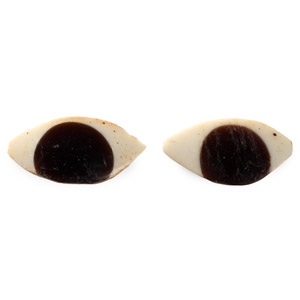
Egyptian Glass Eye Inlay Pair
Ptolemaic Period, 332-30 B.C.Sold for (Inc. bp): £208
The sclera white and the iris black. 4.12 grams total, 27-29 mm
Acquired on the UK art market, 1977-1979. Private collection, London. This lot is accompanied by an illustrated lot declaration signed by the Head of the Antiquities Department, Dr Raffaele D'Amato.
Egyptian coffin eye inlays were both decorative and symbolic, intended to make the coffin appear lifelike and assist the deceased in the afterlife. Typically, they featured a white sclera (glass, travertine, alabaster or quartz), a dark iris (glass or often obsidian), and sometimes red paint at the inner corner. The eyes were often set in bronze or copper frames, occasionally with faience or bronze eyebrows. -
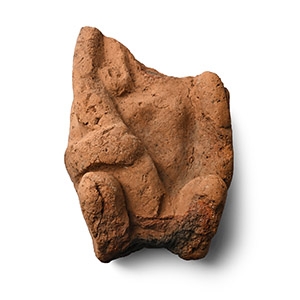
Egyptian Terracotta Fragment of Man Holding Elongated Phallus
Ptolemaic Period, 323-30 B.C.Sold for (Inc. bp): £59
Plano-convex in section with lateral folded legs, lower end of the sidelock at the shoulder, phallus extended across the body. 383 grams, 13 cm
Acquired in London, UK, 1980. From the collection of G.M.R.H., London, UK. This lot is accompanied by an illustrated lot declaration signed by the Head of the Antiquities Department, Dr Raffaele D'Amato. -
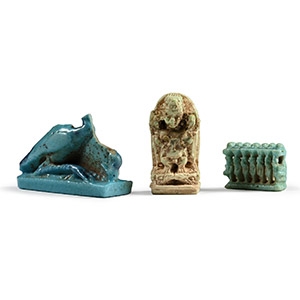
Egyptian Faience Amulet Collection
1st millennium B.C.Estimate: £500 - 700 (‡+bp*)
Opening Bid: £250
Comprising: an amuletic bead consisting of a row of seven Taweret figures on a rectangular base, pierced longitudinally; a seated ibis before a diminutive figure of Maat on a tongue-shaped base; a cippus amulet composed of the figure of Pataikos standing on two crocodiles, with two hawks perched on his shoulders, a scarab on his head, flanked by the figures of Isis and Nephthys, and on the back, a winged goddess standing on the crocodiles' tails. 6.5 grams total, 16-30 mm
Acquired in the mid 1980s-1990s. Private collection, Switzerland, thence by descent. Private collection, since the late 1990s. This lot is accompanied by an illustrated lot declaration signed by the Head of the Antiquities Department, Dr Raffaele D’Amato. This lot is accompanied by an illustrated lot declaration signed by the Head of the Antiquities Department, Dr Raffaele D'Amato.
