
Loading, please wait...
LOT 0440
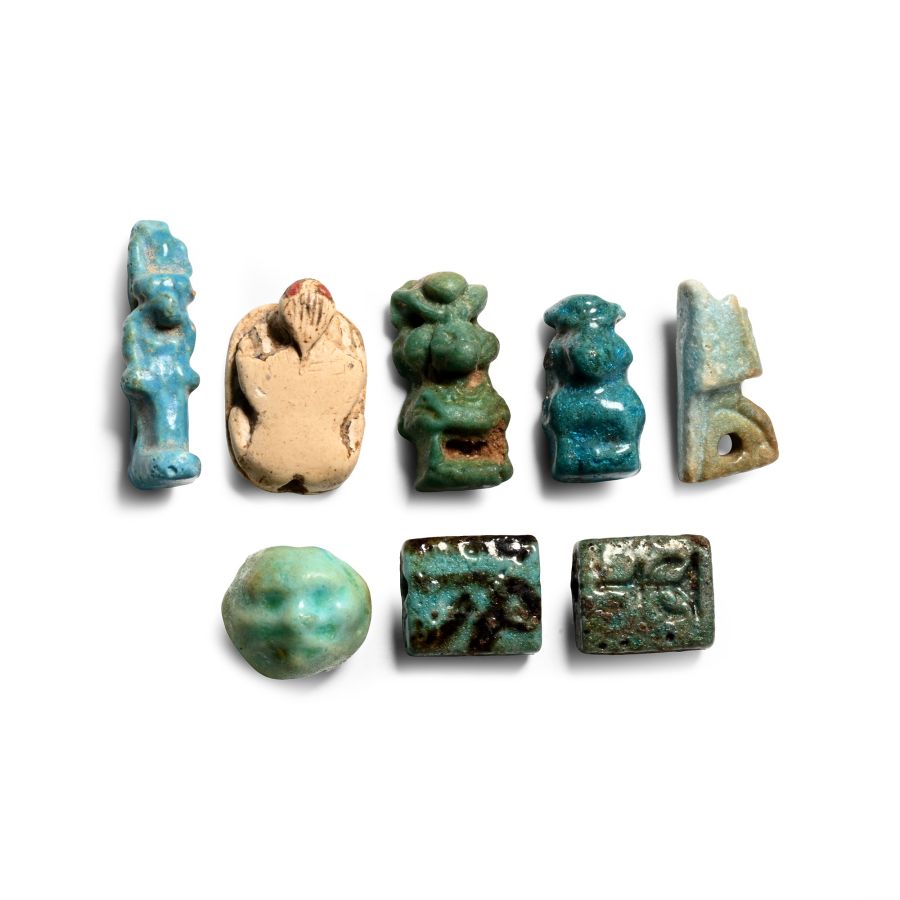
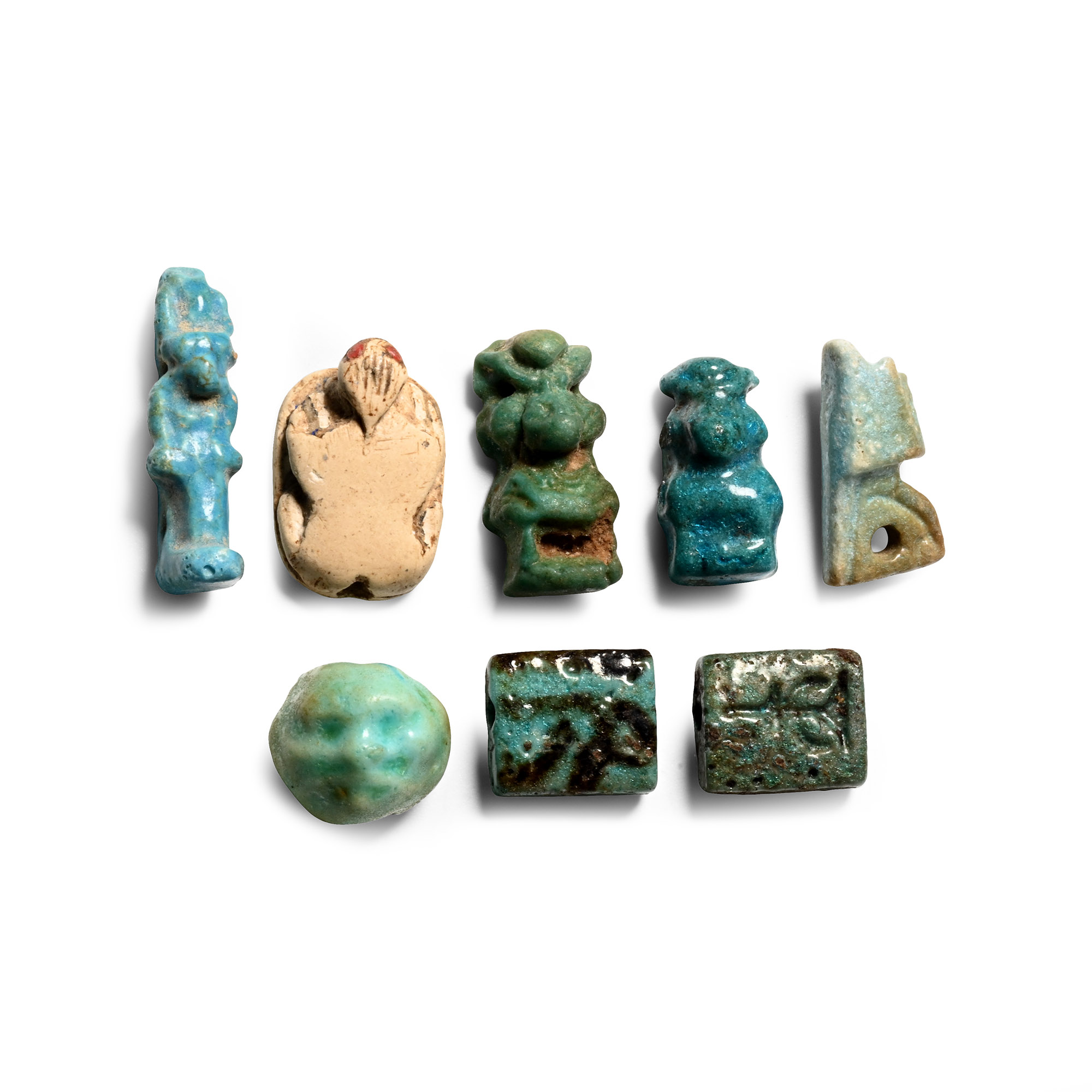
Egyptian Mixed Faience Amulet Collection
LATE PERIOD-PTOLEMAIC PERIOD, CIRCA 664-30 B.C.
3/8 - 3/4 in. (4.93 grams total, 10-20 mm).
Comprising: a face bead; two rectangular wedjat-eye beads with black detailing; an amulet depicting the Deshret crown of Lower Egypt; two seated baboon amulets; an amulet of a standing figure, possibly Sekhmet; a scaraboid with a small raised head. [8]
ProvenanceFrom a 20th century UK collection.
CONDITIONTimeLine Auctions follows a vetting process to ensure the authenticity and legality of all items, reinforcing our commitment to integrity and responsible trading. Each antiquity, antique, and coin lot undergoes thorough examination by a vetting committee of at least ten external specialists, professional trade association members, scientists, and archaeologists: Our Vetting Process
AUCTIONS:
TimeLine is a leading auction house specialising in antiquities, ancient art, collectables, natural history, coins, medals, and books. Our auctions offer museums, collectors, historians, and enthusiasts the opportunity to acquire unique and historically significant pieces.
-
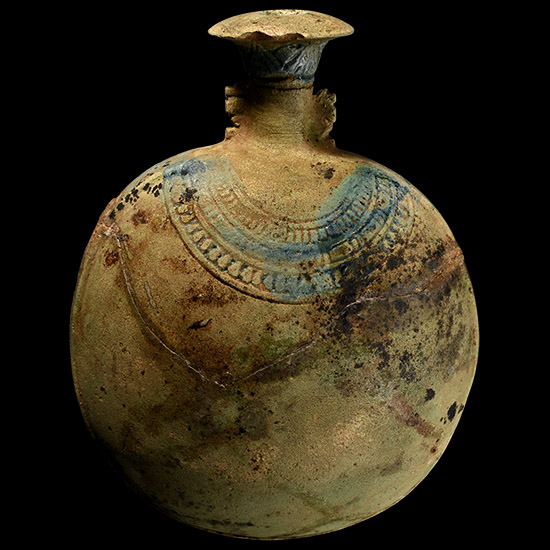
Egyptian Glazed Faience New Year Flask with Baboons
Late Period, 664-332 B.C.Estimate: £2,000 - 3,000 (+bp*)
Opening Bid: £1,000
Lentoid body with segmented collars and blue detailing around the shoulders, neck with papyrus stalk detailing and a domed rim; addorsed stylised baboons flanking the neck. 263 grams, 16 cm
Acquired on the UK art market, 1990s. Private collection, New York, USA. This lot has been checked against the Interpol Database of stolen works of art and is accompanied by search certificate number no.13350-255452.
The concept of renewal is expressed through the form, decoration, and inscriptions of this type of flask. Their rounded bodies evoke the sun disc, symbolising daily rebirth, while the squatting baboons flanking the mouth allude to those that greeted the rising sun each morning. The blue collar decoration, including floral motifs, as seen here, symbolises the renewal of the agricultural cycle through the annual Nile inundation. The papyrus-capital spout reinforces this theme of regeneration. Although traditionally dated exclusively to the 26th Dynasty, examples recovered from Late Period and early Ptolemaic contexts indicate that their popularity actually endured for several centuries. -
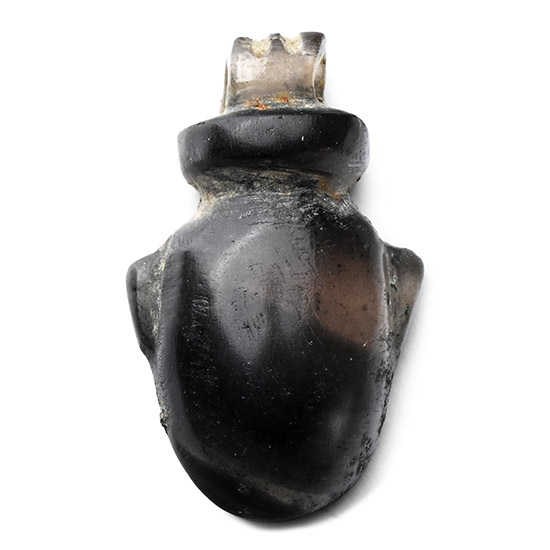
Egyptian Smoky Quartz Heart Amulet
Late Period, 664-332 B.C.Sold for (Inc. bp): £156
Carved with lateral triangular lugs, a pronounced rim surmounted by a ribbed suspension loop. 0.76 grams, 16 mm
From a 20th century UK collection. -
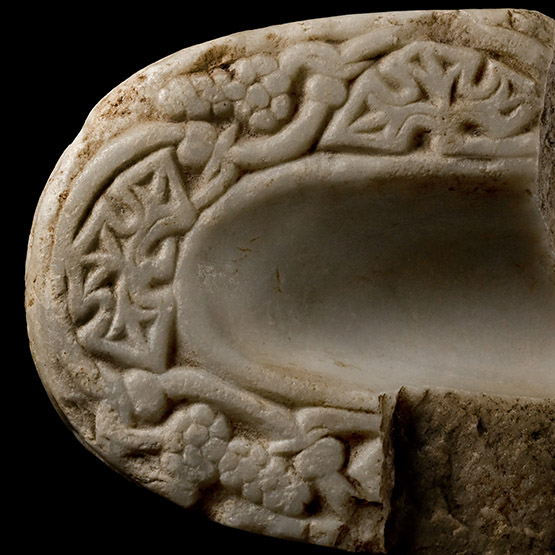
Coptic Marble Liturgical Vessel Fragment with Inscription
6th century A.D.Sold for (Inc. bp): £1,053
Tongue-shaped with low rounded pad on the underside, raised edge with low-relief decoration of grape vines and leaves, the edge with pairs of opposing doves eating grapes; dedicatory Demotic inscription on the underside. 87 grams, 55 mm
Acquired in the mid 1980s-1990s. Private collection, Switzerland, thence by descent. Private collection, since the late 1990s. Accompanied by an academic report by Dr Raffaele D'Amato. This lot has been checked against the Interpol Database of stolen works of art and is accompanied by a search certificate number no.12575-232108.
These vessels were used as liturgical objects for church offerings or ritual, and were extensively employed from late antiquity in ecclesiastical contexts.
