
Loading, please wait...


LOT 0489
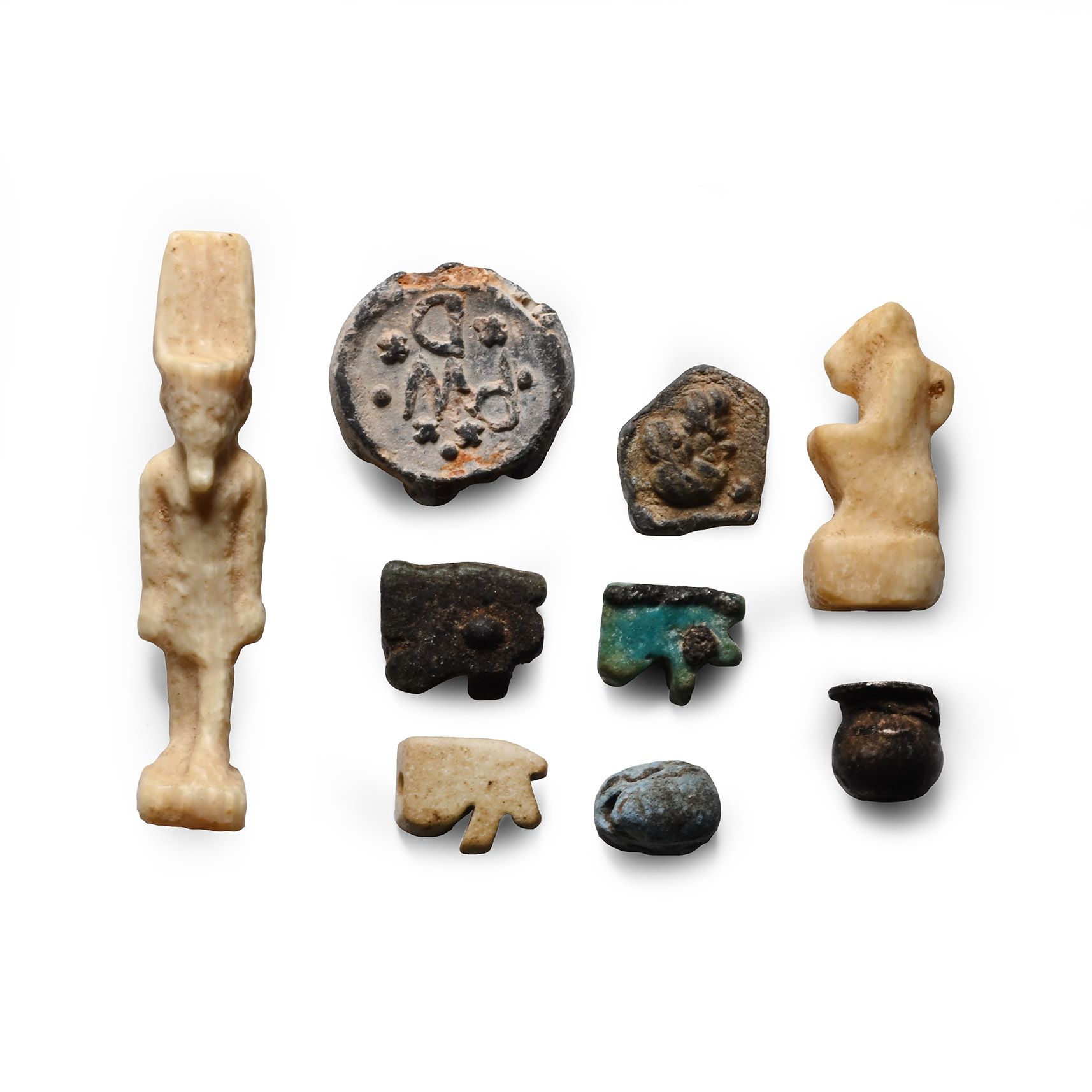
Egyptian Mixed Amulet Group
MAINLY LATE PERIOD, 664-332 B.C.
1/4 - 1 3/8 in. (9.6 grams total, 6-34 mm).
Various amulets, including a seated lion-headed deity and a striding figure of Amun, three faience wedjat eyes, a diminutive faience scarab, and other items. [9]
ProvenanceFrom the private collection of the late Mrs Belinda Ellison, a long time member of the Egyptian Exploration Society, c.1940-2020.
CONDITIONTimeLine Auctions follows a vetting process to ensure the authenticity and legality of all items, reinforcing our commitment to integrity and responsible trading. Each antiquity, antique, and coin lot undergoes thorough examination by a vetting committee of at least ten external specialists, professional trade association members, scientists, and archaeologists: Our Vetting Process
AUCTIONS:
TimeLine is a leading auction house specialising in antiquities, ancient art, collectables, natural history, coins, medals, and books. Our auctions offer museums, collectors, historians, and enthusiasts the opportunity to acquire unique and historically significant pieces.
-
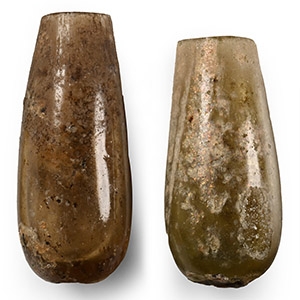
Egyptian Glass Phial Group
1st millennium B.C.Sold for (Inc. bp): £59
Each is a tapering bulb shape with a flat-cut mouth. 13.8 grams total, 35-37 mm
From the collection of Mr S.M., London, UK, formed from 1979-1999. -
.jpg)
Egyptian Blue-Glazed Faience White Lotus Chalice
New Kingdom-Third Intermediate Period, 1315-945 B.C.Estimate: £5,000 - 7,000 (+bp*)
Opening Bid: £2,500
The lotiform cup modelled as an open lotus flower with incised petal detailing to the outer face, short stem and flared foot; some restoration. 205 grams, 12 cm
Acquired 1970s-1996. Property of a North American collector. London collection, 2016. This lot has been checked against the Interpol Database of stolen works of art and is accompanied by search certificate no.12100-214087.
Faience chalices shaped like the flowers of the white lotus (Nymphaea albicans) first appeared in the 18th Dynasty, and are thought to be drinking vessels. -
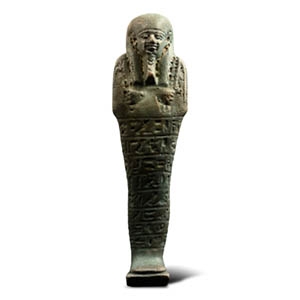
Large Egyptian Blue Glazed Hieroglyphic Shabti
26th Dynasty, 664-525 B.C.Estimate: £1,500 - 2,000 (+bp*)
Opening Bid: £700
Of mummiform type, wearing a tripartite wig and long plaited divine beard, with arms crossed and the left hand holding a pick, the right hand holding a hoe and the cord of a seed bag hanging over his left shoulder, with carefully rendered cosmetic lines around the eyes, narrow eyebrows, and slightly smiling lips giving it a serene expression characteristic of the finest ushabtis of the period; standing on an integral plinth from which a plain back pillar terminating at the base of the wig extends; eight horizontal rows of hieroglyphic inscription, the Sixth Chapter of the Book of the Dead; water worn. 235 grams, 18.6 cm
Acquired on the German art market, 1989-1995. with The Museum Gallery, 19 Bury Place, London, WC1, UK, 1998-2003. Property of a London based academic, 2003-present.
