
Loading, please wait...
LOT 0479
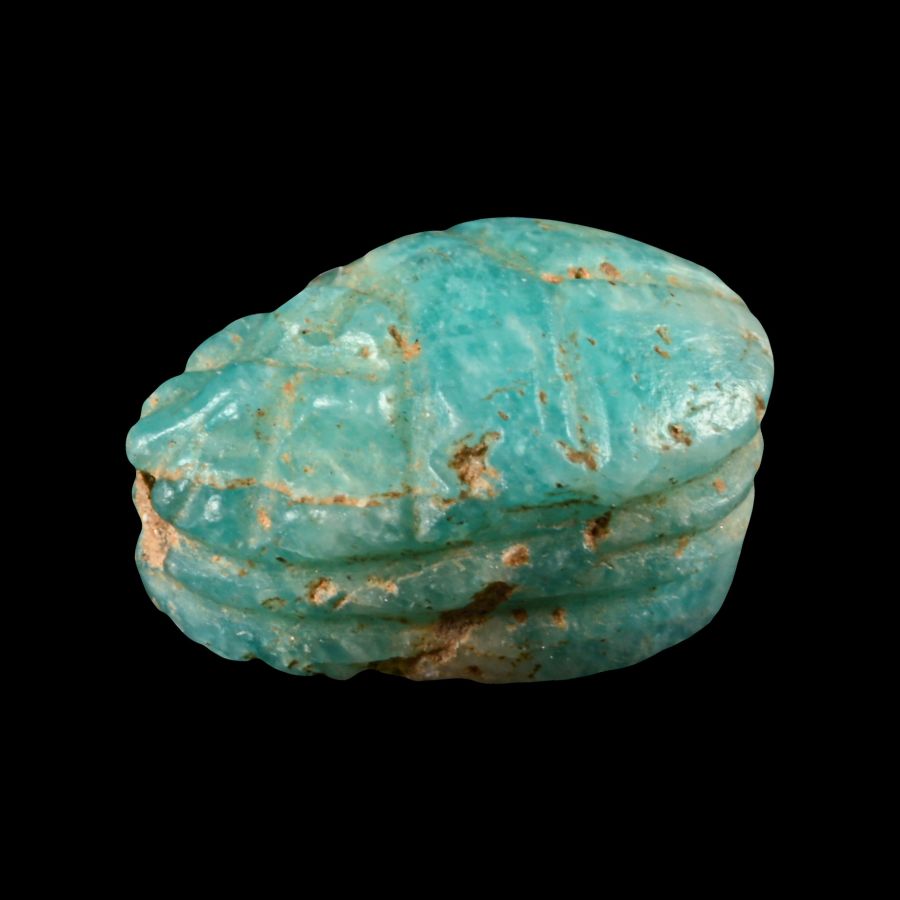
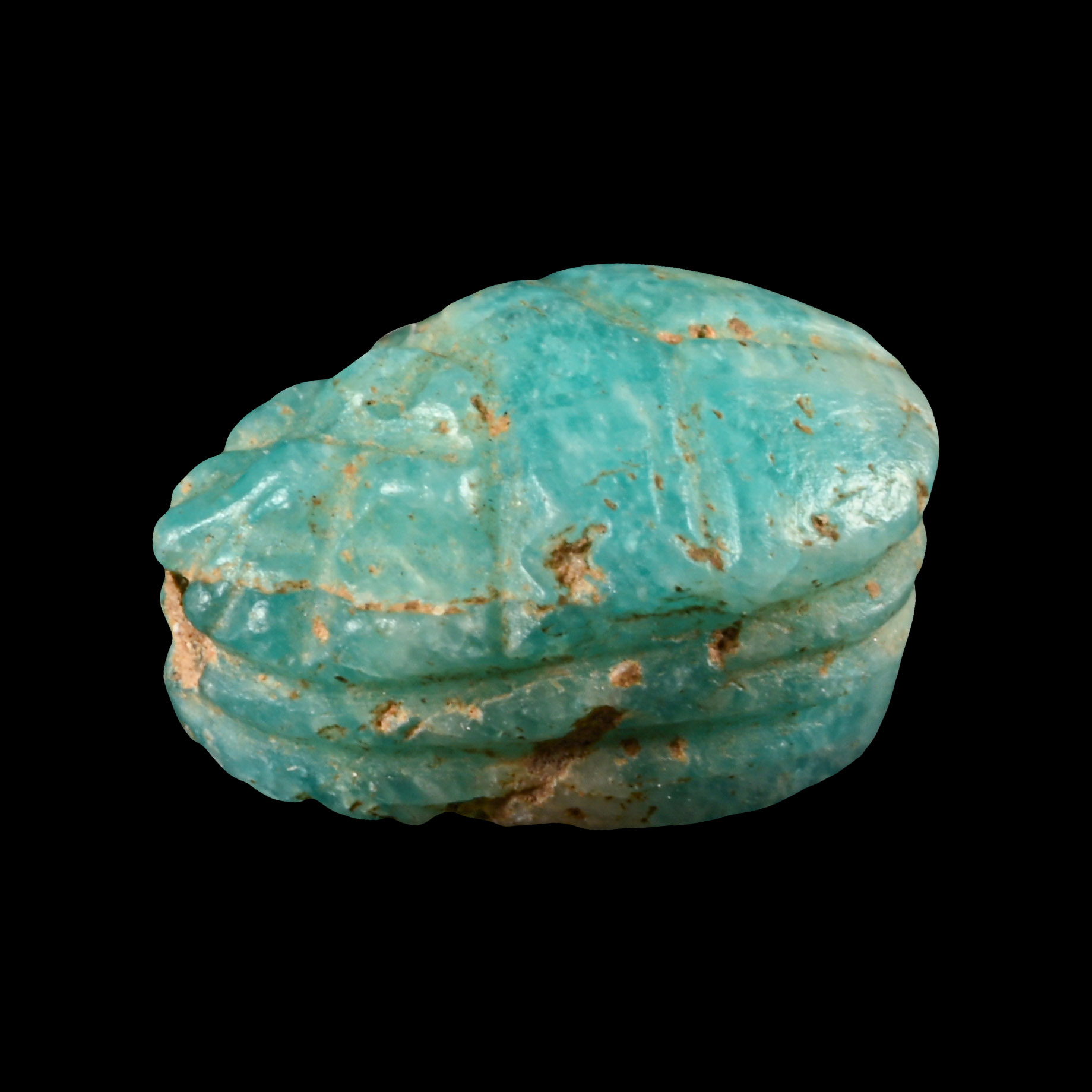
Egyptian Miniature Turquoise Scarab
NEW KINGDOM, 1293-1060 B.C.
1/4 in. (0.09 grams, 5 mm).
With incised anatomical detailing; pierced longitudinally, very rare. [No Reserve]
ProvenanceAcquired in the 1930s.
From an early 20th century London, UK, collection.
TimeLine Auctions follows a vetting process to ensure the authenticity and legality of all items, reinforcing our commitment to integrity and responsible trading. Each antiquity, antique, and coin lot undergoes thorough examination by a vetting committee of at least ten external specialists, professional trade association members, scientists, and archaeologists: Our Vetting Process
AUCTIONS:
TimeLine is a leading auction house specialising in antiquities, ancient art, collectables, natural history, coins, medals, and books. Our auctions offer museums, collectors, historians, and enthusiasts the opportunity to acquire unique and historically significant pieces.
-
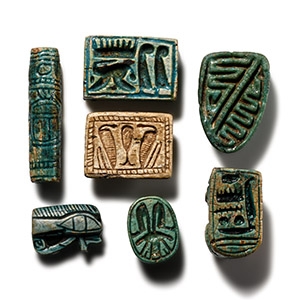
Egyptian Amulet Collection
New Kingdom-Late Period, 1550-332 B.C.Sold for (Inc. bp): £2,080
Comprising: white rectangular bead with Tilapia fish in high-relief and two cobras flanking a hem ideogram; turquoise frog on heater-shaped base with serpent to the underside; green scaraboid with wedjat to the carapace, Hathor sistrum with cow's horns to the underside; green ram-headed scaraboid with hieroglyphs to the underside; green cylinder with scarab motif; green wedjat with a cartouche of Thutmose III to the reverse; green rectangular bead with djed pillar flanked by ostrich feathers and incuse hieroglyphs to the reverse. 14.3 grams total, 14-27 mm
Two amulets with Bonhams, London, Knightsbridge, UK, 3 October 2000, lot 385 [Part]. Private Swiss collection. This lot has been checked against the Interpol Database of stolen works of art and is accompanied by search certificate no.11593-198956. Accompanied by a copy of the relevant Bonhams catalogue pages. -
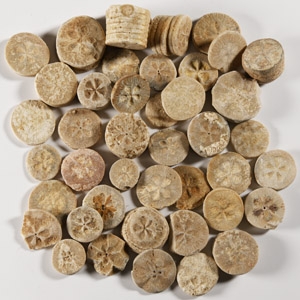
Egyptian Limestone Floral Inlay Group
Roman Period, 30 B.C.-323 A.D.Sold for (Inc. bp): £117
Group of discoid inlay plaques with cinquefoil motif. 77 grams total, 11-20 mm
From a central London ADA member's gallery, 1990s. -
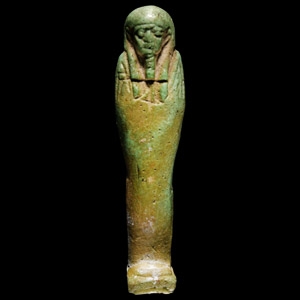
Egyptian Green Faience Shabti for Aames
Late Period, 664-332 B.C.Sold for (Inc. bp): £326
Blue-green composition with detailed face, dorsal pillar with hieroglyphic text with name of the owner, Aa-mes and his mother; repaired. 31 grams, 95 mm high
Ex TimesAncient, London, UK, item no.J167. Private collection of Mr T.H., Norfolk, UK. Accompanied by a previous dealer's certificate of authenticity.
