
Loading, please wait...
LOT 0445
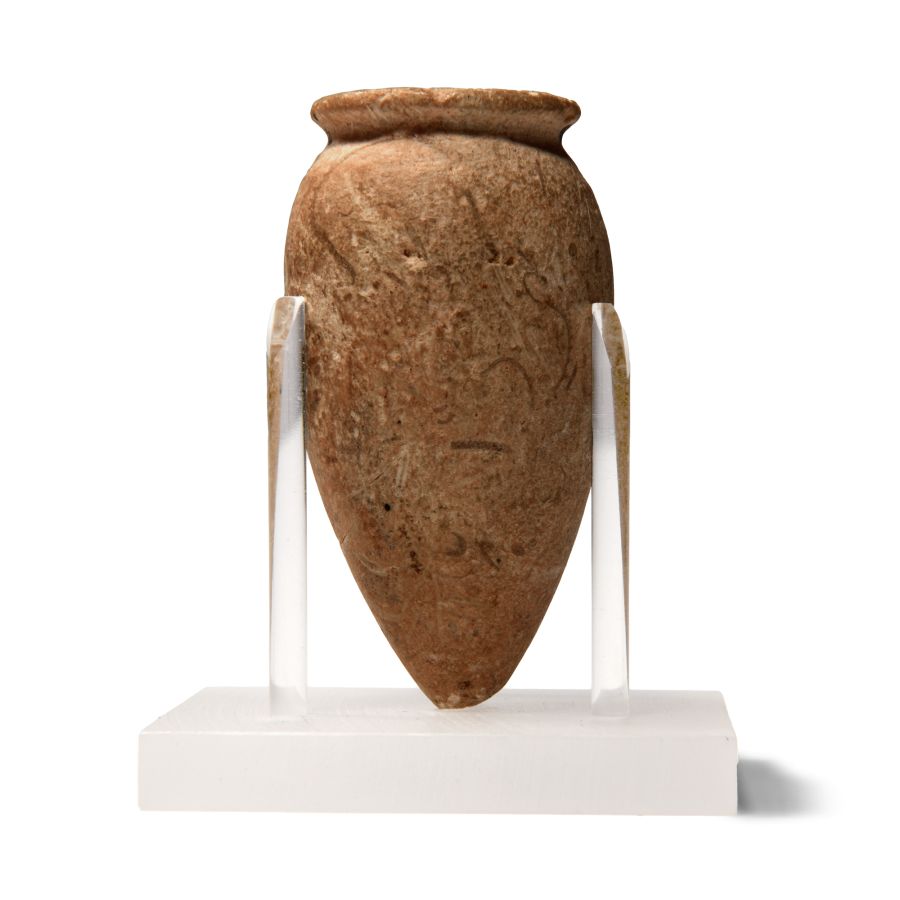
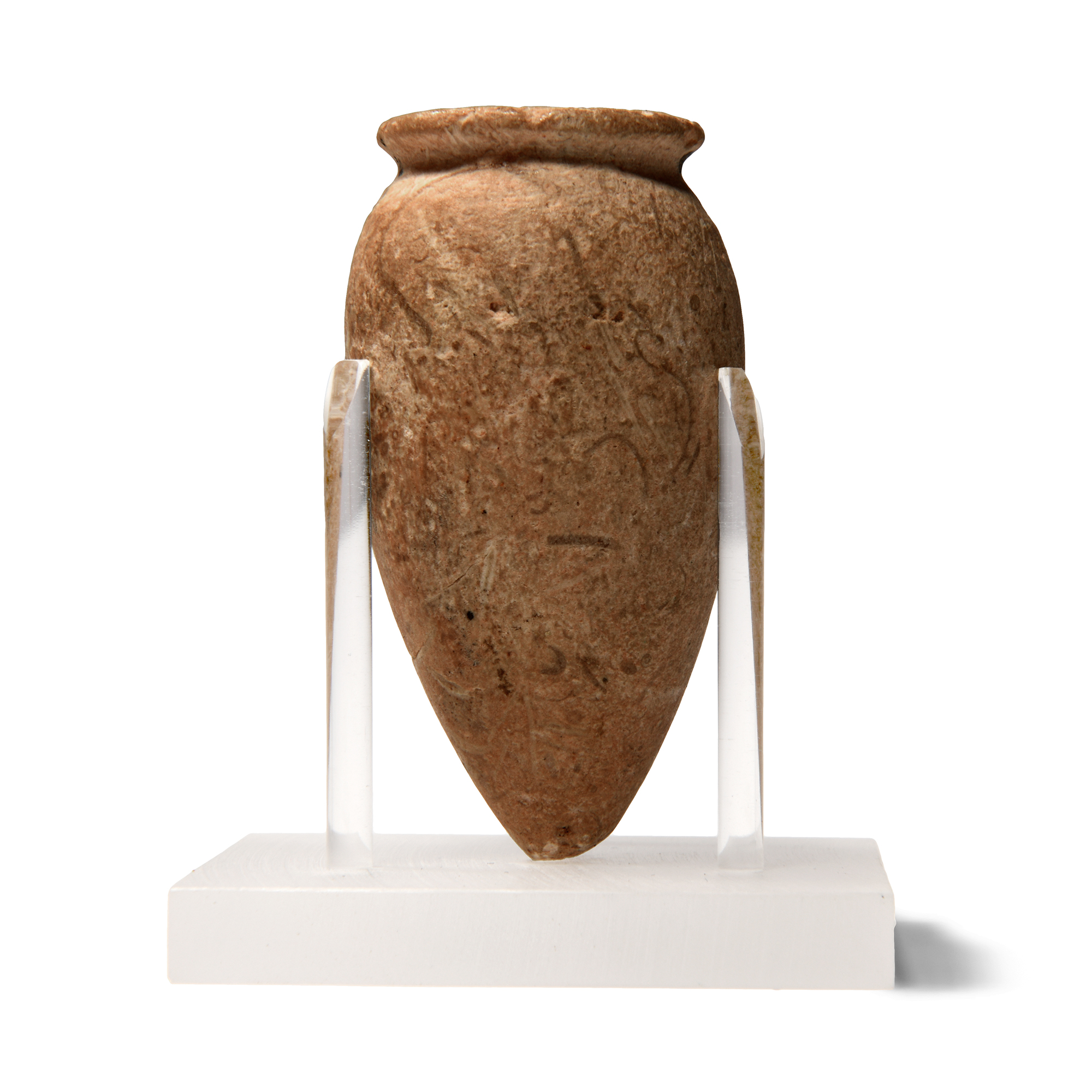
Egyptian Miniature Stone Alabastron
LATE OLD KINGDOM, CIRCA 2300 B.C.
1 7/8 in. (2 1/8 in.) (34.2 grams, 48 mm high (48.9 grams, 55 mm including stand)).
The body with rounded shoulders, convex outer face and pointed base, everted rim; accompanied by a custom-made display base.
ProvenanceAcquired in Europe before 1994.
European collection.
This lot is accompanied by an illustrated lot declaration signed by the Head of the Antiquities Department, Dr Raffaele D’Amato.
Cf. Guidotti, M.C., Vasi dall’epoca protodinastica al Nuovo Regno, Museo Egizio di Firenze, Rome, 1991, p.99, no.68, for similar vessel.
CONDITIONTimeLine Auctions follows a vetting process to ensure the authenticity and legality of all items, reinforcing our commitment to integrity and responsible trading. Each antiquity, antique, and coin lot undergoes thorough examination by a vetting committee of at least ten external specialists, professional trade association members, scientists, and archaeologists: Our Vetting Process
AUCTIONS:
TimeLine is a leading auction house specialising in antiquities, ancient art, collectables, natural history, coins, medals, and books. Our auctions offer museums, collectors, historians, and enthusiasts the opportunity to acquire unique and historically significant pieces.
-
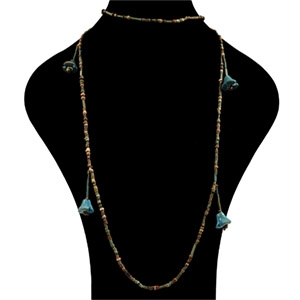
Egyptian Bead Necklace with Lotus Flowers
Late Period, 664-332 B.C. or laterSold for (Inc. bp): £234
Comprising annular and cylindrical beads in various colours, interspersed with four lotus-flower pendants. 24.2 grams, 104 cm
P.S., Netherlands, 1985. Ex Sands of Time U.S.A. with Treasuregate Gallery, 11 June 2015, Netherlands. Accompanied by a copy of an Art Loss Register certificate no.S00105718. This lot is accompanied by an illustrated lot declaration signed by the Head of the Antiquities Department, Dr Raffaele D’Amato.
The most common type of collars based on pendants found at various localities, was mainly composed of pendants imitating plant forms. The terminals of surviving collars of this design are usually triangular, representing lotus flowers, or rectangular, decorated with plant designs or spirals. -
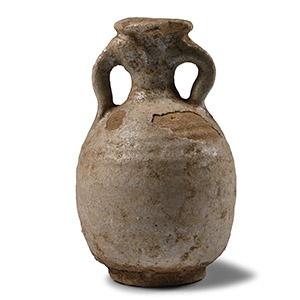
Faience Juglet
Parthian, 1st-2nd century A.D.Sold for (Inc. bp): £85
With barrel-shaped body. trumpet-shaped neck flanked by strap handles to the shoulder, horizontal ribbing. 106 grams, 10 cm
Acquired 1980-2015. Ex Abelita family collection. This lot is accompanied by an illustrated lot declaration signed by the Head of the Antiquities Department, Dr Raffaele D’Amato. -
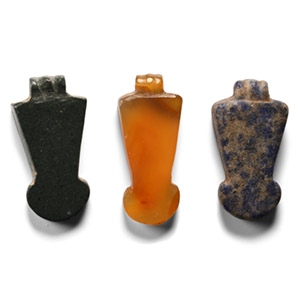
Egyptian Hardstone Menat Amulet Group
Ptolemaic Period, 332-30 B.C.Sold for (Inc. bp): £364
Lapis lazuli, carnelian, and schist (?) menat amulets, each with a distinctive keyhole shape and broad ribbed bale. 5.38 grams total, 20-22 mm
From a private collection acquired by the previous owner's father in the 1950s. Ex TimesAncient, Bristol, UK. Accompanied by a copy of a previous catalogue entry. This lot is accompanied by an illustrated lot declaration signed by the Head of the Antiquities Department, Dr Raffaele D’Amato.
The menat was a counterpoise that hung at the back of a heavy ornamental collar and was closely associated with the goddess Hathor. Amulets representing the counterpoise were thought to bring good luck, protect against evil spirits, and safeguard the wearer in the afterlife. Their Hathoric connection symbolised fertility and good health for women while representing virility for men.
