
Loading, please wait...
_900x900.jpg "Egyptian Marble Eye Inlay")
_200x200.jpg "Egyptian Marble Eye Inlay")
.jpg "Egyptian Marble Eye Inlay")
LOT 0519
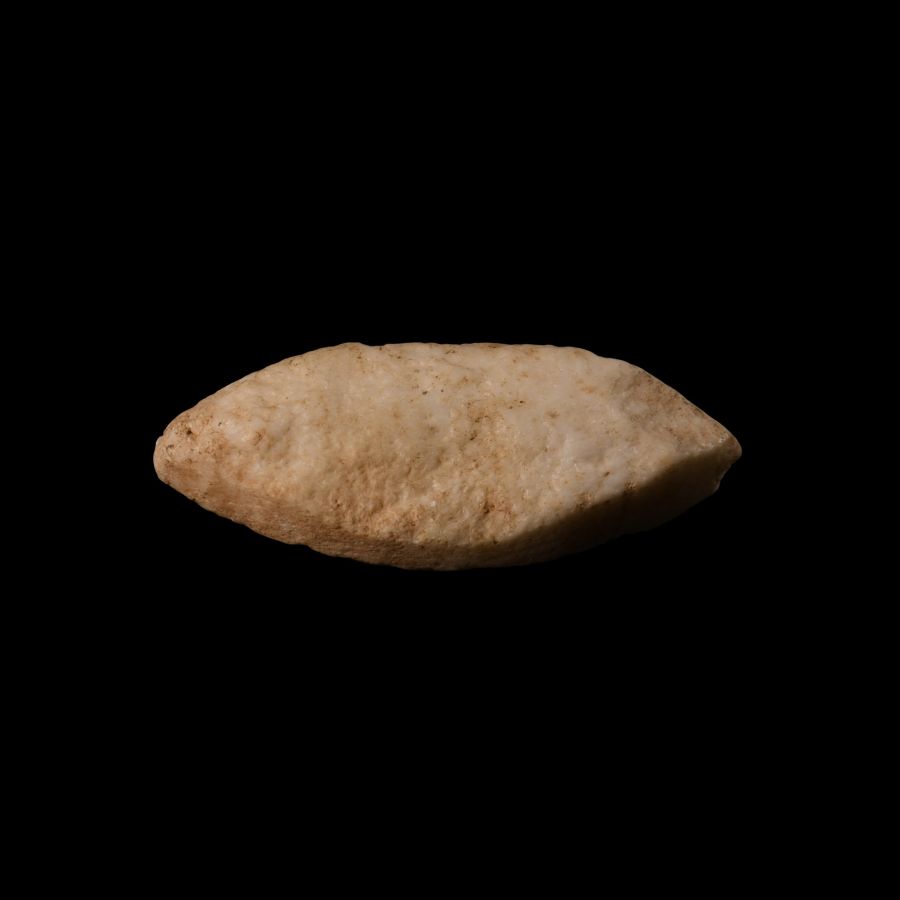
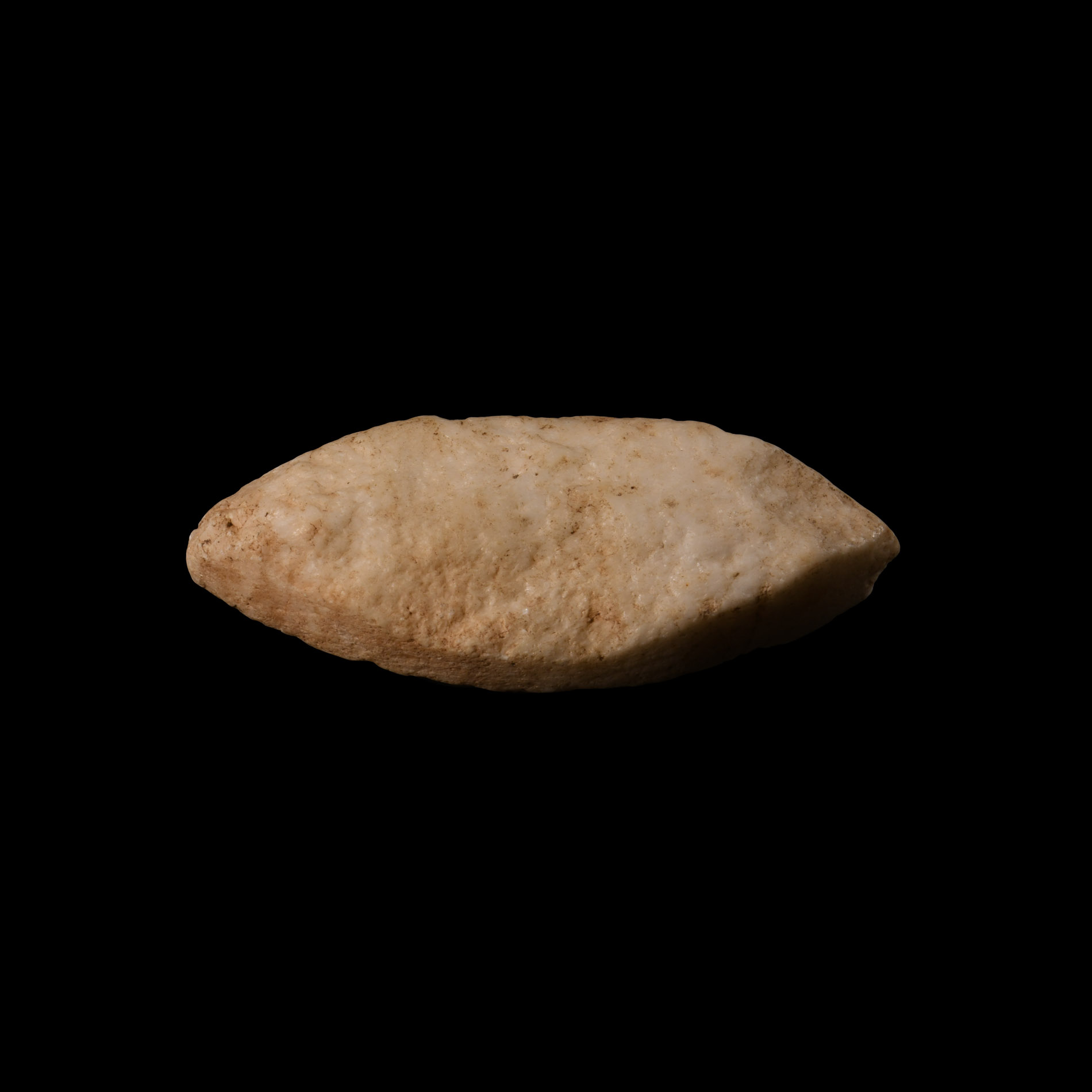
Egyptian Marble Eye Inlay
LATE PERIOD, 664-525 B.C.
2 1/4 in. (24.4 grams, 58 mm).
A carved white marble eye inlay from a statue; unfinished. [No Reserve]
ProvenanceLondon, UK, art market, 1980s.
From the collection of G.M.R.H., London, UK.
TimeLine Auctions follows a vetting process to ensure the authenticity and legality of all items, reinforcing our commitment to integrity and responsible trading. Each antiquity, antique, and coin lot undergoes thorough examination by a vetting committee of at least ten external specialists, professional trade association members, scientists, and archaeologists: Our Vetting Process
AUCTIONS:
TimeLine is a leading auction house specialising in antiquities, ancient art, collectables, natural history, coins, medals, and books. Our auctions offer museums, collectors, historians, and enthusiasts the opportunity to acquire unique and historically significant pieces.
-
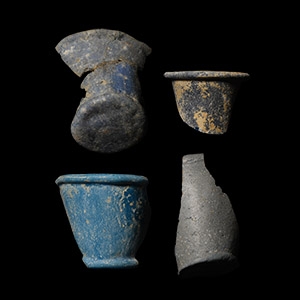
Egyptian Offering Cup Fragment Group
New Kingdom, 1550-1070 B.C.Sold for (Inc. bp): £72
A group of four blue glass fragments from offering cups. 35 grams total, 36-48 mm
From a UK private collection, 1975-1978. -
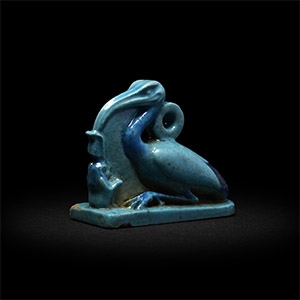
Egyptian Thoth as an Ibis with Maat
Ptolemaic Period, 332-30 B.C.Sold for (Inc. bp): £6,500
A blue-glazed composition amulet in the form of an ibis (representing the god Thoth) seated on a wedge-shaped base, facing a figure of Maat appearing as a diminutive stooping female with an ostrich feather; some details to both figures rendered in a darker blue glaze; suspension loop to the rear of the bird's neck. 9.15 grams, 37 mm
Acquired from Dr Jan Beekmans, circa 1984. UK private collection.
Maat and the moon god Thoth, husband and wife, together embody wisdom and cosmic order. As a divine couple, they served the sun god, Re. Like Thoth, the ancient Egyptians connected the ibis with the moon, owing to its crescent moon-shaped beak. The ibis was well known in antiquity for its refusal to drink unhealthy and poisoned water, or to kill poisonous reptiles, and set mankind an example of cleanliness; thus, like the god Thoth, the ibis offered protection against dangerous forces and served as a model for purity and good sense. Maat embodies the order that Thoth protects. Her symbol, an ostrich feather, references a bird that inhabits desert and savannah habitats, although it must never wander too far away from rivers and lakes. The ostrich cannot fly, but it is a fast runner and a strong fighter. -
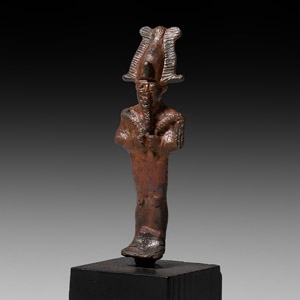
Egyptian Osiris Statuette
Late Period, 664-332 B.C.Estimate: £400 - 600 (+bp*)
Opening Bid: £200
A bronze figurine of Osiris standing with flail and crook held in crossed arms, plaited beard, Atef crown to his head with uraeus above the brow, mounted on a custom-made stand. 150 grams total, 12 cm including stand
Fine condition.
Property of a London gentleman; acquired in London in 1976.
