
Loading, please wait...


LOT 0554
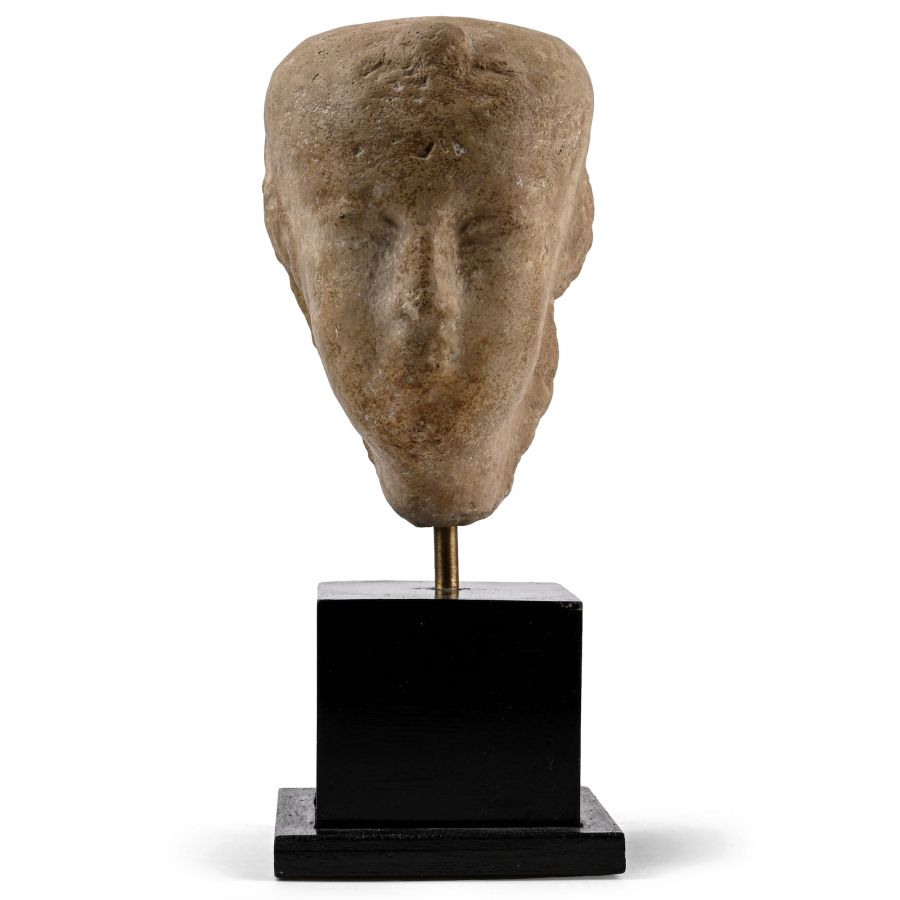
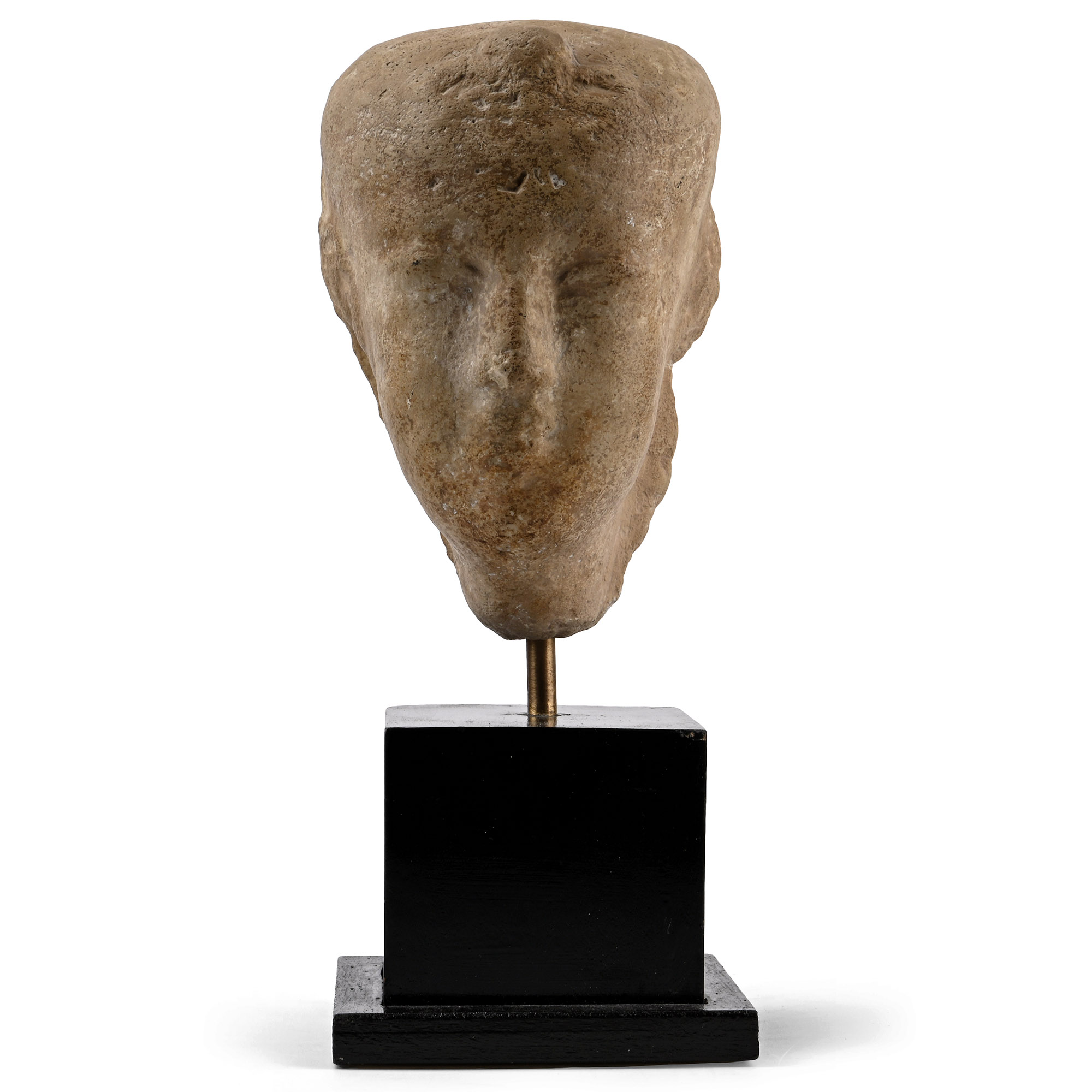
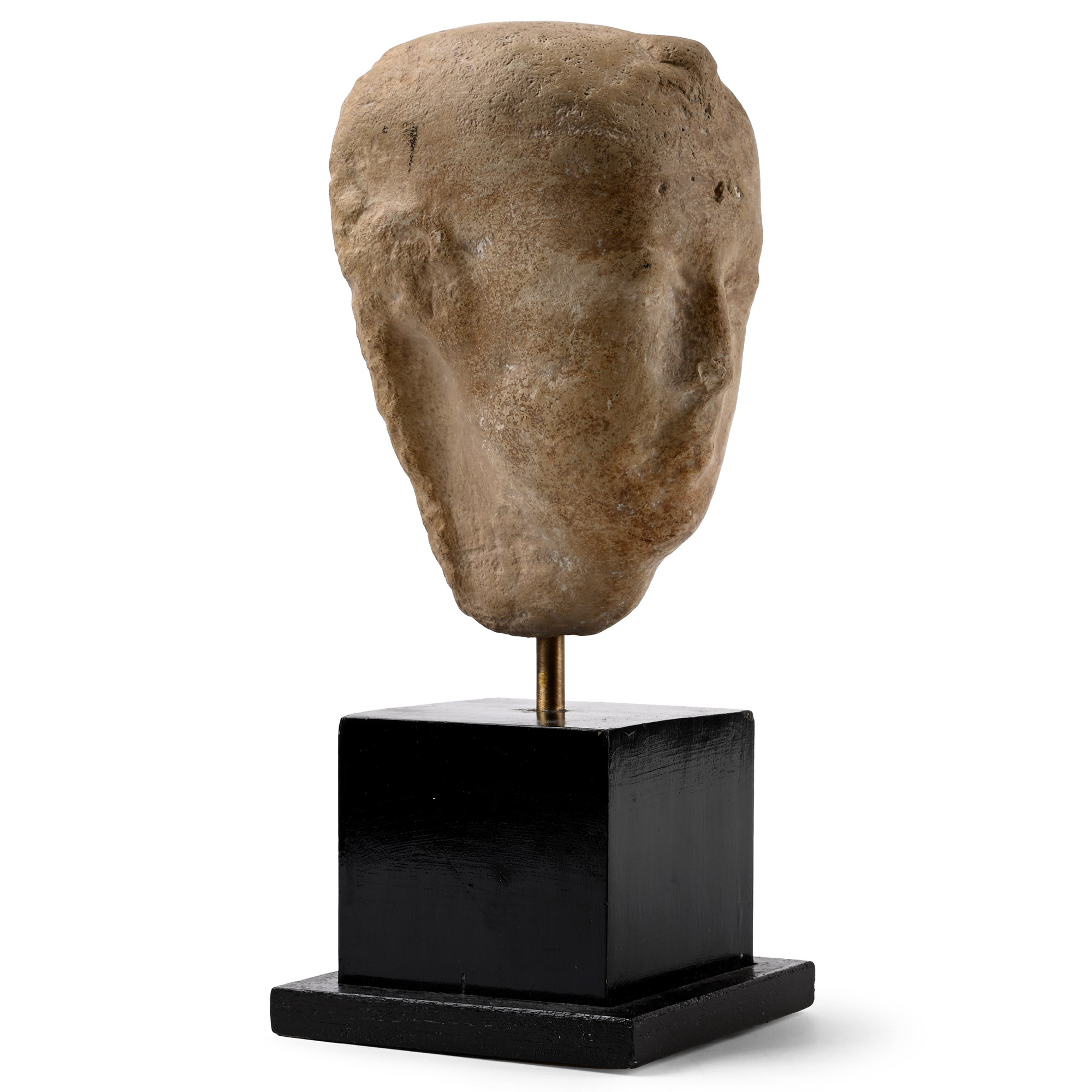
Egyptian Limestone Sculptor's Model
PTOLEMAIC PERIOD, 3RD-2ND CENTURY B.C.
8 in. (948 grams total, 20.5 cm high including stand).
Plano-convex in section, with the carved front portion of a nemes headdress with an uraeus mounted on a custom-made stand.
ProvenanceEx Roger Liechti (1934-2010), Petit-Lancy, Switzerland; acquired in 1982 from Galerie Nicolas Koutoulakis (1910-1996), Geneva.
Thence by descent within the family, Switzerland.
Cf. Tomoum, N., The Sculptors' Models of the Late and Ptolemaic Periods - A Study of the Type and Function of a Group of Ancient Egyptian Artefacts, Cairo, 2005, pls. 30-32, for royal portrait-head models.
CONDITIONTimeLine Auctions follows a vetting process to ensure the authenticity and legality of all items, reinforcing our commitment to integrity and responsible trading. Each antiquity, antique, and coin lot undergoes thorough examination by a vetting committee of at least ten external specialists, professional trade association members, scientists, and archaeologists: Our Vetting Process
AUCTIONS:
TimeLine is a leading auction house specialising in antiquities, ancient art, collectables, natural history, coins, medals, and books. Our auctions offer museums, collectors, historians, and enthusiasts the opportunity to acquire unique and historically significant pieces.
LOT 0554
Egyptian Limestone Sculptor's Model
Estimate £1,000 - 1,400€1,160 - 1,620 (for guidance only)$1,350 - 1,890 (for guidance only)
Opening Bid
£550 (EUR 638; USD 743) ‡+BP*
-
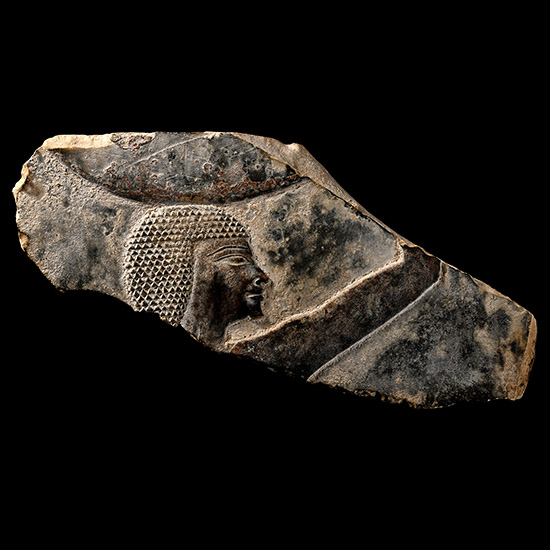
Egyptian Limestone Relief Fragment of a Man
26th Dynasty, 664-525 B.C.Estimate: £1,000 - 1,400 (+bp*)
Bids: 10 | Current Bid: £550
An irregular, elongated limestone fragment intricately carved in low, raised relief, depicting the head and neck of a male figure facing right, wearing a tightly curled wig and a short beard, his arm extended upwards, likely to support the large basket resting on his head. 180 grams total including stand, fragment: 14.5 cm wide
From the private collection of Peter Clayton, FCILIP, Dip, Arch, FSA, FRNS, Hemel Hempstead, Hertfordshire, UK; formed since the late 1950s.
The downturned eyebrow above an almond-shaped eye with a sharply defined eyelid and a long, thin cosmetic line, the small, fairly rounded nose with a lightly drilled nostril above rather thick lips, and the chin below obscured by the short beard are characteristic of the archaising style of the early 26th Dynasty. Artisans of that period adapted and refined earlier Old Kingdom artistic traditions, most apparent in the tomb scenes of high officials at Thebes, particularly those of Montuemhat (see the discussion: der Manuelian, P., 'Two Fragments of Relief and a New Model for the Tomb of Montuemhet at Thebes', Journal of Egyptian Archaeology 71 (1985), pp. 98–121). -
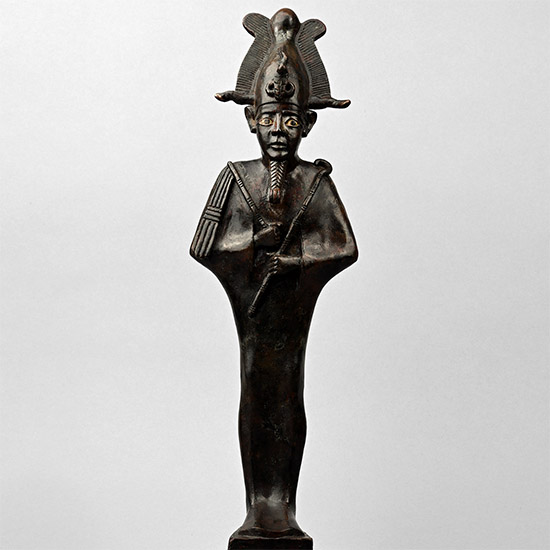
Large Egyptian Bronze Statue of Osiris
Late Period-Ptolemaic Period, circa 664-30 B.C.Estimate: £18,000 - 24,000 (+bp*)
Opening Bid: £9,000
Modelled in the round, standing erect and wearing a long, tight-fitting garment, with hands emerging from openings to hold the nekhakha flail and heka crook; on his head is an atef crown, consisting of the white crown with lateral feathers, ram's horns and a uraeus; below his chin extends a braided false beard, supported behind with a short tab; the eye sockets inlaid with glass; mounted on a custom-made stand. 3.76 kg total, 41.5 cm high including stand
From an old Japanese private collection formed in the 1970s. Mr M.S. prior to 1988. Acquired from the above 18 April 1988. M. Yekta, UK private collection UK. Acquired from the above 17 Aug 2021. This lot has been checked against the Interpol Database of stolen works of art and is accompanied by search certificate no.13469-262425.
Osiris was one of the most important gods of ancient Egypt, associated with the afterlife, resurrection and the regeneration of life. As ruler and judge of the dead, he offered the promise of rebirth to those who hoped to attain eternal life. Bronze statuettes of Osiris were dedicated in temples and placed in tombs as votive offerings. They expressed personal piety and devotion while invoking the god’s protection and his power to grant rebirth in the afterlife. -
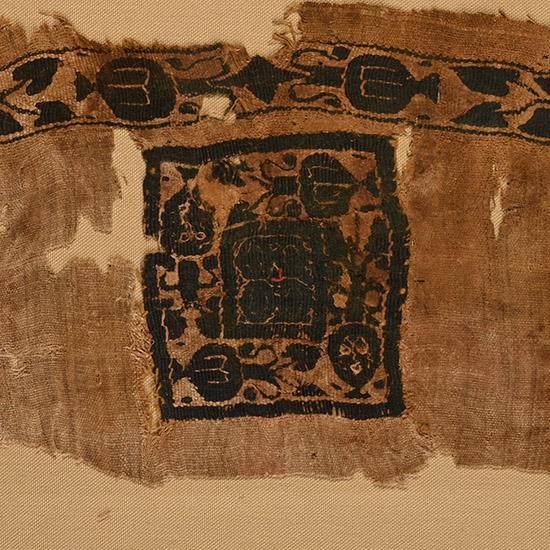
Egyptian Mounted Coptic Tunic Textile Fragment with Clavus and Tabula
Circa 6th century A.D.Estimate: £80 - 100 (+bp*)
Bids: 2 | Current Bid: £15
Showing a large portion of a tunic, decorated with a clavus and a tablion, both featuring foliate ornaments alternating with kantharoi, the centre of the tablion patterned with rosettes surrounded by kantharoi on the four sides; mounted on a backing board. 174 grams total, 57 cm
Acquired 1970s-1996. Property of a North American collector. London collection, 2016.
This type of embroidery was typical of tunics and garments characterised by full-length clavi and segmenta, decorated with either intricate geometric patterns or floral and vegetal motifs. In Christian symbology, the kantharos was an ancient Greek wine cup that symbolised resurrection and eternal life through Christ.
