
Loading, please wait...
LOT 0004
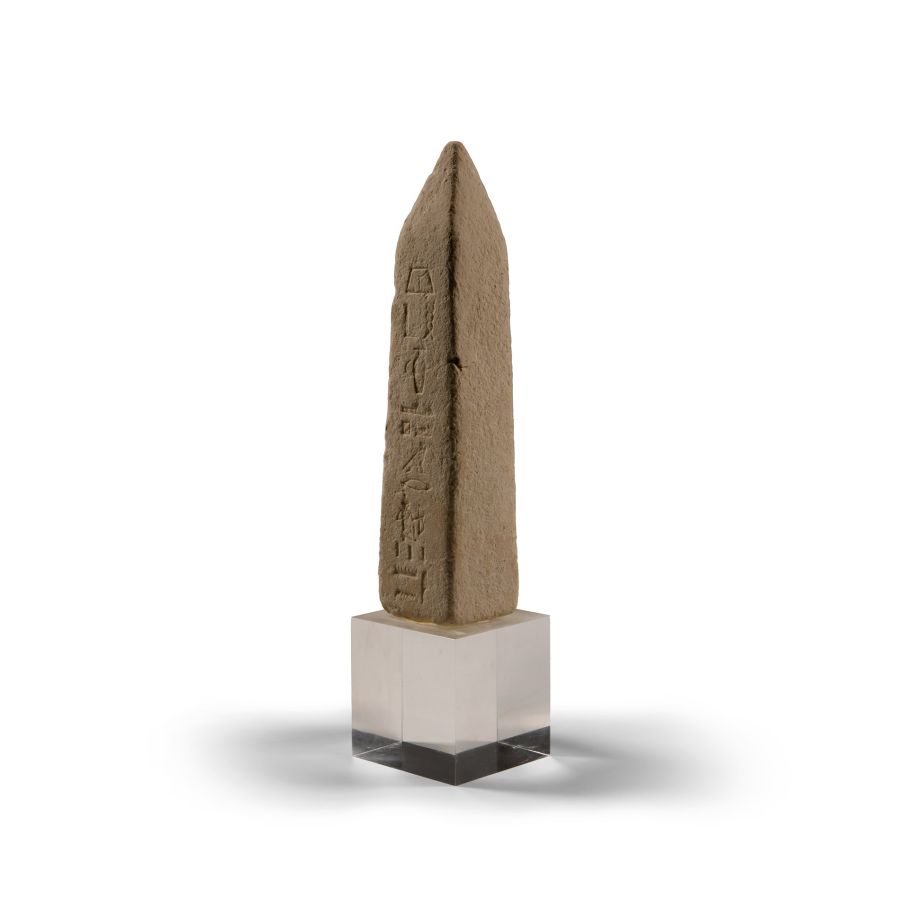
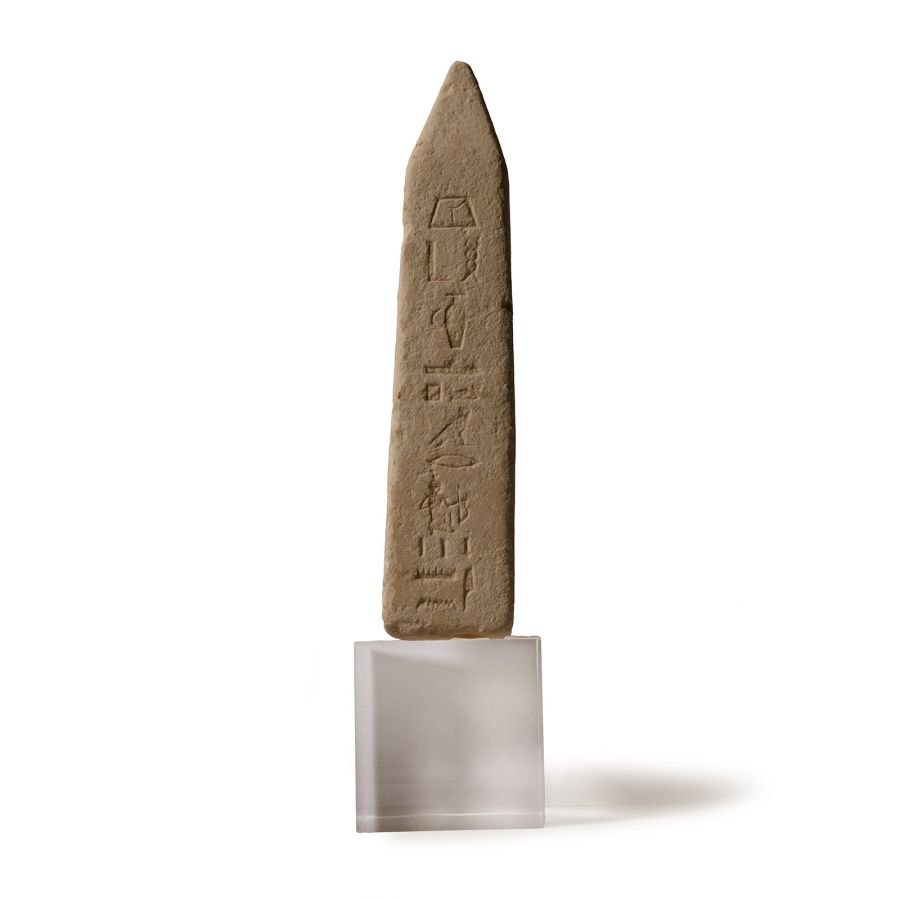
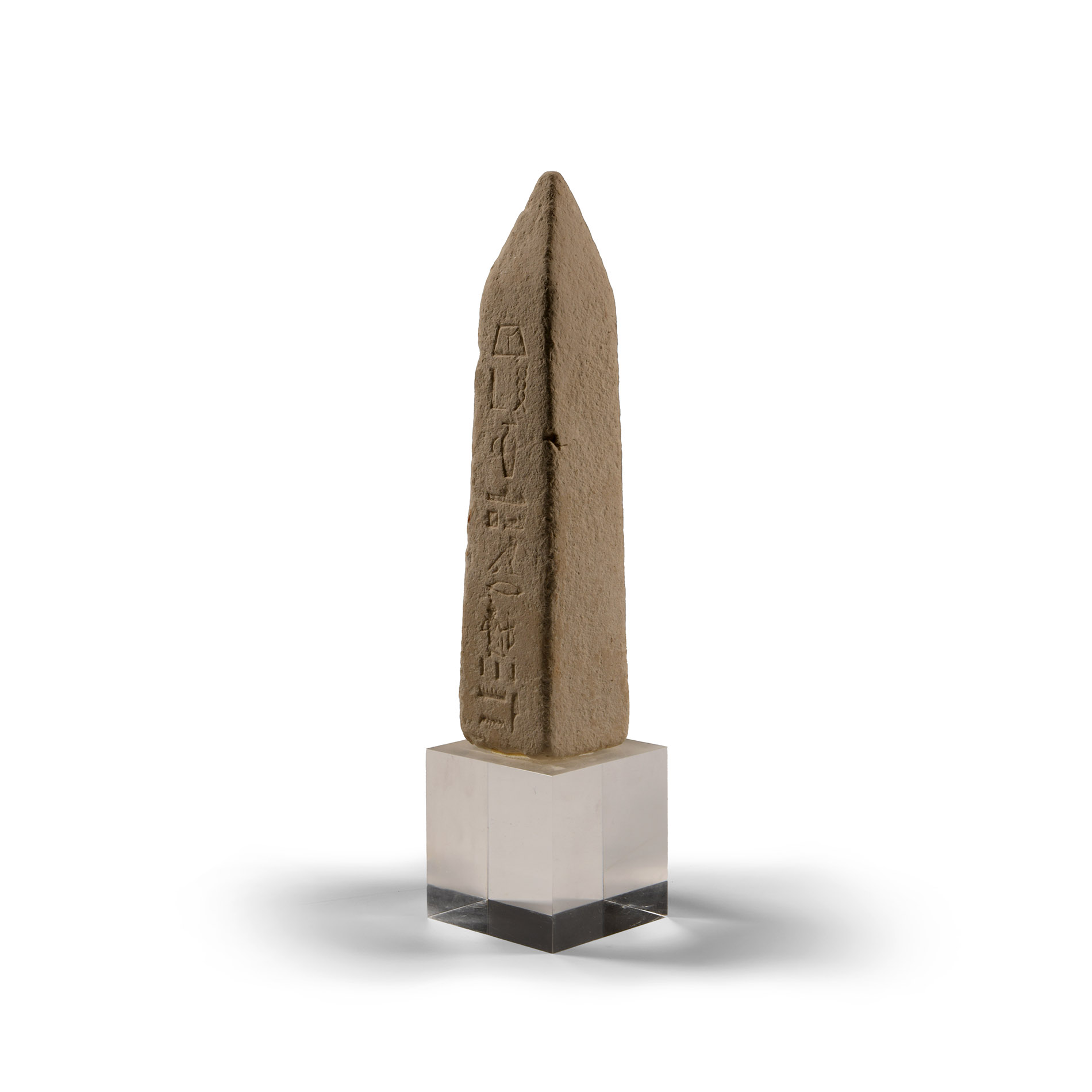
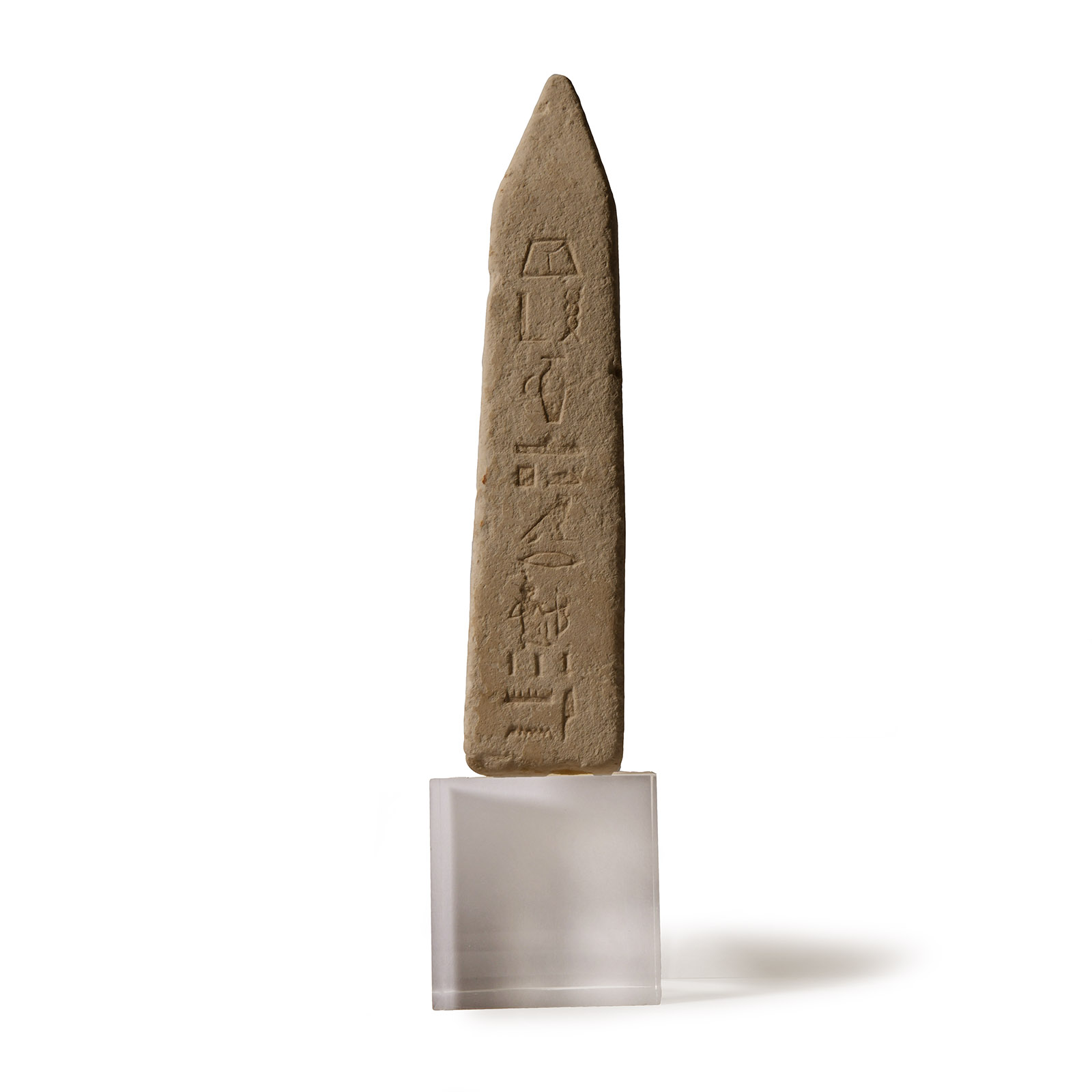
Egyptian Limestone Miniature Obelisk with Hieroglyphs
LATE PERIOD, 664-332 B.C.
8 1/4 in. (444 grams total, 21 cm high).
With tapering sides and pointed top, incised vertical column of hieroglyphic text to one face: ẖry-ḥbt ḳbḥ ḥtp mr-mšꜥ imn, ''lector-priest' (give) purified offering (to the) general of the army (of) Amun'; mounted on a custom-made stand.
ProvenanceAcquired in Egypt in the early 20th century.
Private collection of Mr T.H., Norfolk, UK.
Cf. similar in the collection of the British Museum under accession no.EA495.
FootnotesIn ancient Egypt, it was common for small obelisks like this one to be placed on either side of the entrance to private tombs. Typically inscribed on one side only, these obelisks held great solar religious significance and were closely associated with the cult of the sun-god Re. They symbolised the ancient Egyptians' belief in the rebirth of the deceased, with the moment of revivification being characterised by the individual's face being illuminated by the rays of the rising sun. It was said that, at that moment, the deceased was able to "open their sight to see the sun-god," as one religious text explains.
CONDITIONTimeLine Auctions follows a vetting process to ensure the authenticity and legality of all items, reinforcing our commitment to integrity and responsible trading. Each antiquity, antique, and coin lot undergoes thorough examination by a vetting committee of at least ten external specialists, professional trade association members, scientists, and archaeologists: Our Vetting Process
AUCTIONS:
TimeLine is a leading auction house specialising in antiquities, ancient art, collectables, natural history, coins, medals, and books. Our auctions offer museums, collectors, historians, and enthusiasts the opportunity to acquire unique and historically significant pieces.
LOT 0004
Egyptian Limestone Miniature Obelisk with Hieroglyphs
Sold for (Inc. bp): £5,460
-
.jpg)
Egyptian Alabaster Hedgehog Vessel
Late Period, 664-332 B.C.Estimate: £600 - 800 (+bp*)
Opening Bid: £240
Carved in the round with four stubby feet and hatched body, broad lip and with lug on the reverse. 99 grams, 45 mm
Part of an old collection dating back to the 19th century. Ex property of a gentleman, acquired before the 1980s. Private collection of Mr T.H., Norfolk, UK. -
Egyptian Pale Blue Faience Shabti for Padiosiris
Late Period, 664-525 B.C.Sold for (Inc. bp): £1,105
Finely modelled face with false beard and tripartite wig; hands holding the pick and the hoe; a seed bag over the left shoulder; plain back pillar; a T-shape arrangement of hieroglyphic text to the front: sḥḏ wsir sm n mnw pꜢ-di wsir(?) ms s(sic) r.t-ir.t-Ꜣst-n-wr.t mꜢʾ ḫrw ‘The illuminated, the Osiris, Sem-(priest ) of Min, God’s Servant, Pa-di-Osiris, born (to) Ret-iret-Isis-en-weret true of voice’; mounted on a custom-made stand. 98.6 grams, 14.5 cm including stand
French collection, 1990s. Acquired from St James's Ancient Art, London SW1, circa 2019. Private collection of Professor Kenneth Graham, London, UK. Accompanied by a St James's Ancient Art certificate of authenticity. -
.jpg)
Egyptian Memphis Triad Amulet
Late Period, 664-332 B.C.Estimate: £600 - 800 (+bp*)
Opening Bid: £300
Rectangular plaque with ledge to the lower edge, ribbed loop above, the half-round figures of the goddesses Nephthys and Isis wearing their characteristic headdresses flank the figure of the young Horus wearing the sidelock of youth. 9.1 grams, 37 mm high
From an early Home Counties, UK, collection, 1930-1940. Ex London, UK, collection.
The deities of this triad are the protagonists associated with the myth of Osiris.
