
Loading, please wait...
LOT 0487
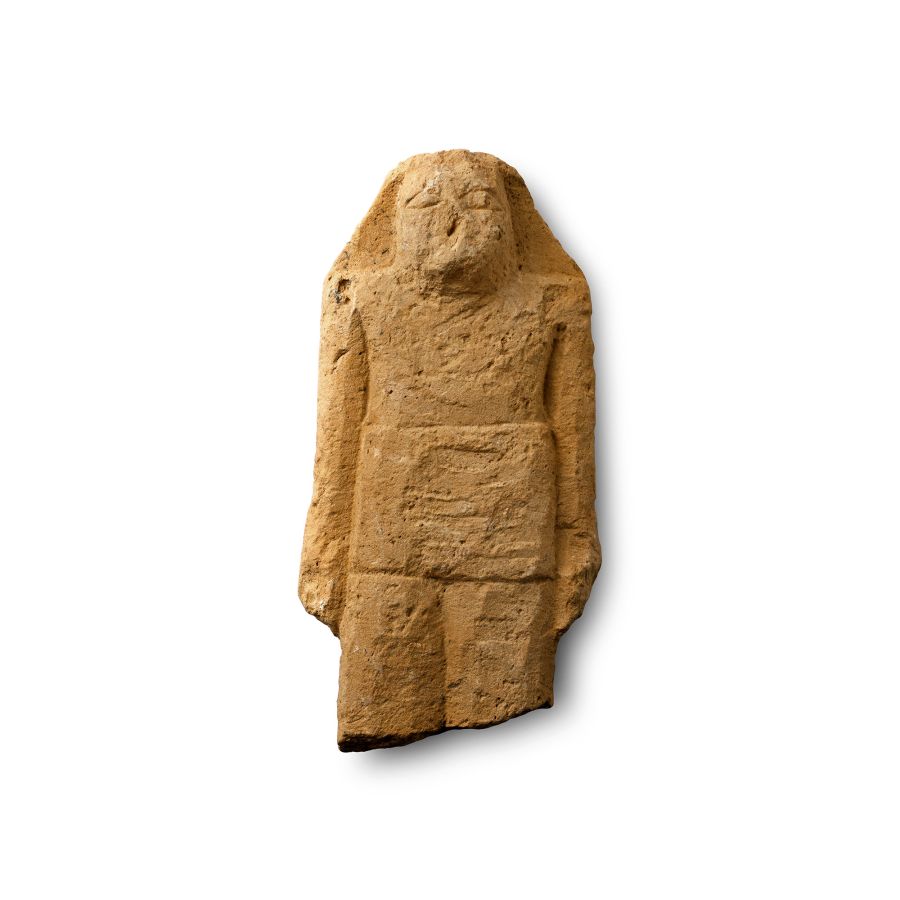
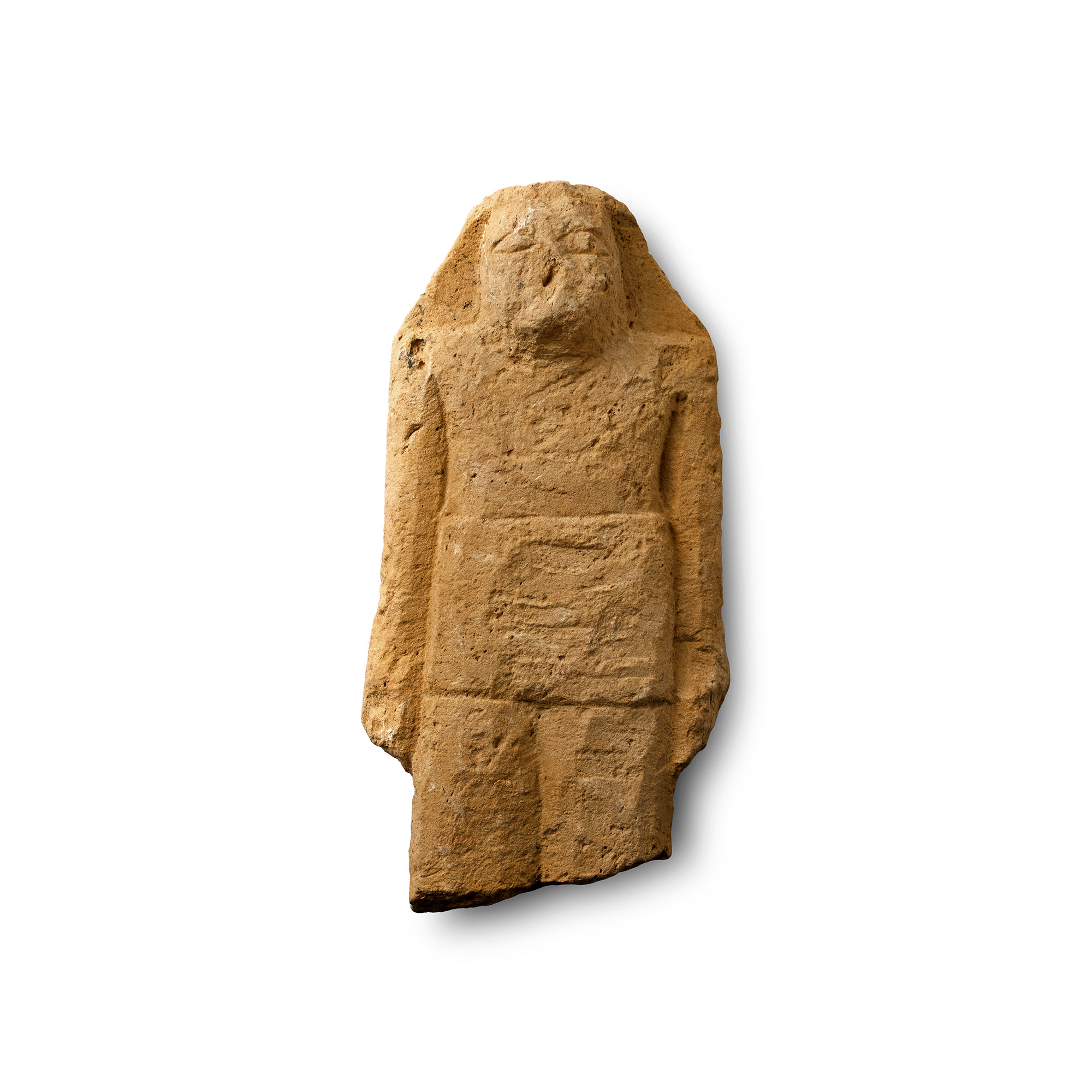
Egyptian Limestone Grave Figure
OLD KINGDOM, 4TH DYNASTY, CIRCA 2613-2498 B.C.
6 7/8 in. (969 grams, 17.5 cm).
Carved in the half-round with suggestion of facial features and kilt; remains of an inscription on the right arm; perhaps unfinished. [No Reserve]
ProvenanceFrom a Swiss private collection.
Acquired in Zurich in 1999.
From the collection of G.M.R.H., London, UK.
This lot is accompanied by an illustrated lot declaration signed by the Head of the Antiquities Department, Dr Raffaele D'Amato.
TimeLine Auctions follows a vetting process to ensure the authenticity and legality of all items, reinforcing our commitment to integrity and responsible trading. Each antiquity, antique, and coin lot undergoes thorough examination by a vetting committee of at least ten external specialists, professional trade association members, scientists, and archaeologists: Our Vetting Process
AUCTIONS:
TimeLine is a leading auction house specialising in antiquities, ancient art, collectables, natural history, coins, medals, and books. Our auctions offer museums, collectors, historians, and enthusiasts the opportunity to acquire unique and historically significant pieces.
-
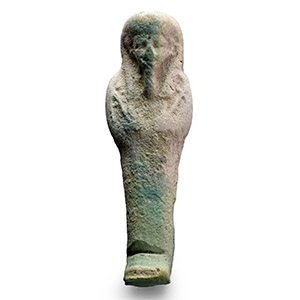
Egyptian Pale Blue Faience Shabti
Ptolemaic Period, 332-30 B.C.Sold for (Inc. bp): £169
Mummiform figure with false beard and holding agricultural implements in the crossed hands. 9.17 grams, 63 mm
Ex London, UK, collection, 1990s. This lot is accompanied by an illustrated lot declaration signed by the Head of the Antiquities Department, Dr Raffaele D'Amato. -
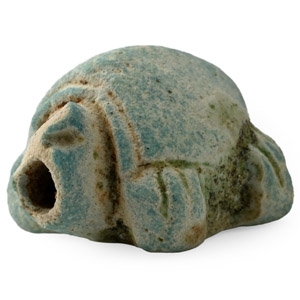
Egyptian Faience Turtle Amulet
Late Period, 664-332 B.C.Sold for (Inc. bp): £143
Blue glazed turtle amulet or bead with flat base and incised lines to each leg, pierced for suspension. 0.76 grams, 11 mm
From an early 20th century collection. This lot is accompanied by an illustrated lot declaration signed by the Head of the Antiquities Department, Dr Raffaele D'Amato.
Turtle amulets have a rich history in ancient Egypt. The turtle was considered to possess a dual character. On one hand, it lived in the dark depths, embodying cosmic danger and was ritually annihilated. On the other hand, its power could be harnessed to ward off evil and work to the advantage of people, making turtle amulets a potent symbol of protection. -
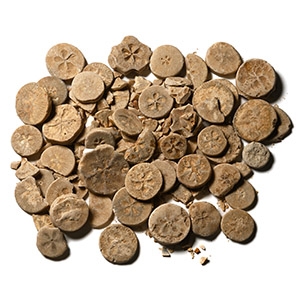
Egyptian Limestone Floral Inlay Group
Roman Period, 30 B.C.-323 A.D. or earlierSold for (Inc. bp): £33
Group of discoid inlay plaques or gaming counters, crinoids with cinquefoil motif; some fragmentary. 60 grams total, 1-21 mm
From a central London ADA dealership, 1980-1990. This lot is accompanied by an illustrated lot declaration signed by the Head of the Antiquities Department, Dr Raffaele D'Amato.
Flowers were symbolic of rebirth due to the daily reopening of their petals after nightfall. As a result, they were widely used in domestic settings, religious and funerary contexts, and as adornments. Similar rosette discs, like those recovered from the Ramesside Period palace at Qantir, were used as decorative elements in royal palaces.
