
Loading, please wait...
_900x900.jpg "Egyptian Limestone Fragment with Face")
_200x200.jpg "Egyptian Limestone Fragment with Face")
.jpg "Egyptian Limestone Fragment with Face")
LOT 0005
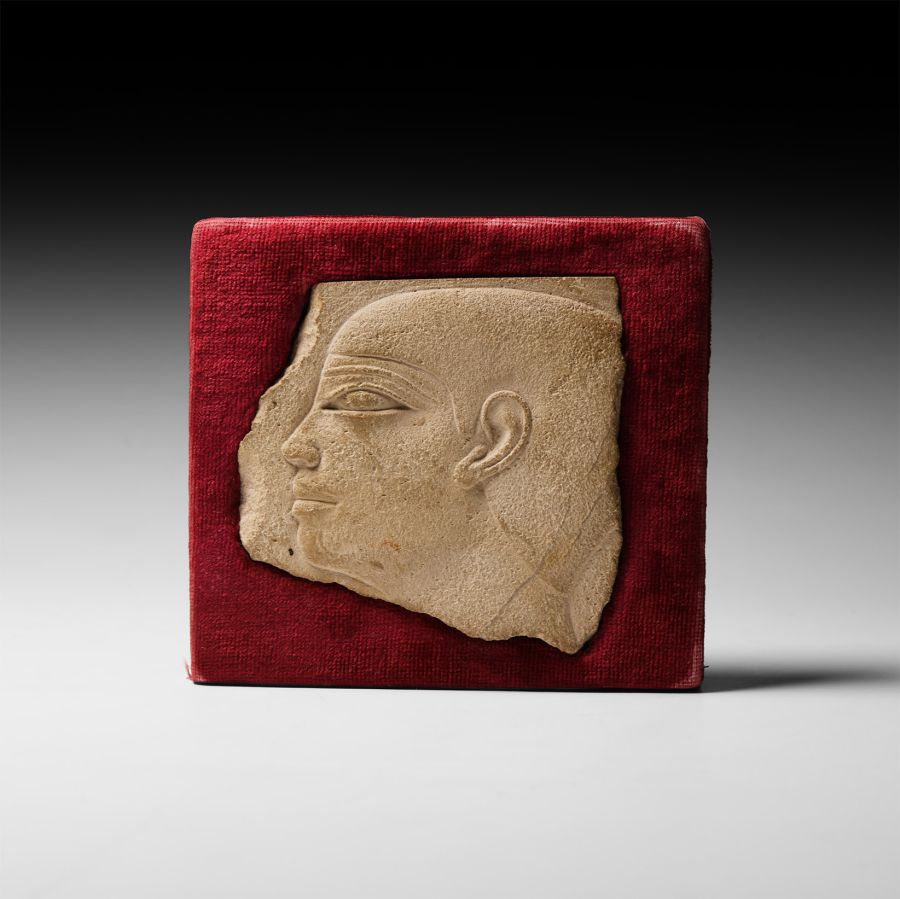
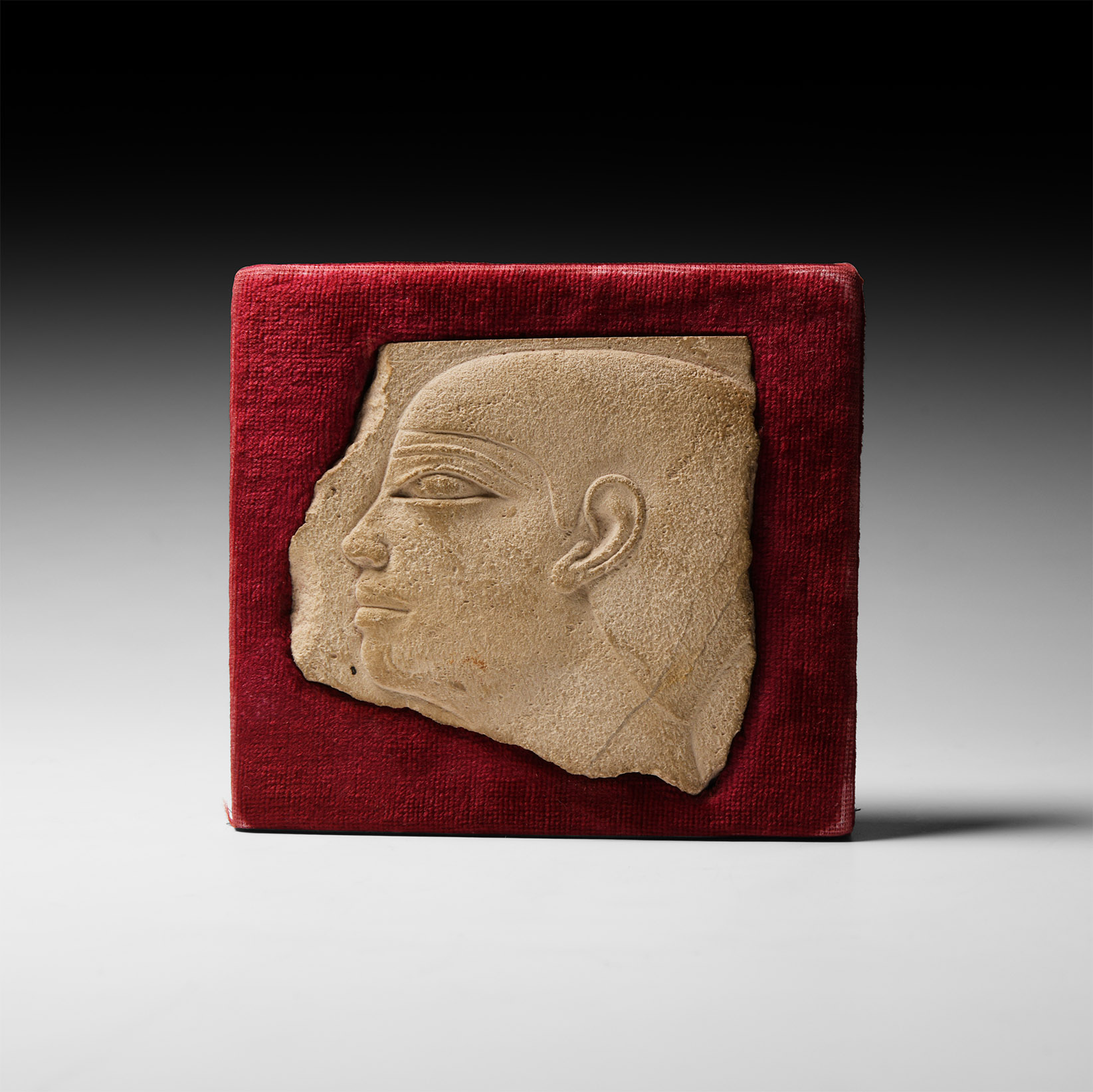
Egyptian Limestone Fragment with Face
OLD KINGDOM, 2686-2181 B.C.
2 3/4 in. (129 grams, 71 mm wide).
A carved limestone relief fragment with profile male head facing left, with close-cropped hair and detailed treatment of the eye, ear and mouth; inked inscription to the reverse 'E. H. Heckett.'; set in an old velvet-covered mount.
ProvenanceFrom the estate of a deceased American, acquired between 1970-1989.
with Bonham's, London, Knightsbridge, 28 October 2009, lot 23 [Part].
Accompanied by a copy of the relevant Bonhams catalogue pages.
This lot has been checked against the Interpol Database of stolen works of art and is accompanied by search certificate no.11596-198972.
TimeLine Auctions follows a vetting process to ensure the authenticity and legality of all items, reinforcing our commitment to integrity and responsible trading. Each antiquity, antique, and coin lot undergoes thorough examination by a vetting committee of at least ten external specialists, professional trade association members, scientists, and archaeologists: Our Vetting Process
AUCTIONS:
TimeLine is a leading auction house specialising in antiquities, ancient art, collectables, natural history, coins, medals, and books. Our auctions offer museums, collectors, historians, and enthusiasts the opportunity to acquire unique and historically significant pieces.
-
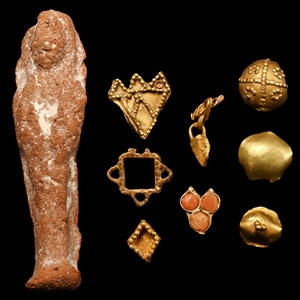
Egyptian and Other Artefact Collection
1st millennium B.C. and laterSold for (Inc. bp): £195
A mixed group comprising: a miniature glazed composition shabti; two gold domed discs, one with a granule cluster to the apex; a gold lozenge cell with granulation to the rim; a square gold cell with flanking loops and granulation; a gold triangular panel with granulated dividers, triangles to the upper edge; a gold domed disc with quartered design and rosettes, granulated; a gold leaf-shaped pendant and chain links; three gold cells with carnelian inlays. 5.35 grams total, 6-46 mm
Acquired 1990s. English private collection. Property of an Essex gentleman. -
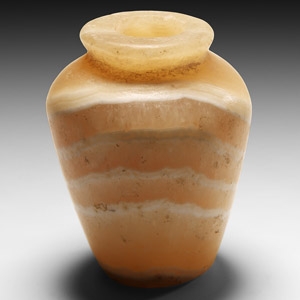
Egyptian Alabaster Vessel
Late Period, 664-332 B.C.Sold for (Inc. bp): £338
A piriform veined alabaster vessel with everted neck and broad rim. 342 grams, 78 mm high
French collection, 1960s-early 2000s. From an important Paris gallery, France. -
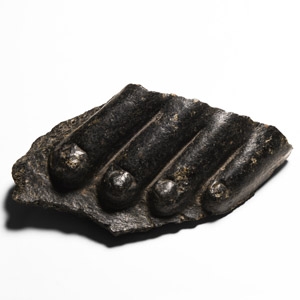
Egyptian Black Granite Foot Fragment
Late New Kingdom, 1550-1070 B.C.Sold for (Inc. bp): £585
A carved black granite statue base fragment with four toes modelled in the round, with delineated nails of a left foot. 253 grams, 11.8 cm
Acquired from France, 2015. English private collection. Accompanied by a copy of the French cultural passport no.167713. Accompanied by an academic report by Dr Alberto Maria Pollastrini.
