
Loading, please wait...
_900x900.jpg "Egyptian Limestone 'Floral' Inlay Group")
_200x200.jpg "Egyptian Limestone 'Floral' Inlay Group")
.jpg "Egyptian Limestone 'Floral' Inlay Group")
LOT 0486
Egyptian Limestone 'Floral' Inlay Group
ROMAN PERIOD, 30 B.C.-323 A.D.
3/8 - 3/4 in. (36 grams total, 11-18 mm).
Group of discoid inlay plaques or gaming counters, crinoids with cinquefoil motif. [18, No Reserve]
ProvenanceFrom a central London ADA dealership, 1980-1990.
CONDITIONTimeLine Auctions follows a vetting process to ensure the authenticity and legality of all items, reinforcing our commitment to integrity and responsible trading. Each antiquity, antique, and coin lot undergoes thorough examination by a vetting committee of at least ten external specialists, professional trade association members, scientists, and archaeologists: Our Vetting Process
AUCTIONS:
TimeLine is a leading auction house specialising in antiquities, ancient art, collectables, natural history, coins, medals, and books. Our auctions offer museums, collectors, historians, and enthusiasts the opportunity to acquire unique and historically significant pieces.
-
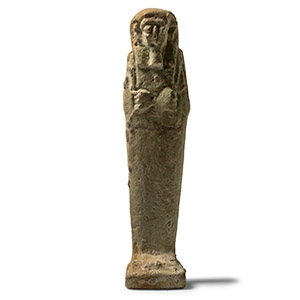
Egyptian Pale Green Faience Shabti
Ptolemaic Period, 332-30 B.C.Sold for (Inc. bp): £156
Mummiform figure with dorsal pillar, hands folded across the chest holding a pick and flail, with seed bag over left shoulder. 29.8 grams, 90 mm
Acquired 1950s-1960s. From the estate of a deceased Norfolk, UK, gentleman. Accompanied by a dealer's information display card. -
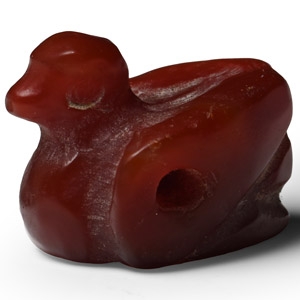
Egyptian Red Jasper Bird Amulet
Late Period, 664-332 B.C.Sold for (Inc. bp): £78
The seated figure of a duck(?), its small carefully rendered head with internally detailed eyes; a transverse suspension hole through its folded wings. 1.35 grams, 13 mm
From the collection of a gentleman, acquired on the London art market in the 1990s. -
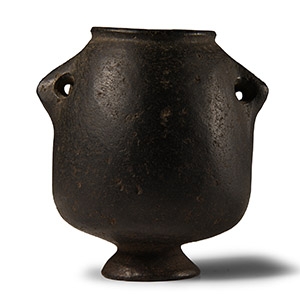
Egyptian Predynastic Basalt Vase
Naqada I-II, circa 3900-3300 B.C.Sold for (Inc. bp): £4,680
Barrel-shaped in profile with tapering neck and trumpet-shaped foot, two lateral pierced lug handles, flared rim (damaged). 330 grams, 86 mm
French private collection. From the 'Yvelines Department', Northern France. with Mme Digard, Drouot, Paris, 7 February 2011, no.107. Accompanied by a copy of a French cultural passport. This lot has been checked against the Interpol Database of stolen works of art and is accompanied by a search certificate number no.12072-218133.
