
Loading, please wait...

LOT 0458
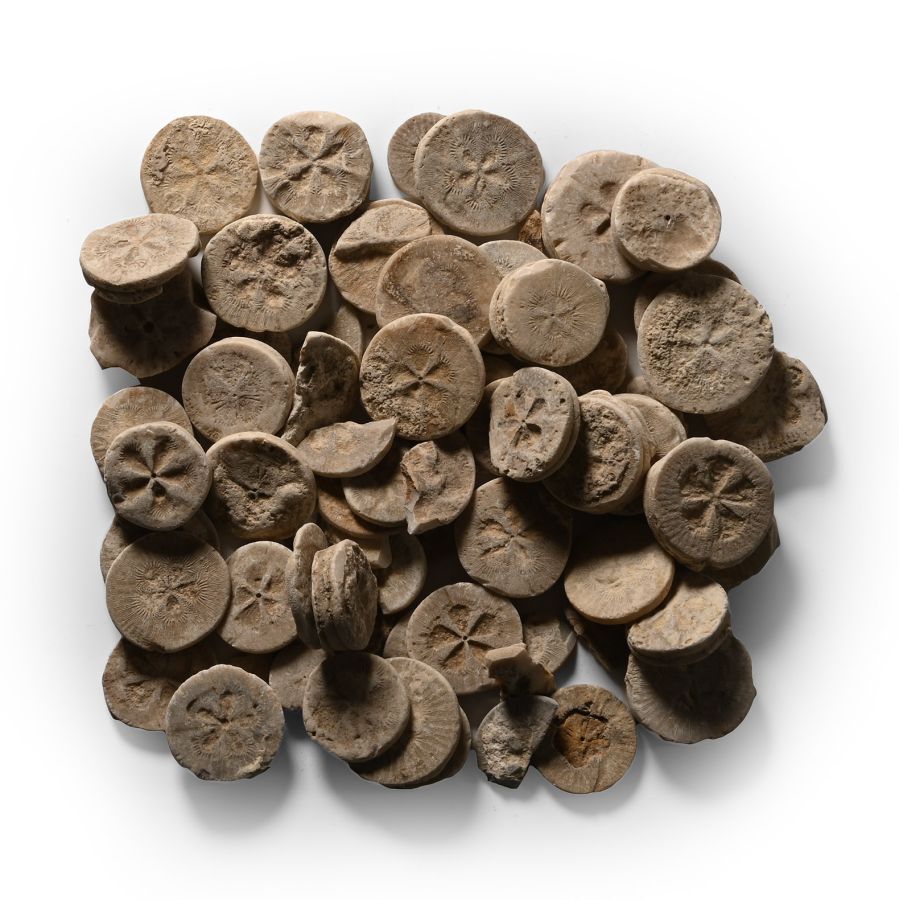
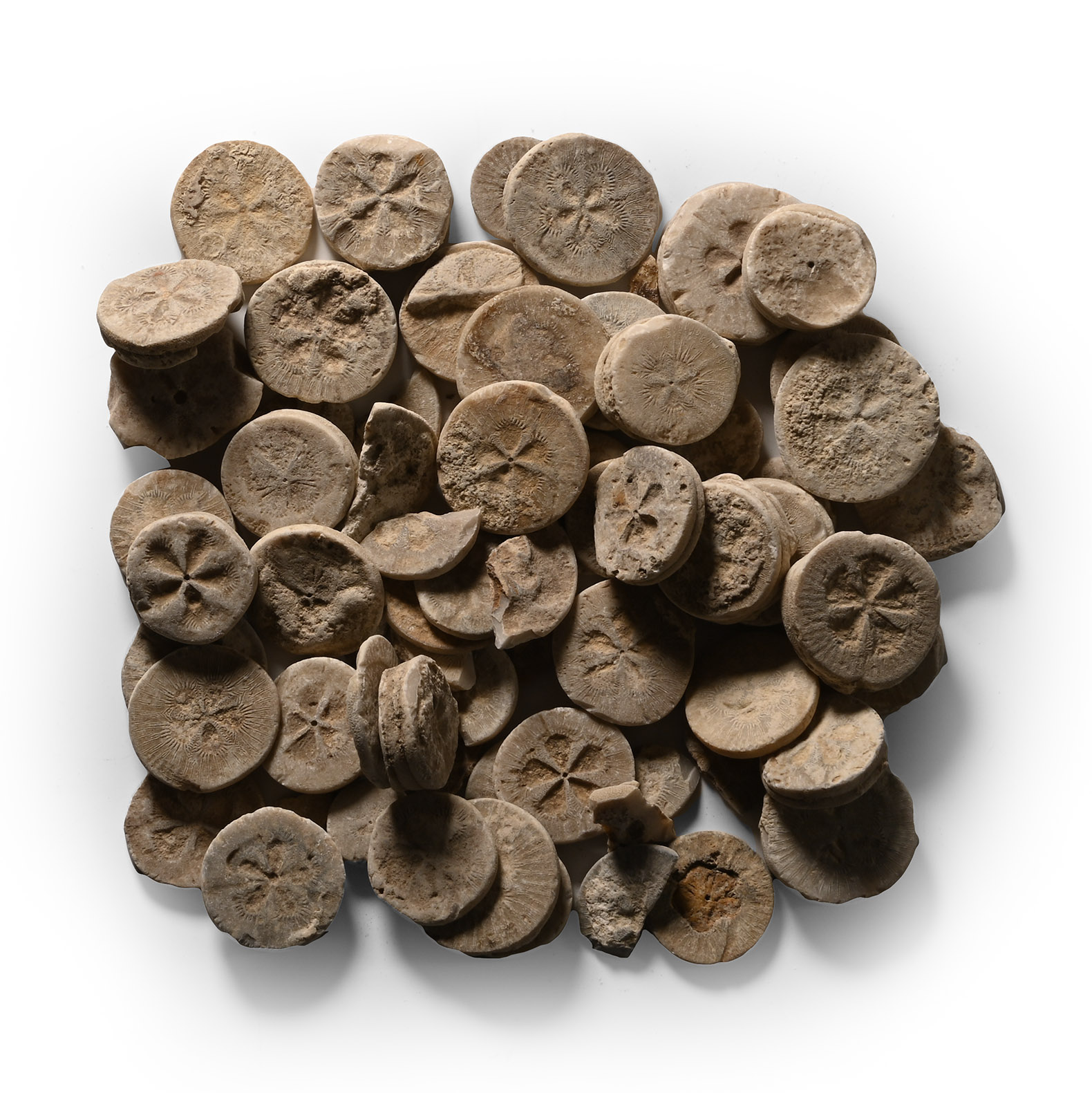
Egyptian Limestone 'Floral' Inlay Group
ROMAN PERIOD, 30 B.C.-323 A.D. OR EARLIER
1/4 - 5/8 in. (79 grams total, 8-18 mm).
Group of discoid inlay plaques or gaming counters, crinoids with cinquefoil motif. [70, No Reserve]
ProvenanceFrom a central London ADA dealership, 1980-1990.
FootnotesFlowers were symbolic of rebirth due to the daily reopening of their petals after nightfall. As a result, they were widely used in domestic settings, religious and funerary contexts, and as adornments. Similar rosette discs, like those recovered from the Ramesside Period palace at Qantir, were used as decorative elements in royal palaces.
CONDITIONTimeLine Auctions follows a vetting process to ensure the authenticity and legality of all items, reinforcing our commitment to integrity and responsible trading. Each antiquity, antique, and coin lot undergoes thorough examination by a vetting committee of at least ten external specialists, professional trade association members, scientists, and archaeologists: Our Vetting Process
AUCTIONS:
TimeLine is a leading auction house specialising in antiquities, ancient art, collectables, natural history, coins, medals, and books. Our auctions offer museums, collectors, historians, and enthusiasts the opportunity to acquire unique and historically significant pieces.
-
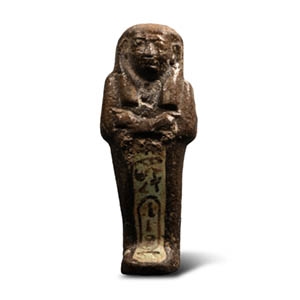
Egyptian Brown Glazed Shabti for Queen Isetnofret
New Kingdom, 12th century B.C.Estimate: £2,000 - 3,000 (+bp*)
Opening Bid: £1,000
Of mummiform type, wearing a tripartite wig, stylised facial features with large ears, hands crossed at the chest; a contrasting green-glazed frontal column of hieroglyphic text with a cartouche which reads wsỉr nswt wrt Ꜣst-nfr.t, ‘The Osiris, the great king's wife Iset-nofret’. 88 grams, 10.8 cm
Acquired on the German art market, 1989-1995. with The Museum Gallery, 19 Bury Place, London, WC1, UK, 1998-2003. Property of a London based academic, 2003-present. This lot has been checked against the Interpol Database of stolen works of art and is accompanied by a search certificate number no.12373-226026.
Several late New Kingdom queens were named Iset-nofret, but this particular example is likely associated with one of the two wives of Ramesses II who had the same name. One of these queens gave birth to Prince Khaemwaset and is mentioned on monuments erected by him. While it is possible that the queen's shabtis were used for funerary purposes, Khaemwaset is known to have placed his own shabtis as votives in non-sepulchral locations in the Memphite necropolises, and it is possible that he also did the same with shabtis naming his mother. For a discussion of the Ramesside queens with this name, see Tyldesley, J., Chronicle of the Queens of Egypt, London, 2006, p.154ff. -
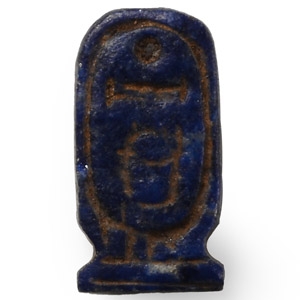
Egyptian Lapis Lazuli Amulet with Cartouche
New Kingdom, 1539-1075 B.C.Sold for (Inc. bp): £143
Rectangular in section with longitudinal piercing, hieroglyphic text. 1.38 grams, 16 mm
Acquired on the UK art market before 2000. Property of an Essex, UK, gentleman. -
.jpg)
Egyptian Alabaster Cosmetic Jar
Late Period, 664-332 B.C.Sold for (Inc. bp): £130
Tapering gradually towards the top, with two small lugs at the shoulders, a collared rim, and flattened base. 77 grams, 87 mm
Private collection, Zurich, acquired in 1975 when the owners lived in Cairo (1975-1980). with Bonhams London, Antiquities, 23 July 2020, lot 119 (part). Property of a Bristol, UK, gentleman.
