
Loading, please wait...
LOT 0462
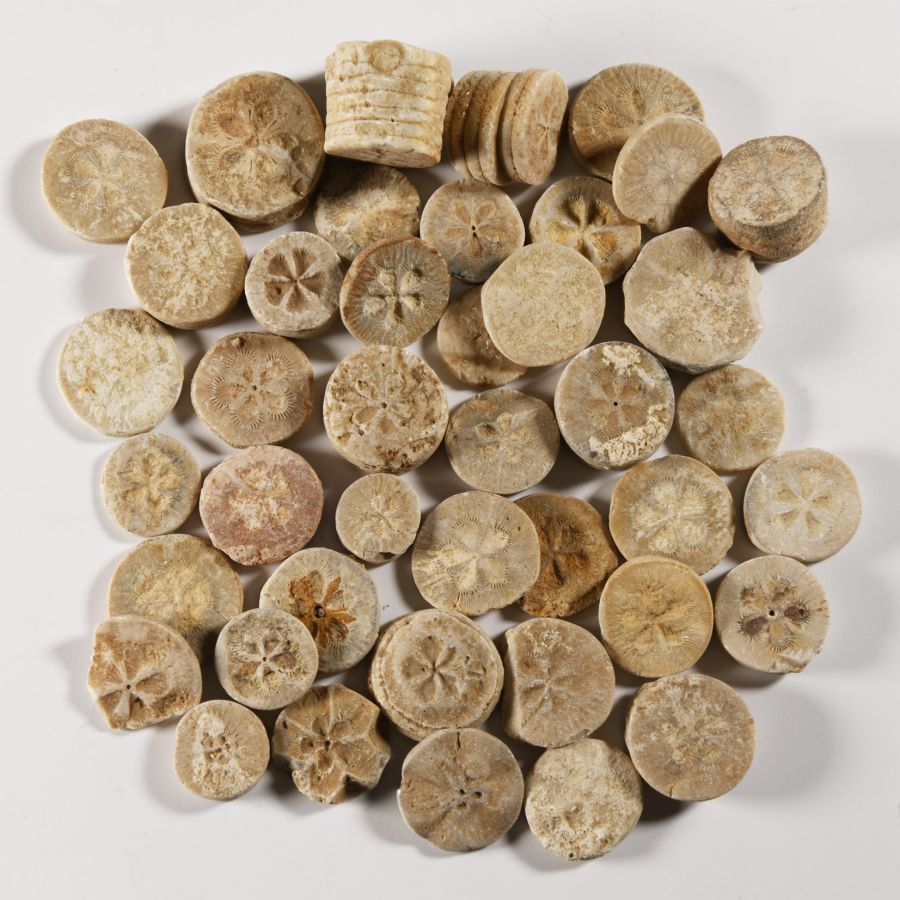
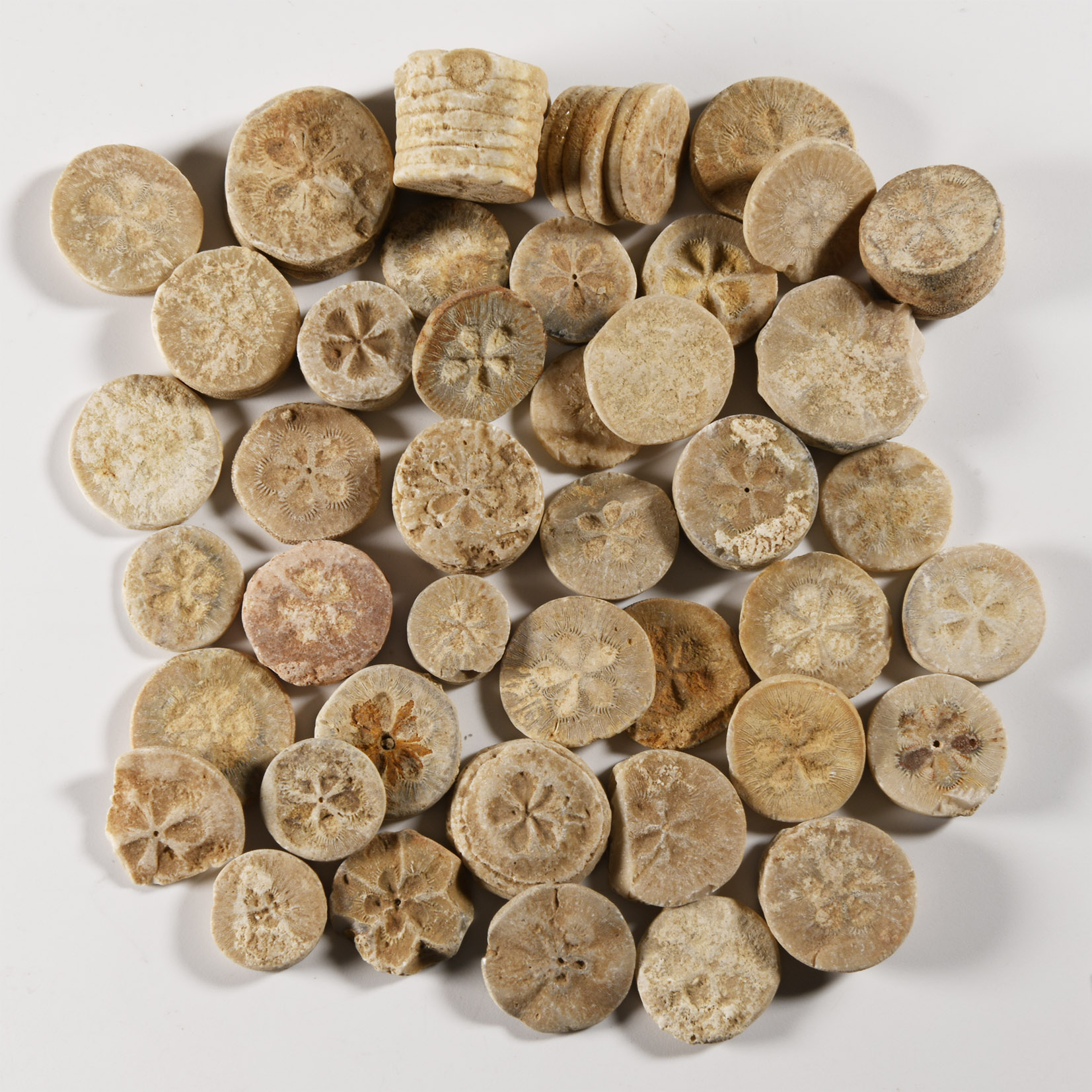
Egyptian Limestone Floral Inlay Group
ROMAN PERIOD, 30 B.C.-323 A.D.
3/8 - 3/4 in. (77 grams total, 11-20 mm).
Group of discoid inlay plaques with cinquefoil motif. [42]
ProvenanceFrom a central London ADA member's gallery, 1990s.
CONDITIONTimeLine Auctions follows a vetting process to ensure the authenticity and legality of all items, reinforcing our commitment to integrity and responsible trading. Each antiquity, antique, and coin lot undergoes thorough examination by a vetting committee of at least ten external specialists, professional trade association members, scientists, and archaeologists: Our Vetting Process
AUCTIONS:
TimeLine is a leading auction house specialising in antiquities, ancient art, collectables, natural history, coins, medals, and books. Our auctions offer museums, collectors, historians, and enthusiasts the opportunity to acquire unique and historically significant pieces.
-
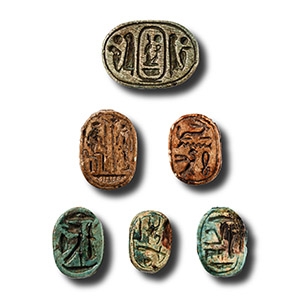
Egyptian Steatite and Other Scarab Collection
Late Period, 664-332 B.C.Sold for (Inc. bp): £715
Group of steatite and glazed composition scarabs each with hieroglyphs to the underside, the largest with a cartouche of Amenophis III. 10.1 grams total, 13-18 mm
Ex North London, UK, gentleman, 1990s. -
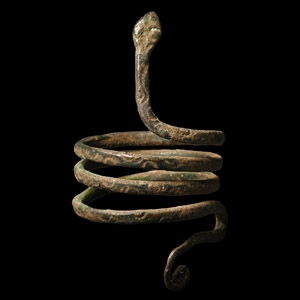
Romano-Egyptian Bronze Snake Ring
Circa 1st century B.C.Sold for (Inc. bp): £234
With D-section narrow coiled band with stylised scale detailing, raised head and tightly coiled tip of the tail. 4.61 grams, 40.41 mm overall, 17.80 mm internal diameter (approximate size British L, USA 5 3/4, Europe 11.24, Japan 10)
Acquired on the UK art market before 2000. Property of a Surrey, UK, collector. -
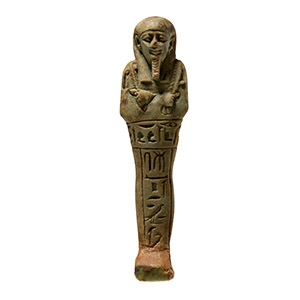
Egyptian Green Faience Shabti with Hieroglyphic Inscription
Late Period, 664-332 B.C.Sold for (Inc. bp): £650
Olive-green glazed composition with detailed facial features, hands, tools, seed bag, dorsal pillar; T-shaped hieroglyphic text: 'sḥḏ wsir nb pḥ.ty ..ns(?) mꜢʾ ḫrw ms n ipt-wrt(?)' ‘The illuminated, the Osiris, Lord of Strength ..ns(?), true of voice’ born to Ipet-weret(?)’; mounted on a custom-made stand. 169 grams total, 15 cm high including stand
Part of an old collection dating back to the 19th century. Ex property of a gentleman, acquired before the 1980s. Private collection of Mr T.H., Norfolk, UK.
