
Loading, please wait...
LOT 0456
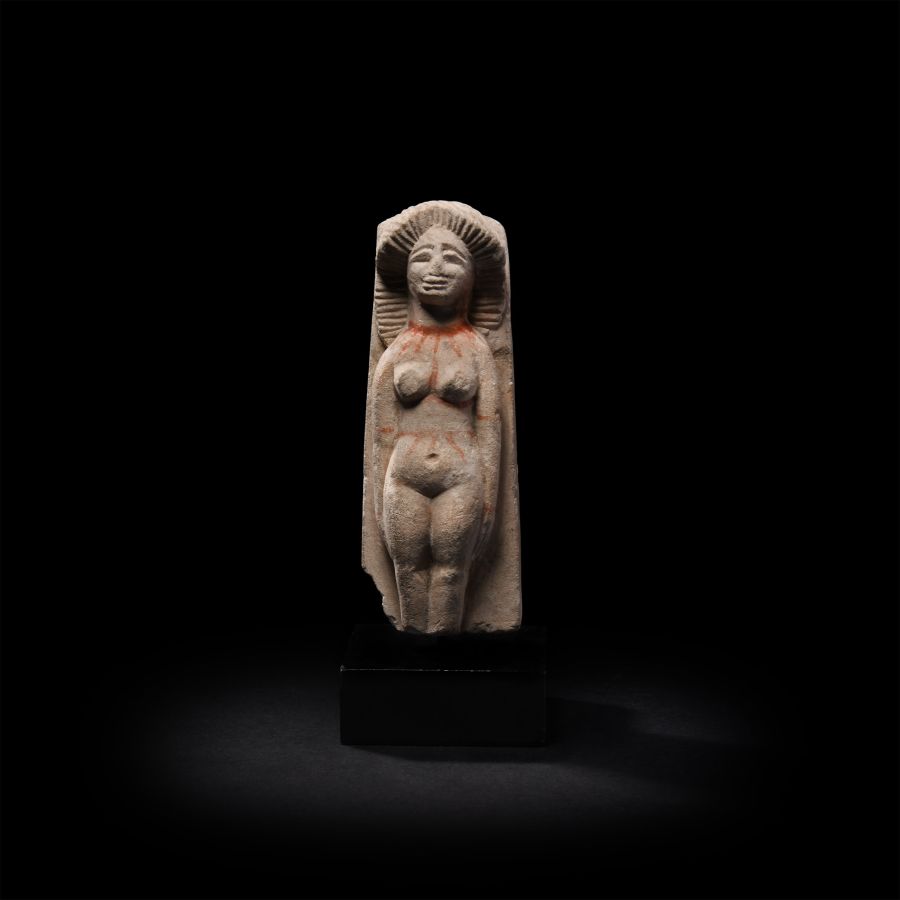
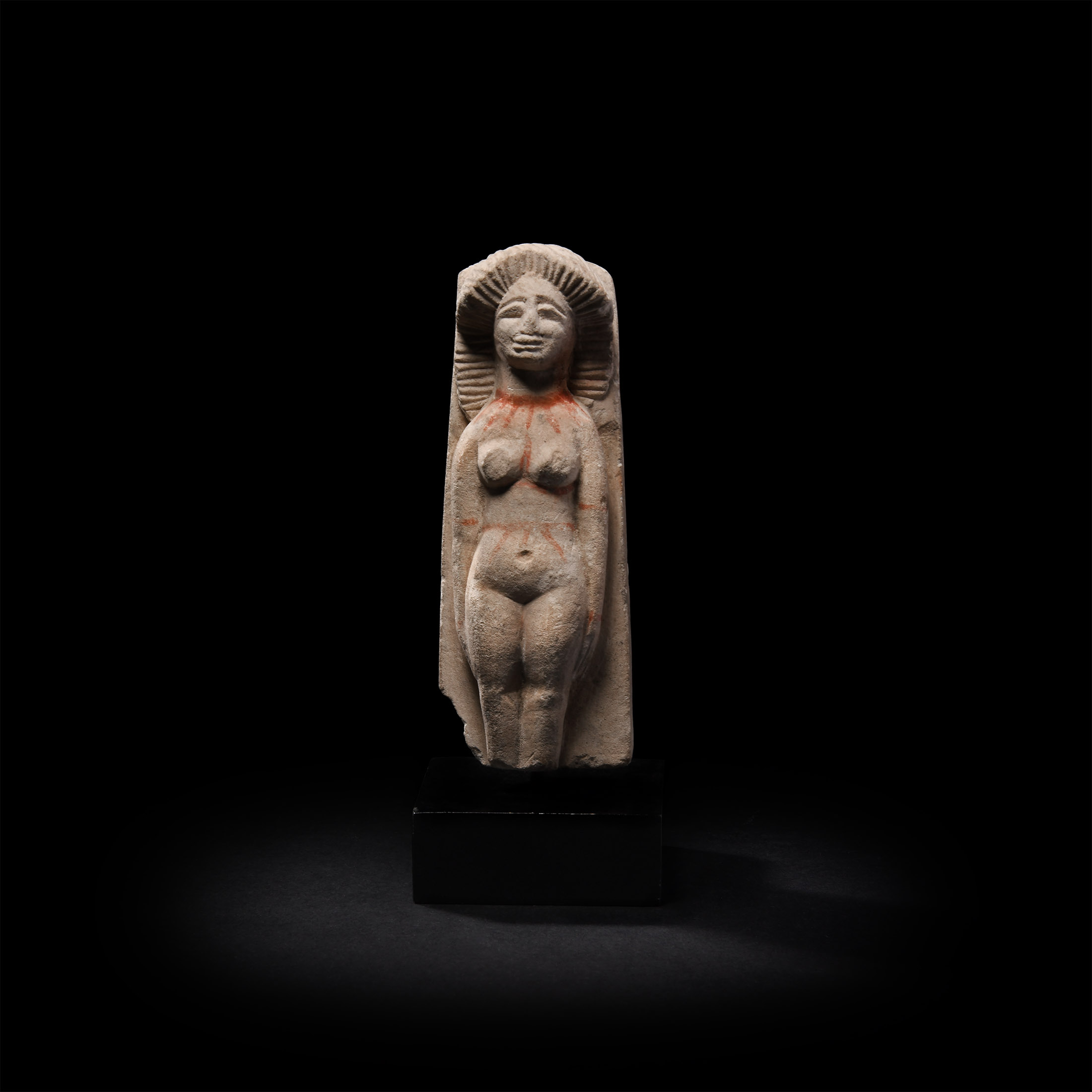
Egyptian Limestone Figure of Isis-Aphrodite
PTOLEMAIC-ROMAN PERIOD, 332 B.C.-200 A.D.
4 1/2 in. (109 grams total, 11.5 cm including stand).
A limestone figure modelled in the half-round, lying naked on a rectangular bed, executed with semi-naturalistic anatomical detailing, voluminous coiffed hair and painted necklace, armbands and distinctive ornamental girdle at the waist; accompanied by a custom-made display stand.
Provenancewith Secret Eye Gallery, New York City, 1977.
with Arte Primitivo, New York, USA, 8 October, 2003, lot 66.
Private collection of Professor Kenneth Graham, London, UK.
Accompanied by an original Arte Primitivo catalogue page.
Accompanied by a scholarly note by Egyptologist Paul Whelan.
This syncretic figure combines the Egyptian goddess Isis and the Greek goddess Aphrodite, a deity popular from the 3rd century B.C. into the Roman Period, who embodied aspects of fertility, marriage, and childbirth.
CONDITIONTimeLine Auctions follows a vetting process to ensure the authenticity and legality of all items, reinforcing our commitment to integrity and responsible trading. Each antiquity, antique, and coin lot undergoes thorough examination by a vetting committee of at least ten external specialists, professional trade association members, scientists, and archaeologists: Our Vetting Process
AUCTIONS:
TimeLine is a leading auction house specialising in antiquities, ancient art, collectables, natural history, coins, medals, and books. Our auctions offer museums, collectors, historians, and enthusiasts the opportunity to acquire unique and historically significant pieces.
-
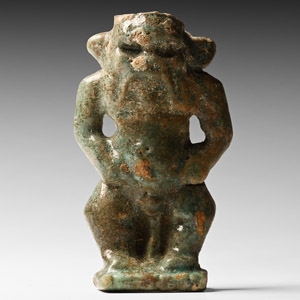
Egyptian Faience Figure of Bes
Ptolemaic Period, 332-30 B.C.Sold for (Inc. bp): £234
A green glazed composition figure of Bes standing on a base; plumed headdress and loop absent. 4.79 grams, 34 mm
Acquired early 1990s. Ex private American collection; thence by descent. Private Swiss collection since 1998. -
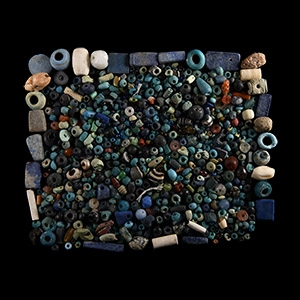
Egyptian and Other Faience and Hardstone Bead Collection
1st millennium B.C. and laterSold for (Inc. bp): £312
A mixed group of mainly composition, glass, shell and stone polychrome beads of various types and dates. 167 grams total, 2-26 mm
Acquired in the 1970s. Important European collection. -
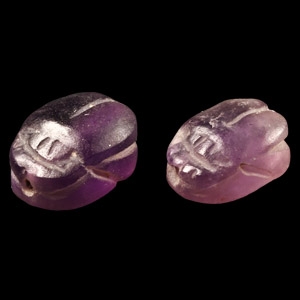
Egyptian Amethyst Scarab Group
Graeco-Roman Period, 332 B.C.-323 A.D.Sold for (Inc. bp): £338
A group of two amethyst scarabs pierced for suspension, each with simple detailing to the wings, head and legs. 1.12 grams total, 8-9 mm
Acquired 1980s. Private collection of L.H., Staffordshire, UK. Property of a Sussex, UK, teacher.
