
Loading, please wait...
LOT 0009
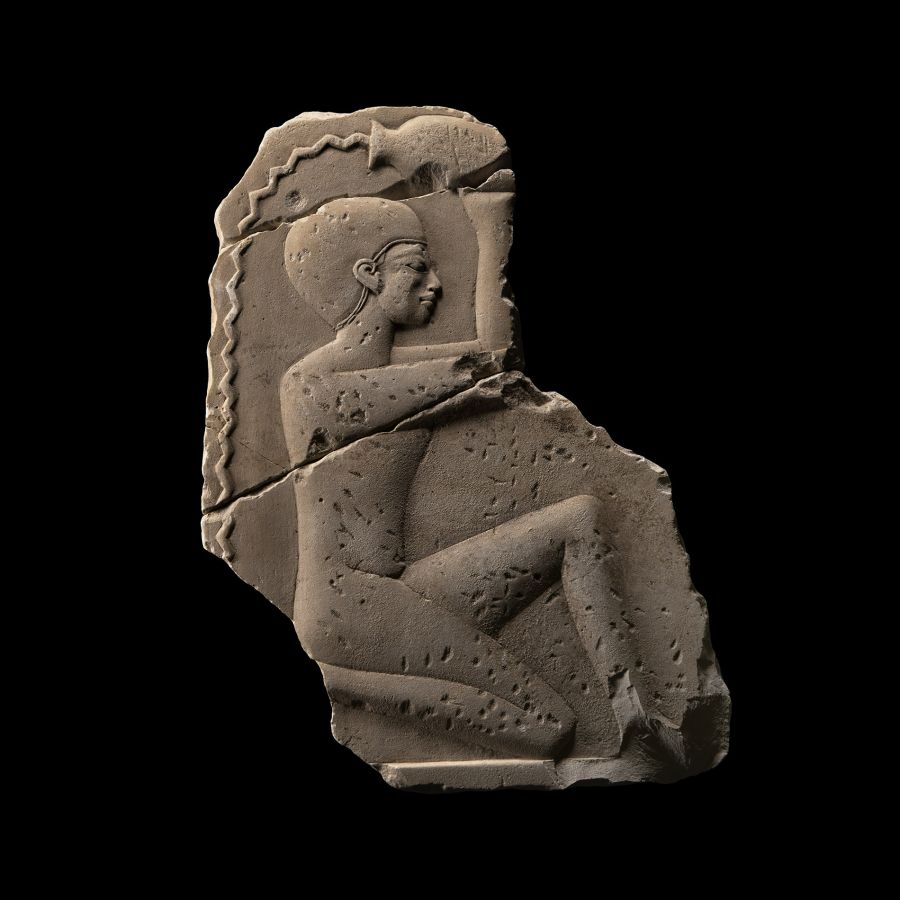
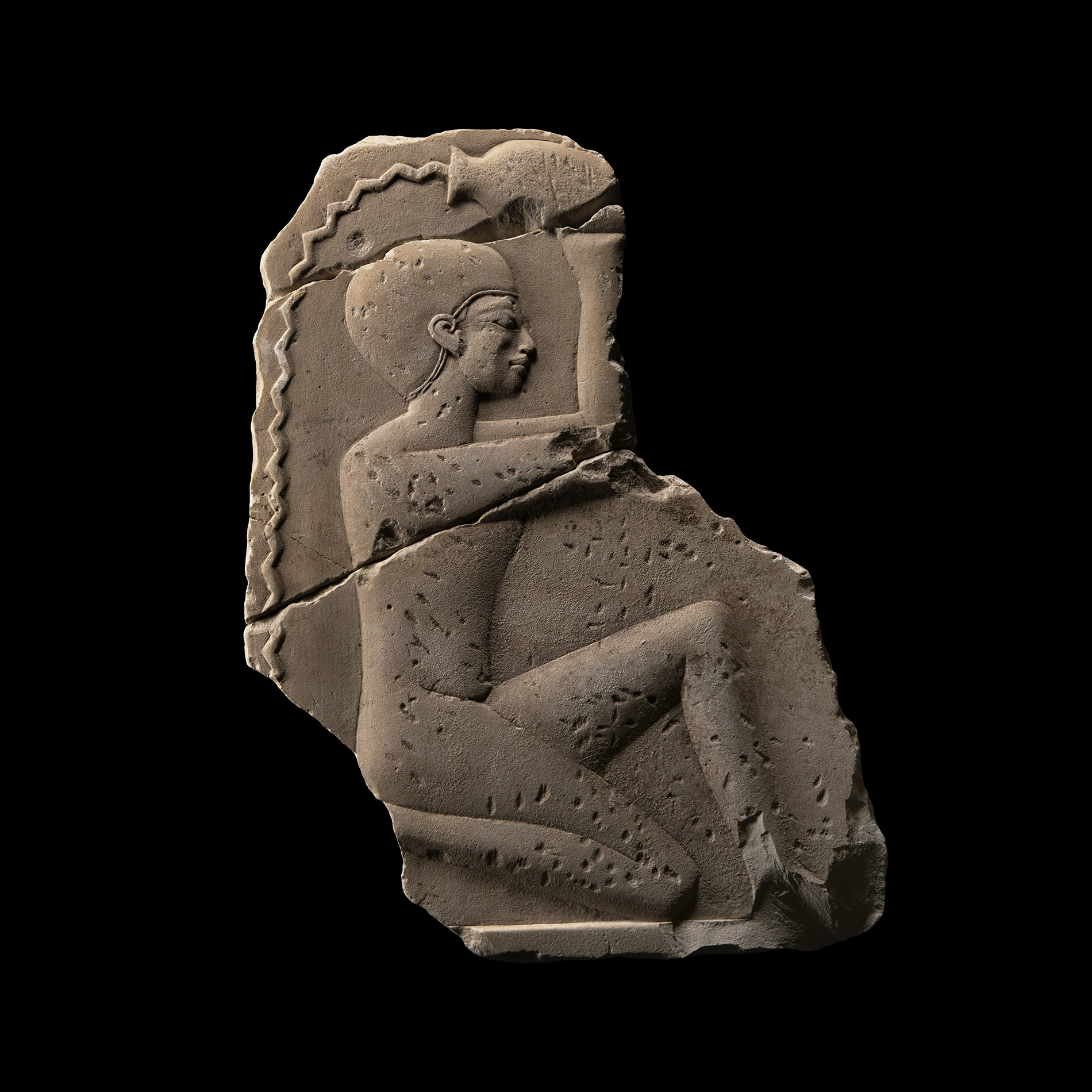
Egyptian Limestone Figural Temple Relief
LATE NEW KINGDOM, 1293-1060 B.C.
10 in. (1.2 kg, 25.6 cm).
Depicting a naked male figure crouching right, wearing a head cap and lifting an amphora over his head, pouring its liquid contents out behind him; with pecking defacing; repaired.
ProvenanceEx T.C. collection, Martigny, Switzerland.
Acquired in Europe before 1994.
This lot has been checked against the Interpol Database of stolen works of art and is accompanied by search certificate number no.11836-206814.
TimeLine Auctions follows a vetting process to ensure the authenticity and legality of all items, reinforcing our commitment to integrity and responsible trading. Each antiquity, antique, and coin lot undergoes thorough examination by a vetting committee of at least ten external specialists, professional trade association members, scientists, and archaeologists: Our Vetting Process
AUCTIONS:
TimeLine is a leading auction house specialising in antiquities, ancient art, collectables, natural history, coins, medals, and books. Our auctions offer museums, collectors, historians, and enthusiasts the opportunity to acquire unique and historically significant pieces.
-
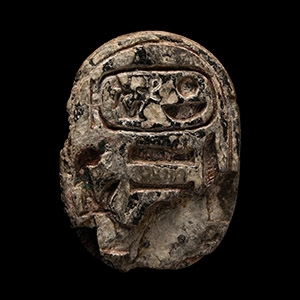
Large Egyptian Stone Hieroglyphic Scarab for Amenhotep III
New Kingdom, 1386-1349 B.C.Estimate: £1,000 - 1,400 (‡+bp*)
Opening Bid: £500
Naturalistically modelled with detailing to the upper body and legs; damaged base with the throne name 'neb-maat-re' of Amenhotep III in cartouche and the god's name Amun-Re below; pierced for suspension. 41 grams, 44 mm
Ex R. Liechti (1934-2010) Geneva, Switzerland, collection between 1950-1990s. -
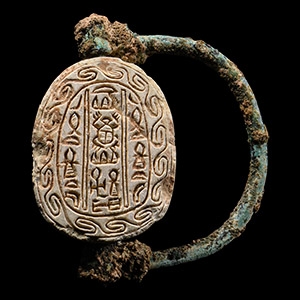
Egyptian Bronze Ring with Hyksos Scarab
2nd Intermediate Period, 15th Dynasty, Hyksos, 1648-1540 B.C.Sold for (Inc. bp): £780
Round-section bronze shank with attachment wires retaining a glazed composition scarab with three columns of hieroglyphs with a rope border. 9.41 grams, 37 mm wide
From the private collection of the late Mr S.M., London, UK, 1969-1999; thence by descent. -
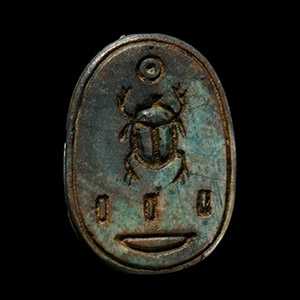
Egyptian Stone Scarab Inscribed for Tutankhamun
New Kingdom, 1334-1325 B.C.Sold for (Inc. bp): £6,500
Naturalistically modelled and coloured blue, hieroglyphs on base; pierced for suspension. 4.55 grams, 20 mm
Ex collection of Emil Saad, Paris-Alexandria.
