
Loading, please wait...
LOT 0027
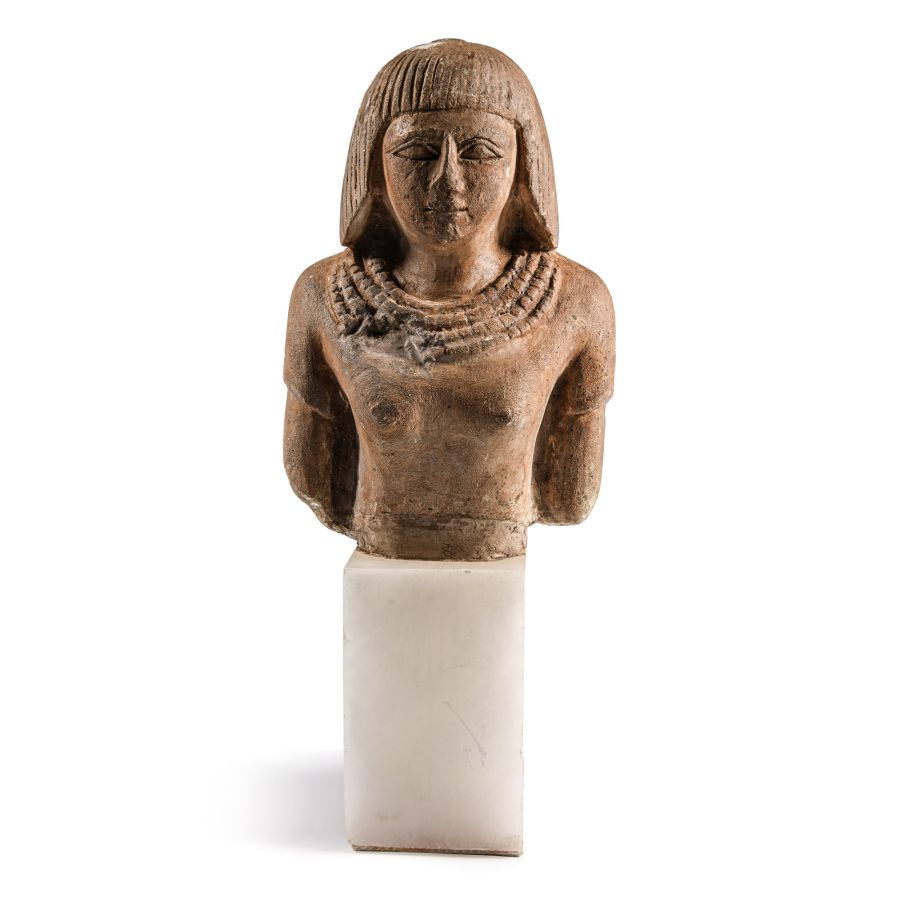
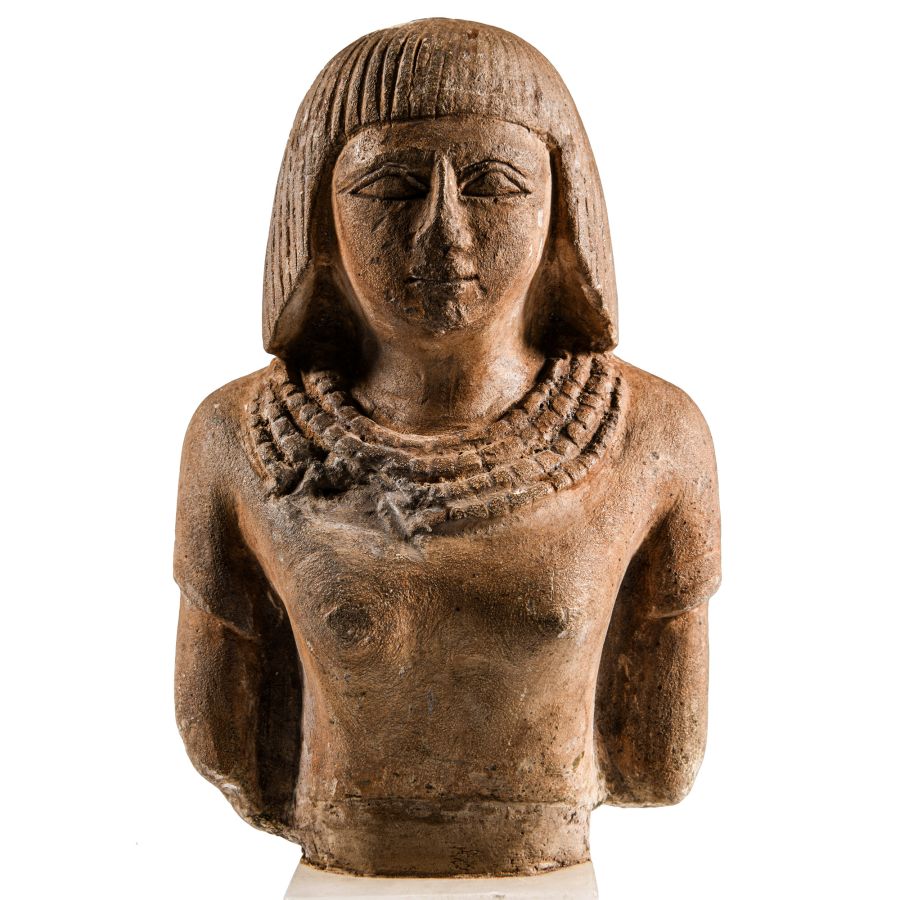
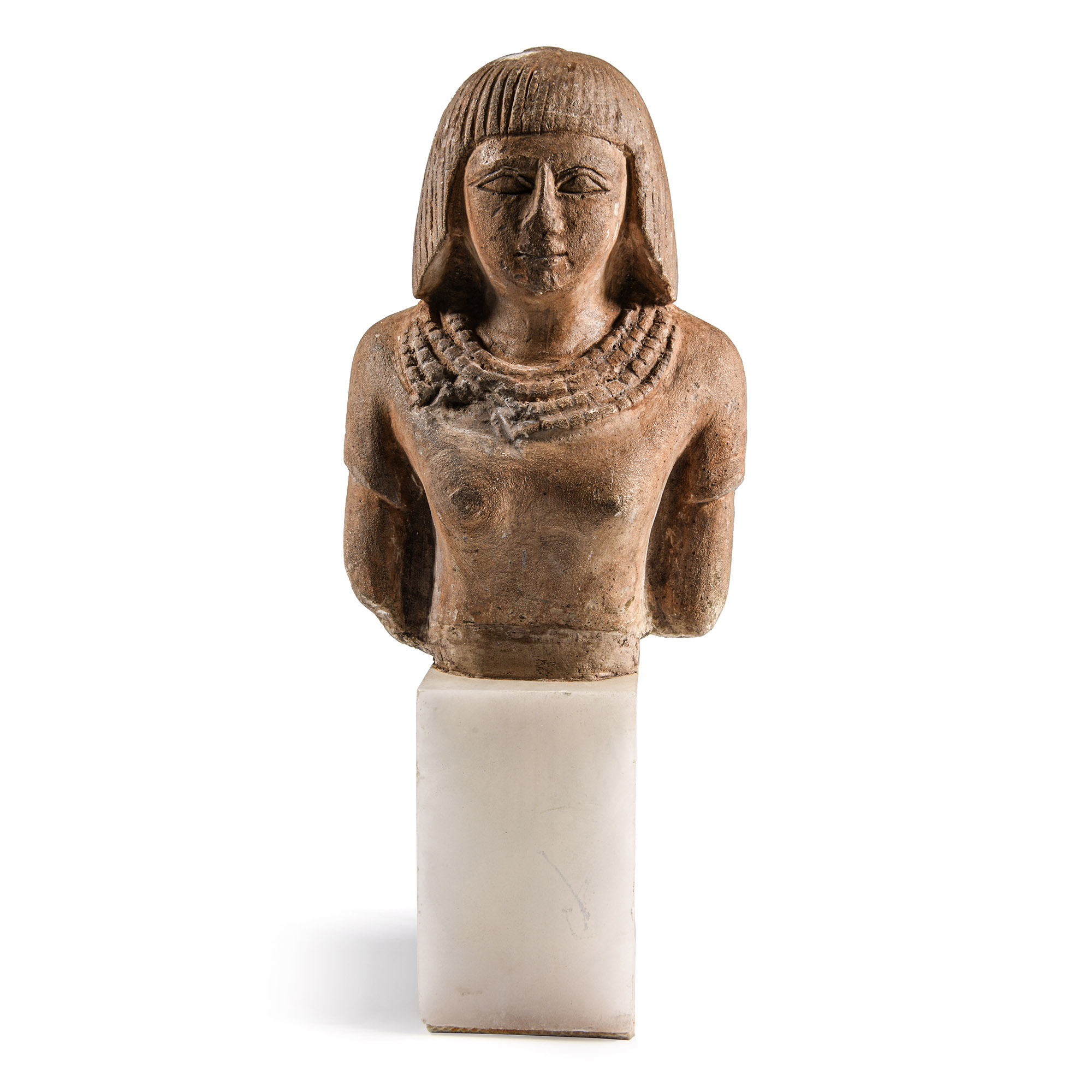
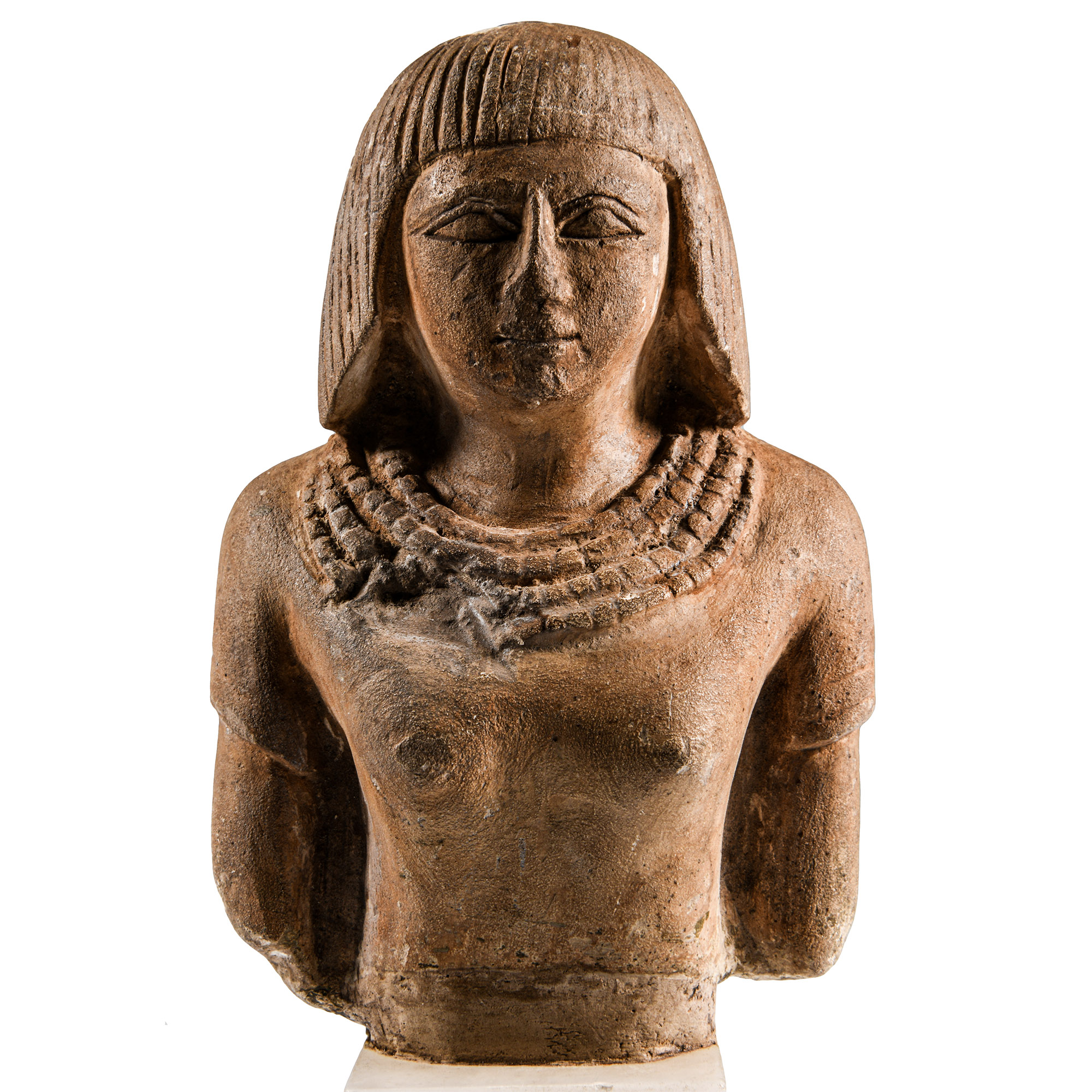
Egyptian Limestone Bust of a Male Dignitary
NEW KINGDOM, 13TH-12TH CENTURY B.C.
8 1/4 in. (855 grams total, 21 cm high including stand).
Carved male bust with a short-sleeved robe and tiered shebyu jewelled collar, striated wig; mounted on a custom-made plinth.
ProvenanceFrom an old UK collection.
With Coincraft since the 1990s.
Property of an Essex, UK, gentleman.
Accompanied by an academic report by Dr Alberto Maria Pollastrini.
Accompanied by a master copy of the Coincraft catalogue BCF 76, where this object is offered for £2,950.00.
This lot has been checked against the Interpol Database of stolen works of art and is accompanied by search certificate no.11946-209473.
Coincraft coin and antiquities catalogue BCF 76.
CONDITIONTimeLine Auctions follows a vetting process to ensure the authenticity and legality of all items, reinforcing our commitment to integrity and responsible trading. Each antiquity, antique, and coin lot undergoes thorough examination by a vetting committee of at least ten external specialists, professional trade association members, scientists, and archaeologists: Our Vetting Process
AUCTIONS:
TimeLine is a leading auction house specialising in antiquities, ancient art, collectables, natural history, coins, medals, and books. Our auctions offer museums, collectors, historians, and enthusiasts the opportunity to acquire unique and historically significant pieces.
-
.jpg)
Egyptian Bronze Statuette of Osiris
Late Period, 664-332 B.C.Estimate: £7,000 - 9,000 (+bp*)
Opening Bid: £3,500
Depicted in a tightly wrapped shroud, holding his characteristic regalia of crook and flail; wearing the Atef crown; remains of gilding, eyes inlaid in glass; small part of the crown missing, otherwise intact; on a custom-made stand; some restoration. 269 grams total, 22 cm including stand
German private collection H. W. (1931-2018). Acquired before December 1991 on the German art market. Accompanied by a copy of an IADAA Interpol search certificate. Accompanied by a copy of a certificate of authenticity of Galerie Puhze, prior to 1991. This lot has been checked against the Interpol Database of stolen works of art and is accompanied by search certificate no.11948-210758. -
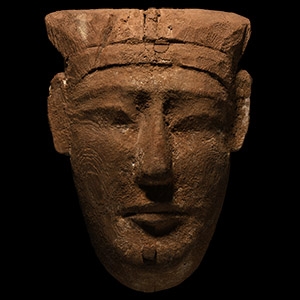
Egyptian Wooden Face Mask
Late Period, 664-332 B.C.Sold for (Inc. bp): £715
Carved in the half-round with elegant nose and prominent chin, full lips and rounded cheeks; a headband resting on the forehead; an attachment dowel on the chin and forehead. 475 grams, 23 cm high
Acquired 1970s-1996. Property of a North American collector. London collection, 2016. -
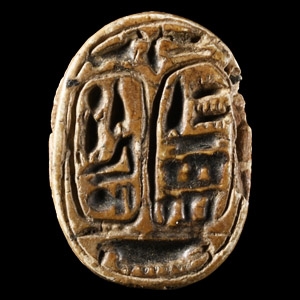
Egyptian Steatite Scarab with Hieroglyphs
Late Period, 664-332 B.C.Sold for (Inc. bp): £572
With detailed legs and mouth, two cartouches to the underside with hieroglyphic texts. 7.64 grams, 25 mm
Ex North London, UK, gentleman, 1990s.
