
Loading, please wait...
LOT 0732
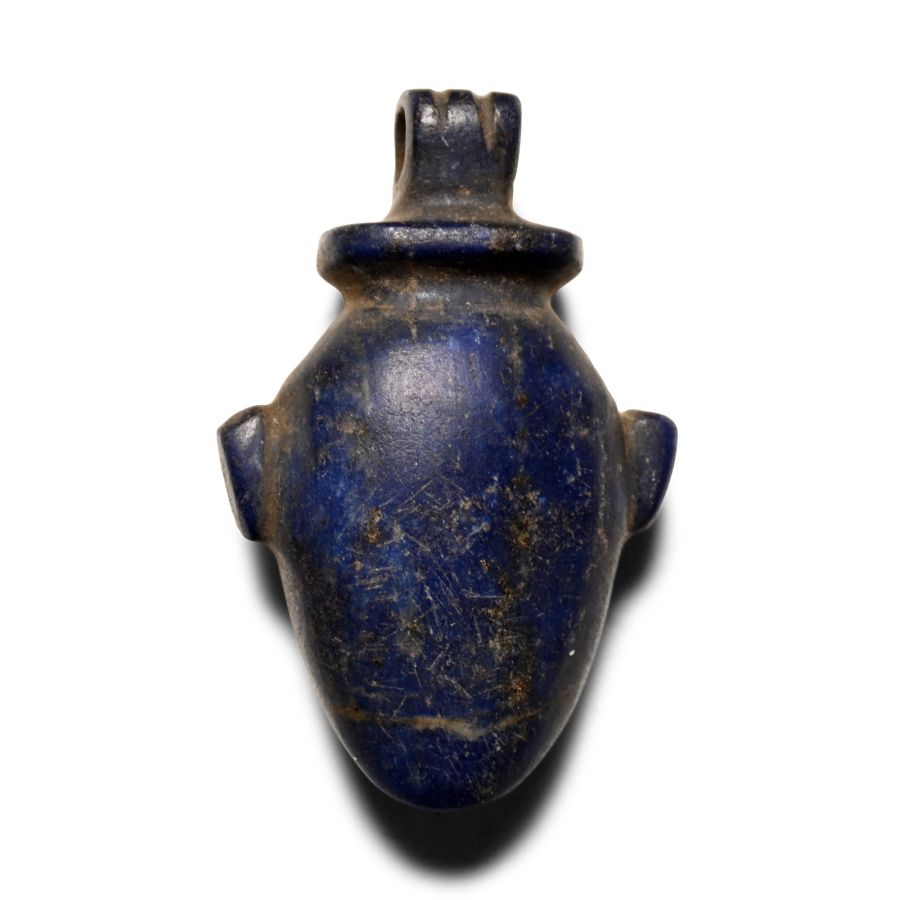
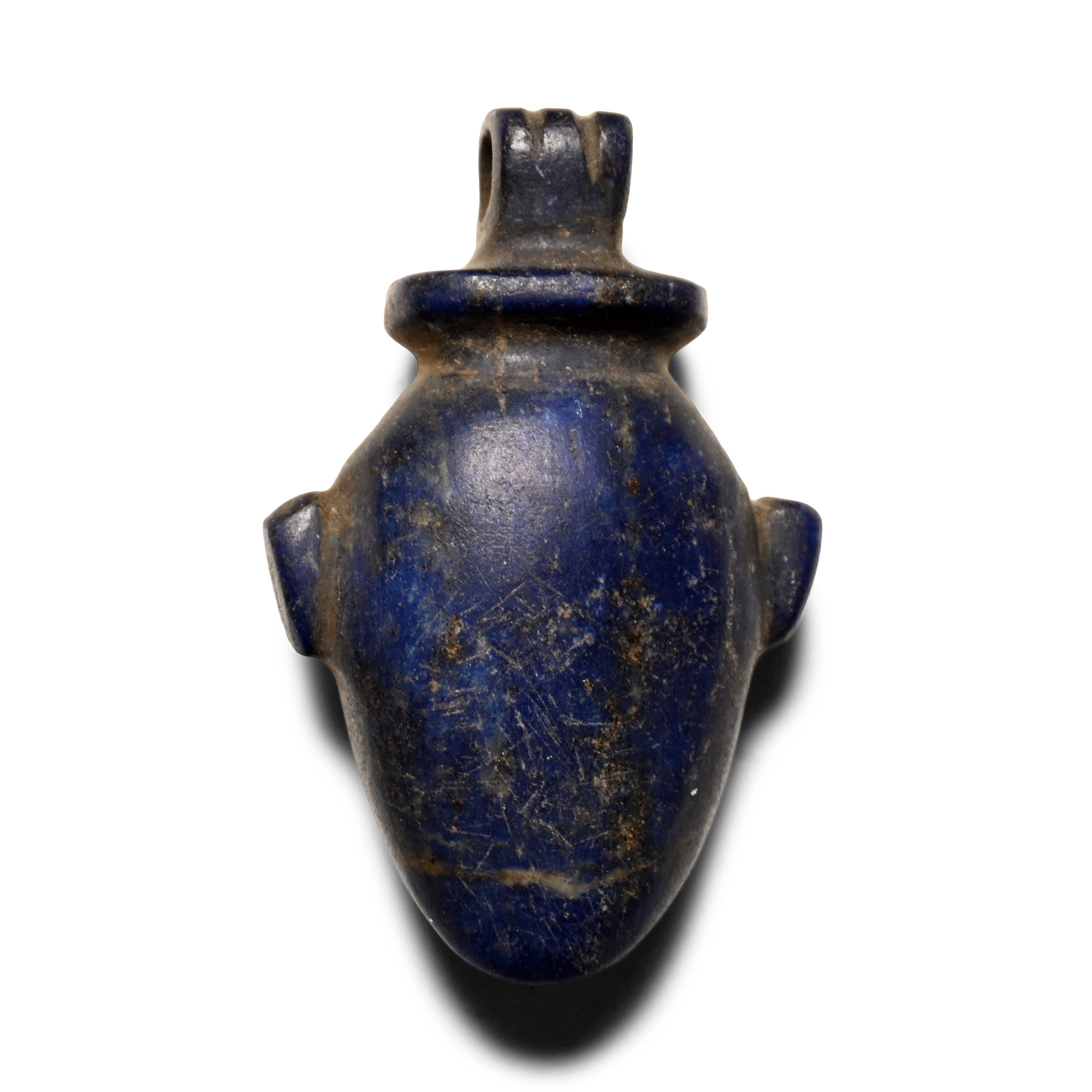
Egyptian Lapis Lazuli Heart Amulet
LATE PERIOD-PTOLEMAIC PERIOD, CIRCA 664-30 B.C.
7/8 in. (2.14 grams, 21 mm).
Carved with lateral lugs, a pronounced rim surmounted by a ribbed suspension loop.
ProvenanceProperty of a London, UK, gentleman, 1970-2000.
LiteratureCf. Petrie, W.M.F., Amulets. Illustrated by the Egyptian Collection in University College, London, 1914, pl.I, nos.7a-p, for type.
CONDITIONTimeLine Auctions follows a vetting process to ensure the authenticity and legality of all items, reinforcing our commitment to integrity and responsible trading. Each antiquity, antique, and coin lot undergoes thorough examination by a vetting committee of at least ten external specialists, professional trade association members, scientists, and archaeologists: Our Vetting Process
AUCTIONS:
TimeLine is a leading auction house specialising in antiquities, ancient art, collectables, natural history, coins, medals, and books. Our auctions offer museums, collectors, historians, and enthusiasts the opportunity to acquire unique and historically significant pieces.
LOT 0732
Egyptian Lapis Lazuli Heart Amulet
Estimate £150 - 200€170 - 230 (for guidance only)$200 - 270 (for guidance only)
Opening Bid
£50 (EUR 58; USD 68) +BP*
-
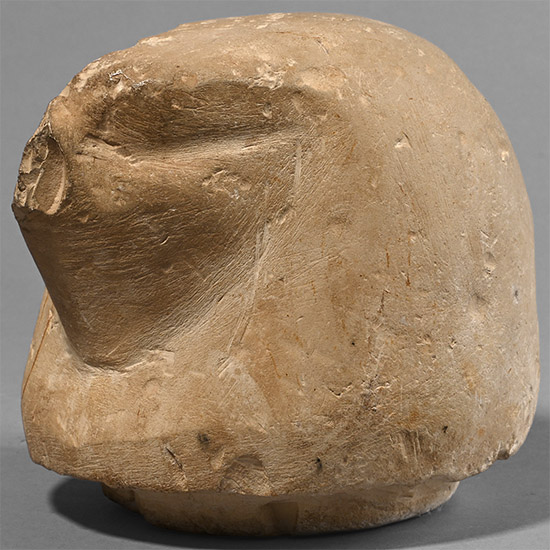
Large Egyptian Limestone Qebehsenuef Canopic Jar Lid
New Kingdom, 18th Dynasty, 1550-1292 B.C.Estimate: £200 - 300 (+bp*)
Opening Bid: £5
Carved as an avian head with a discoid base to accept the rim of the canopic jar; old handwritten collector's note attached to the back of the head 'Found in rubble, literally tripped over, in tombs on West Bank, March 1963, group with Dr Veronica Seton-Williams'; old collector's card: 'Lid of hawk headed canopic jar. Duamutef (sic), guardian of the lungs and deity of the east in their general arrangement to the cardinal [?]. Made of white limestone, the right hand side much damaged...'; chipped. 2.74 kg, 14.6 cm wide
From the private collection of Peter Clayton, FCILIP, Dip, Arch, FSA, FRNS, Hemel Hempstead, Hertfordshire, UK; formed since the late 1950s. Accompanied by an old handwritten identification card written by Peter Clayton.
The Four Sons of Horus safeguarded the deceased's internal organs. The human-headed Imsety protected the liver; the baboon-headed Hapy, the lungs; the jackal-headed Duamutef, the stomach; and the falcon-headed Qebehsenuef, the intestines. They often placed the viscera in canopic jars with the head of the respective Son of Horus. -
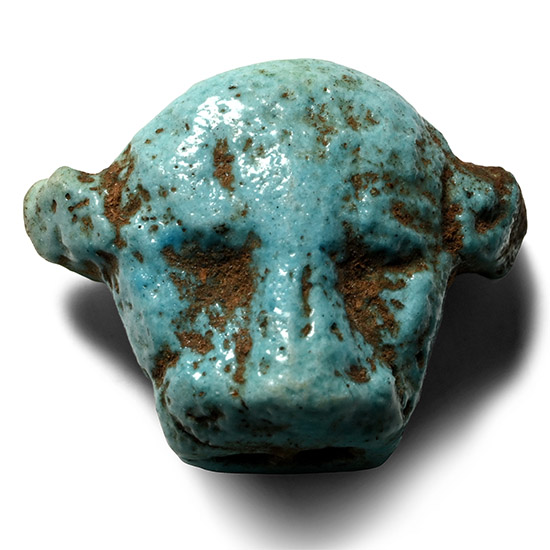
Large Egyptian Faience Lioness Head Amuletic Bead
New Kingdom, 1550-1069 B.C.Estimate: £150 - 200 (+bp*)
Opening Bid: £75
Blue-glazed faience amuletic bead modelled as a lioness's head, pierced vertically through the nostrils with two holes. 2.5 grams, 21 mm
From a mid 20th century collection. -
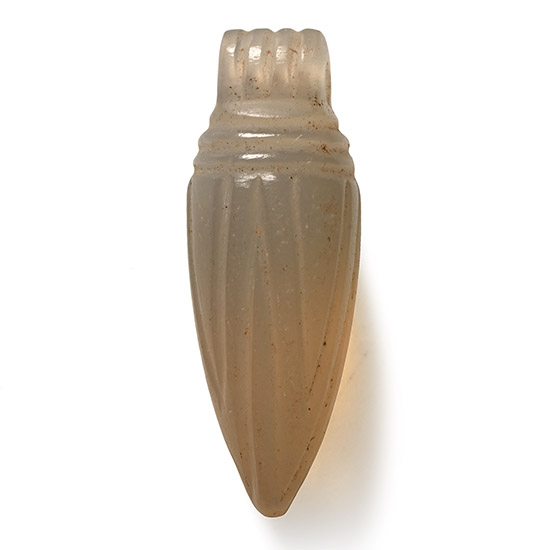
Egyptian Chalcedony Fluted Fruit Amulet
Late Period-Ptolemaic Period, circa. 664-30 B.C.Estimate: £150 - 200 (+bp*)
Opening Bid: £50
Columnar in form with basal leaves to the finial, bindings and leaves beneath the ribbed loop. 1.45 grams, 21 mm
Property of a London, UK, gentleman, 1970-2000.
