
Loading, please wait...


LOT 0562
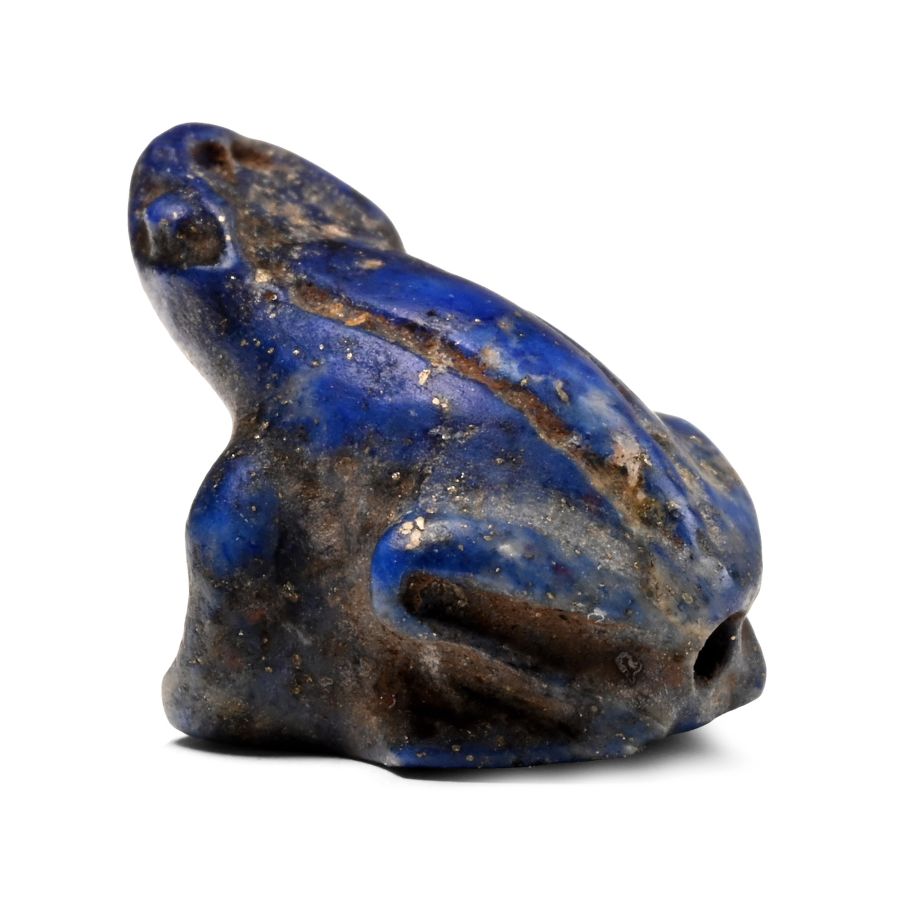
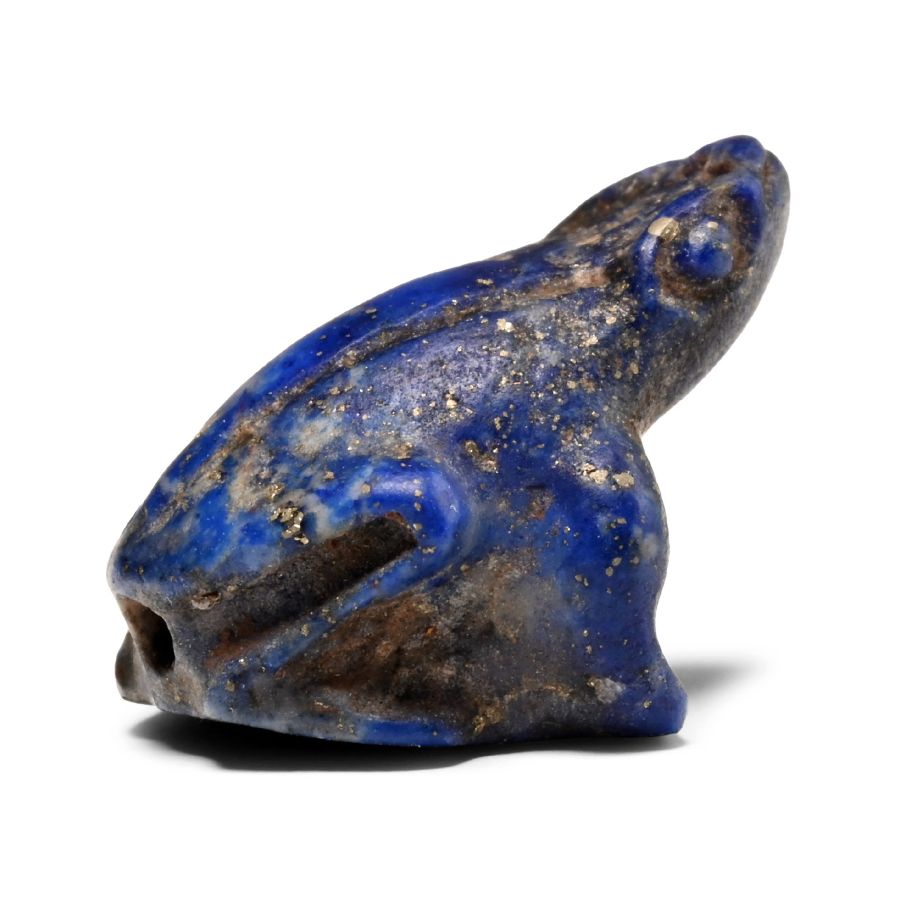
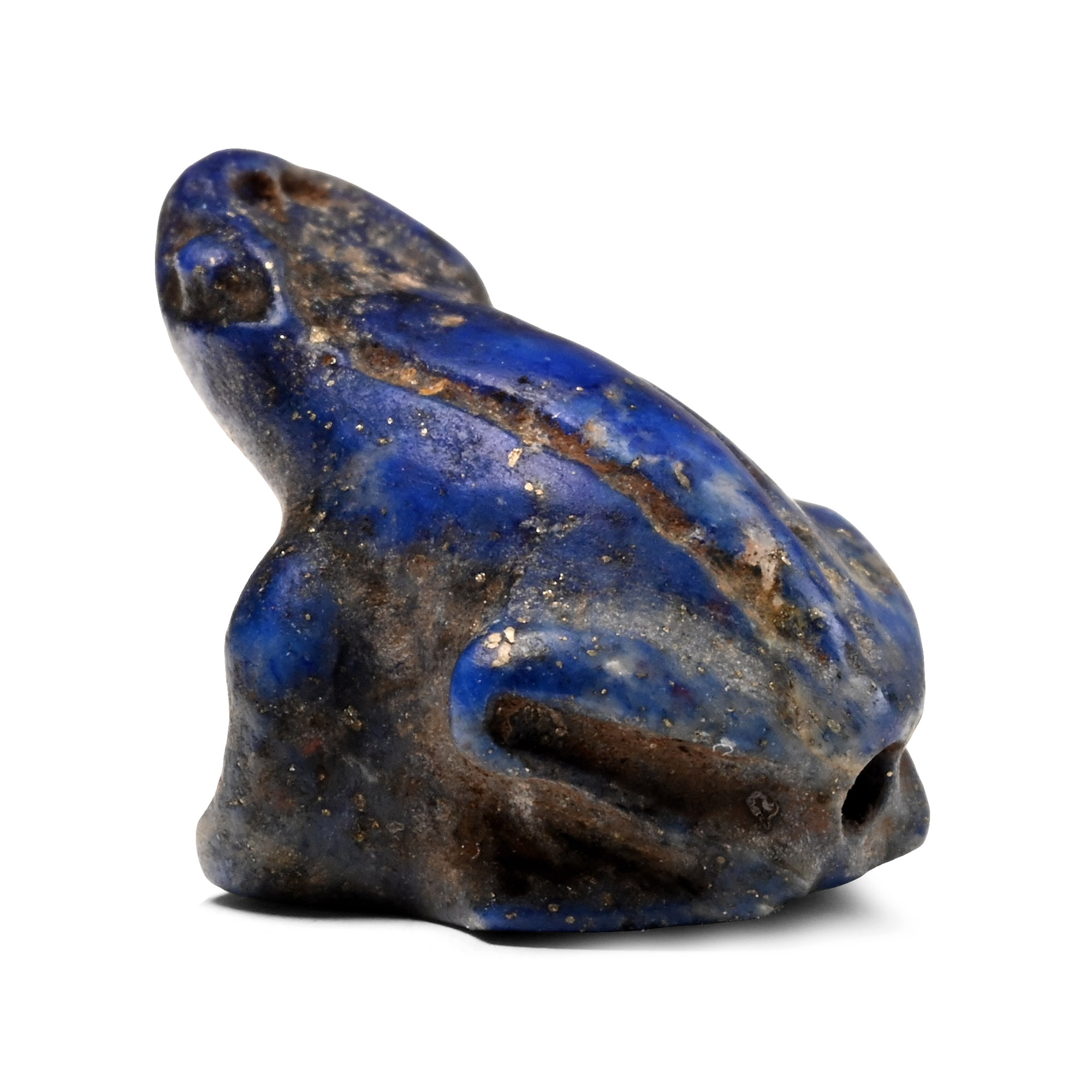
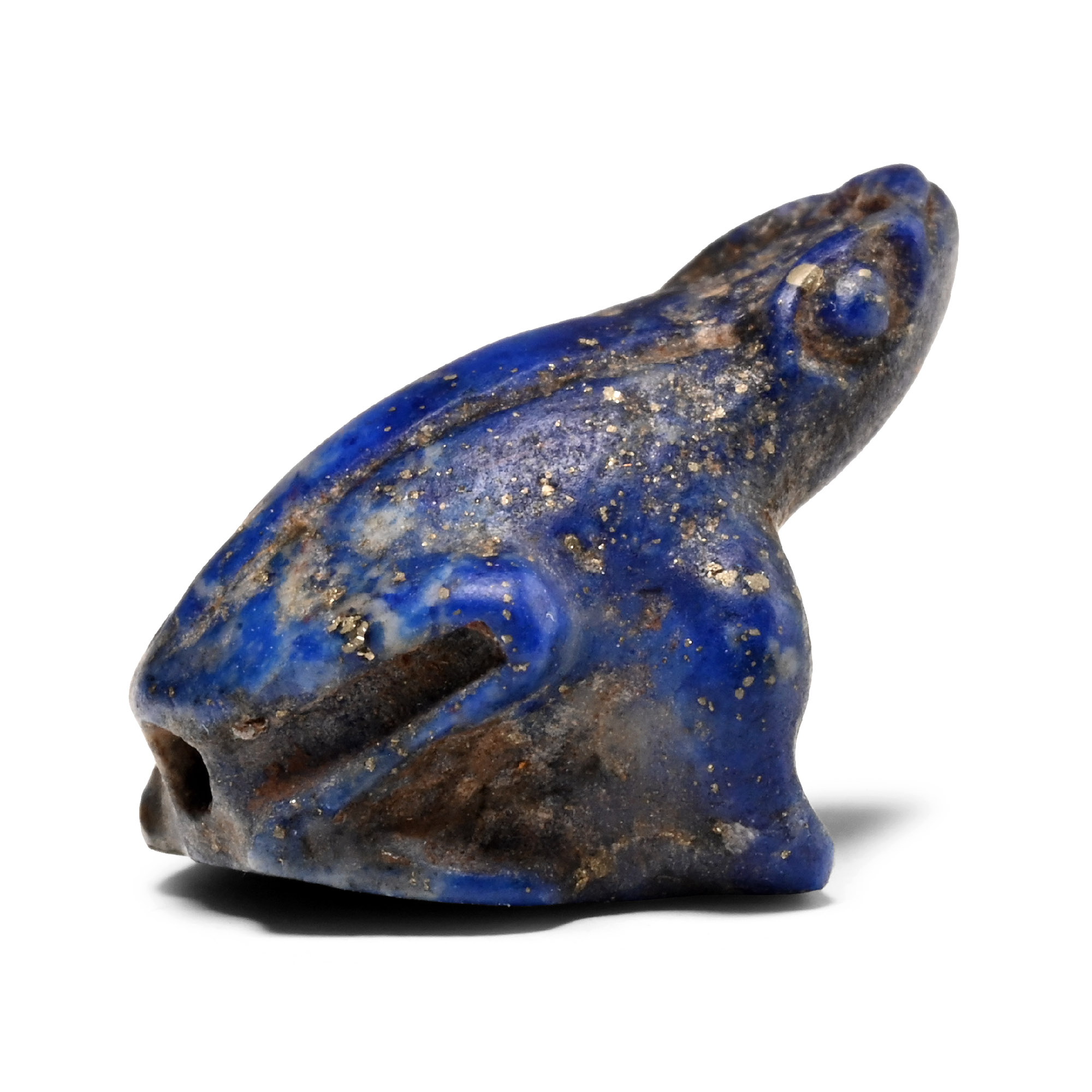
Egyptian Lapis Lazuli Frog Amulet
LATE PERIOD, 664-332 B.C.
1/2 in. (1.02 grams, 14 mm).
Carved in the round in a crouched pose, with hind legs folded behind the body, pierced through the stomach for suspension.
ProvenanceFrom a mid 20th century collection.
LiteratureCf. Reisner, G.A., Catalogue général des antiquités égyptiennes du Musée du Caire, Nos.12528-13595, Vol. II, Amulets, Cairo, 1958, pl. XVI, nos. 13373-13380, for similar examples.
FootnotesFrog amulets in ancient Egypt symbolised fertility, rebirth, and renewal. Associated with the goddess Heqet, linked to childbirth and life-giving forces, they were especially popular for fertility and protection during pregnancy and labour. Their association with the annual Nile flood, which brought new life to the land, further emphasised their symbolism of revival and abundance.
CONDITIONTimeLine Auctions follows a vetting process to ensure the authenticity and legality of all items, reinforcing our commitment to integrity and responsible trading. Each antiquity, antique, and coin lot undergoes thorough examination by a vetting committee of at least ten external specialists, professional trade association members, scientists, and archaeologists: Our Vetting Process
AUCTIONS:
TimeLine is a leading auction house specialising in antiquities, ancient art, collectables, natural history, coins, medals, and books. Our auctions offer museums, collectors, historians, and enthusiasts the opportunity to acquire unique and historically significant pieces.
LOT 0562
Egyptian Lapis Lazuli Frog Amulet
Estimate £200 - 300€230 - 350 (for guidance only)$270 - 410 (for guidance only)
Opening Bid
£60 (EUR 70; USD 81) +BP*
-
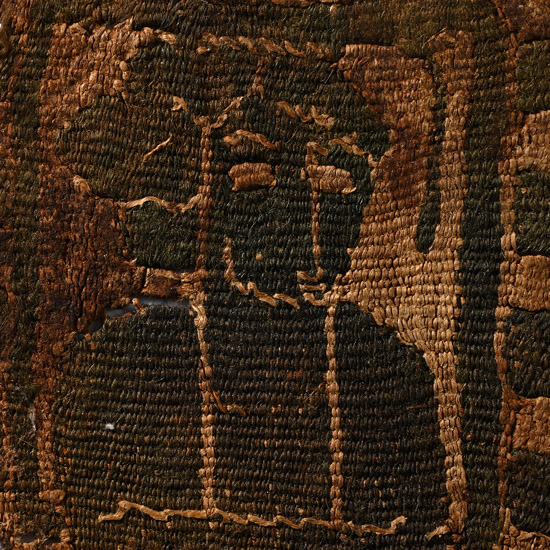
Egyptian Coptic Textile Fragment of a Tablion from a Tunic with Facing Bust
Circa 5th century A.D.Estimate: £60 - 80 (+bp*)
Bids: 1 | Current Bid: £5
In linen and wool, showing the half-bust of a man clad in tunica paragaudata, borders with geometric decorations. 4.68 grams, 10 cm
Acquired 1970s-1996. Property of a North American collector. London collection, 2016.
The tabula, or tablion, was a square embroidery used to decorate tunics or mantles. This one, interestingly, shows a man dressed in the typical late Roman tunic, featuring the image of a soldier or military servant. -
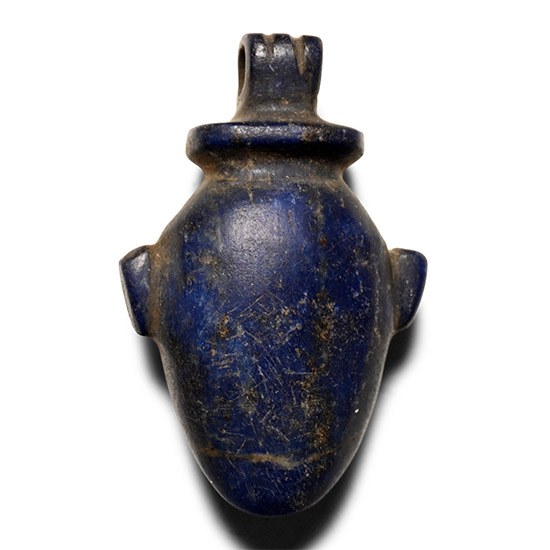
Egyptian Lapis Lazuli Heart Amulet
Late Period-Ptolemaic Period, circa 664-30 B.C.Estimate: £150 - 200 (+bp*)
Bids: 2 | Current Bid: £90
Carved with lateral lugs, a pronounced rim surmounted by a ribbed suspension loop. 2.14 grams, 21 mm
Property of a London, UK, gentleman, 1970-2000. -
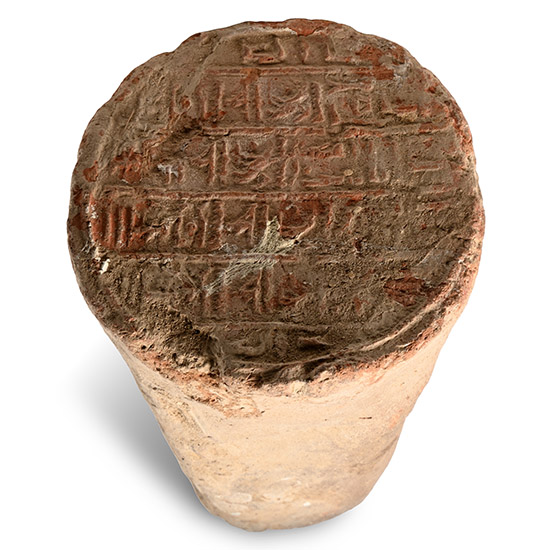
Egyptian Terracotta Funerary Cone of Minnakht
New Kingdom, mid-18th Dynasty, circa 1450-1350 B.C.Estimate: £300 - 400 (+bp*)
Bids: 3 | Current Bid: £80
Large portion of a tapering cone, with the circular flat end impressed with six columns of hieroglyphic text reading: 'The Osiris, wab-priest, lector-priest of Mut, Minnakht, wab-priest who goes ahead, god's father of Mut, Minnakht, scribe of the divine book(s) of Mut, Minnakht, the Osiris, scribe of the divine offerings of Mut, Minnakht, true of voice.' 323 grams, 10 cm
Acquired from Abdoul Rassoul on the West Bank at Luxor, 1974-1980 when a guest lecturer. From the private collection of Peter Clayton, FCILIP, Dip, Arch, FSA, FRNS, Hemel Hempstead, Hertfordshire, UK; formed since the late 1950s.
Although Minnakht's tomb has yet to be identified in the Theban necropolis, his funerary cones have long been known. Some details of his career are known from a unique block statue in the Cairo Museum (inv. no. CG 624/JE 27585), which includes important funerary religious texts (El Gabry, D., Journal of Egyptian Archaeology, 110, no. 1-2, 2024, pp. 131-149).
