
Loading, please wait...


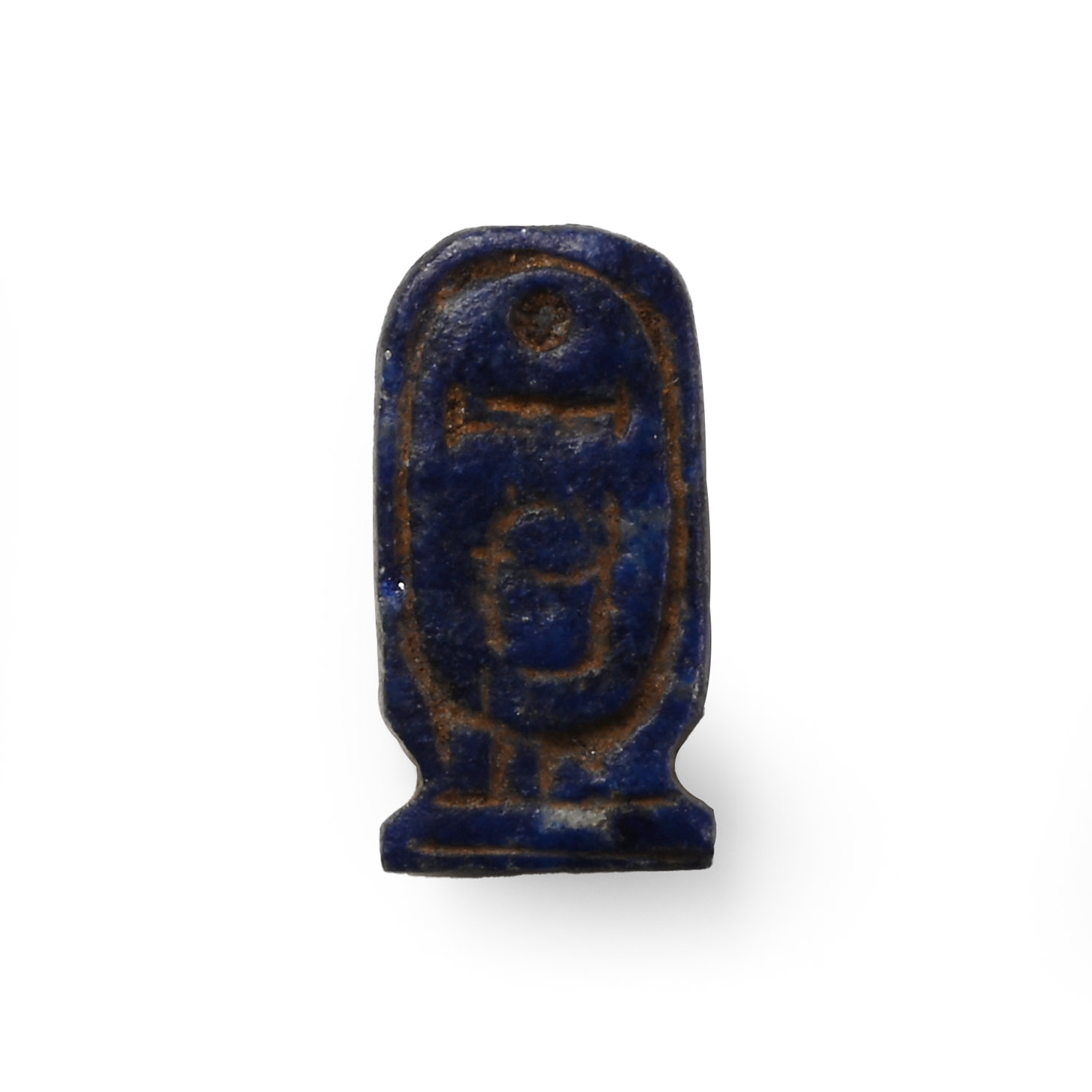
LOT 0483
Egyptian Lapis Lazuli Amulet with Cartouche
NEW KINGDOM, 1539-1075 B.C.
5/8 in. (1.38 grams, 16 mm).
Rectangular in section with longitudinal piercing, hieroglyphic text. [No Reserve]
ProvenanceAcquired on the UK art market before 2000.
Property of an Essex, UK, gentleman.
TimeLine Auctions follows a vetting process to ensure the authenticity and legality of all items, reinforcing our commitment to integrity and responsible trading. Each antiquity, antique, and coin lot undergoes thorough examination by a vetting committee of at least ten external specialists, professional trade association members, scientists, and archaeologists: Our Vetting Process
AUCTIONS:
TimeLine is a leading auction house specialising in antiquities, ancient art, collectables, natural history, coins, medals, and books. Our auctions offer museums, collectors, historians, and enthusiasts the opportunity to acquire unique and historically significant pieces.
-
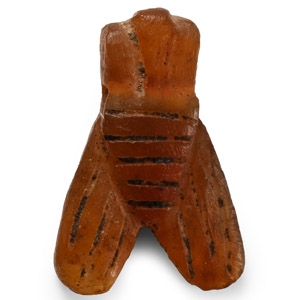
Egyptian Carnelian Fly Amulet
Late Period, 664-332 B.C.Sold for (Inc. bp): £72
Carved with ribbed body and eye detailing; drilled through the eyes for suspension. 0.37 grams, 12 mm
From the private collection of H. Norry, 1980s-1990s. -
.jpg)
Phoenician Stone Scarab with Inscription
1st millennium B.C.Sold for (Inc. bp): £910
With detailing to the carapace, the underside divided into four registers, the top and bottom with a winged Horus plaque, one register with a winged scarab flanked by two falcons, the register below with lying sphinxes flanking an ankh; pierced longitudinally. 9.7 grams, 27 mm
Acquired in the mid 1980s-1990s. Private collection, Switzerland, thence by descent. Private collection, since the late 1990s. -
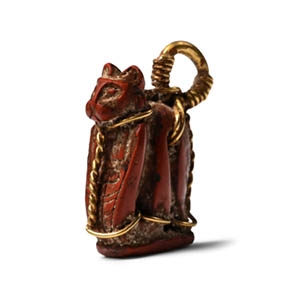
Egyptian Jasper Lion-Headed Cobra Amulet in Gold Frame
6th century B.C.Estimate: £2,000 - 3,000 (‡+bp*)
Opening Bid: £1,000
The S-curved body resting on a tongue-shaped based, detailed hood, and delicate details to the head of a lioness; wrapped in a gold frame with suspension loop. 2 grams, 18 mm
Private collection of Mr K.A. Private collection, Europe, 26 June 2009.
This amulet likely represents a goddess, either Sekhmet or Wadjet. Sekhmet is typically depicted as a lioness or lion-headed woman, while Wadjet appears in the form of a cobra. The lion-headed cobra form can be an allusion to the uraeus, worn on the crowns of royalty and deities for protection.
