
Loading, please wait...
LOT 0004
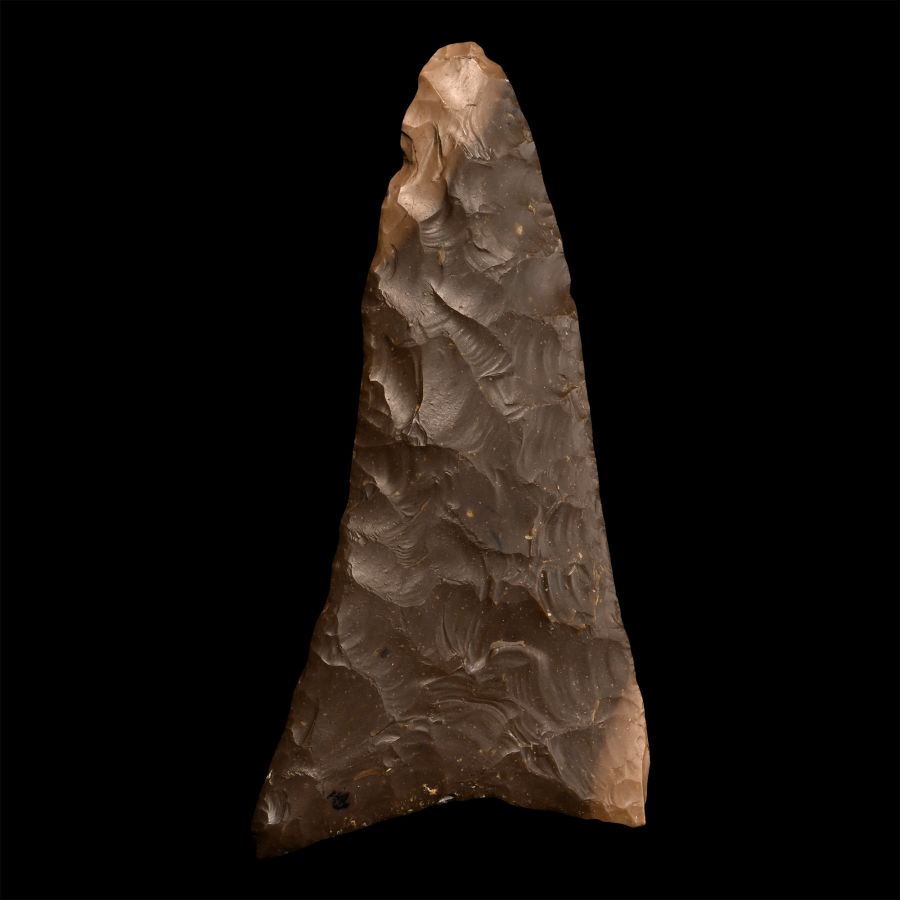
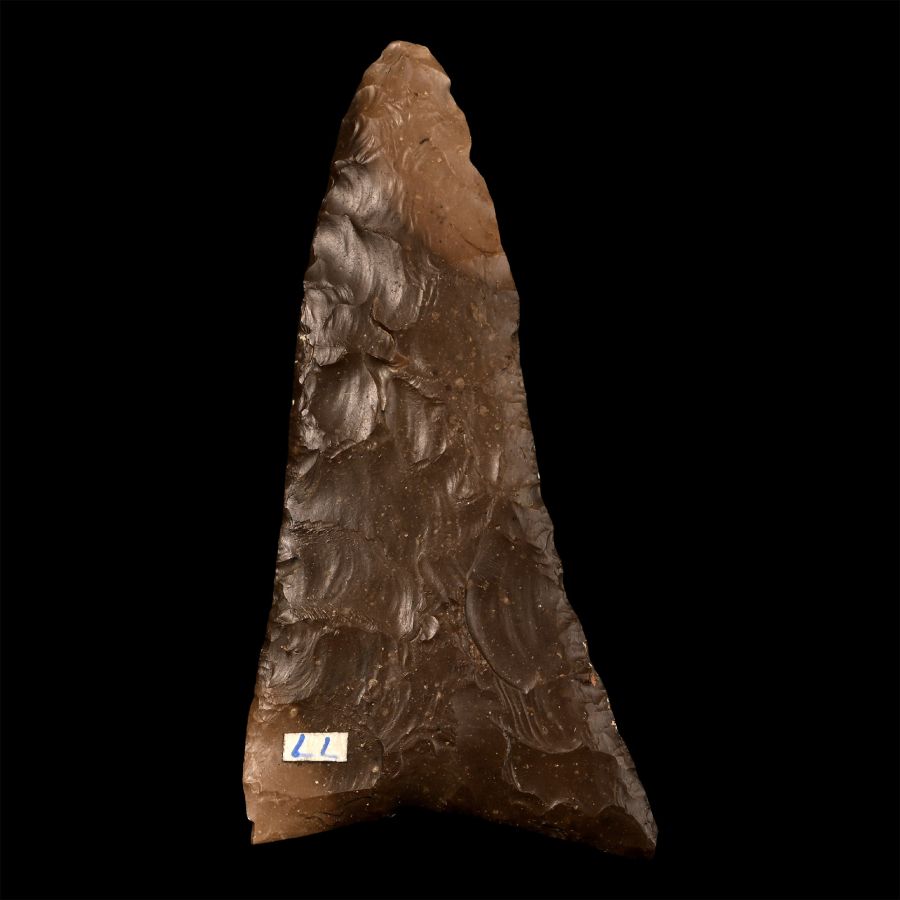
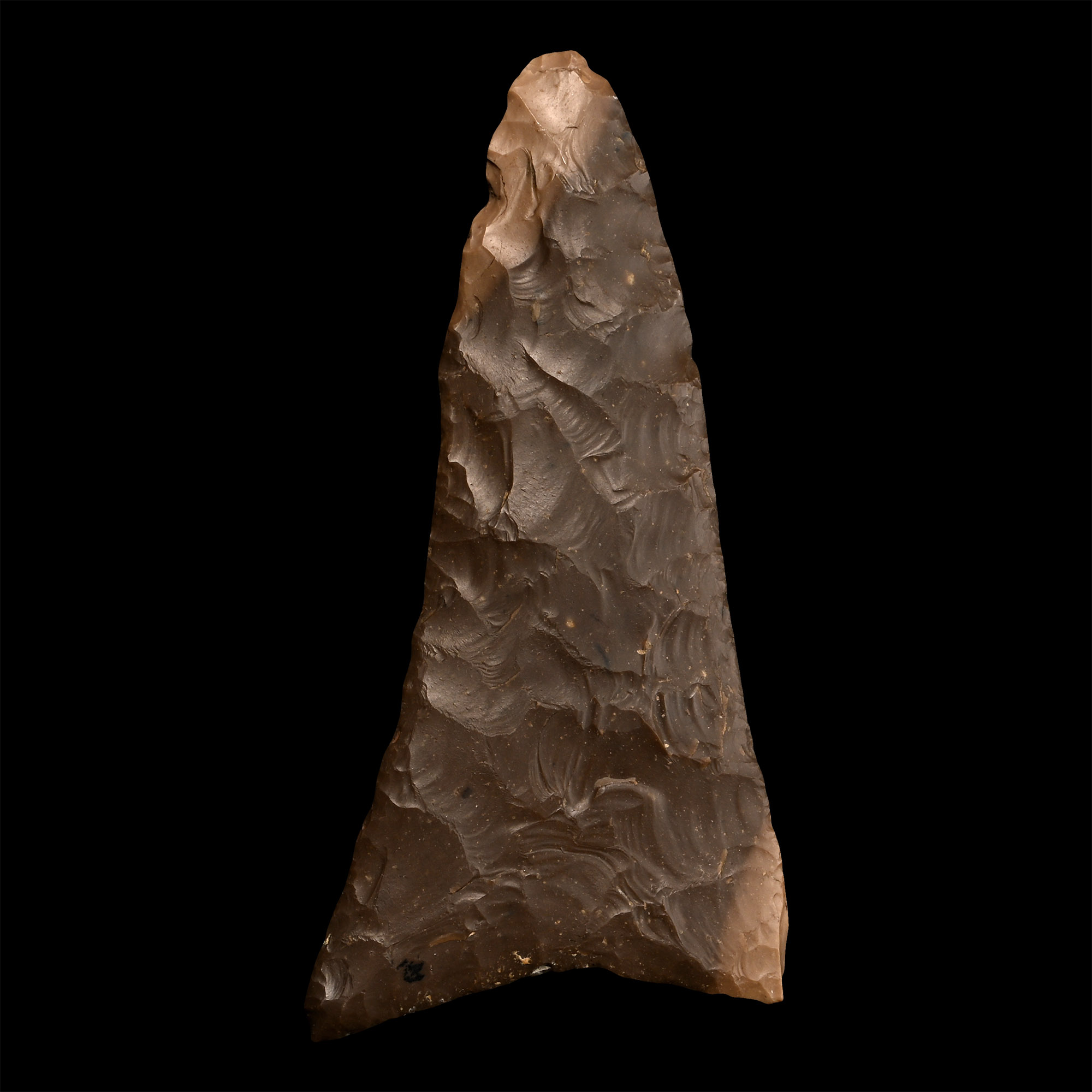
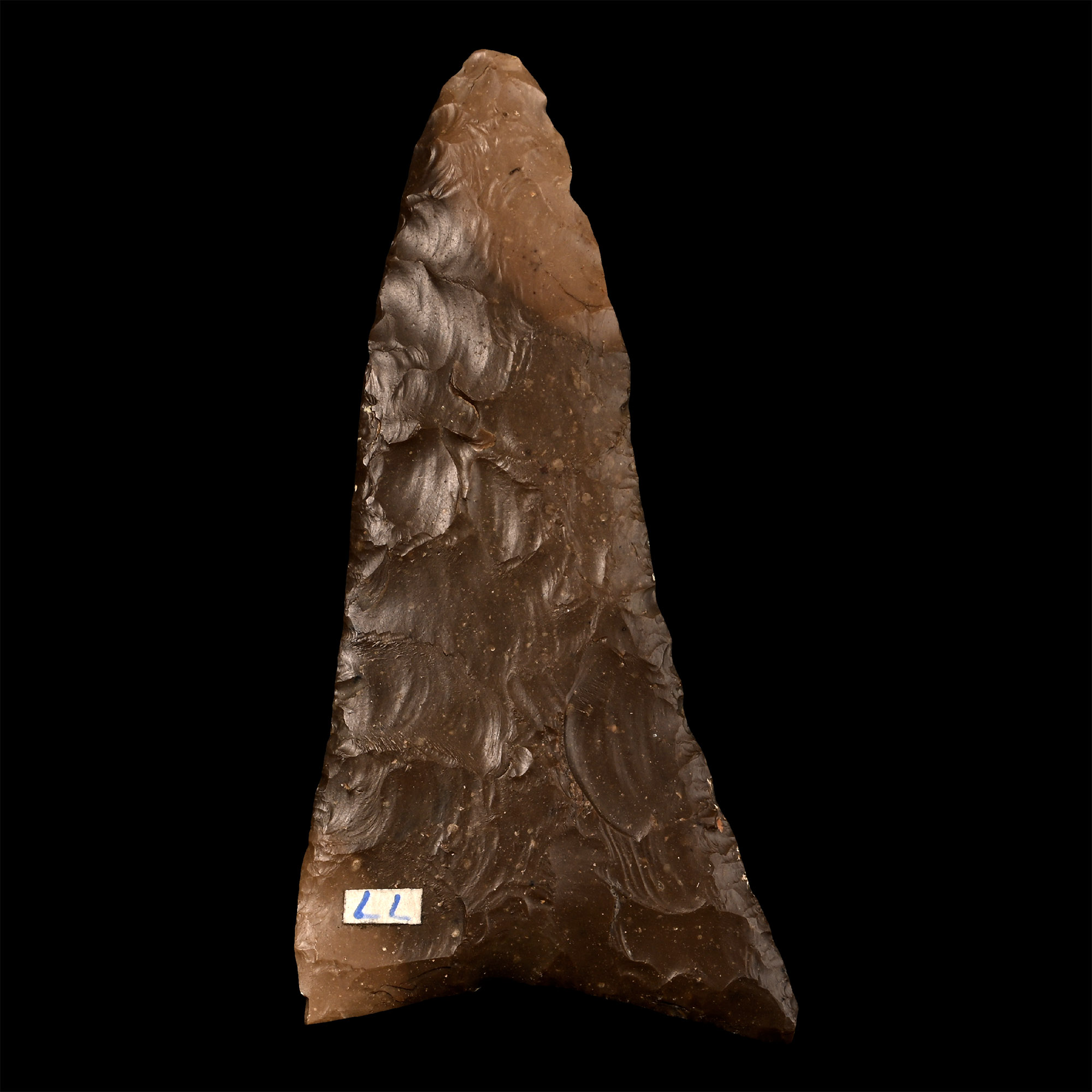
Egyptian Knapped Stone Fish-Tailed Knife
PREDYNASTIC PERIOD, CIRCA 3,500-3,000 B.C.
4 1/2 in. (38.6 grams, 11.5 cm).
With long edges knapped, a rounded point, a forked end, and a rippled surface. [No Reserve]
ProvenanceAcquired from Elgin Antiques, Portobello Road, 26th November 1960, for £2.00.
From the private collection of Peter Clayton, FCILIP, Dip, Arch, FSA, FRNS, Hemel Hempstead, Hertfordshire, UK; formed since the late 1950s.
Accompanied by an old handwritten information card by Peter Clayton, collection no.77.
Cf. Patch, D.C., 'Flint Blade', in: Allen, J.P. Mininberg, D.T. (eds.), The Art of Medicine in Ancient Egypt, New York, 2005, pp. 27–28, no. 17, for a fine example of the type.
FootnotesThese objects were crafted from fine flint and featured a narrow, pointed handle end, once hafted into wood, ivory, bone, or gold, and a broad, serrated, forked blade. Originally used during life, possibly to cut an infant's umbilical cord, they were later placed in male graves as elite ceremonial or funerary objects. Egyptologists often associate them with the pesesh-kef tool used in the funerary 'Opening of the Mouth' ceremony, which symbolically restored breath and the senses to a mummy or statue.
CONDITIONTimeLine Auctions follows a vetting process to ensure the authenticity and legality of all items, reinforcing our commitment to integrity and responsible trading. Each antiquity, antique, and coin lot undergoes thorough examination by a vetting committee of at least ten external specialists, professional trade association members, scientists, and archaeologists: Our Vetting Process
AUCTIONS:
TimeLine is a leading auction house specialising in antiquities, ancient art, collectables, natural history, coins, medals, and books. Our auctions offer museums, collectors, historians, and enthusiasts the opportunity to acquire unique and historically significant pieces.
LOT 0004
Egyptian Knapped Stone Fish-Tailed Knife
Estimate £500 - 700€580 - 810 (for guidance only)$680 - 950 (for guidance only)
-
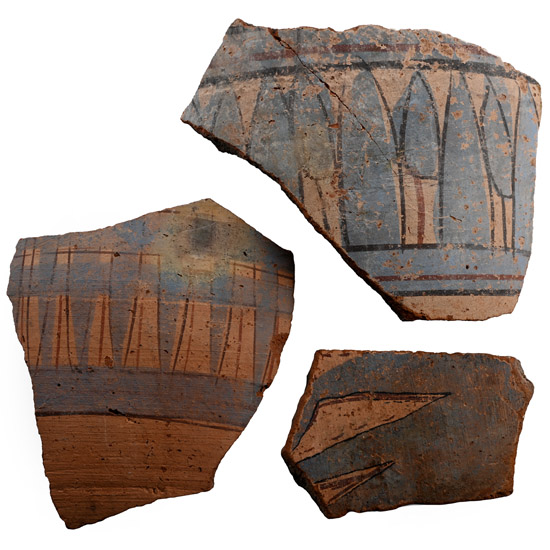
Large Egyptian Painted Bowl Fragments
New Kingdom, 18th Dynasty, Amarna Period, 1379-1362 B.C.Estimate: £80 - 100 (+bp*)
Opening Bid: £5
Three substantial fragments from blue-painted vessels, two with stylised floral motifs and one with a fragment of figurative decoration. 300 grams total, 8.3-13.2 cm
Acquired circa 1979. From the private collection of Peter Clayton, FCILIP, Dip, Arch, FSA, FRNS, Hemel Hempstead, Hertfordshire, UK; formed since the late 1950s.
The distinctive blue colour on these pottery fragments derives from a cobalt-and-aluminium slip that reacts during firing. The designs could incorporate floral, geometric, and figurative motifs (for an illustrated discussion of the technical production of blue-painted pottery, see Seyfried, F. (ed.), In the Light of Amarna: 100 Years of the Nefertiti Discovery, Berlin, 2012, pp. 132-135. -
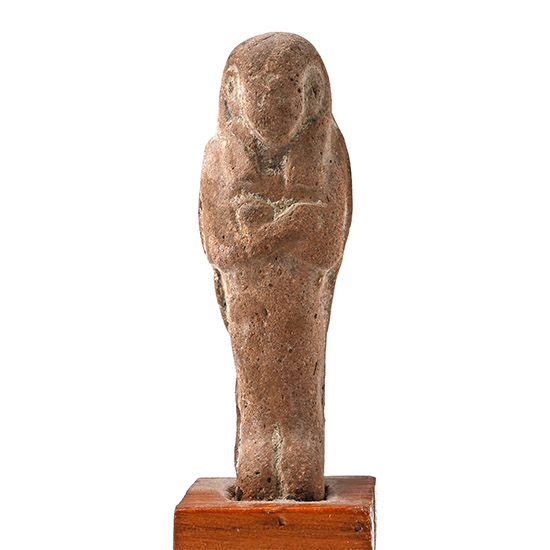
Egyptian Terracotta Shabti
New Kingdom, late 18th-19th Dynasty, circa 1332-1189 B.C.Estimate: £80 - 100 (+bp*)
Bids: 1 | Current Bid: £5
Mummiform figure wearing a lappet wig, arms crossed over the chest; back flat; traces of white pigment in places; supplied with a custom-made wooden stand. 45.3 grams total, 99 mm
Acquired Caledonian market, 16th March 1962, for 5 shillings. From the private collection of Peter Clayton, FCILIP, Dip, Arch, FSA, FRNS, Hemel Hempstead, Hertfordshire, UK; formed since the late 1950s. Accompanied by an old handwritten information card by Peter Clayton, collection no.93.
During the late New Kingdom, larger quantities of shabti figurines were provided for the deceased and were often mass-produced using open moulds, leaving the backs flat. -
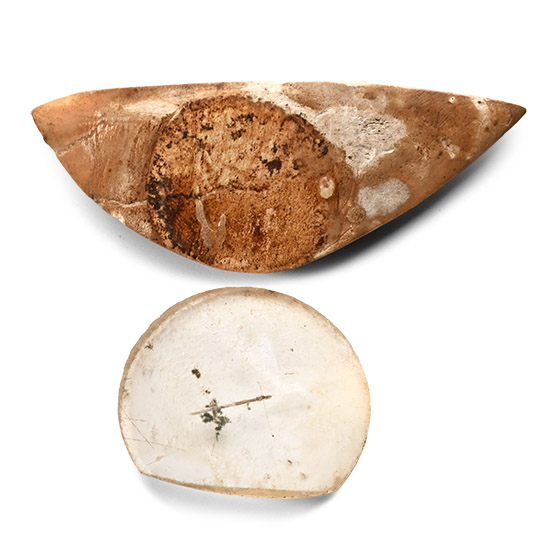
Egyptian Inlaid Mummy Eye
Late Period, 664-332 B.C.Estimate: £500 - 700 (‡+bp*)
Opening Bid: £250
Almond-shaped insert in pale stone with disc-shaped, convex iris, possibly not belonging. 4.51 grams total, 18-37 mm
Ex Milfred (Miriam) Devor Collection. with Archaeological center, Tel-Aviv, 27 March 2013, no.356.
