
Loading, please wait...
LOT 0007
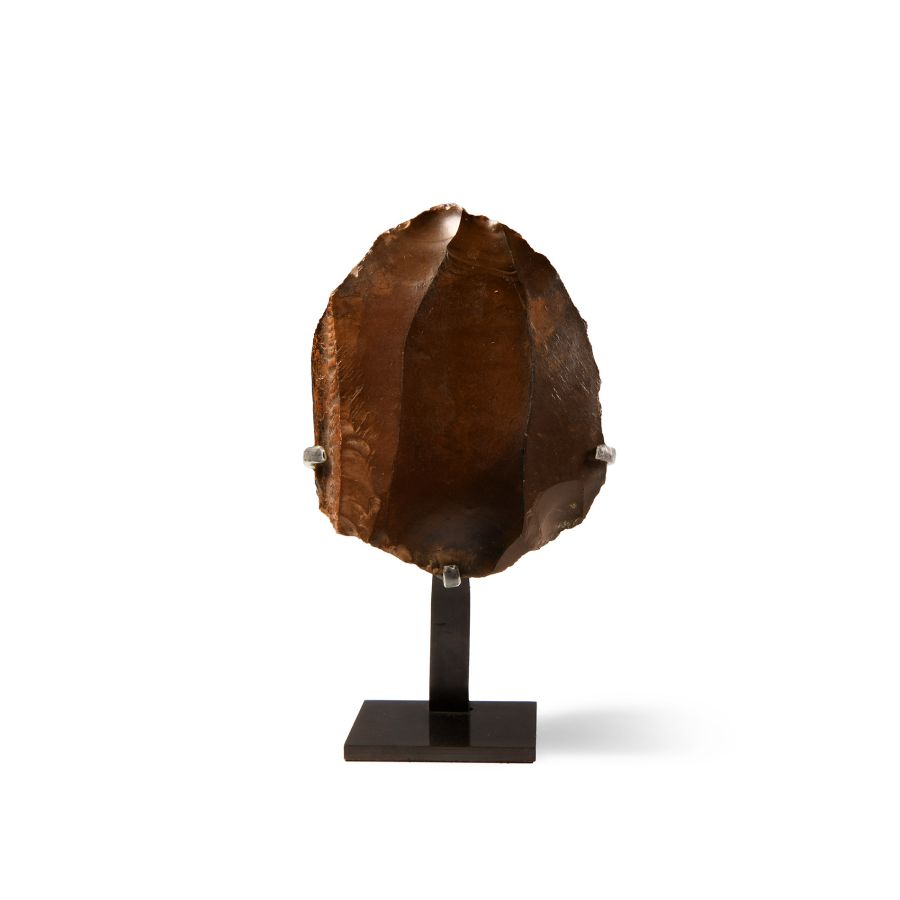
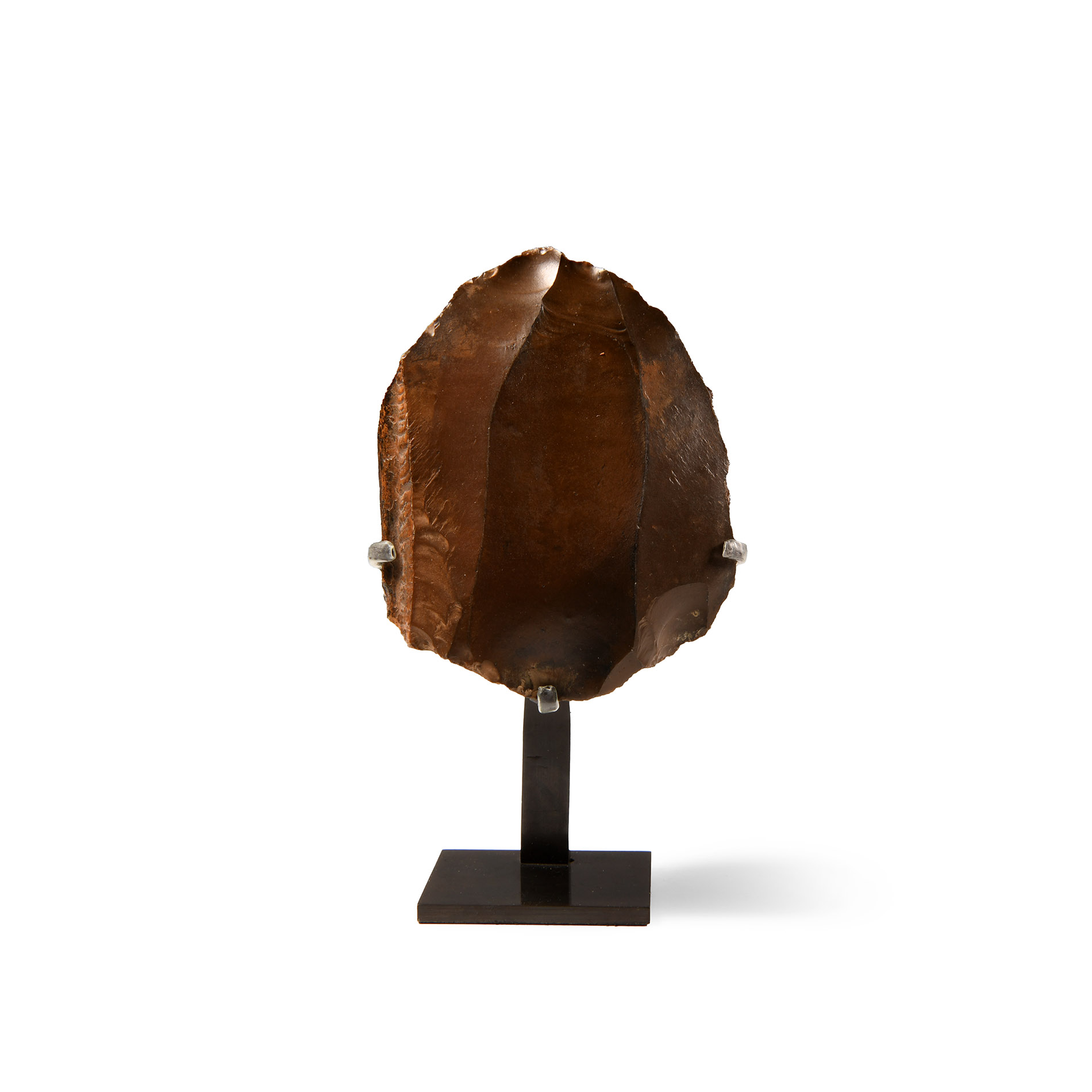
Egyptian Knapped Flint Axehead
LOWER PALAEOLITHIC PERIOD, CIRCA 400,000 B.P.
5 1/8 in. (390 grams total, 13 cm including stand).
A very thick, almost domed flint hand axe or heavy scraper formed on a blade core with the perimeter edges finely knapped; with illegible label and custom-made display stand.
ProvenanceFrom the collection of Robert De Rustafjell (1876-1943), acquired in Thebes prior to 1909.
Deaccessioned from The Heckscher Museum of Art, Long Island, NY.
Private New Jersey collection.
De Rustafjaell, R., The Stone Age in Egypt: A Record of Recently Discovered Implements and Products of Handicraft of the Archaic Nilotic Races Inhabiting the Thebaid, New York, 1914, object 243.
CONDITIONTimeLine Auctions follows a vetting process to ensure the authenticity and legality of all items, reinforcing our commitment to integrity and responsible trading. Each antiquity, antique, and coin lot undergoes thorough examination by a vetting committee of at least ten external specialists, professional trade association members, scientists, and archaeologists: Our Vetting Process
AUCTIONS:
TimeLine is a leading auction house specialising in antiquities, ancient art, collectables, natural history, coins, medals, and books. Our auctions offer museums, collectors, historians, and enthusiasts the opportunity to acquire unique and historically significant pieces.
-
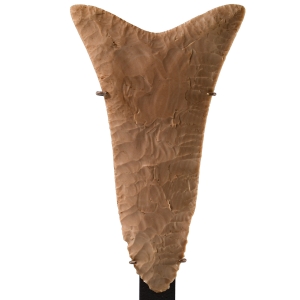
Egyptian Fishtail Flint Knife
Circa 3650-3300 B.C.Sold for (Inc. bp): £7,150
Knapped bifacial tan knife with fishtail butt to receive a hilt; the rounded tip tapering and flaring along the edges; with a custom-made display stand. 142 grams total, 12 cm including stand
Collection of Maurice Bouvier, Alexandria, Egypt, then in Switzerland from 1959; thence by descent. This lot has been checked against the Interpol Database of stolen works of art and is accompanied by search certificate number no.11834-207726.
Many of these superbly crafted knives are attributed to the Naqada II period (c.3500-c.3200 BC), in Upper Egypt. They were normally used in the Opening of the Mouth ceremony. -
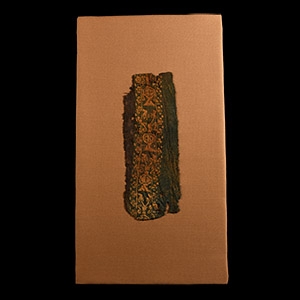
Egyptian Mounted Coptic Textile
Circa 6th-7th century A.D.Sold for (Inc. bp): £72
Part of a tunic, the rectangular segment in yellow and green linen and wool, decorated with acanthus flowers inside a kantharos, the crenellated edge with palmettes alternating with dots. 90 grams, 38.2 x 21 cm
Acquired 1970s-1996. Property of a North American collector. London collection, 2016.
Tapestry technique on natural light yellow wool upon linen. It is highly probable that this tapestry was part of a tunic decoration, a clavus, running vertically on the breast and on the back of it. The decoration conformed to a specific layout with the back mirroring the front. These matching bands, called clavi, ran on either side of the neck. They could be full length or like our specimen, stop above the waistline. -
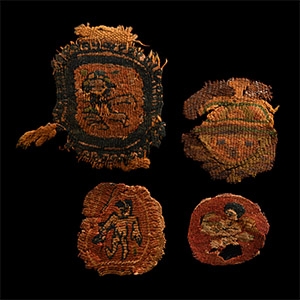
Egyptian Coptic Textile Collection in Folder
Circa 5th-7th century A.D.Sold for (Inc. bp): £520
Comprising 31 fragments of linen and wool textiles decorated with various subject matter: geometric motifs; symbolic interlaced panels and frieze; vases; human and animal figures; the designs executed using a variety of colours; displayed in a ring binder. 768 grams, 29 x 25 cm
Acquired 1970s-1996. Property of a North American collector. London collection, 2016.
