
Loading, please wait...
LOT 0453
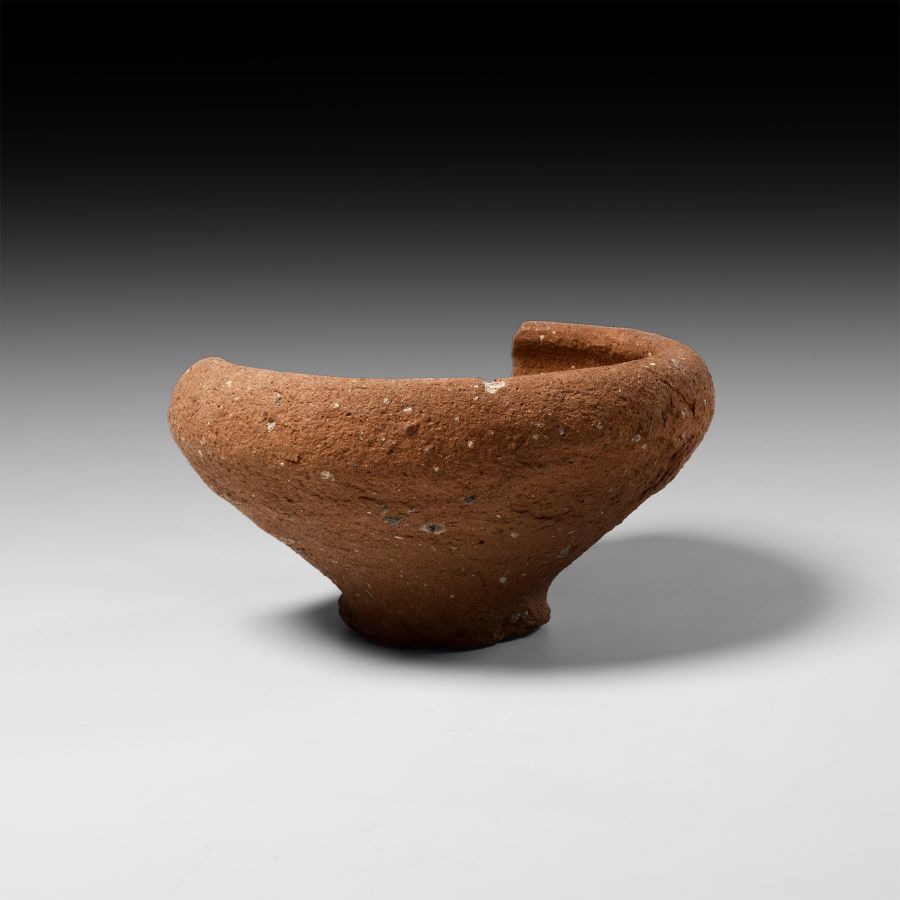
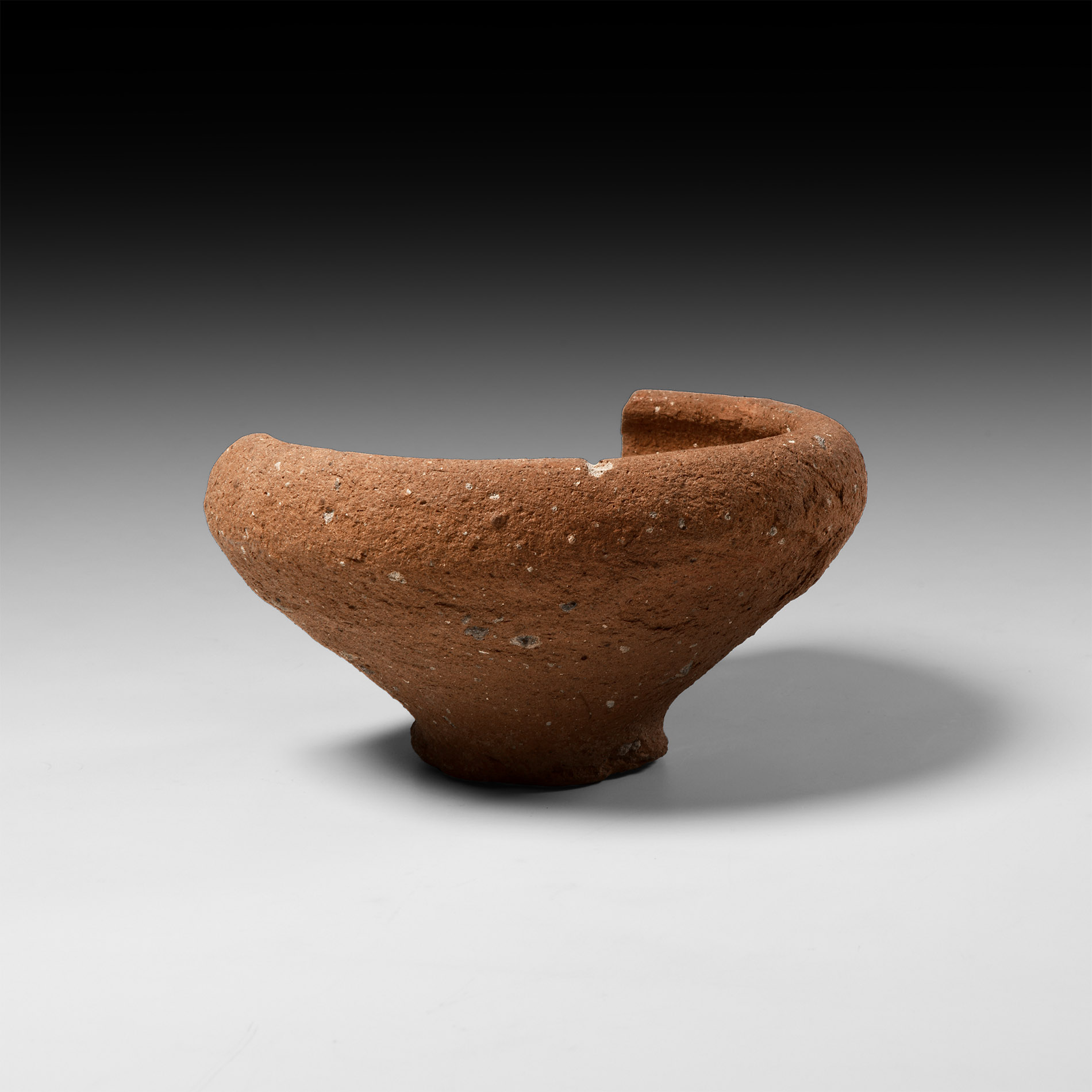
Egyptian Khufu Pyramid Mastabas Offering Pot
OLD KINGDOM, 4TH DYNASTY, CIRCA 2570-2500 B.C.
4 5/8 in. (214 grams, 11.7 cm).
A coarse pottery footed offering dish with inverted rim and conical body, likely used for cereals; from a mastaba in the pyramid field associated with Khufu, builder of the Great Pyramid. [2, No Reserve]
ProvenanceFrom an old UK collection.
From the private collection of Alf Baxendale (1941-2016) part 2, keen Egyptologist, member of the Egyptology Society, trustee of the Amarna Trust; thence by descent.
Accompanied by an identification display card.
Accompanied by a copy of his obituary published in Horizon, The Amarna Project and Amarna Trust newsletter, Issue 18, 2017, p.21, by Barry John Kemp, CBE, FBA, Professor Emeritus of Egyptology at the University of Cambridge and directing excavations at Amarna in Egypt.
TimeLine Auctions follows a vetting process to ensure the authenticity and legality of all items, reinforcing our commitment to integrity and responsible trading. Each antiquity, antique, and coin lot undergoes thorough examination by a vetting committee of at least ten external specialists, professional trade association members, scientists, and archaeologists: Our Vetting Process
AUCTIONS:
TimeLine is a leading auction house specialising in antiquities, ancient art, collectables, natural history, coins, medals, and books. Our auctions offer museums, collectors, historians, and enthusiasts the opportunity to acquire unique and historically significant pieces.
-
.jpg)
Egyptian Blue Faience Shabti Group
Late Period-Ptolemaic Period, 664-30 B.C.Sold for (Inc. bp): £208
A group of four blue-glazed faience shabtis. 18.2 grams total, 43-46 mm
Fair condition.
Acquired 1930s-1950s. Ex Ciapara collection. -
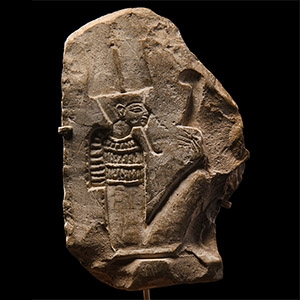
Egyptian Limestone Fragment with Seated God
Ramesside Period, 19th Dynasty, 1295-1186 B.C.Sold for (Inc. bp): £1,235
A carved limestone relief fragment depicting a squatting god Amun-Re, facing right wearing a headdress topped by two ostrich-feather plumes, a segmented mantle to the shoulders, knees drawn up supporting another ostrich plume; inked accession numbers to the reverse: '974.15', '69.10019'; accompanied by a custom-made display stand. 53 grams, 74 mm (84 grams total, 10.5 cm high including stand)
From a deceased American estate, acquired between 1970-1989. with Bonham's, London, Knightsbridge, 28 October 2009, lot 23 [Part]. Accompanied by a copy of the relevant Bonhams catalogue pages. -
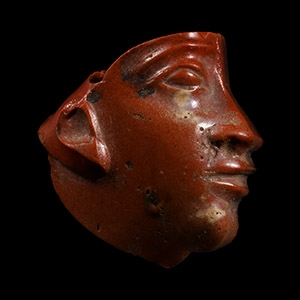
Egyptian Red Glass Face Inlay
Ptolemaic Period, circa 332-32 B.C.Sold for (Inc. bp): £3,640
A red glass insert of a profile face with remains of a pharaonic crown to the forehead. 16.7 grams, 31 mm wide
Ex Joseph Altounian (1889-1954), Paris and Macon, thence by decent. with Christie's, London, 3 July 2018, lot 29. English private collection. This lot has been checked against the Interpol Database of stolen works of art and is accompanied by search certificate no.11603-199738.
Joseph Altounian opened his shop in 1906 in Paris and then relocated to Mâcon in 1924 when he was joined by his wife Henriette Lorbet. They specialised in Egyptian and Greek art, medieval sculpture and decorative arts, selling to major museums both in Europe and in the United States. At his death in 1954 the business was taken over by his daughter, Jacqueline Altounian-Lorbet, and her husband Bernard Rousset, who then specialised in antique furniture.
