
Loading, please wait...

LOT 0413
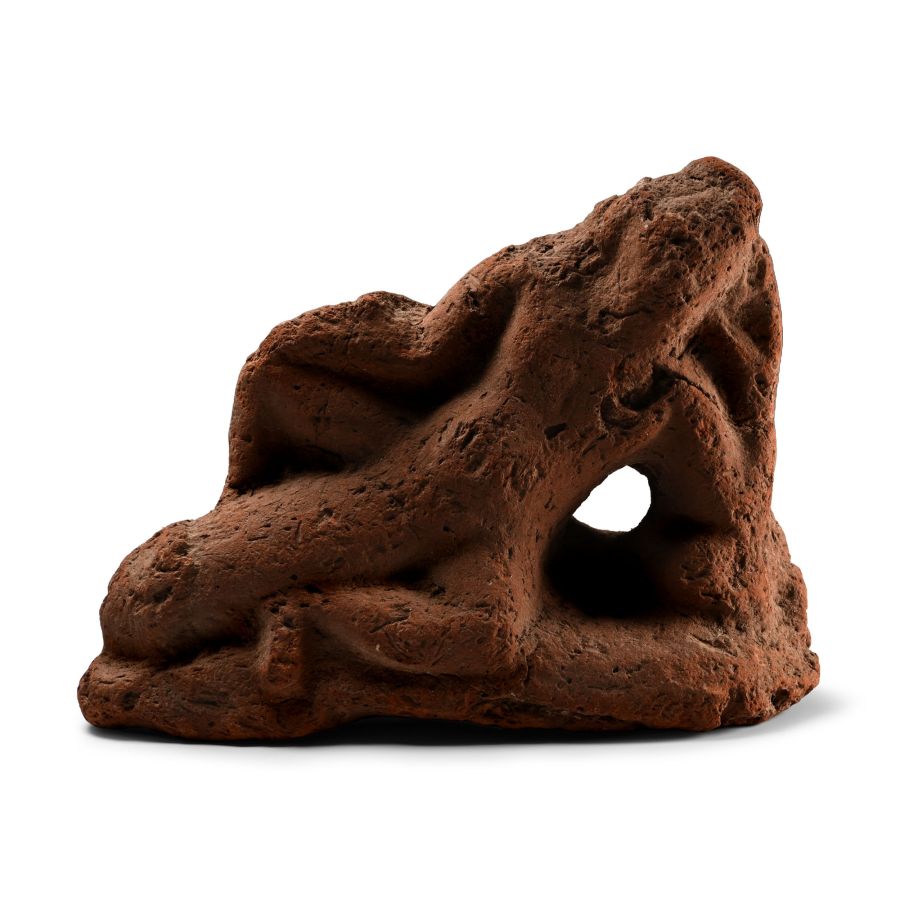
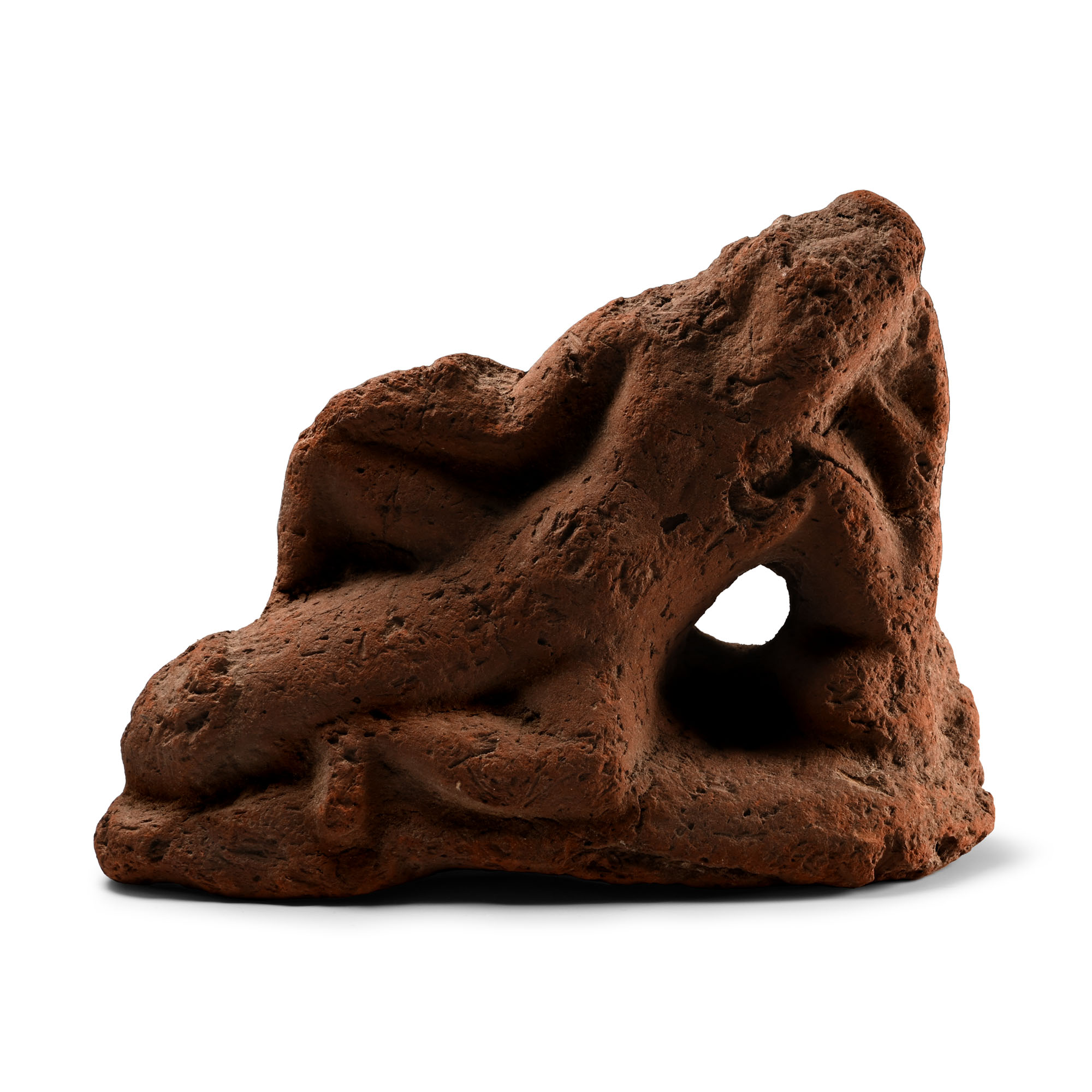
Egyptian Ithyphallic Terracotta Reclining Figure
PTOLEMAIC PERIOD, 3RD CENTURY B.C.
5 1/8 in. (319 grams, 13 cm vwide).
Probably depicting young Harpocrates, holding his weight on his left arm, enormous phallus resting between his spread legs, shaved head and side-lock braid. [No Reserve]
ProvenanceThe Erotica Collection Christian von Faber-Castell, Küsnacgt ZH, Switzerland, since the late 1970s.
This lot is accompanied by an illustrated lot declaration signed by the Head of the Antiquities Department, Dr Raffaele D’Amato.
Cf. Ross, T., ‘Egyptian Late Period figures in terracotta and limestone’ in Villing, A., Beregeron, M., Bourogiannis, G., Johnston, A., Leclere, F., Masson. A., Ross, T., Naukratis, Greeks in Egypt, London, 2015, pp.1-79, fig.109, for a similar reclining Harpocrates.
FootnotesA few early Hellenistic terracotta figures show the ithyphallic youth Harpocrates reclining on his phallus, usually depicted (when preserved) with a bald or shaved head and side-lock, sometimes in Macedonian dress. Some in this form have hermaphrodite-like features, although this may be little more than just the representation of a plump baby.
Christian von Faber-Castell (born 1950) is a renowned German entrepreneur and art collector, best known as a member of the prominent Faber-Castell family, famed for their iconic writing instruments. A passionate advocate for art and culture, Christian von Faber-Castell curated an extensive and diverse private collection of erotica, spanning centuries and cultures. His collection reflects a deep appreciation for the interplay of beauty, sensuality, and artistic expression, bringing together rare and unique works that explore themes of intimacy and human connection. Pieces from this collection have been featured in notable exhibitions and are celebrated for their artistic and historical significance. This offering represents a rare opportunity to acquire works from one of the most fascinating and eclectic private collections of its kind.
TimeLine Auctions follows a vetting process to ensure the authenticity and legality of all items, reinforcing our commitment to integrity and responsible trading. Each antiquity, antique, and coin lot undergoes thorough examination by a vetting committee of at least ten external specialists, professional trade association members, scientists, and archaeologists: Our Vetting Process
AUCTIONS:
TimeLine is a leading auction house specialising in antiquities, ancient art, collectables, natural history, coins, medals, and books. Our auctions offer museums, collectors, historians, and enthusiasts the opportunity to acquire unique and historically significant pieces.
-
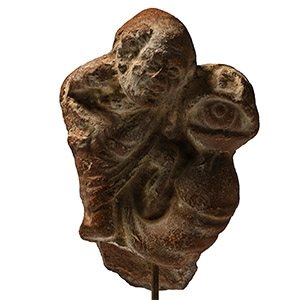
Romano-Egyptian Terracotta Figurine with Large Phallus and Apotropaic Eye
1st century B.C.-2nd century A.D.Estimate: £300 - 400 (‡+bp*)
Opening Bid: £135
Representing a slave or a dwarf in a crouched position, dressed in a short tunic leaving the left shoulder uncovered (exomis), a large curving phallus emerging from underneath the tunic topped with a large apotropaic eye; accompanied by a display stand. 64 grams, 81 mm (80 grams total, 10 cm high including stand)
The Erotica Collection Christian von Faber-Castell, Küsnacgt ZH, Switzerland, since the late 1970s. This lot is accompanied by an illustrated lot declaration signed by the Head of the Antiquities Department, Dr Raffaele D’Amato.
Except for the enormous phallus, the figure is human in all aspects. The apotropaic aspect, symbolised also by the eye, is combined with the erotic. It should be pointed out that according to the physiognomic conceptions held in the ancient world, from the 4th century B.C. onwards, small-scale sculptures developed a rich repertoire of grotesque types. These so-called grotesques were a development of the Hellenistic interest in the human body and its imperfections. They range from representations of individuals with clinically diagnosable disfigurements to those with exaggerated physical features. According to some scholars, terracotta (and bronze) figurines of this kind were life-like representations of beggars and others who gathered at big feasts in temples or at the houses of the wealthy. In the latter case, they indicated the importance and wealth of the host because the more beggars an event attracted, the greater the fortune of the event organizer. By implication, the bronze and terracotta portraits of these marginal people could have become symbols and charms of good luck that would have been placed in private houses. Christian von Faber-Castell (born 1950) is a renowned German entrepreneur and art collector, best known as a member of the prominent Faber-Castell family, famed for their iconic writing instruments. A passionate advocate for art and culture, Christian von Faber-Castell curated an extensive and diverse private collection of erotica, spanning centuries and cultures. His collection reflects a deep appreciation for the interplay of beauty, sensuality, and artistic expression, bringing together rare and unique works that explore themes of intimacy and human connection. Pieces from this collection have been featured in notable exhibitions and are celebrated for their artistic and historical significance. This offering represents a rare opportunity to acquire works from one of the most fascinating and eclectic private collections of its kind. -
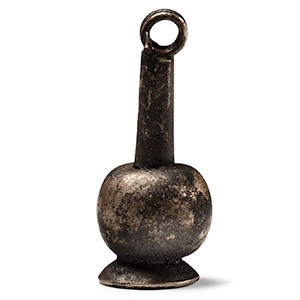
Egyptian Silver Poppy Amulet
Late-Ptolemaic Period, 664-30 B.C.Sold for (Inc. bp): £85
Silver poppy-head with loop at the apex. 1.46 grams, 19 mm
From an early 20th century collection. This lot is accompanied by an illustrated lot declaration signed by the Head of the Antiquities Department, Dr Raffaele D’Amato. -
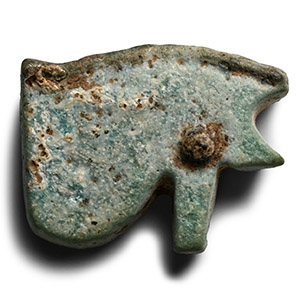
Egyptian Glazed Faience Horus Eye Amulet
Ptolemaic Period, 332-30 B.C.Sold for (Inc. bp): £59
Wedjat bead or amulet with applied black detailing to the pupil and brow. 1.18 grams, 17 mm
Mr F.D. collection, acquired on the European art market, 1975 to present. This lot is accompanied by an illustrated lot declaration signed by the Head of the Antiquities Department, Dr Raffaele D’Amato.
The wedjat-eye amulet is a representation of the healed eye of the god Horus, featuring both human and falcon elements. The name wedjat in ancient Egyptian means ‘the one that is sound.’ According to Egyptian mythology, Horus' eye was wounded or taken by the god Seth and restored by Thoth. The wedjat-eye amulet was thought to protect its wearer and bestow the power of recovery and regeneration onto them. It was very popular and used by both the living and the dead.
