
Loading, please wait...
LOT 0051
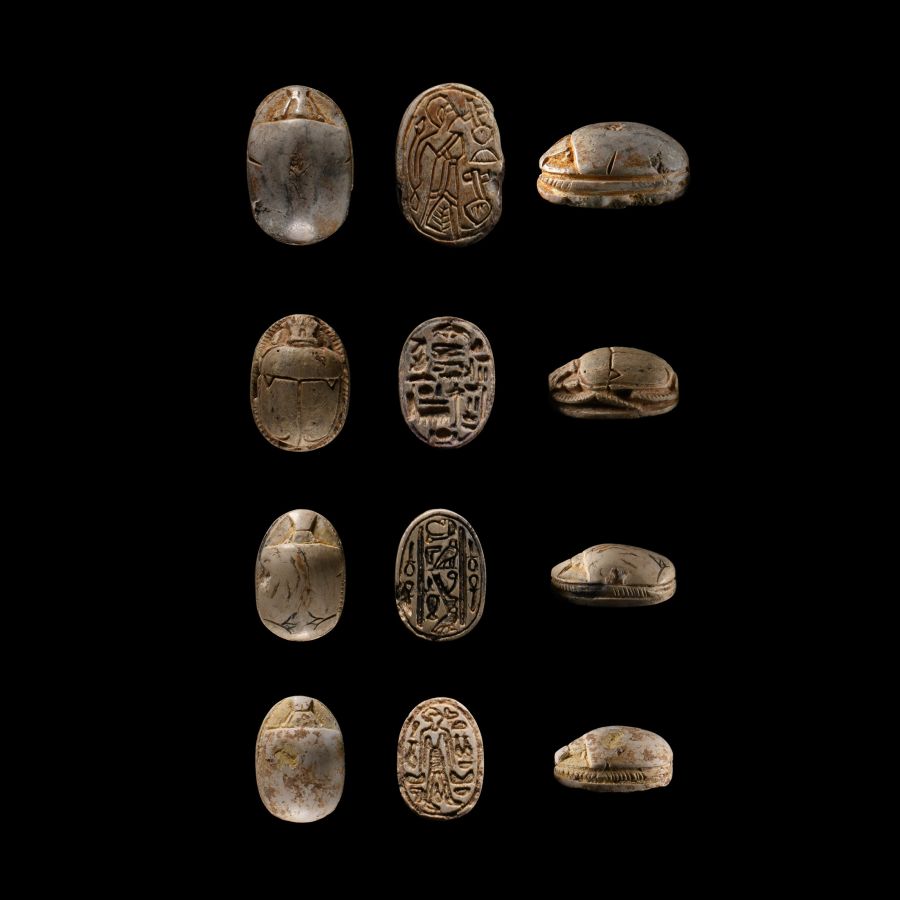
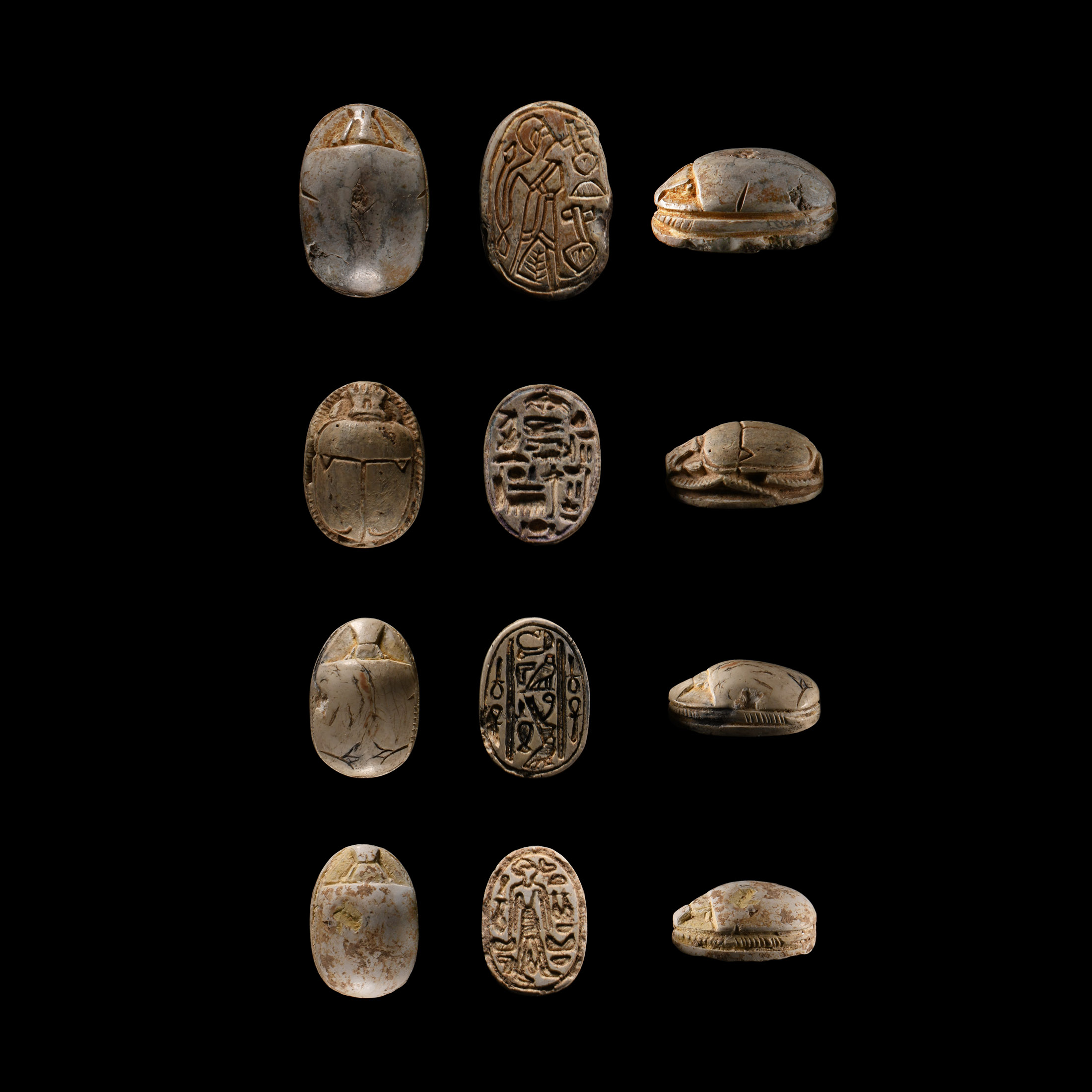
Egyptian Hyksos Steatite Scarab Collection
18TH-16TH CENTURY B.C.
3/4 - 1 in. (15.1 grams total, 18-24 mm).
Four scarabs each with detailing to the upper body, legs and hieroglyphs on the bases; each pierced for suspension. [4]
ProvenanceAcquired in Europe before 1992.
CONDITIONTimeLine Auctions follows a vetting process to ensure the authenticity and legality of all items, reinforcing our commitment to integrity and responsible trading. Each antiquity, antique, and coin lot undergoes thorough examination by a vetting committee of at least ten external specialists, professional trade association members, scientists, and archaeologists: Our Vetting Process
AUCTIONS:
TimeLine is a leading auction house specialising in antiquities, ancient art, collectables, natural history, coins, medals, and books. Our auctions offer museums, collectors, historians, and enthusiasts the opportunity to acquire unique and historically significant pieces.
-
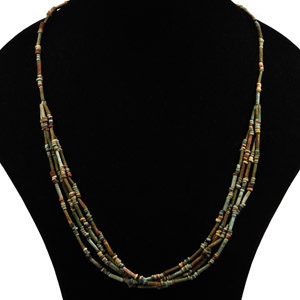
Egyptian Multi-Stranded Faience Mummy Bead Necklace
Late Period, 664-525 B.C.Sold for (Inc. bp): £130
Restrung of four strands of polychrome composition beads of mainly cylindrical types. 19.7 grams, 72 cm long
Acquired before 1979. From the private collection of Mr F. A., South Kensington, London, UK; thence by descent 2014. -
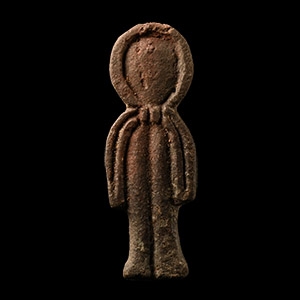
Egyptian Brown Faience Tyet Amulet
Late Period, 664-323 B.C.Sold for (Inc. bp): £169
Also known as the tit, or knot of Isis; displaying simple detailing and a pierced pillar to the reverse. 3.63 grams, 39 mm
From an early 20th century collection, Caernarfon, North Wales, UK. -
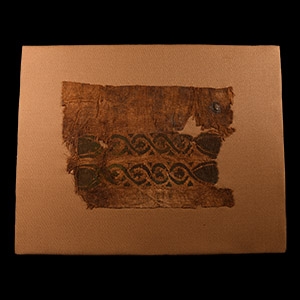
Egyptian Mounted Coptic Textile
Circa 6th-7th century A.D.Sold for (Inc. bp): £39
Comprising a pair of simple segmenta on a woven background, formed of a spiral line surrounding floral images, closed at both ends by a pair of petals. 121 grams, 38 x 30 cm
Acquired 1970s-1996. Property of a North American collector. London collection, 2016.
The textile shows a pair of segmenta, probably from a sleeve of a linen tunic. The wool here seems to be Z-spun, a spin direction not very common in Roman Egypt and suggesting that the spun yarn may have been traded from another province of the empire. Frequently, like in our case, the wool is purple in hue.
