
Loading, please wait...
LOT 0645
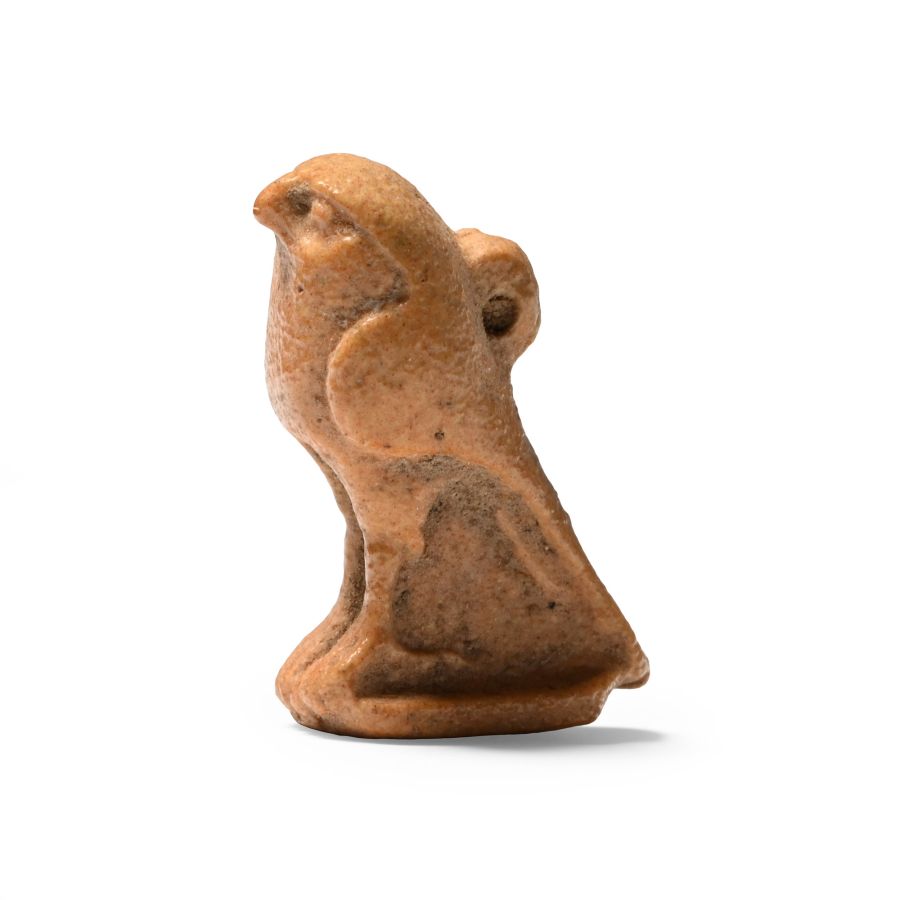
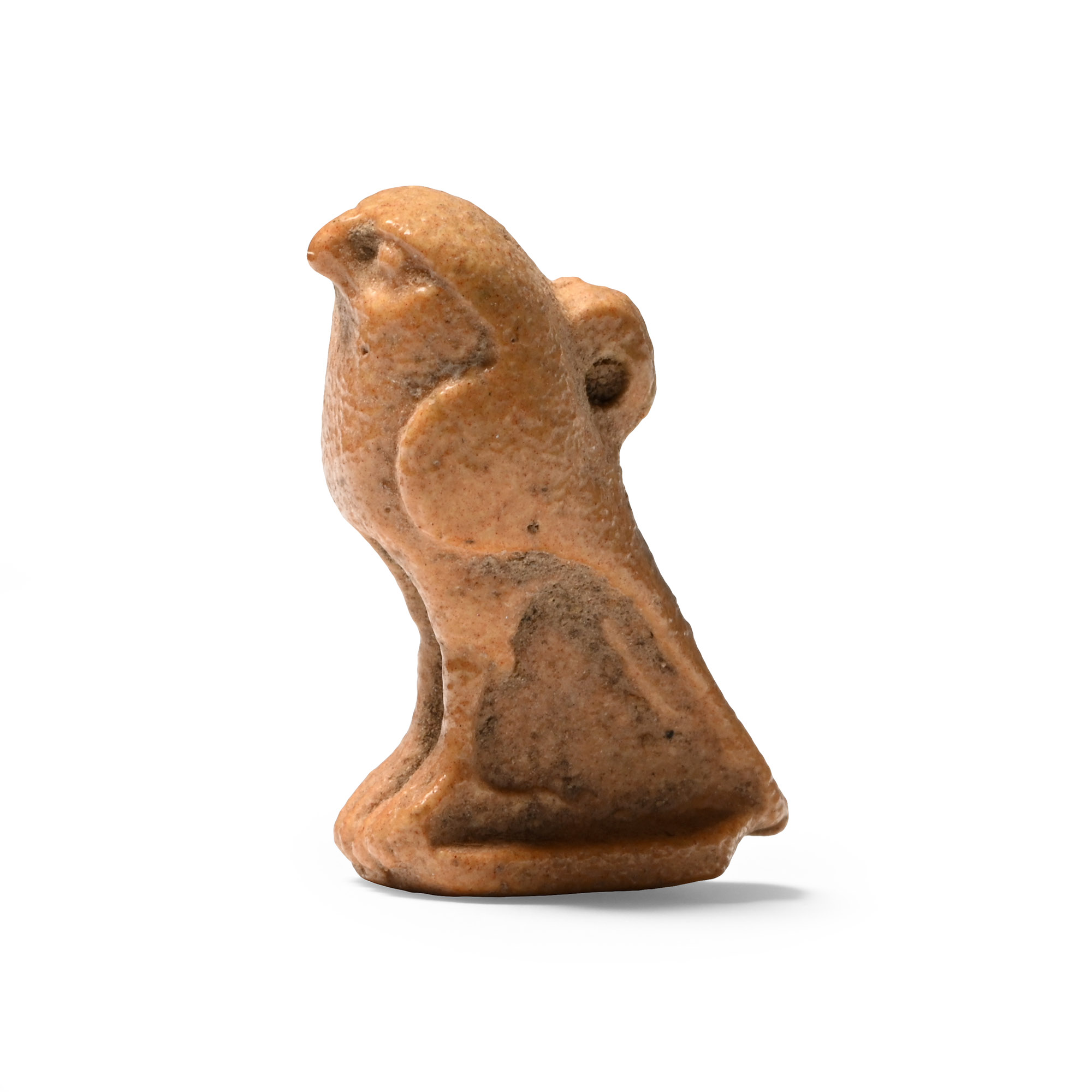
Egyptian Horus Amulet
LATE PERIOD, 664-332 B.C.
3/4 in. (1.24 grams, 19 mm).
Perching Horus falcon with talons gripping the front edge of the integral plinth; detailed wings and head and a suspension loop on the back.
ProvenanceEx London gentleman's collection, by descent 1980s.
LiteratureCf. Andrews, C., Amulets of Ancient Egypt, London, 1994, p.28, fig.25a, for similar.
FootnotesHorus is one of the most significant and widely worshipped gods in ancient Egyptian mythology. His importance spans many aspects of Egyptian religion, including serving as a symbol of the living king, offering protection, representing the sky, and symbolising the sun.
CONDITIONTimeLine Auctions follows a vetting process to ensure the authenticity and legality of all items, reinforcing our commitment to integrity and responsible trading. Each antiquity, antique, and coin lot undergoes thorough examination by a vetting committee of at least ten external specialists, professional trade association members, scientists, and archaeologists: Our Vetting Process
AUCTIONS:
TimeLine is a leading auction house specialising in antiquities, ancient art, collectables, natural history, coins, medals, and books. Our auctions offer museums, collectors, historians, and enthusiasts the opportunity to acquire unique and historically significant pieces.
LOT 0645
Egyptian Horus Amulet
Estimate £150 - 200€170 - 230 (for guidance only)$200 - 270 (for guidance only)
-
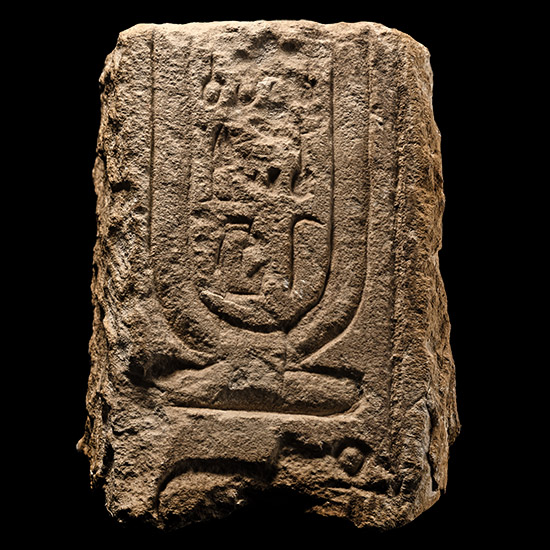
Egyptian Limestone Block from a Tomb with Cartouche of Queen Nefertiti
New Kingdom, 18th Dynasty, Amarna Period, 1353-1332 B.C.Estimate: £4,000 - 6,000 (+bp*)
Bids: 12 | Current Bid: £550
Rectangular block with a dressed face, preserving most of a low-relief cartouche containing Nefertiti's name, 'Neferneferu[aten] Nefertiti'. 1.13 kg, 11.2 cm
Acquired in March 1977. From the private collection of Peter Clayton, FCILIP, Dip, Arch, FSA, FRNS, Hemel Hempstead, Hertfordshire, UK; formed since the late 1950s. Accompanied by an old handwritten information card by Peter Clayton, collection no.129. This lot has been checked against the Interpol Database of stolen works of art and is accompanied by search certificate no.13493-262901.
Most inscribed objects related to Akhenaten or his family were systematically smashed or defaced after his death. Some scholars think that Nefertiti then took the royal name Neferneferuaten and may have served as a co-regent or an independent ruler. -
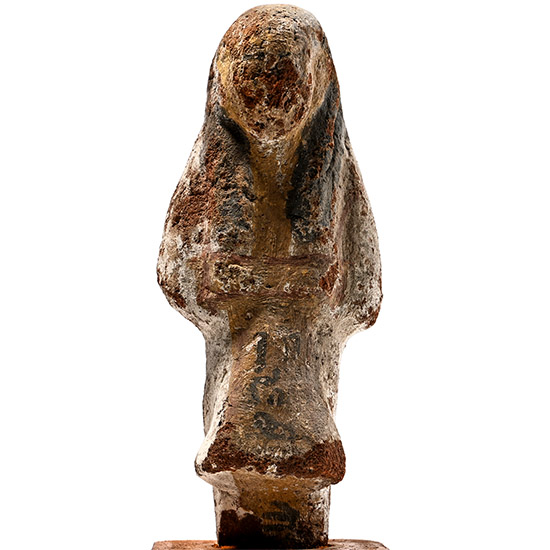
Egyptian Painted Clay Shabti in Daily Dress
New Kingdom, 19th-20th Dynasty, circa 1292-1069 B.C.Estimate: £600 - 800 (+bp*)
Bids: 2 | Current Bid: £25
Shabti wearing the kilted dress of daily life, painted white, a blue-black lappet wig, arms crossed, and hands holding hoes, applied in red pigment; the face yellow; a yellow panel of hieroglyphic text on and beneath the kilt reading: 'The illuminated one, the Osiris, Wen....'; feet missing; mounted on a display stand. 119 grams total, 12.5 cm including stand
Acquired from the Egypt Exploration Society, 30th June 1965, for 2 shillings and sixpence. From the private collection of Peter Clayton, FCILIP, Dip, Arch, FSA, FRNS, Hemel Hempstead, Hertfordshire, UK; formed since the late 1950s. Accompanied by an old handwritten information card by Peter Clayton, collection no.115. -
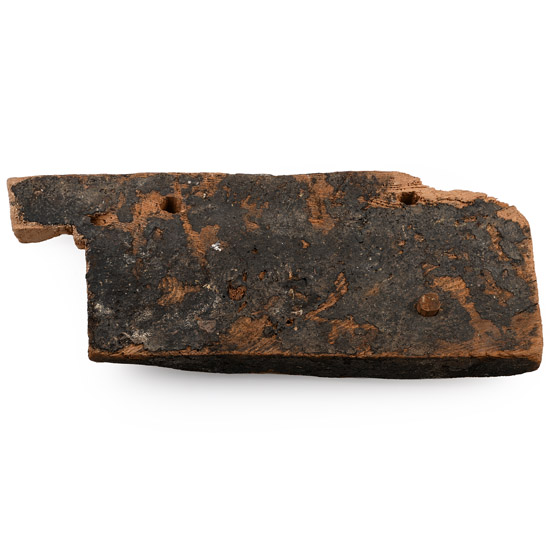
Egyptian Wooden Sarcophagus Panel
Late-Ptolemaic Period, circa 664-30 B.C.Estimate: £60 - 80 (+bp*)
Bids: 1 | Current Bid: £5
Rectangular fragment with dowel and dowel holes, with a black bitumen-like varnish. 157 grams, 25 cm
With a privately curated collection, 1980s-early 2000s. From the private collection and estate of Christine Simons (1943-2025), West Midlands, UK.
