
Loading, please wait...

LOT 0550
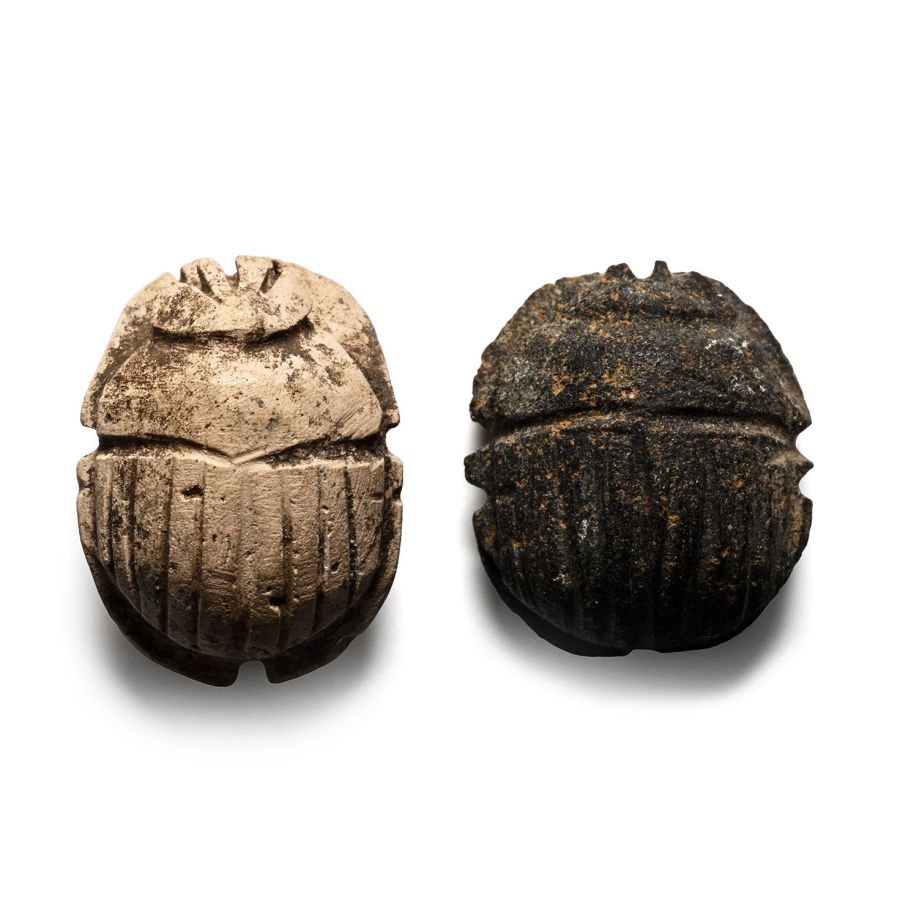
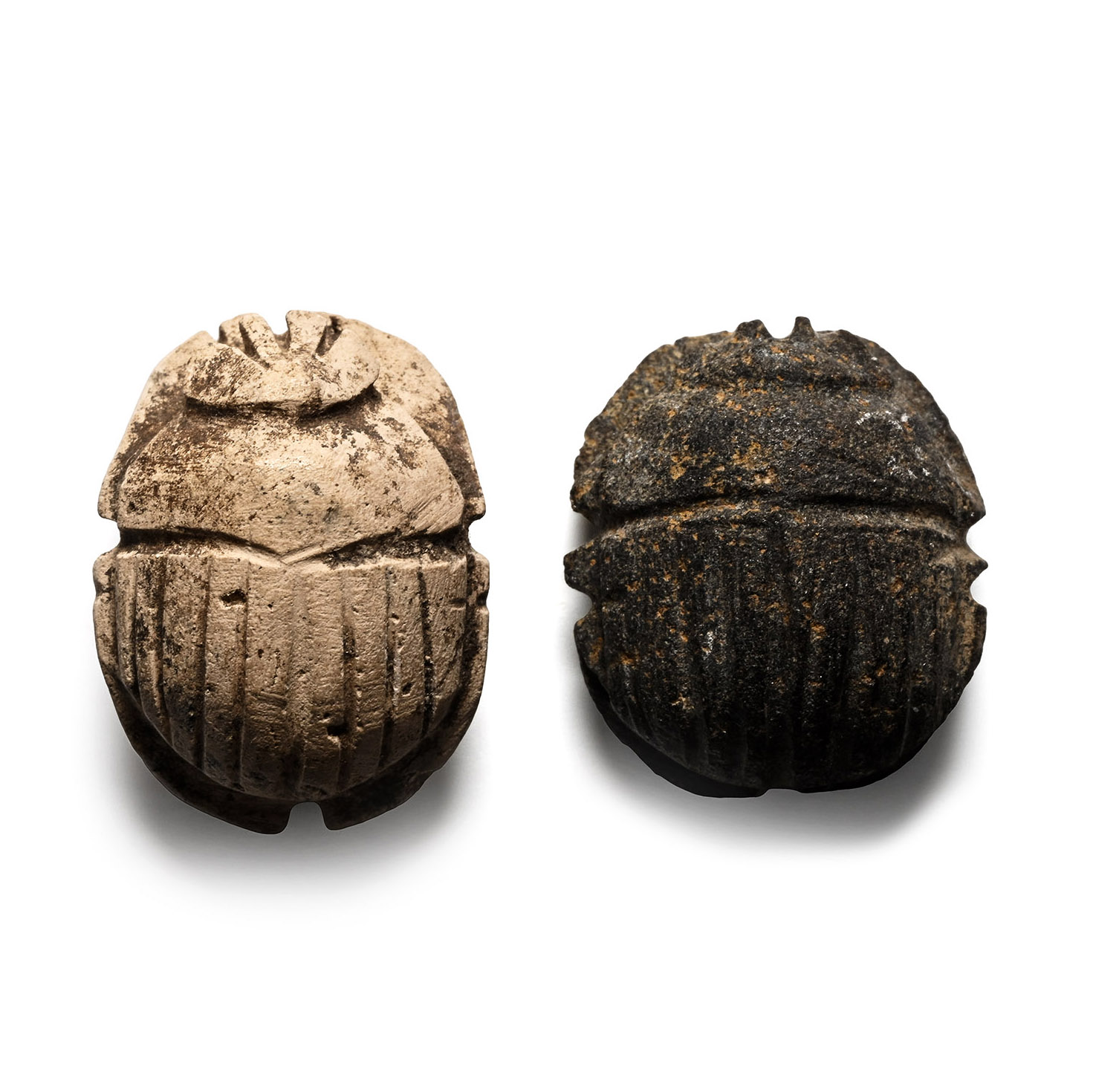
Egyptian Heart Scarab Group
LATE PERIOD, 664-332 B.C.
3/4 in. (7.5 grams total, 18-20 mm).
Comprising two naturalistically modelled scarabs with striated wing cases and ribbed undersides. [2]
ProvenanceFrom the collection of a gentleman, acquired on the London art market in the 1990s.
LiteratureCf. Ben-Tor, D., The Scarab: A Reflection of Ancient Egypt, Tel Aviv, 1993, pp. 76-77, for similar examples.
FootnotesThe scarab amulet was a powerful symbol of rebirth, transformation, and protection in ancient Egypt. Modeled after the beetle associated with the sun god Khepri, it represented the cycle of life and regeneration. From the Middle Kingdom (c. 2050 BCE) onwards, scarabs served as funerary amulets, personal charms, and seals—often inscribed with prayers or names—reflecting both spiritual beliefs and daily life.
CONDITIONTimeLine Auctions follows a vetting process to ensure the authenticity and legality of all items, reinforcing our commitment to integrity and responsible trading. Each antiquity, antique, and coin lot undergoes thorough examination by a vetting committee of at least ten external specialists, professional trade association members, scientists, and archaeologists: Our Vetting Process
AUCTIONS:
TimeLine is a leading auction house specialising in antiquities, ancient art, collectables, natural history, coins, medals, and books. Our auctions offer museums, collectors, historians, and enthusiasts the opportunity to acquire unique and historically significant pieces.
LOT 0550
Egyptian Heart Scarab Group
Estimate £120 - 170€140 - 200 (for guidance only)$160 - 230 (for guidance only)
Opening Bid
£60 (EUR 70; USD 81) +BP*
-
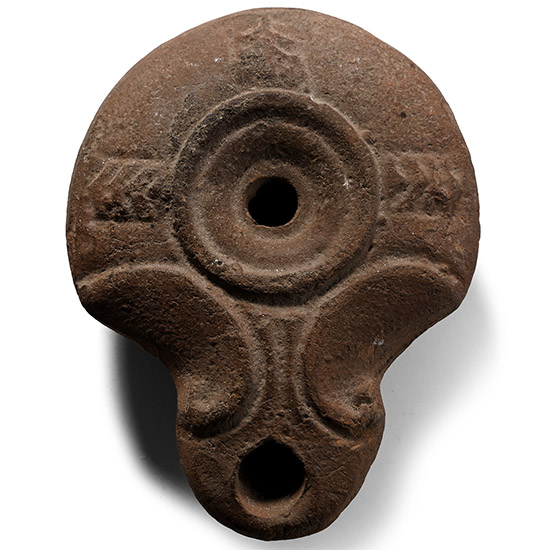
Romano-Egyptian Terracotta Toad Oil Lamp
Roman Period, 2nd-early 3rd century A.D.Estimate: £40 - 60 (+bp*)
Bids: 1 | Current Bid: £5
Biconvex in section with volute detailing to the shoulders and nozzle, central discus and three chevron bands to the shoulder; old collector's ticket 'Ancient Roman small red lamp of pretty style & decorative design. 2nd century. Excavated at Alexandria. Finely preserved.' 51.6 grams, 77 mm
From Alexandria, Egypt. From the estate of a deceased Sussex private collector since the early 20th century. Accompanied by an old, original handwritten collector's ticket. -
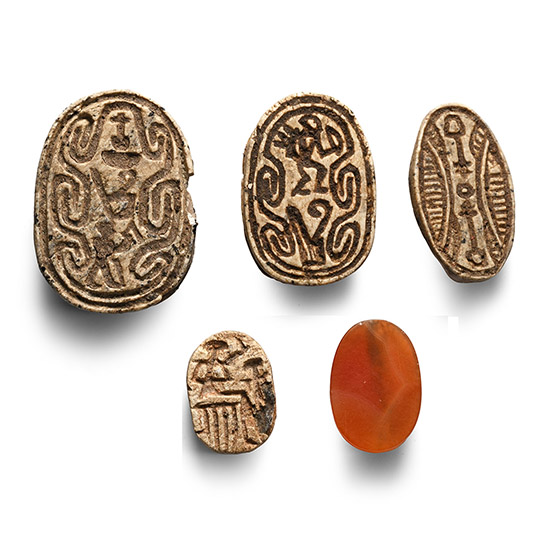
Egyptian Mixed Scarab Collection
2nd-1st millennium B.C. and laterEstimate: £400 - 600 (+bp*)
Opening Bid: £200
Comprising three faience scarabs with detailed bodies and decorated undersides, featuring: a scroll border with central design consisting of a nefer, neb, Red Crown, and a striding human figure holding a flail; a scroll border with a central figure of a bowman with a Red Crown beneath; a seated figure before an offering table(?); an oval scaraboid featuring a central sun disc with opposed nefer signs flanked by hatched panels; and a plain carnelian scarab. 22.75 grams total, 15-28 mm
From the collection of a gentleman, acquired on the London art market in the 1990s. This lot is accompanied by an illustrated lot declaration signed by the Head of the Antiquities Department, Dr Raffaele D'Amato. -
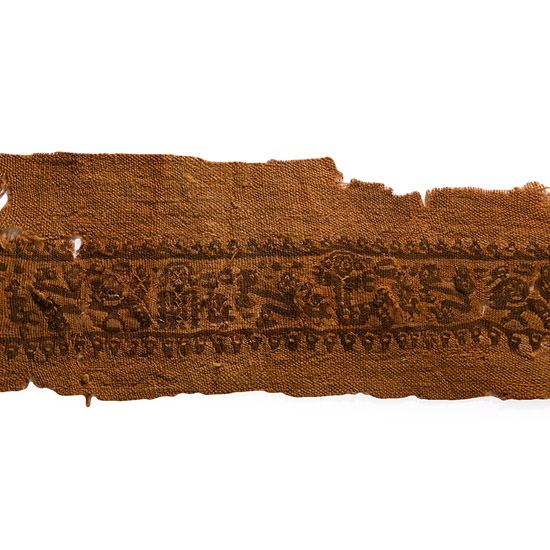
Egyptian Coptic Textile Fragment of a Clavus from a Tunic with Triton, Male Figure and Birds
Circa 5th-6th century A.D.Estimate: £60 - 80 (+bp*)
Bids: 1 | Current Bid: £5
Comprising a decorative tunic stripe (clavus) in purple wool over coarse linen, S-twist tapestry, embroidered with stylised plants, male figures, tritons and birds, borders decorated with meanders. 14.5 grams, 44 cm
Acquired 1970s-1996. Property of a North American collector. London collection, 2016.
Among the many fragments from wool tunics are several long strips that match to form nearly full-length central pectoral clavi. They are patterned with a profusion of small figures or interlaced abstract designs, birds, plants, and animals, with a contrasting border filled with geometric motifs.
