
Loading, please wait...

LOT 0442
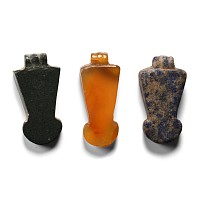
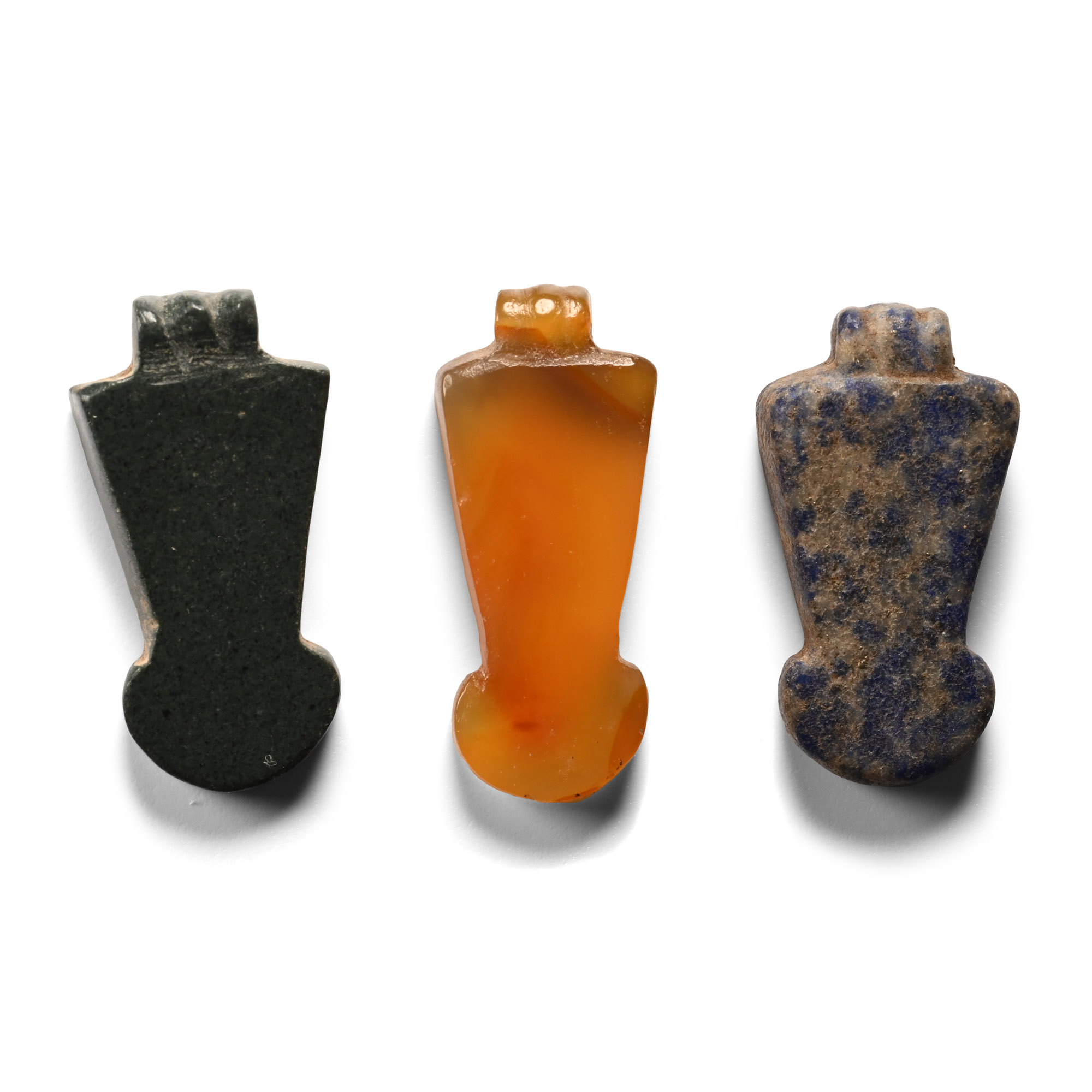
Egyptian Hardstone Menat Amulet Group
PTOLEMAIC PERIOD, 332-30 B.C.
3/4 - 7/8 in. (5.38 grams total, 20-22 mm).
Lapis lazuli, carnelian, and schist (?) menat amulets, each with a distinctive keyhole shape and broad ribbed bale. [3, No Reserve]
ProvenanceFrom a private collection acquired by the previous owner's father in the 1950s.
Ex TimesAncient, Bristol, UK.
Accompanied by a copy of a previous catalogue entry.
This lot is accompanied by an illustrated lot declaration signed by the Head of the Antiquities Department, Dr Raffaele D’Amato.
Cf. Reisner, G.A., Catalogue général des antiquités égyptiennes du Musée du Caire, Nos.12528-13595, Vol. II, Amulets, Cairo, 1958, pls. V and XXIV, nos. 12701 and 12694, for type.
FootnotesThe menat was a counterpoise that hung at the back of a heavy ornamental collar and was closely associated with the goddess Hathor. Amulets representing the counterpoise were thought to bring good luck, protect against evil spirits, and safeguard the wearer in the afterlife. Their Hathoric connection symbolised fertility and good health for women while representing virility for men.
CONDITIONTimeLine Auctions follows a vetting process to ensure the authenticity and legality of all items, reinforcing our commitment to integrity and responsible trading. Each antiquity, antique, and coin lot undergoes thorough examination by a vetting committee of at least ten external specialists, professional trade association members, scientists, and archaeologists: Our Vetting Process
AUCTIONS:
TimeLine is a leading auction house specialising in antiquities, ancient art, collectables, natural history, coins, medals, and books. Our auctions offer museums, collectors, historians, and enthusiasts the opportunity to acquire unique and historically significant pieces.
-
Egyptian Bronze Figurine of Harpocrates
Late Period, 664-332 B.C.Estimate: £200 - 300 (‡+bp*)
Opening Bid: £90
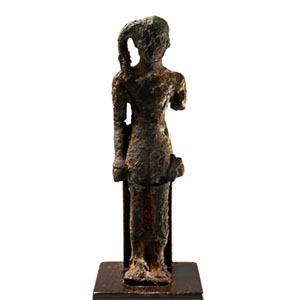
Modelled in the round depicted in a seated pose with bold sidelock reaching to the shoulder; kilt to the thighs, D-shaped base beneath the feet, socket to the middle of the back; provided with a custom-made display stand. 146 grams, 12.2 cm (202 grams total, 13.7 cm including stand)
with Max Hagemann, prior 1964. This lot is accompanied by an illustrated lot declaration signed by the Head of the Antiquities Department, Dr Raffaele D’Amato.
Harpocrates is the Greek rendering of the Egyptian Hor-pa-khered, which translates as 'Horus the Child', referring to Horus as the divine infant of Isis and Osiris. -
Egyptian Clay Shabti and Babylonian Head Group
Mid 1st millennium B.C.Sold for (Inc. bp): £85
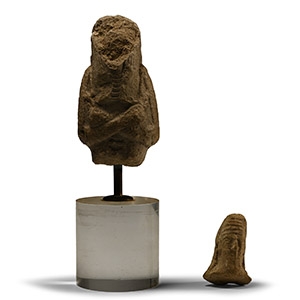
Comprising: fragment of a shabti with tripartite wig and arms crossed at the chest, mounted on a custom-made stand; male head from a figurine. 268 grams total, 4.3-16.5 cm including stand
From an old English deceased estate. Property of a London, UK, collector. This lot is accompanied by an illustrated lot declaration signed by the Head of the Antiquities Department, Dr Raffaele D’Amato. -
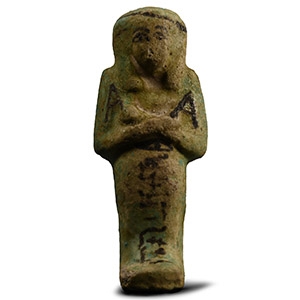
Egyptian Faience Shabti for Nes-Khonsu
Third Intermediate Period, 21st-22nd Dynasty, circa 1085-713 B.C.Sold for (Inc. bp): £715
A pale blue-green faience mummiform shabti, with arms crossed and holding a hoe in each hand, wearing a tripartite wig with a headband with ties hanging down at the back; a seed bag suspended below the wig; the outline of the eyes, eyebrows, hoes, and seed bag painted black; a central column of hieroglyphs on the front reading: wsı͗r šmꜤyt n ı͗mn ns-ḫns.w ‘The Osiris, chantress of Amun, Nes-Khonsu.’ 166 grams, 12.2 cm
Ex German private collection. Acquired from Galerie BB-Antiken & Asiatika with stock reference no.366/08. From the private collection of a Belgian collector. Ex TimesAncient, Bristol, UK. Accompanied by a copy of the Galerie BB-Antiken & Asiatika certificate dated 1 December 2008. Accompanied by a copy of a previous catalogue entry. This lot is accompanied by an illustrated lot declaration signed by the Head of the Antiquities Department, Dr Raffaele D’Amato.
Nes-Khnosu (and the variant Nesy-Khonsu) were common names during the Third Intermediate Period. However, the combination of the name and title in the dedication on this shabti is less common. It is possible that this shabti comes from tomb 339 at Deir el-Medineh in Western Thebes. The tomb was discovered by Bernard Bruyère in 1929 (Rapports préliminaires Deir el Médineh, Cairo, 1930, p. 89, 92), from where blue faience shabtis bearing the same dedication were recovered. Traditionally, chantresses were female performers who acted as dancers and rhythmic musicians. Like Nes-Khnosu, many were associated with temples and played significant roles in religious festivals.
