
Loading, please wait...
LOT 0509
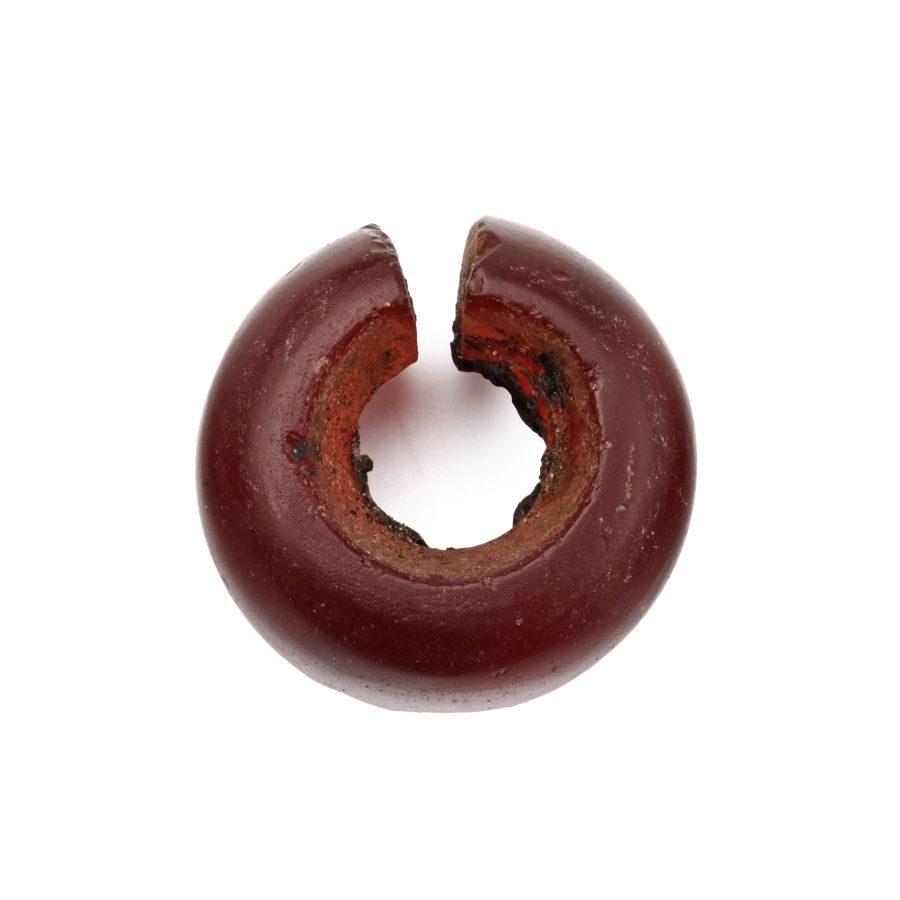
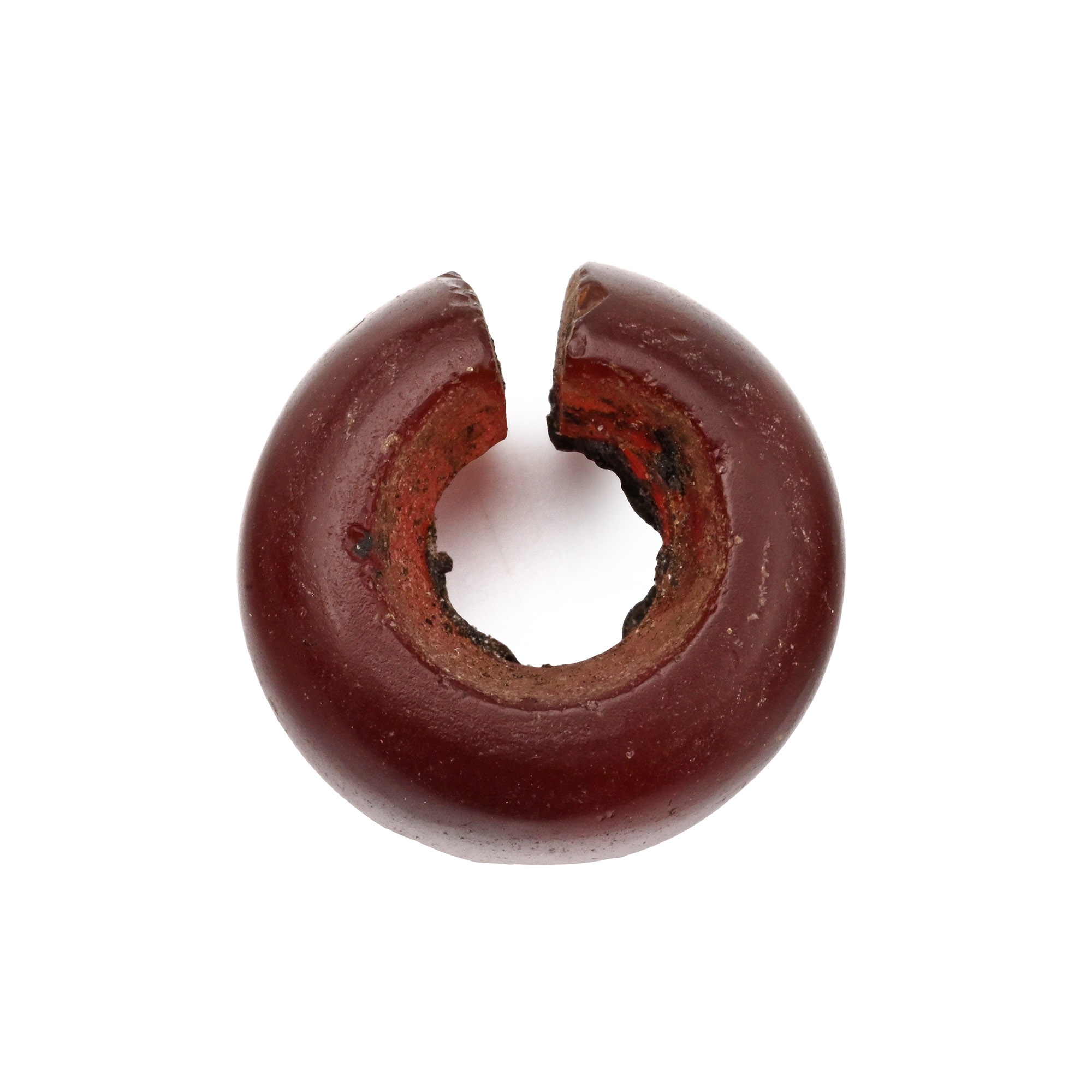
Egyptian Hardstone Hair Ring
NEW KINGDOM, 1550-1070 B.C.
5/8 in. (3.57 grams, 17 mm).
Circular with a semi-circular profile and an opening on one side.
ProvenanceFrom an early 20th century collection.
This lot is accompanied by an illustrated lot declaration signed by the Head of the Antiquities Department, Dr Raffaele D'Amato.
See Andrews, C., Ancient Egyptian Jewellery, London, 1990, p.116, no.96k, for the style.
CONDITIONTimeLine Auctions follows a vetting process to ensure the authenticity and legality of all items, reinforcing our commitment to integrity and responsible trading. Each antiquity, antique, and coin lot undergoes thorough examination by a vetting committee of at least ten external specialists, professional trade association members, scientists, and archaeologists: Our Vetting Process
AUCTIONS:
TimeLine is a leading auction house specialising in antiquities, ancient art, collectables, natural history, coins, medals, and books. Our auctions offer museums, collectors, historians, and enthusiasts the opportunity to acquire unique and historically significant pieces.
LOT 0509
Egyptian Hardstone Hair Ring
Estimate £200 - 300€230 - 350 (for guidance only)$270 - 410 (for guidance only)
-
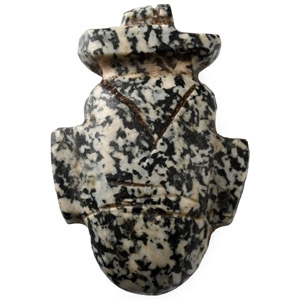
Egyptian Diorite Heart Amulet
Late Period, 664-332 B.C.Sold for (Inc. bp): £338
A large heart, ib, amulet of classic egg-form with shallow lugs on either side, with flared top and incised lines to one side. 10.7 grams, 31 mm
From an early 20th century collection. Ex London, UK, gallery. From a private UK collection This lot is accompanied by an illustrated lot declaration signed by the Head of the Antiquities Department, Dr Raffaele D'Amato.
According to ancient Egyptian beliefs, the heart (ib) was considered the centre of intelligence, emotions, and behaviour. It was also believed to store an individual's memories. During the Weighing of the Heart ceremony in the afterlife, the heart could speak on behalf of the deceased and account for their lifetime of actions before Osiris. For this reason, heart amulets were placed on the mummy to safeguard the organ and ensure a favourable outcome during judgment. -
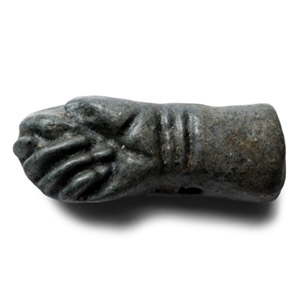
Egyptian Faience Fist Amulet
Ptolemaic-Roman Period, 323 B.C.-323 A.D.Sold for (Inc. bp): £124
Modelled as a right hand in fica protective gesture; pierced at wrist. 1.48 grams, 20 mm
From an early 20th century collection. This lot is accompanied by an illustrated lot declaration signed by the Head of the Antiquities Department, Dr Raffaele D'Amato. -
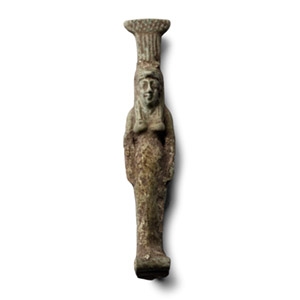
Egyptian Faience Amulet Representing Nephthys
Late Period, 664-332 B.C.Sold for (Inc. bp): £182
Modelled in the round on a small base, wearing columnar headdress, with dorsal pillar pierced behind the elbows. 4.15 grams, 55 mm
Private collection, Carouge, Switzerland, assembled in the 1980s-1990s. Thence by descent to the collection of Mr S.P., since 2020. This lot is accompanied by an illustrated lot declaration signed by the Head of the Antiquities Department, Dr Raffaele D'Amato.
Nephthys was a protective goddess linked to mourning, magic, and the afterlife. As the sister of Isis, she played a vital role in the funerary rites of Osiris. Amulets like this were placed on the deceased to invoke her protection and aid in rebirth. Typically made of faience or semi-precious stone, they were especially common in the Late Period.
