
Loading, please wait...
LOT 0460
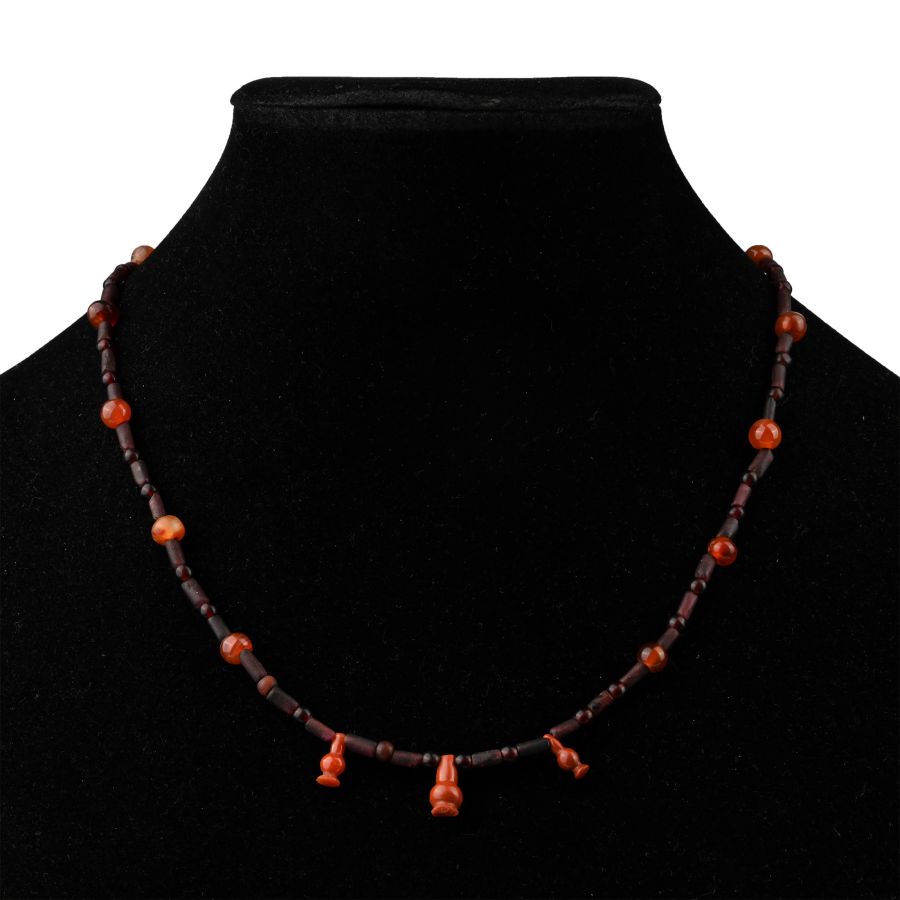
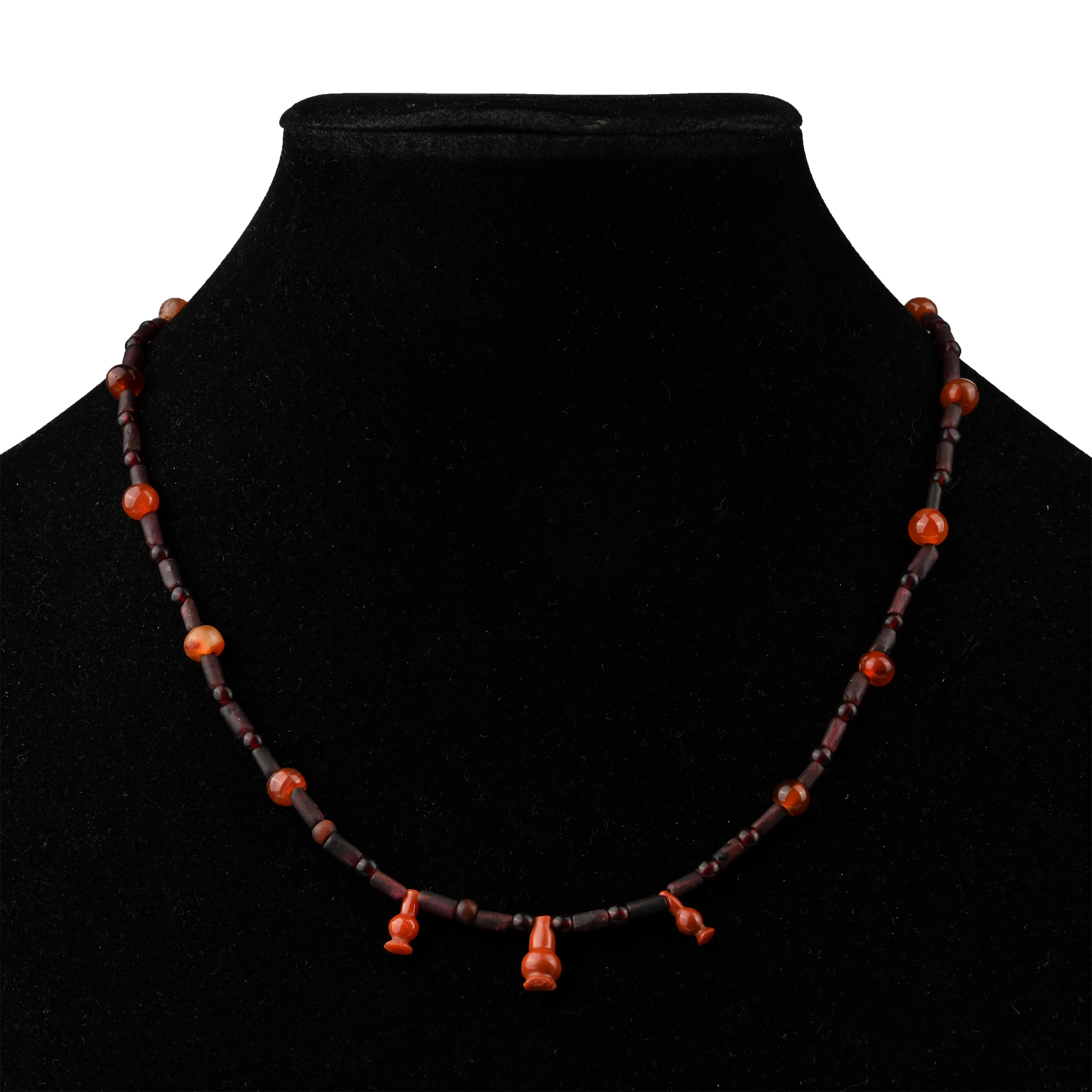
Egyptian Hardstone Bead Necklace with Jasper Poppy Amulets
NEW KINGDOM, CIRCA 1550-1070 B.C.
17 in. (14.34 grams, 43 cm).
Restrung group of spherical, cylindrical, three jasper poppy seed head amulets, and other beads.
ProvenanceEx Israel collection, 1990s.
This lot is accompanied by an illustrated lot declaration signed by the Head of the Antiquities Department, Dr Raffaele D'Amato.
TimeLine Auctions follows a vetting process to ensure the authenticity and legality of all items, reinforcing our commitment to integrity and responsible trading. Each antiquity, antique, and coin lot undergoes thorough examination by a vetting committee of at least ten external specialists, professional trade association members, scientists, and archaeologists: Our Vetting Process
AUCTIONS:
TimeLine is a leading auction house specialising in antiquities, ancient art, collectables, natural history, coins, medals, and books. Our auctions offer museums, collectors, historians, and enthusiasts the opportunity to acquire unique and historically significant pieces.
LOT 0460
Egyptian Hardstone Bead Necklace with Jasper Poppy Amulets
Estimate £350 - 450€410 - 520 (for guidance only)$470 - 610 (for guidance only)
-
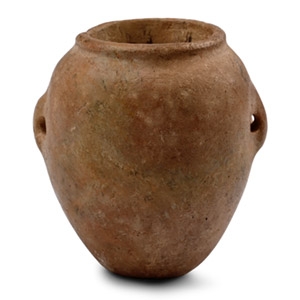
Egyptian Stone Two-Handled Cosmetic Jar
Late Predynastic-early Dynastic Period, 3100-2850 B.C.Sold for (Inc. bp): £572
Barrel-shaped in profile with low rim and two lateral pierced lug handles. 103 grams, 53 mm
From the private collection of a Canadian gentleman living in Essex, UK, formed since the 1920s-circa 1990. Property of an Essex lady until the late 1990s; thence by descent. From the private collection of an Essex gentleman since the late 1990s. This lot is accompanied by an illustrated lot declaration signed by the Head of the Antiquities Department, Dr Raffaele D'Amato. -
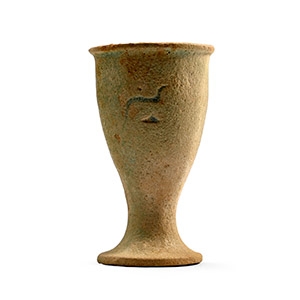
Egyptian Faience Offering Cup with Inscription
Ptolemaic Period, 332-30 B.C.Sold for (Inc. bp): £338
Piriform body, stemmed foot, and thick rim; one side inscribed with the hieroglyphs ḏt ('eternally'). 32 grams, 56 mm
Private collection of Mr K.A., acquired in the 1990s-early 2000s. This lot is accompanied by an illustrated lot declaration signed by the Head of the Antiquities Department, Dr Raffaele D'Amato. -
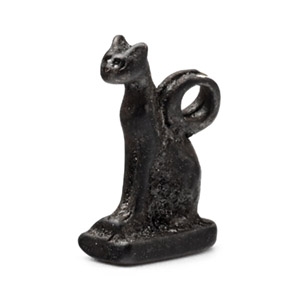
Egyptian Silver Bastet as Seated Cat Amulet
Late-Ptolemaic Period, 664-30 B.C.Sold for (Inc. bp): £208
Seated figure of a cat with pointed ears mounted on a rectangular base with a rounded end; suspension loop on the back. 0.34 grams, 8 mm
Ex London, UK, gentleman 1980-1990s. This lot is accompanied by an illustrated lot declaration signed by the Head of the Antiquities Department, Dr Raffaele D'Amato.
The cat was sacred to Bastet, a protective mother goddess and the daughter of the sun god Re. Amulets offered the wearer the goddess's protection. Her name means ‘she of the bast [ointment jar],’ which may have contained a substance favoured by or exclusive to royalty. Originally, Bastet was depicted as a woman with the head of a lioness, but by the late New Kingdom, she was usually shown with a cat's head. She is sometimes portrayed with kittens, emphasising her maternal role as a fierce protector of offspring.
