
Loading, please wait...
LOT 0503
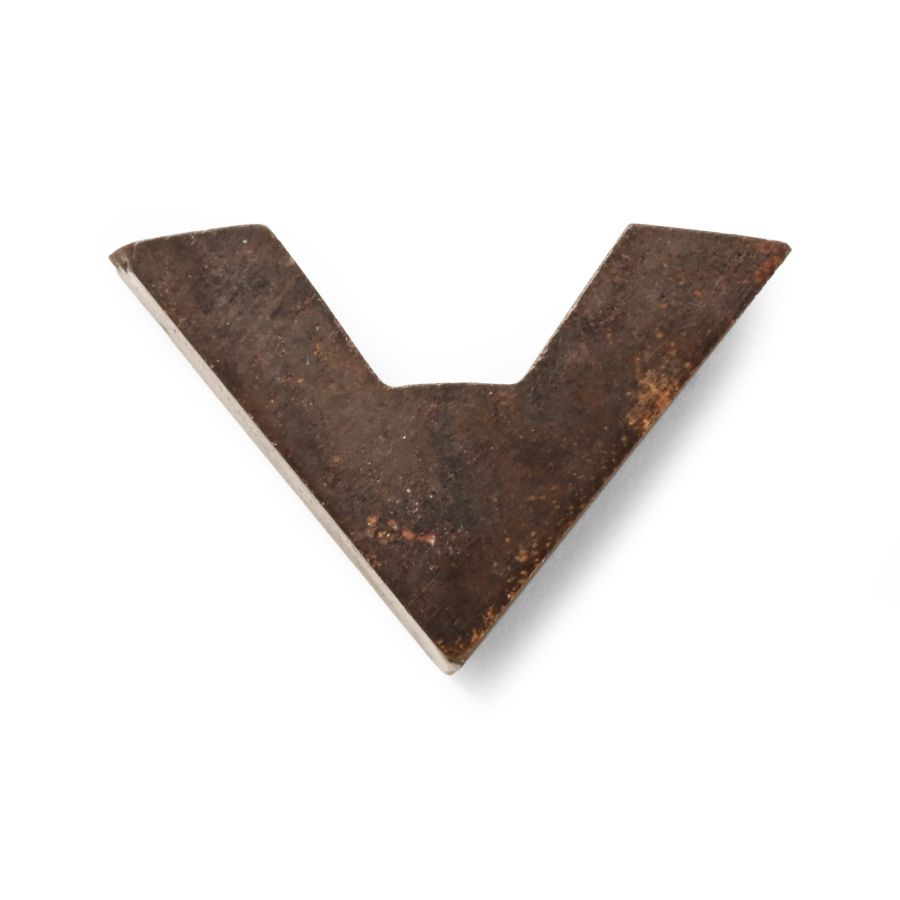
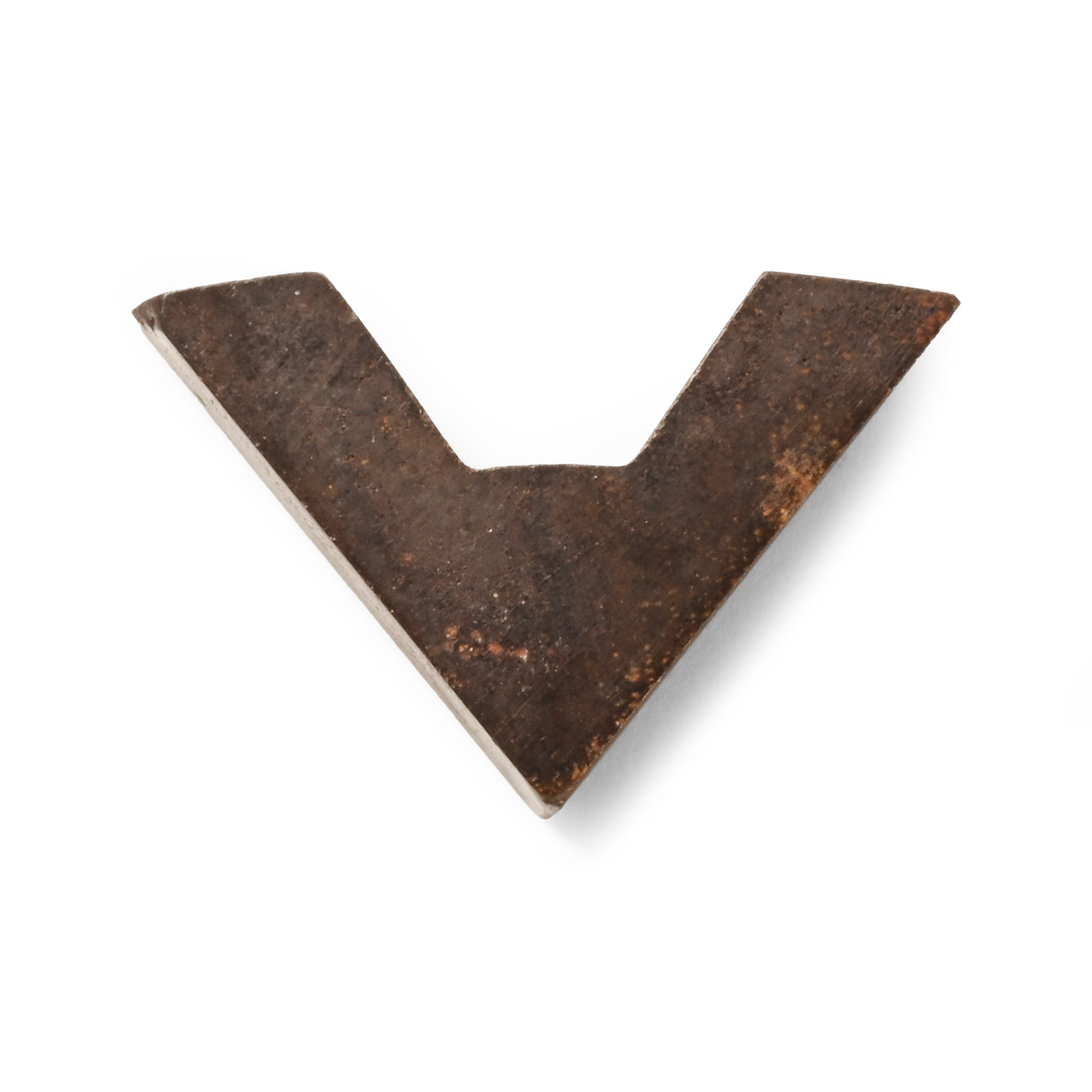
Egyptian Hardstone Architectural Amulet
LATE PERIOD, 664-332 B.C.
1 in. (2.38 grams, 25 mm).
Amuletic model of a stonemason's plummet.
Provenancewith Hotel des Ventes, Drouot, Paris, France.
From the collection of Mr H. Naudy, Paris, France.
Acquired at between 2004-2010.
Property of a French collector.
Cf. Andrews, C., Amulets of Ancient Egypt, London, 1994, p. 85, pl.87a, for a similar haematite example.
FootnotesThe stonemason’s plumb bob amulet was most frequently made of a dark hardstone like this example and paired with a set-square amulet. Plummet amulets were thought to grant their owner everlasting balance and harmony.
CONDITIONTimeLine Auctions follows a vetting process to ensure the authenticity and legality of all items, reinforcing our commitment to integrity and responsible trading. Each antiquity, antique, and coin lot undergoes thorough examination by a vetting committee of at least ten external specialists, professional trade association members, scientists, and archaeologists: Our Vetting Process
AUCTIONS:
TimeLine is a leading auction house specialising in antiquities, ancient art, collectables, natural history, coins, medals, and books. Our auctions offer museums, collectors, historians, and enthusiasts the opportunity to acquire unique and historically significant pieces.
-
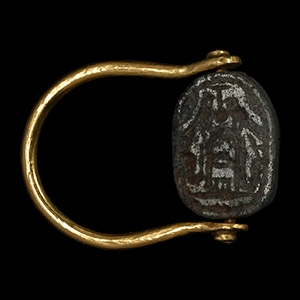
Phoenician Scarab in Gold Swivel Ring
8th-5th century B.C.Estimate: £2,000 - 3,000 (‡+bp*)
Opening Bid: £1,000
The scarab with lightly incised anatomical detailing, the underside with a central cartouche flanked by two rearing crowned uraei, a pair of falcons standing above the cartouche facing a smꜣ hieroglyph symbolising union (of the two lands, Upper and Lower Egypt); set into a later gold swivel ring. 4.34 grams, 26.44 mm overall, 15.68 mm internal diameter (approximate size British J 1/2, USA 5, Europe 9.32, Japan 9)
with Bonhams, London, 21 October 1999, no.36. Private collection, Europe. This lot has been checked against the Interpol Database of stolen works of art and is accompanied by a search certificate number no.12370-226696. -
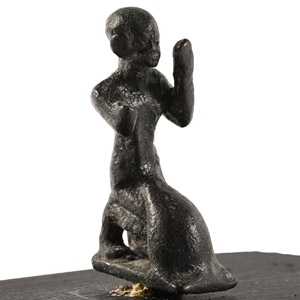
Egyptian Bronze Statue of a Kneeling Priest
Late Period, 664-332 B.C.Estimate: £250 - 350 (+bp*)
Opening Bid: £139
Kneeling on a rectangular platform with a wide apron covering his thighs, clean-shaven head and hands raised in adoration; tang on the underside for attachment; mounted on a display stand. 41 grams total, statue: 30 mm high
From an early 20th century Home Counties, UK, collection.
Priest figurines like this were commonly placed before a larger figurine of a deity, both attached to a base, e.g., Schulz, R., Seidel, M., Egyptian Art. The Walters Art Museum, London, 2009, for a kneeling priest before a standing figure of Anubis. -
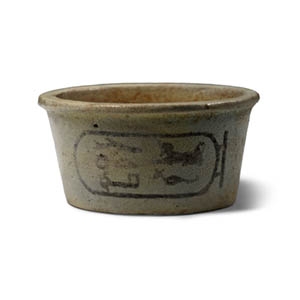
Egyptian Faience Offering Cup with Cartouche of Nectanebo I
30th Dynasty, 380-326 B.C.Estimate: £1,200 - 1,700 (+bp*)
Opening Bid: £600
A squat flared vessel with a rim, one side with a cartouche containing the hieroglyphs nakhtnebef, giving the birth name of the 30th Dynasty King Nectanebo I. 20.8 grams, 48 mm
Acquired on the German art market, 1989-1995. with The Museum Gallery, 19 Bury Place, London, WC1, UK, 1998-2003. Property of a London based academic, 2003-present.
