
Loading, please wait...
LOT 0425
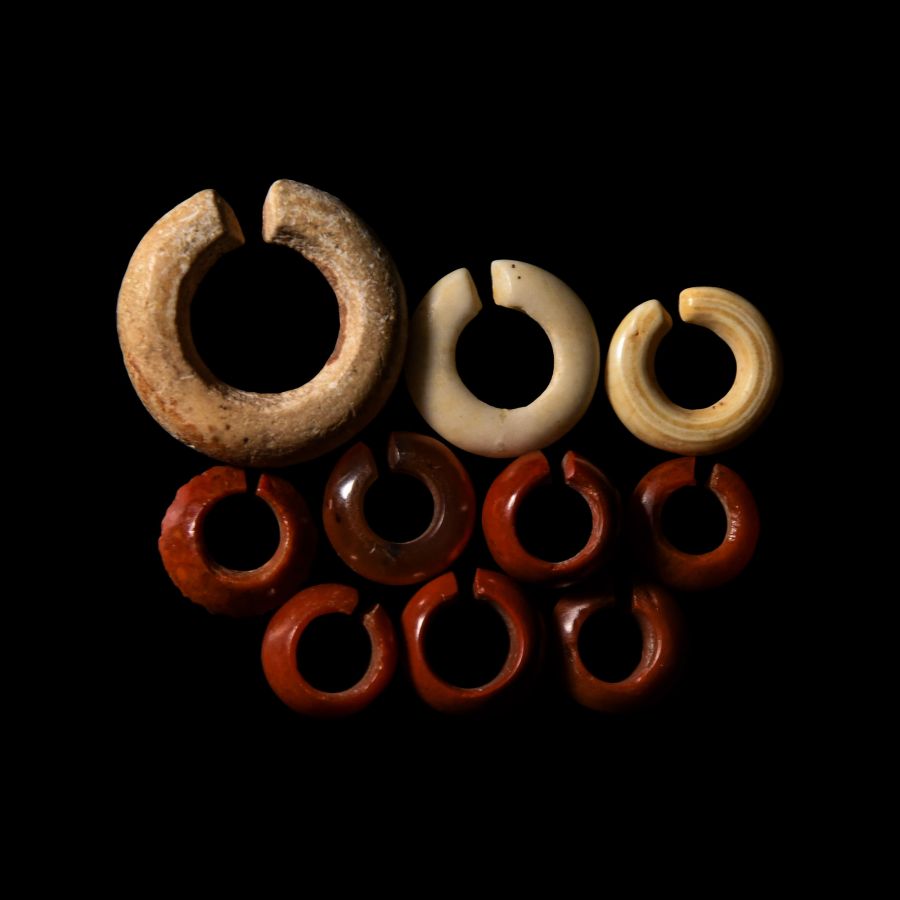
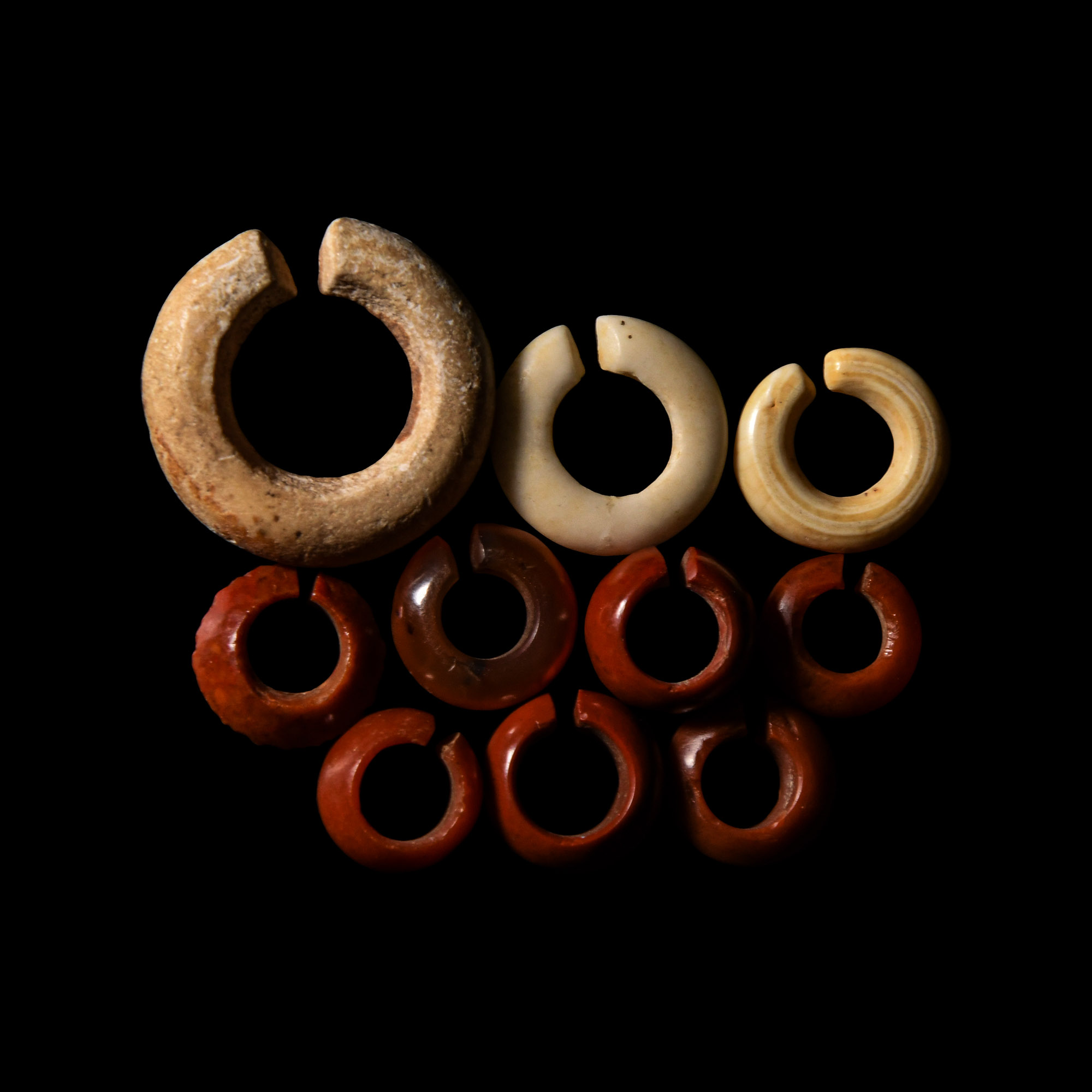
Egyptian Hardstone and Shell Hair Ring Collection
NEW KINGDOM, 1550-1060 B.C. AND LATER
1/2 - 1 in. (16.1 grams total, 12-26 mm).
Comprising: three large white shell types; one carnelian type; six red jasper types. [10, No Reserve]
ProvenanceAcquired 1970s-1996.
Property of a North American collector.
London collection, 2016.
Cf. similar in the collection of the British Museum under accession no.EA87318.
CONDITIONTimeLine Auctions follows a vetting process to ensure the authenticity and legality of all items, reinforcing our commitment to integrity and responsible trading. Each antiquity, antique, and coin lot undergoes thorough examination by a vetting committee of at least ten external specialists, professional trade association members, scientists, and archaeologists: Our Vetting Process
AUCTIONS:
TimeLine is a leading auction house specialising in antiquities, ancient art, collectables, natural history, coins, medals, and books. Our auctions offer museums, collectors, historians, and enthusiasts the opportunity to acquire unique and historically significant pieces.
-
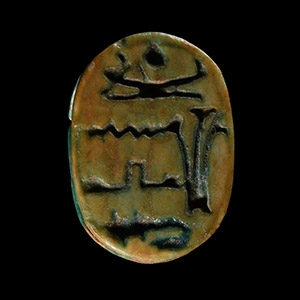
Egyptian Faience Scarab with Hieroglyphs
Late Period, 664-332 B.C.Estimate: £1,000 - 1,400 (‡+bp*)
Opening Bid: £500
Naturalistic detailing to the blue stained body and legs with section of openwork between the front and back legs; hieroglyphs on base; pierced for suspension. 1.72 grams, 15 mm
Ex collection of Emil Saad, Paris-Alexandria. -
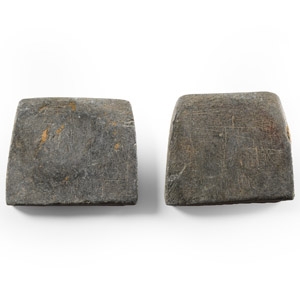
Egyptian Schist Cosmetic Palette Pair
New Kingdom-Late Period, 1550-332 B.C.Estimate: £300 - 400 (+bp*)
Opening Bid: £50
Two flat schist panels, sub-rectangular in plan each with one tapering edge. 200 grams total, 73-74 mm
From the private collection of the late Mr S.M., London, UK, 1969-1999; thence by descent. -
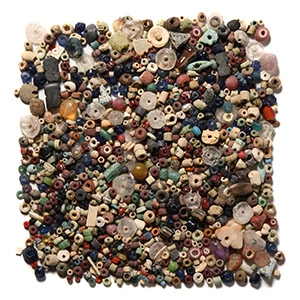
Egyptian and Other Glass and Stone Bead Group
1st millennium B.C. and laterSold for (Inc. bp): £182
Comprising a quantity of small beads, of mixed shapes, colours and materials; each pierced for stringing. 57 grams total, 2-12 mm
UK gallery, early 2000s.
