
Loading, please wait...
LOT 0433
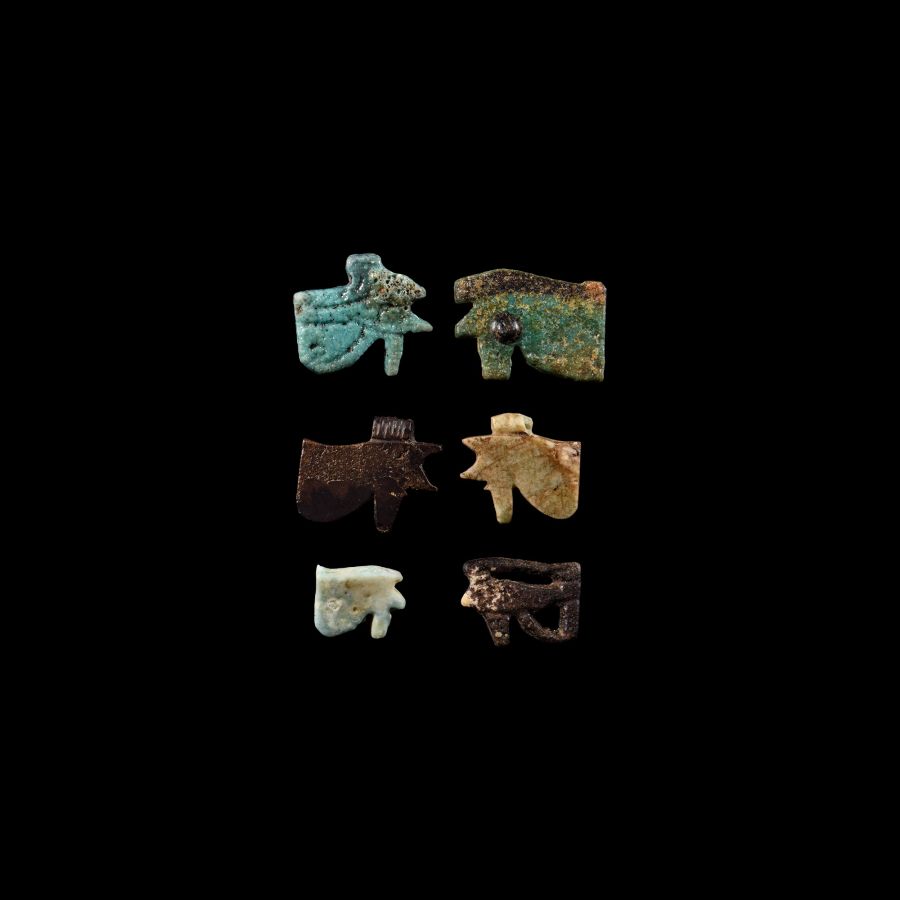
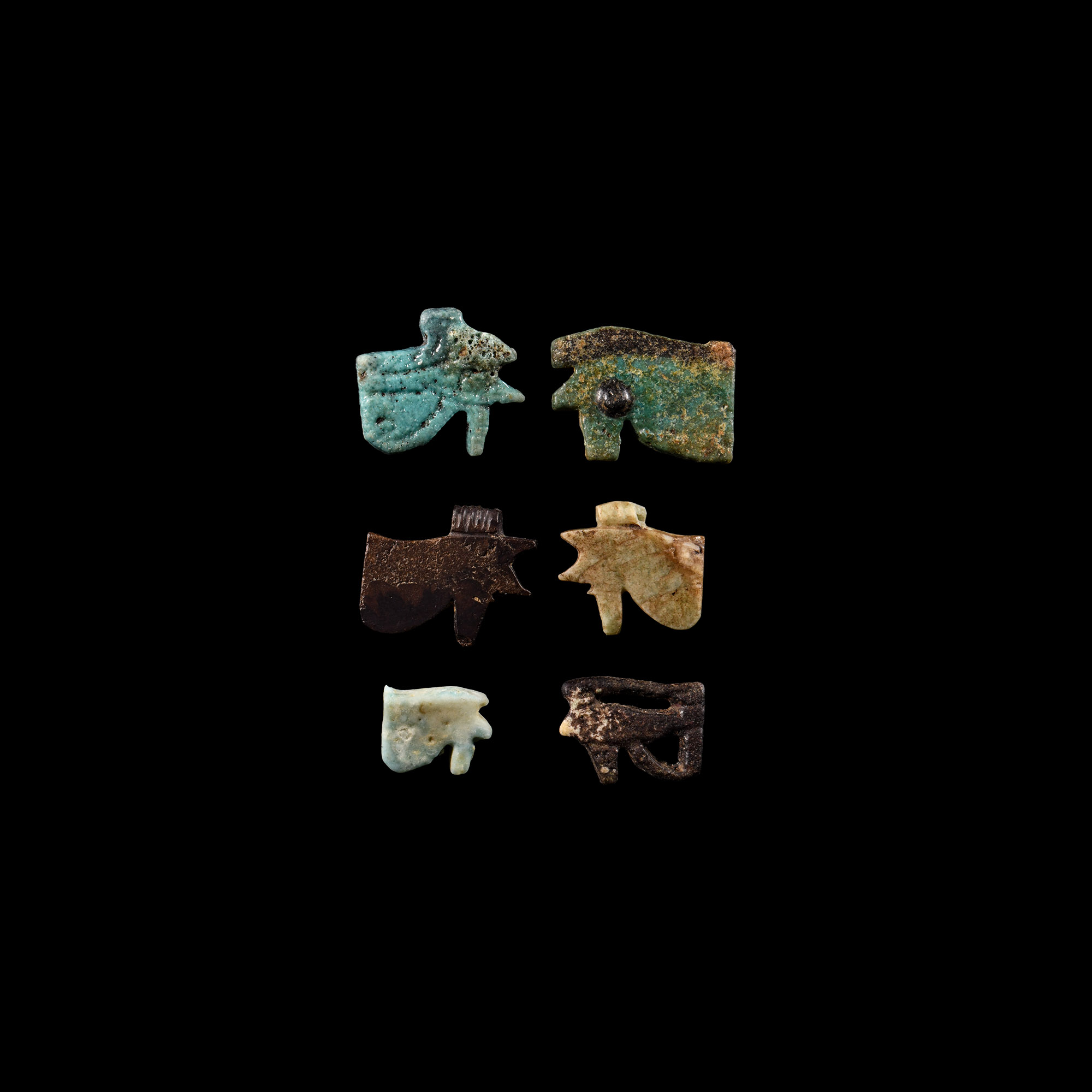
Egyptian Hardstone and Faience Wedjat Eye Collection
LATE PERIOD, 664-332 B.C.
1/2 in. (8.68 grams total, 12-21 mm).
Including examples with applied black detailing and openwork bands. [6, No Reserve]
ProvenanceAcquired 1970s-1996.
Property of a North American collector.
London collection, 2016.
Cf. Andrews, C., Amulets of Ancient Egypt, London, 1994, pl.46, for types.
CONDITIONTimeLine Auctions follows a vetting process to ensure the authenticity and legality of all items, reinforcing our commitment to integrity and responsible trading. Each antiquity, antique, and coin lot undergoes thorough examination by a vetting committee of at least ten external specialists, professional trade association members, scientists, and archaeologists: Our Vetting Process
AUCTIONS:
TimeLine is a leading auction house specialising in antiquities, ancient art, collectables, natural history, coins, medals, and books. Our auctions offer museums, collectors, historians, and enthusiasts the opportunity to acquire unique and historically significant pieces.
-
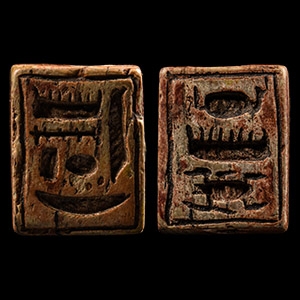
Egyptian Tabular Glazed Steatite Spacer Bead with Hieroglyphs
Late Period, 664-332 B.C. or laterSold for (Inc. bp): £130
Bifacial with incised border to each face, one with throne name of Tuthmoses III and the other with hieroglyphs. 2.25 grams, 16 mm
Acquired 1970s-1996. Property of a North American collector. London collection, 2016. -
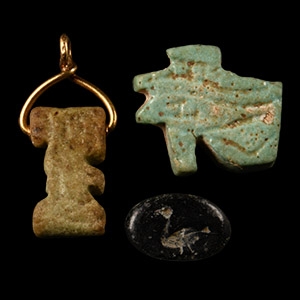
Egyptian Faience Amulet Collection
Mostly Late Period, 664-332 B.C.Sold for (Inc. bp): £91
Comprising: a blue-glazed eye of Horus amulet with bifacial detailing, pierced for suspension; a glazed Shu amulet, suspended on a slender gold bar and pendant hoop; offered with a black stone stamp seal engraved with a bird standing left, pierced for suspension. 5.06 grams total, 13-26 mm
Collected since the 1970s. Ex Everitt collection, acquired by descent 2017. -
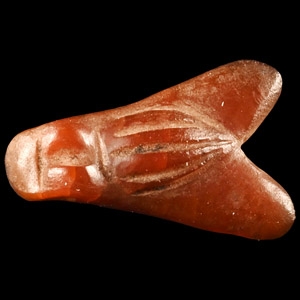
Egyptian Carnelian Fly Amulet
Late Period, 664-332 B.C.Sold for (Inc. bp): £156
Carved with simple body and eye detailing and polished; drilled through the eyes for suspension. 0.56 grams, 14 mm
Ex early 20th century Home Counties, UK, collection.
