
Loading, please wait...

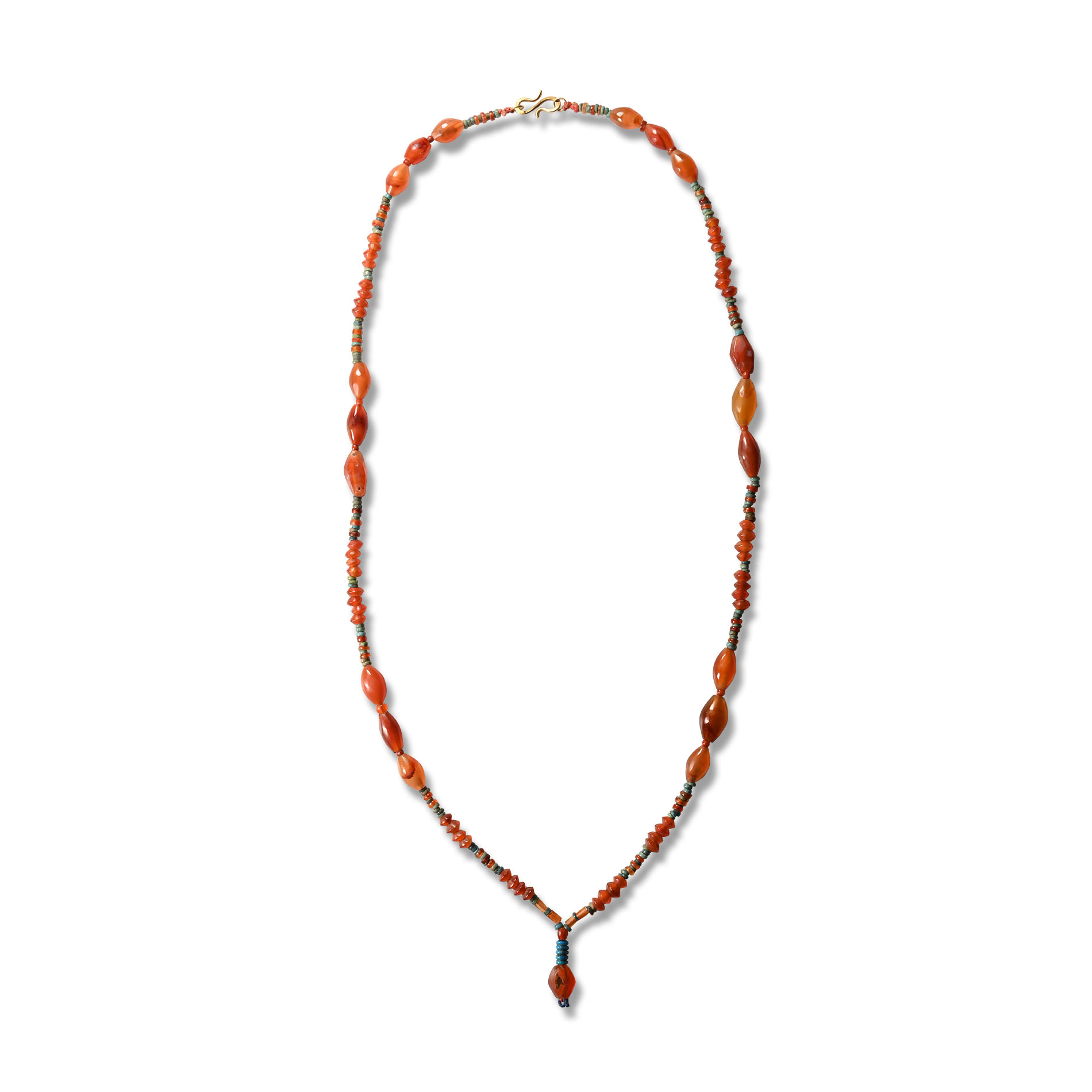
LOT 0451
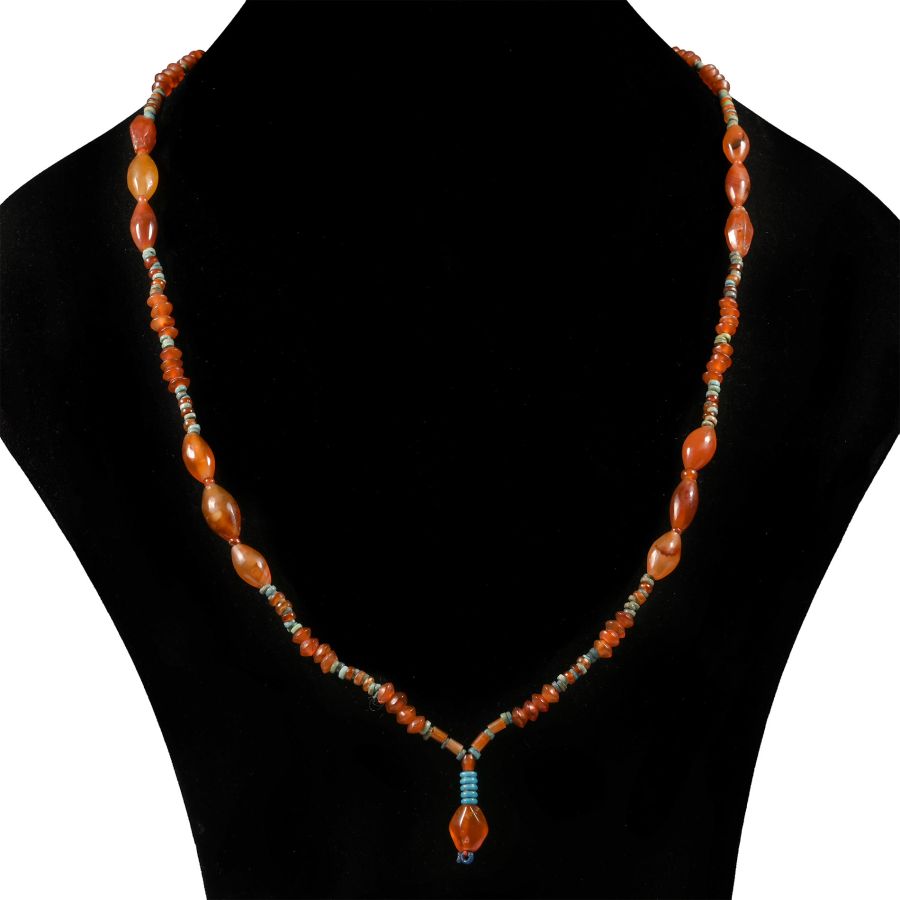
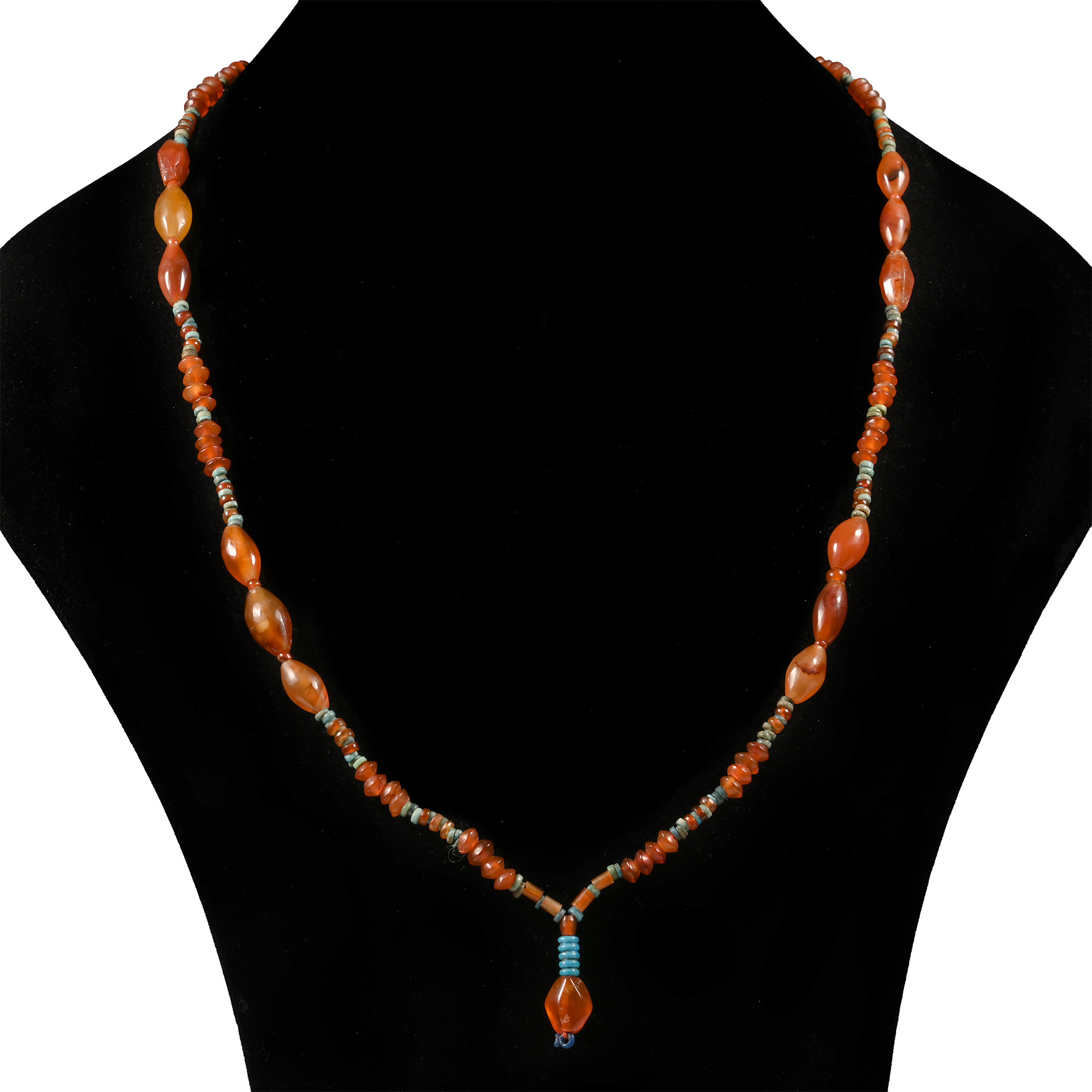
Egyptian Hardstone and Faience Necklace
LATE PERIOD, 664-332 B.C.
27 1/2 in. (35 grams, 70 cm).
Designer necklace featuring symmetrical layout of carnelian oval beads, with faience annular beads and some smaller carnelian beads, with a central shaped carnelian bead pendant and S-shaped hook; restrung.
ProvenanceFrom the private collection of the late Mrs Belinda Ellison, long time member of the Egyptian Exploration Society, c.1940-2020.
This lot is accompanied by an illustrated lot declaration signed by the Head of the Antiquities Department, Dr Raffaele D’Amato.
TimeLine Auctions follows a vetting process to ensure the authenticity and legality of all items, reinforcing our commitment to integrity and responsible trading. Each antiquity, antique, and coin lot undergoes thorough examination by a vetting committee of at least ten external specialists, professional trade association members, scientists, and archaeologists: Our Vetting Process
AUCTIONS:
TimeLine is a leading auction house specialising in antiquities, ancient art, collectables, natural history, coins, medals, and books. Our auctions offer museums, collectors, historians, and enthusiasts the opportunity to acquire unique and historically significant pieces.
-
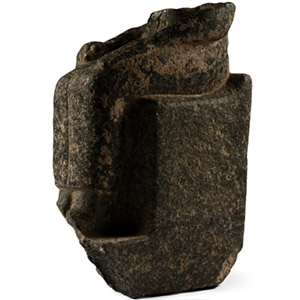
Egyptian Granite Seated Figure Representing Osiris
Middle Kingdom, circa 1800 B.C.Estimate: £4,000 - 6,000 (‡+bp*)
Opening Bid: £2,000
Fragment of a statue of an official, comprising the torso and legs clad in an ankle-length robe and seated on a rectangular-section seat with stepped base and short, curved backrest and rear dorsal pillar; the left hand carved with the hand palm-downwards placed flat along the thigh; the right hand similarly placed but with the hand gripping a folded piece of cloth of which the ends are draped over the lower thigh above the knee; traces of an old label to reverse. 4.1 kg, 18.7 cm
Private collection, Europe. with Bonham's & Brooks, 8th November 2001, no.265. Private collection, Europe. Accompanied by copies of the relevant Bonham's & Brooks catalogue pages. This lot has been checked against the Interpol Database of stolen works of art and is accompanied by a search certificate number no.12584-232097. This lot has been cleared against the Art Loss Register database, and is accompanied by an illustrated lot declaration signed by the Head of the Antiquities Department, Dr Raffaele D’Amato.
The official would have been shown wearing a longer cloak-like garment rather than a waist-height kilt, as the line of the folded edge is visible above where a waistband would typically be. -
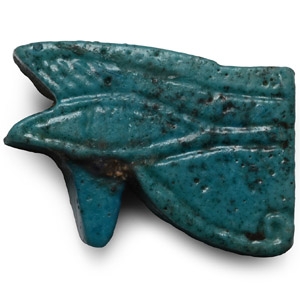
Egyptian Deep Blue Glazed Faience Eye of Horus Amulet
Late Period, 664-332 B.C.Sold for (Inc. bp): £234
Large wedjat-eye amulet with incised human and falcon elements. 11.7 grams, 38 mm
From the private collection of the late Mrs Belinda Ellison, a long time member of the Egyptian Exploration Society, c.1940-2020. This lot is accompanied by an illustrated lot declaration signed by the Head of the Antiquities Department, Dr Raffaele D’Amato.
The wedjat-eye amulet is a representation of the healed eye of the god Horus, featuring both human and falcon elements. The name wedjat in ancient Egyptian means ‘the one that is sound.’ According to Egyptian mythology, Horus' eye was wounded or taken by the god Seth and restored by Thoth. The wedjat-eye amulet was thought to protect its wearer and bestow the power of recovery and regeneration onto them. It was very popular and used by both the living and the dead. -
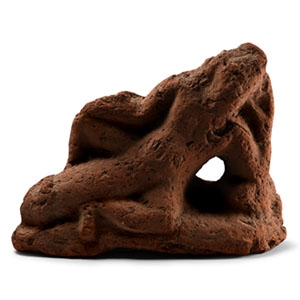
Egyptian Ithyphallic Terracotta Reclining Figure
Ptolemaic Period, 3rd century B.C.Sold for (Inc. bp): £46
Probably depicting young Harpocrates, holding his weight on his left arm, enormous phallus resting between his spread legs, shaved head and side-lock braid. 319 grams, 13 cm vwide
The Erotica Collection Christian von Faber-Castell, Küsnacgt ZH, Switzerland, since the late 1970s. This lot is accompanied by an illustrated lot declaration signed by the Head of the Antiquities Department, Dr Raffaele D’Amato.
A few early Hellenistic terracotta figures show the ithyphallic youth Harpocrates reclining on his phallus, usually depicted (when preserved) with a bald or shaved head and side-lock, sometimes in Macedonian dress. Some in this form have hermaphrodite-like features, although this may be little more than just the representation of a plump baby. Christian von Faber-Castell (born 1950) is a renowned German entrepreneur and art collector, best known as a member of the prominent Faber-Castell family, famed for their iconic writing instruments. A passionate advocate for art and culture, Christian von Faber-Castell curated an extensive and diverse private collection of erotica, spanning centuries and cultures. His collection reflects a deep appreciation for the interplay of beauty, sensuality, and artistic expression, bringing together rare and unique works that explore themes of intimacy and human connection. Pieces from this collection have been featured in notable exhibitions and are celebrated for their artistic and historical significance. This offering represents a rare opportunity to acquire works from one of the most fascinating and eclectic private collections of its kind.
