
Loading, please wait...

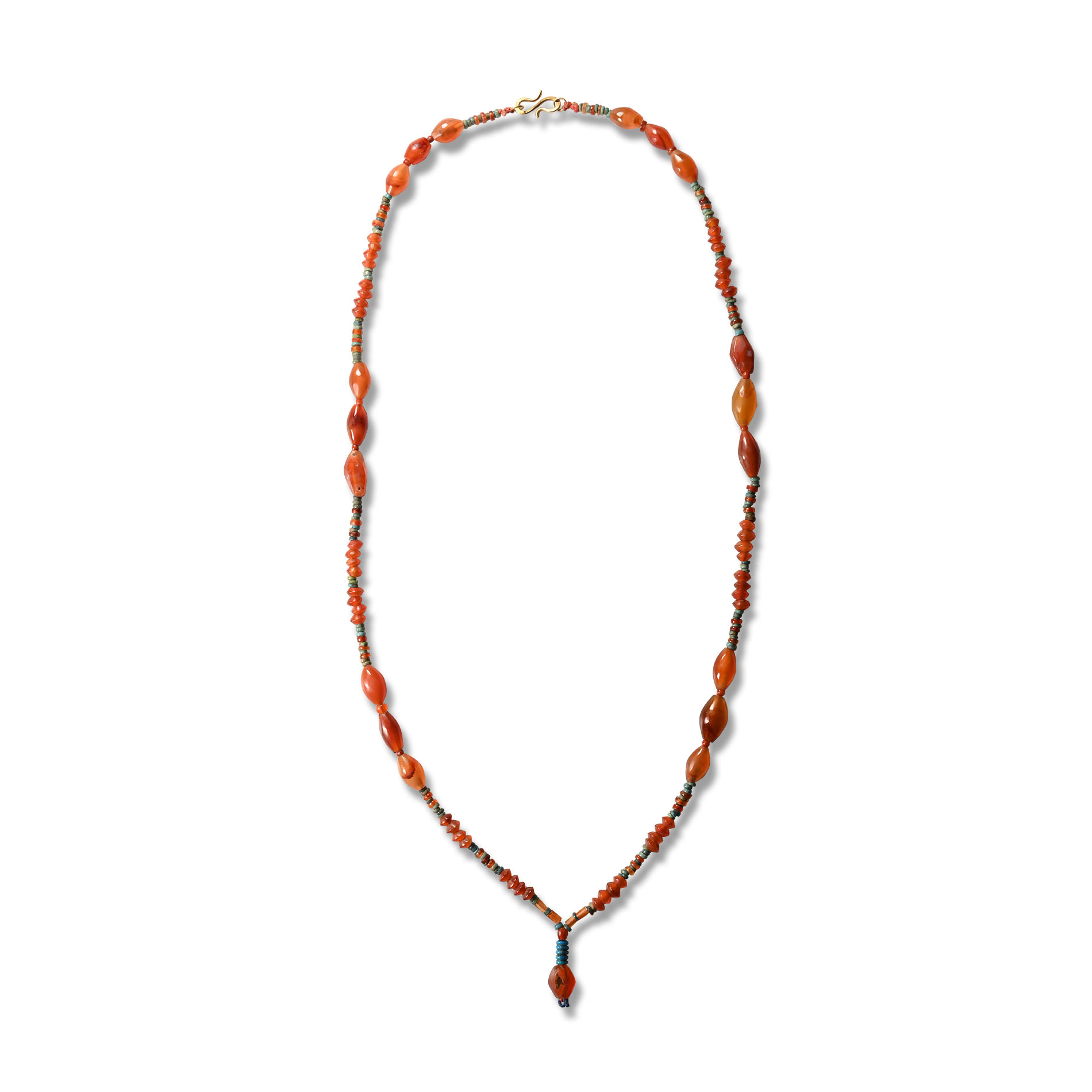
LOT 0493
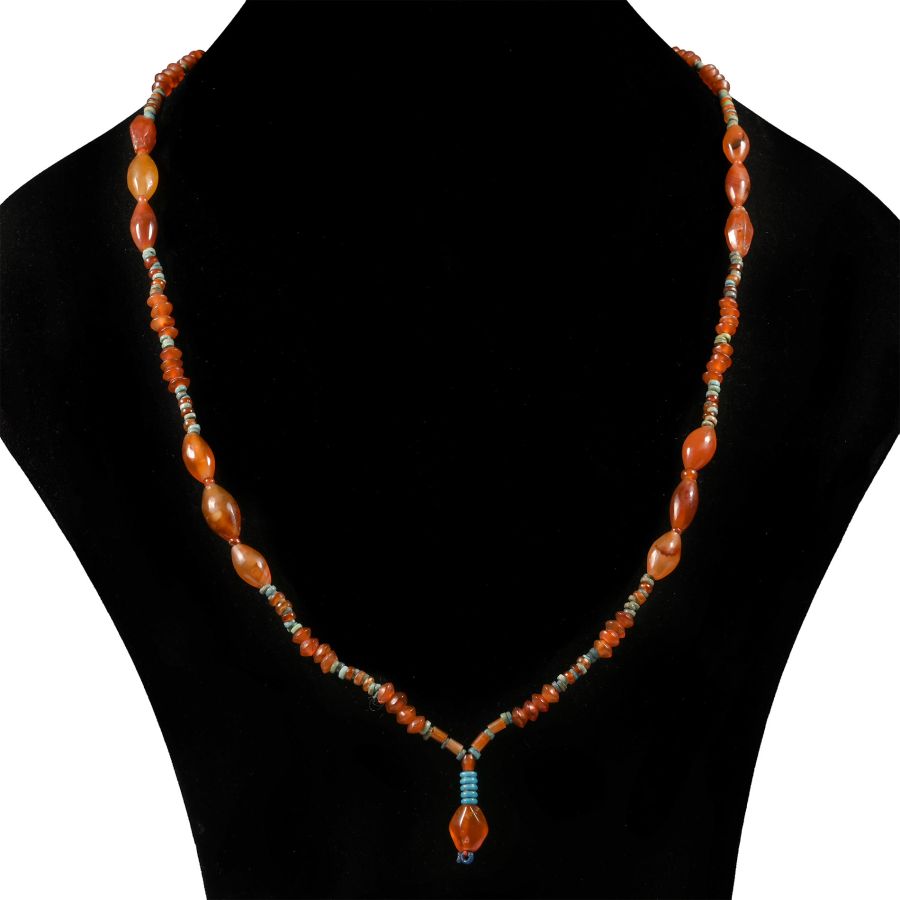
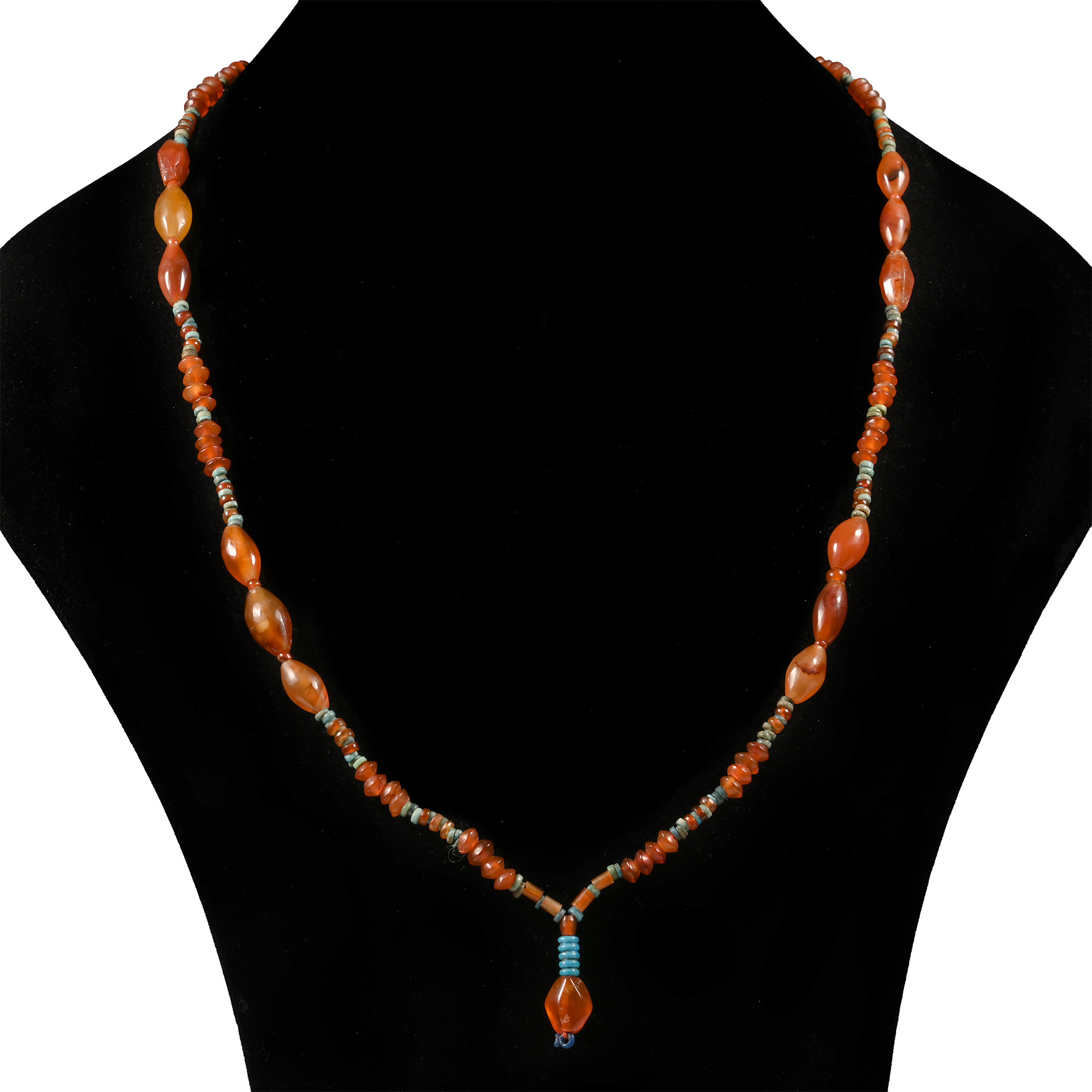
Egyptian Hardstone and Faience Necklace
LATE PERIOD, 664-332 B.C.
27 1/2 in. (35 grams, 70 cm).
Comprising groups of three oval carnelian beads with interstitial biconvex and annular beads, a turquoise faience ribbed tubular bead and an irregular polyhedral carnelian centrepiece.
ProvenanceFrom the private collection of the late Mrs Belinda Ellison, long time member of the Egyptian Exploration Society, c.1940-2020.
CONDITIONTimeLine Auctions follows a vetting process to ensure the authenticity and legality of all items, reinforcing our commitment to integrity and responsible trading. Each antiquity, antique, and coin lot undergoes thorough examination by a vetting committee of at least ten external specialists, professional trade association members, scientists, and archaeologists: Our Vetting Process
AUCTIONS:
TimeLine is a leading auction house specialising in antiquities, ancient art, collectables, natural history, coins, medals, and books. Our auctions offer museums, collectors, historians, and enthusiasts the opportunity to acquire unique and historically significant pieces.
LOT 0493
Egyptian Hardstone and Faience Necklace
Estimate £450 - 650€520 - 750 (for guidance only)$610 - 880 (for guidance only)
-
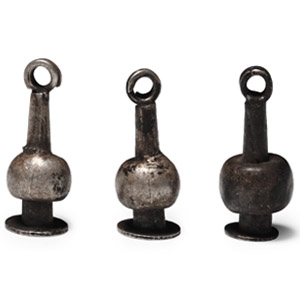
Egyptian Silver Poppy Beads
Late Period, 664-332 B.C.Sold for (Inc. bp): £124
Modelled in the shape of a poppy seed with a flat foot leading to a globular body with a tapering neck attached to a small loop at the top for suspension. 3.29 grams total, 16-17 mm
From an early 20th century collection.
Amulets in the form of poppies were used to heal and alleviate pain and to ward off death. These types of amulets were also linked to Osiris, the Egyptian deity of agriculture, death, and the afterlife. -
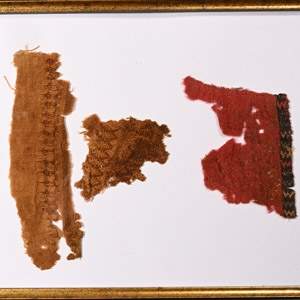
Egyptian Framed Coptic Fabric Collection
Circa 5th-7th century A.D.Sold for (Inc. bp): £85
Three fragments of tabby-weave linen fabric, two with embroidered ornament, one with a woven polychrome border; mounted in a glazed wooden frame with gilt inner border. 578 grams total, fragments: 6.5-15.5 cm (frame: 26 x 31 cm)
From the private collection of H. Norry, 1980s-1990s. -
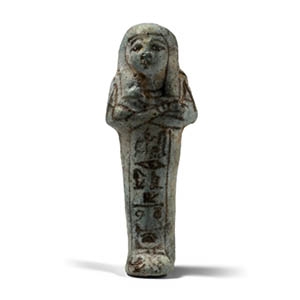
Egyptian Faience Shabti of Qenu-khayes
New Kingdom, 19th-20th Dynasty, circa 1292-1069 B.C.Estimate: £1,000 - 1,400 (+bp*)
Opening Bid: £550
Light blue faience mummiform shabti with details added in black line, adorned with a tripartite wig and collar, and the arms crossed over the chest with hands holding a pick and hoe, seed bag and water pots, the back decorated with a curved yoke with pots and a brick mould; a central panel of hieroglyphs on the lower half of the figure giving the dedication: sḥḏ wsı͗r ḳnw ḫꜤs mꜢꜤ ḫrw, ‘The illuminated one, the Osiris Qenu-khayes, true of voice’. 152 grams, 13 cm
Formerly in North American collection, 1990s. From the collection of a London, UK, gentleman.
