
Loading, please wait...
LOT 0441
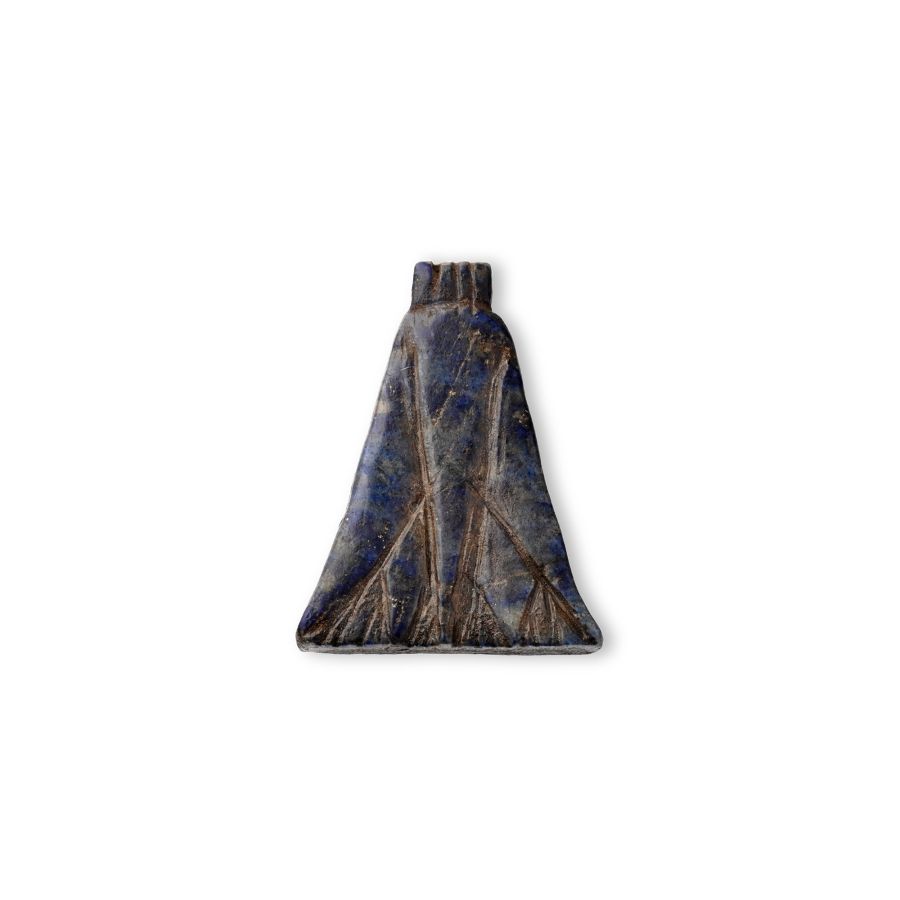
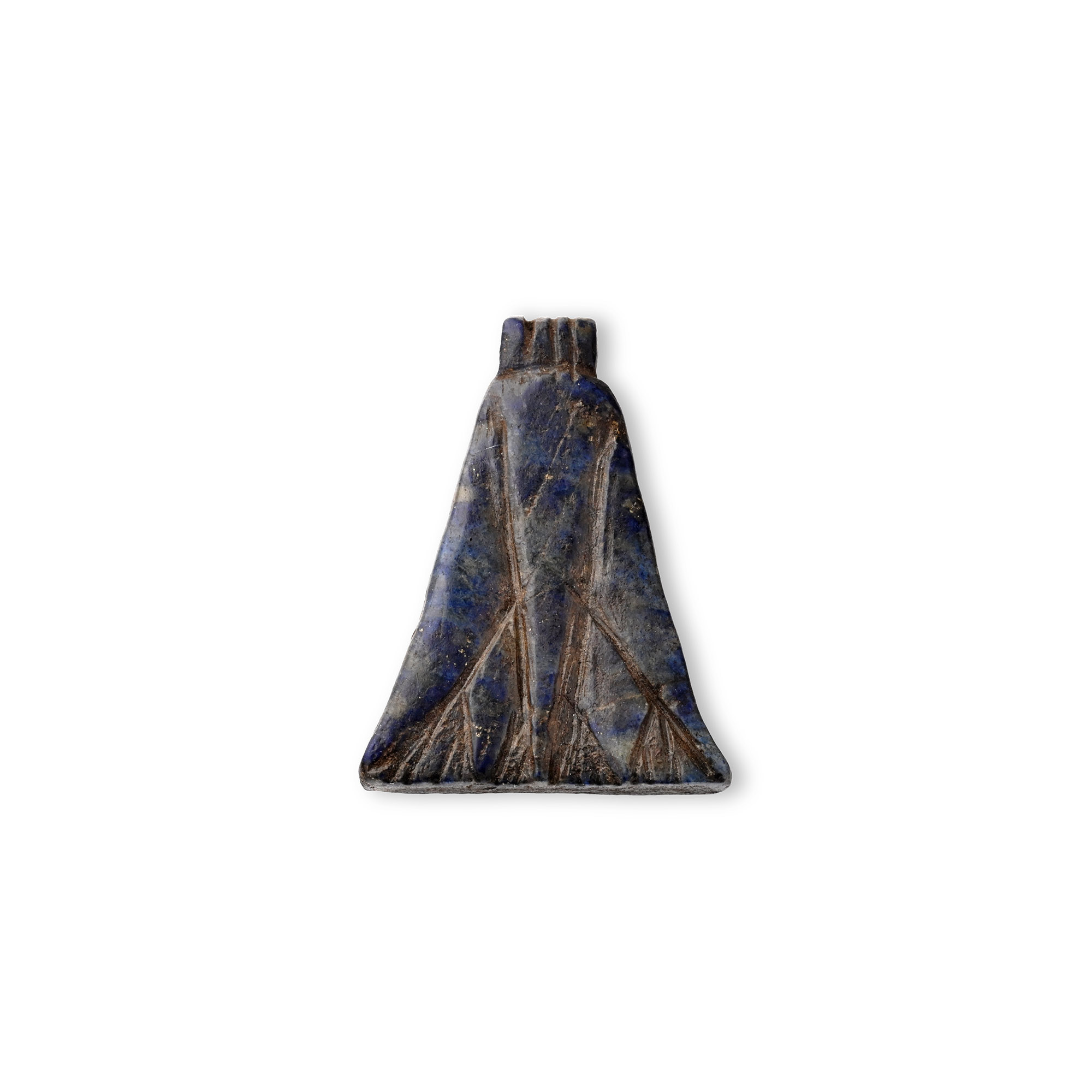
Egyptian Hardstone Amulet of Lotus Flower
NEW KINGDOM, 1550-1070 B.C.
7/8 in. (2.23 grams, 22 mm).
Bifacial with ribbed suspension loop and carved petals.
ProvenanceFrom an early 20th century collection.
This lot is accompanied by an illustrated lot declaration signed by the Head of the Antiquities Department, Dr Raffaele D'Amato.
TimeLine Auctions follows a vetting process to ensure the authenticity and legality of all items, reinforcing our commitment to integrity and responsible trading. Each antiquity, antique, and coin lot undergoes thorough examination by a vetting committee of at least ten external specialists, professional trade association members, scientists, and archaeologists: Our Vetting Process
AUCTIONS:
TimeLine is a leading auction house specialising in antiquities, ancient art, collectables, natural history, coins, medals, and books. Our auctions offer museums, collectors, historians, and enthusiasts the opportunity to acquire unique and historically significant pieces.
-
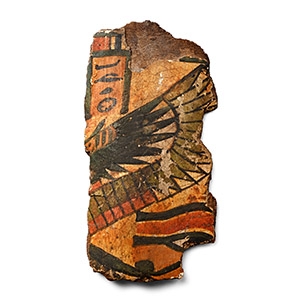
Egyptian Cartonnage Section with Eye and Wing
Third Intermediate Period, circa 1069-860 B.C.Sold for (Inc. bp): £416
Sub-rectangular in plan with irregular and fragmented edge; prepared plaster surface featuring a line-bordered column with four cursive hieroglyphs naming Behedet (bḥdt); a section of finely painted outstretched wing with feather detailing to lower edge in red and blue; below, a wedjat eye in black with red medial band; fabric back to reverse. 48 grams, 17 cm
Formerly from an old collection of a Wiltshire, UK, collector, acquired before 1980. Property of a private collector, West London, UK. This lot is accompanied by an illustrated lot declaration signed by the Head of the Antiquities Department, Dr Raffaele D'Amato.
This fragment most likely originates from the lower chest section of a so-called anthropoid 'yellow coffin' from the Third Intermediate Period. The wing belongs to a protective deity; as Behedet is a name given to several locations (Edfu, Tell el-Balamun, and Lepidotonpolis) associated with Horus, it seems probable that the wing belongs to the falcon form of this god. -
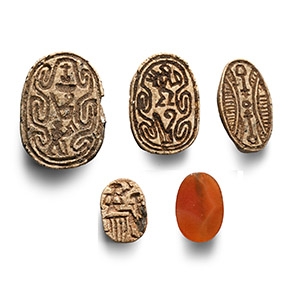
Egyptian Mixed Scarab Collection
2nd-1st millennium B.C. and laterSold for (Inc. bp): £468
Comprising three faience scarabs with detailed bodies and decorated undersides, featuring: a scroll border with central design consisting of a nefer, neb, Red Crown, and a striding human figure holding a flail; a scroll border with a central figure of a bowman with a Red Crown beneath; a seated figure before an offering table(?); an oval scaraboid featuring a central sun disc with opposed nefer signs flanked by hatched panels; and a plain carnelian scarab. 22.75 grams total, 15-28 mm
From the collection of a gentleman, acquired on the London art market in the 1990s. This lot is accompanied by an illustrated lot declaration signed by the Head of the Antiquities Department, Dr Raffaele D'Amato. -
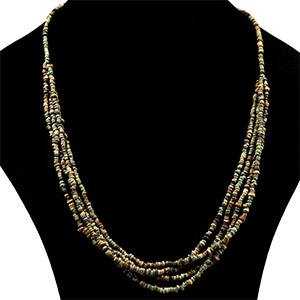
Egyptian Multi-Stranded Mummy Bead Necklace
Late Period, 664-332 B.C.Sold for (Inc. bp): £312
Multi-stranded designer necklace composed of polychrome beads of mainly annular types. 26 grams, 72 cm
Acquired before 1979. From the private collection of Mr F.A., South Kensington, London, UK; thence by descent 2014. This lot is accompanied by an illustrated lot declaration signed by the Head of the Antiquities Department, Dr Raffaele D'Amato.
For thousands of years, artisans in Egypt created vibrant ceramics to echo the beauty of rare jewels. These ornaments were created with almost every material, colour, and texture imaginable and they come from across Egypt and beyond: vibrant blue lapis lazuli from Afghanistan, glossy black obsidian from Turkey, and aqua-green turquoise from the Sinai. They were worn in life and, after death, they served as precious ornamentation for mummies.
