
Loading, please wait...
LOT 0466
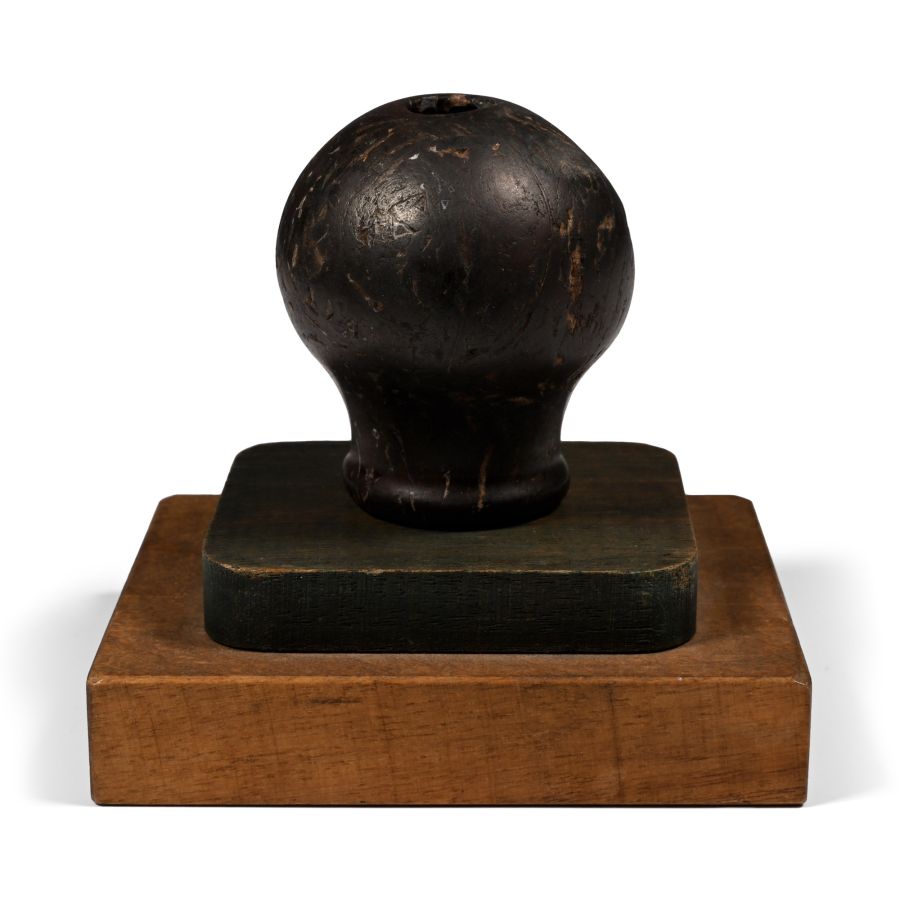
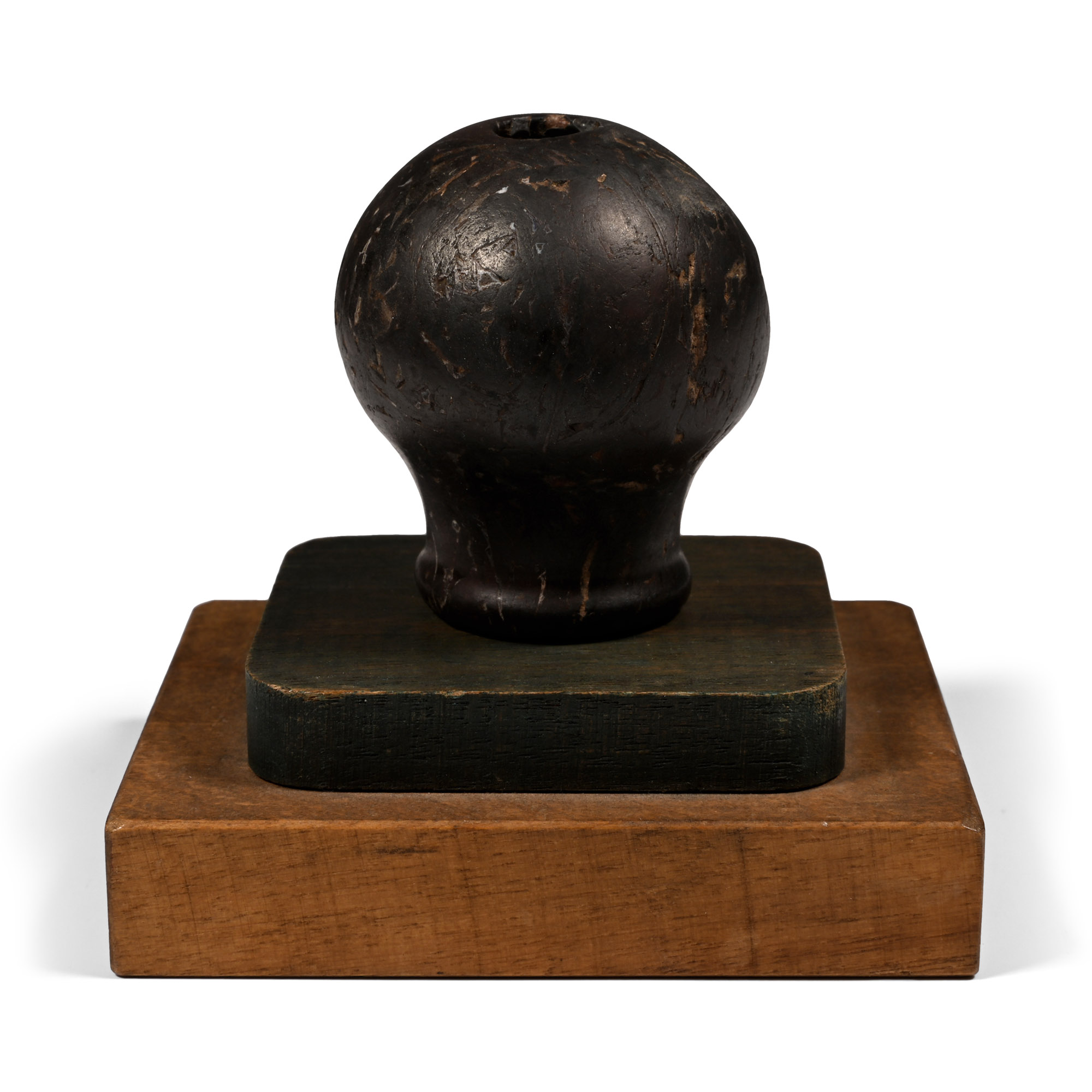
Egyptian Haematite Mace Head
4TH-3RD MILLENNIUM B.C.
2 3/5 in. (457 grams total, mace: 60 mm high).
Globular body with short socket and thickened rim; accompanied by a custom-made display stand. [No Reserve]
ProvenanceEx Norman Fargo collection.
with Olympia Auctions, 26 June 2024, no.119.
This lot is accompanied by an illustrated lot declaration signed by the Head of the Antiquities Department, Dr Raffaele D'Amato.
See Gorelik, M., Weapons of Ancient East, IV millennium BC-IV century BC, Saint Petersburg, 2003, pl.XXX, nos.25 and 75, mace of a nobleman of Pharaoh Ptahhotep (I), detail of a wall painting, Old Kingdom, V Dynasty, mid-3rd millennium BC.
FootnotesNorman Fargo was born in Los Angeles, California in 1945, the son of Hungarian immigrant Frank and his wife, Rose. His lifelong passion for collecting began at the age of six with a simple interest in rocks. By the 1960s, Norman had become a dedicated student of antique arms and armour, developing a deep appreciation for both craftsmanship and historical context. He began collecting at a time when many items now considered rare were still relatively accessible. A friendship with renowned collector Howard Curtis—whose important collection was partially sold at Christie’s, London in 1984—opened doors to early and exceptional material. Norman also acquired outstanding pieces from respected figures such as Frank Bivens and others known today through museum and auction catalogue provenance. Alongside his core collection of arms and armour (c.1450-1700), Norman developed an eye for period furniture and accessories. He also built a growing collection of Pre-Columbian art with an emphasis on Southern Mexican cultures, particularly Veracruz, as well as fine examples of Japanese Satsuma ware and cloisonné.
CONDITIONTimeLine Auctions follows a vetting process to ensure the authenticity and legality of all items, reinforcing our commitment to integrity and responsible trading. Each antiquity, antique, and coin lot undergoes thorough examination by a vetting committee of at least ten external specialists, professional trade association members, scientists, and archaeologists: Our Vetting Process
AUCTIONS:
TimeLine is a leading auction house specialising in antiquities, ancient art, collectables, natural history, coins, medals, and books. Our auctions offer museums, collectors, historians, and enthusiasts the opportunity to acquire unique and historically significant pieces.
-
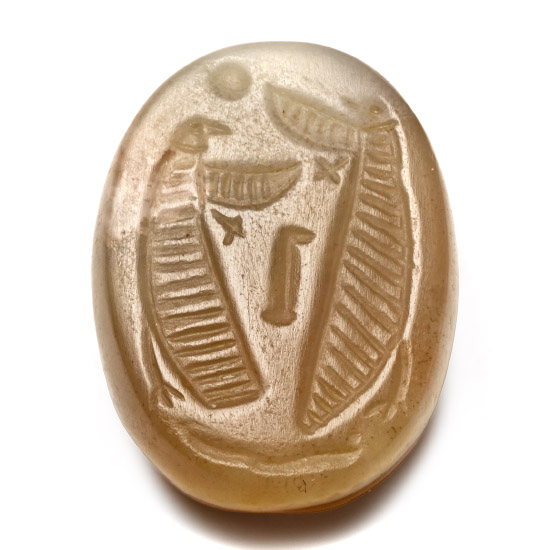
Egypto-Phoenician Agate Scarab
8th-6th century B.C.Sold for (Inc. bp): £156
Plano-convex in section with incised segmentation to the carapace, underside with two hatched avian figures; supplied with a museum-quality impression. 5.65 grams, 20 mm
From the private collection of a European gentleman (1942-2024), formed since the 1970s. -
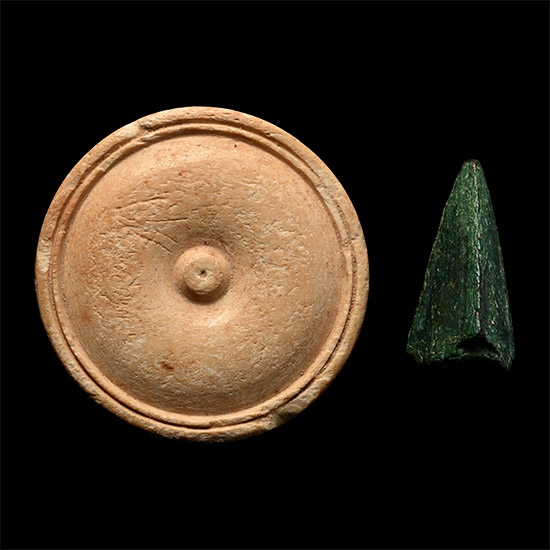
Egyptian Bone Gaming Counter and Bronze Arrow Tip
Graeco-Roman Period, circa 3rd century B.C.-2nd century A.D.Sold for (Inc. bp): £52
Comprising: turned discoid counter with raised tiered rim and central boss, plain reverse with incised 'L · III' legend (numeral '53'); triangular-section arrowhead with low flanges to one face and mounting hole, socket to rear. 4.82 grams total, 17-26 mm
Ex John Cummings Ltd., Lincolnshire, UK. From the private collection of a Canadian gentleman living in Essex, UK, formed since the 1920s-circa 1990. Property of an Essex lady until the late 1990s; thence by descent. From the private collection of an Essex gentleman since the late 1990s. Accompanied by an old information card. -
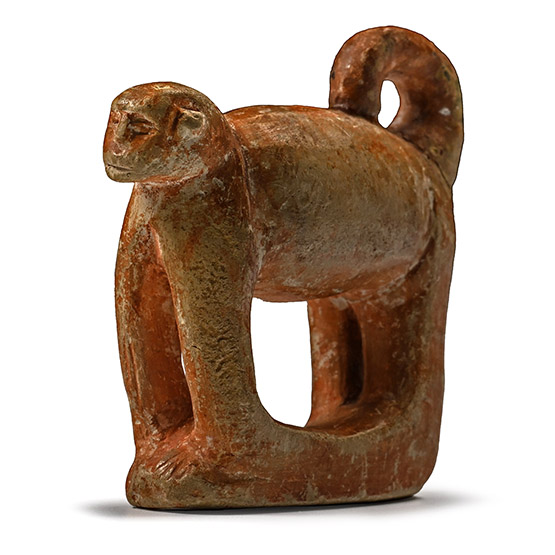
Egyptian Statuette of a Monkey
Ptolemaic Period, 4th-1st century B.C.Estimate: £600 - 800 (‡+bp*)
Current Winning Bid: £400
Standing on a rectangular plinth with head raised and tail curled above the hindquarters, barrel-shaped body with incised detailing at the shoulders and hips, traces of a white and reddish brown coating; partially restored; old collector's labels to underside '51' and 'N13234'. 42.8 grams, 60 mm
Ex Baden-Württemberg, Germany, formed since ca.1930. Private collection, Saarland, Germany. Thereafter, Michael Schrôder, Germany. Consigned to DAWO Auktion, 18 February 2017, no.824. Accompanied by a copy of an Art Loss Register certificate no.S00123279.
The ancient Egyptians kept pet monkeys (baboons as well as the more slender guenons) for amusement and as status symbols. These animals played around the house and accompanied the master on outings.
